Choosing the right Pallet Storage Racks from China requires more than comparing prices. Global buyers must assess load capacity, steel quality, warehouse layout, and supplier reliability. A rack may look strong in photographs, yet its performance depends on beam connections, upright thickness, anchoring, and installation accuracy.
This guide examines practical options for distribution centers, manufacturing plants, cold stores, and retail warehouses. It considers selective pallet racks, drive-in systems, and adjustable designs for different storage needs. Details matter: a 2,500-kilogram beam rating, a 90-millimeter upright profile, or a 100-millimeter aisle difference can change daily operations. Buyers should request drawings, material specifications, test reports, and clear packaging details before placing an order.
China offers broad manufacturing capacity and competitive customization. However, low cost alone is not proof of value. Factory audits, sample inspections, welding checks, and coating tests can reveal problems before shipment. Documentation should match the actual product, not only a sales quotation. This point is easy to overlook.
The best solution is not always the largest or cheapest system. It should fit the building, pallet dimensions, forklift type, fire-safety plan, and expected growth. Some recommendations may need revision after a site survey. That is normal. A careful purchasing process combines supplier experience, engineering review, and measurable quality control, helping global buyers select Pallet Storage Racks that support safer, more efficient, and more predictable warehouse operations.
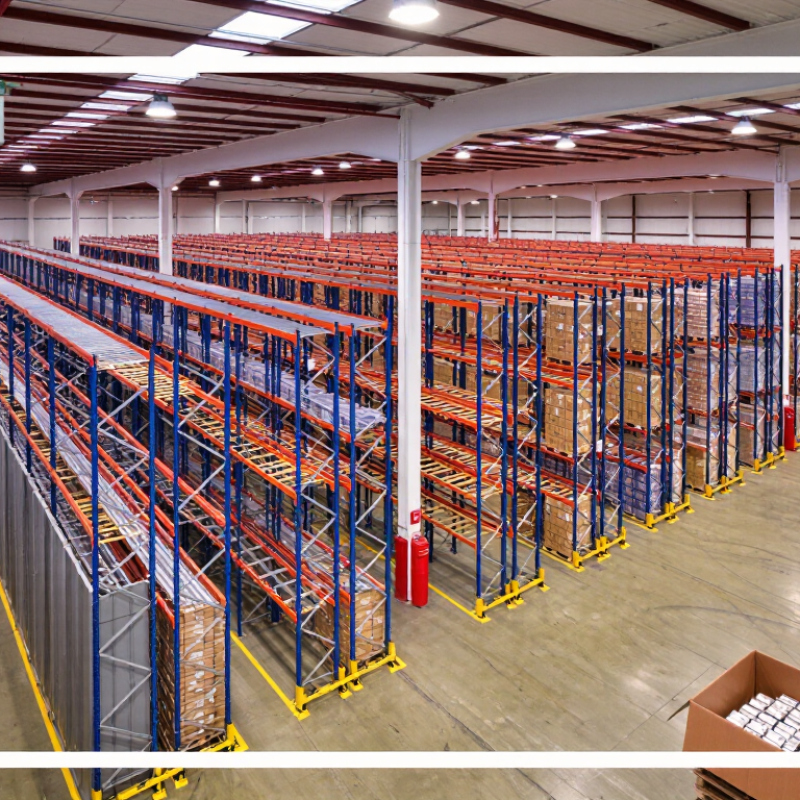
What Pallet Storage Racks Are and How They Work
Pallet storage racks are steel structures designed to hold palletized goods above the warehouse floor. Their main parts include upright frames, horizontal beams, braces, and floor anchors. Each pallet rests on two beams, leaving clear aisles for forklifts and pallet trucks. This arrangement uses vertical space efficiently while keeping products visible and accessible.
The rack works through a simple load path. Weight moves from the pallet to the beams, then into the upright frames and concrete floor. Beam levels can be adjusted for different pallet heights, but every change affects stability and capacity.
A professional layout considers pallet dimensions, load weight, forklift turning radius, aisle width, and building height. Selective racks support direct access to every pallet. Drive-in designs store more units but provide less individual access.
In real warehouse projects, small details matter. Floor flatness, anchor depth, pallet condition, and impact protection can influence daily safety. A rack may look strong, yet poor installation can create hidden risks.
Load signs should match actual beam spacing and pallet weights. Regular inspections can reveal bent uprights, loose connections, or damaged beams before they become serious problems.
Buyers comparing suppliers should request drawings, load calculations, material specifications, and inspection records.
One planning assumption may still be wrong. Test the proposed layout with actual handling equipment before production.
Key Rack Types for Different Warehouse Storage Needs
China Best Pallet Storage Racks for Global Buyers
Choosing the right pallet rack starts with warehouse behavior, not catalog appearance. Selective pallet racking suits facilities storing many product types with direct access to every pallet. It works well for mixed inventory and frequent order picking. Each upright frame should match the pallet load, beam span, and lifting equipment. A 2.4-meter aisle may fit some forklifts, but turning tests can reveal uncomfortable clearance.
Drive-in racking offers high density for large quantities of similar goods. Operators load pallets from one side and remove them in reverse order. This system can reduce aisles, but it limits stock rotation. Push-back racking stores several pallets deep while keeping access from the front. It supports better product variety, although the moving carts require careful inspection. For first-in, first-out handling, pallet flow racks use inclined rollers and controlled movement.
Warehouse conditions deserve equal attention. Cold rooms, humid areas, and dusty floors can affect coatings, wheels, and anchors. Confirm floor strength, rack height limits, and local safety requirements before production. Ask for load calculations, material specifications, inspection guidance, and installation drawings. Real measurements matter more than attractive renderings.
A useful layout may still need adjustment. Product demand changes, and today’s efficient aisle can become tomorrow’s bottleneck. Leave space for maintenance and future expansion. Small details matter. Proper beam locking, visible load notices, and routine frame checks support safer daily operations.
How to Compare Rack Load Capacity, Size, and Safety
China Best Pallet Storage Racks for Global Buyers
How to Compare Rack Load Capacity, Size, and Safety
A reliable rack comparison starts with the real pallet, not a catalog image. Measure pallet length, width, height, and actual product weight. Include packaging weight. Add forklift clearance and beam deflection limits. Capacity labels should state the load per level and per bay. These figures are not interchangeable. A rack rated for 2,000 kilograms per level may support less when beams are longer. Uneven loading also changes performance. Small details matter.
Check the rack layout against your warehouse floor and aisle plan. Leave enough clearance for forklifts, sprinkler systems, lighting, and emergency access. Upright frames must match the required height and depth. Deep frames can waste space when pallets are shallow. A useful comparison includes beam size, frame thickness, steel grade, and connection design. Ask for drawings, load calculations, inspection records, and installation guidance. Good documentation makes technical claims easier to verify.
Safety is more than a thick-looking frame. Look for upright protectors, locking pins, row spacers, and stable floor anchors. Confirm that the design follows applicable local standards and operating requirements. Inspect damaged beams quickly. A small bend is not always harmless. In practice, buyers sometimes focus too heavily on price and painted appearance. That can be a mistake. I would also recheck every capacity figure after changing pallet weight, beam spacing, or warehouse conditions. Rack selection is rarely perfect on the first review.
China Manufacturing Standards, Materials, and Quality Checks
China Best Pallet Storage Racks for Global Buyers
China Manufacturing Standards, Materials, and Quality Checks
Reliable pallet racks begin with clear manufacturing requirements, not attractive catalog images. In China, factories commonly use Q235 or Q355 structural steel, depending on load demands and design calculations. The selected grade should appear in material certificates, not only in a quotation. Rack columns need consistent punching, accurate dimensions, and controlled thickness. Small errors can affect beam fit and warehouse stability.
During factory inspections, I check weld penetration, frame squareness, beam connectors, and surface preparation. A smooth weld is not always a strong weld. Inspectors should review welding procedures and examine critical joints for visible cracks or incomplete fusion. Powder coating also needs practical testing. Scratching a hidden area can reveal poor preparation, while coating thickness measurements show whether coverage is consistent. These checks are simple. They still catch expensive problems.
Load testing should follow the agreed design and the destination market’s requirements, such as applicable Chinese, European, or North American standards. Suppliers should provide drawings, load tables, inspection records, and traceable batch information. Independent inspection can verify dimensions, steel thickness, coating quality, and packaging before shipment. Yet no inspection is perfect. I have seen carefully measured samples differ from later production batches. For that reason, buyers should define acceptable tolerances, approve a reference sample, and repeat checks during mass production. Clear records build trust. Loose promises do not.
Buying and Importing Pallet Racks for Global Warehouses
China Best Pallet Storage Racks for Global Buyers
Buying and Importing Pallet Racks for Global Warehouses
Importing pallet racks from China requires more than comparing unit prices. Warehouse operators should confirm pallet dimensions, load weight, beam levels, and forklift access before requesting quotations. A clear layout drawing reduces expensive changes after production. Measure the building carefully. Ceiling height matters.
Experienced buyers usually request steel grades, surface treatment details, welding methods, and tolerance records. Suppliers should provide drawings, packing lists, invoices, and inspection documents for customs clearance. Independent pre-shipment inspections can verify beam length, upright holes, coating quality, and hardware quantities. Photos are useful, but they cannot replace physical checks. That lesson is easy to miss.
Freight planning should include rack volume, container loading, port charges, insurance, import duties, and inland delivery. Ask whether components arrive bundled, labeled, and protected against moisture. Our first shipping estimate was too optimistic because packaging used more space than expected. Buyers should calculate landed cost, not just factory cost. Local installation teams also need assembly instructions and safety guidance. A small labeling error can delay installation for days.
China Best Pallet Storage Racks for Global Buyers - Buying and Importing Pallet Racks for Global Warehouses
Indicative specifications and import-planning data for warehouse pallet-racking projects
| Rack Configuration |
Typical Application |
Typical Bay Size
(W × D × H) |
Load per Level |
Storage Access |
Best Use |
| Selective Pallet Rack |
General distribution, manufacturing, retail and third-party logistics warehouses |
2,300–2,700 × 900–1,100 × 3,000–12,000 mm |
500–4,500 kg |
Direct access to every pallet |
High SKU variety |
| Double-Deep Pallet Rack |
High-volume inventory with several pallets per SKU |
2,300–2,700 × 1,800–2,200 × 3,000–12,000 mm |
800–4,000 kg |
Partial selectivity |
Higher density than selective rack |
| Drive-In Pallet Rack |
Cold storage and last-in, first-out bulk storage |
1,350–1,500 × 1,200–2,000 × 3,000–10,000 mm |
500–1,500 kg per pallet position |
Limited selectivity |
Maximum floor-space utilization |
| Pallet Flow Rack |
First-in, first-out inventory for food, beverages and dated products |
2,500–3,600 × 2,400–3,600 × 3,000–10,000 mm |
500–1,500 kg per pallet position |
FIFO access |
Stock rotation and order picking |
| Push-Back Pallet Rack |
Medium- to high-density storage with multiple pallets per lane |
2,300–2,700 × 2,400–6,000 × 3,000–10,000 mm |
500–1,500 kg per pallet position |
Last-in, first-out |
Reduced aisles and high density |
| Pallet Shuttle Rack |
High-density automated or semi-automated warehouses |
1,350–1,500 × 1,200–2,000 × 3,000–12,000 mm |
500–1,500 kg per pallet position |
LIFO or FIFO by lane design |
High throughput and labor reduction |
Import and Purchasing Reference
| Buying Dimension |
Practical Reference |
What Global Buyers Should Confirm |
| Common Material |
Cold-formed or hot-rolled structural steel, normally supplied with powder coating or painted finish |
Steel grade, thickness, corrosion protection, weld quality and coating test results |
| Applicable Design Standards |
EN 15512, FEM 10.2.02, RMI specifications or AS 4084, depending on the destination market |
Local seismic category, wind loads, forklift impact requirements and engineering calculations |
| Typical Production Lead Time |
Approximately 20–45 days after approved drawings and deposit for standard projects |
Drawing approval date, production schedule, inspection date and spare-parts availability |
| Packaging for Export |
Bundled frames, nested beams and labeled hardware packed for container handling |
Moisture protection, package dimensions, gross weight, loading plan and product labels |
| Container Planning |
A 40-foot high-cube container has approximately 76 m³ of internal volume; actual rack quantity depends on section size and packaging |
Verified packing list, container weight limit, loading sequence and port handling restrictions |
| Common Trade Classification |
Steel storage equipment is often classified under HS heading 9403, subject to national customs interpretation |
Destination-country tariff code, import duty, VAT or GST, anti-dumping measures and customs documentation |
| Recommended Commercial Terms |
FOB, CFR or CIF for experienced importers; DAP may simplify delivery but requires clear tax and unloading responsibilities |
Insurance, customs clearance, destination charges, unloading equipment and final-mile delivery scope |
| Quality Inspection |
Pre-shipment inspection should check dimensions, welds, coating, beam connectors, accessories and packaging |
Inspection checklist, sampling level, load-test records, nonconformity procedure and photo documentation |
Note: Capacity, dimensions, standards and import costs are project-dependent. Final rack selection must be verified against pallet type, forklift clearances, building conditions, seismic requirements and the regulations of the destination country.
FAQS
They store palletized goods above the warehouse floor. This saves floor space. Forklifts can reach products through clear aisles.
The pallet transfers weight to horizontal beams. The beams transfer it to upright frames and the concrete floor. Anchors help keep the structure stable.
Measure pallet length, width, height, and actual product weight. Include packaging weight. Also check ceiling height, aisle width, and forklift turning space.
No. Capacity depends on beam length, spacing, pallet placement, and frame size. Uneven loading can reduce performance. A 2,000-kilogram rating may not apply to every layout.
Selective racks usually provide direct access to each pallet. Drive-in designs store more units but offer less individual access. The better choice depends on stock rotation and handling needs.
Check floor anchors, locking pins, upright protectors, and row spacers. Confirm adequate forklift clearance. Inspect bent uprights and damaged beams quickly. Small damage can matter.
Request layout drawings, load calculations, material specifications, and inspection records. Also ask for installation instructions and packing lists. Photos help, but physical inspection is stronger.
Calculate packaging volume, freight, port charges, insurance, duties, and inland delivery. Do not rely on factory pricing alone. Our first estimate was too optimistic. Packaging used extra space.
Measure the building carefully before production. Ensure components are labeled and protected from moisture. Test the layout with actual handling equipment. One planning assumption may still be wrong.
Conclusion
Pallet Storage Racks are essential warehouse systems designed to store palletized goods vertically, improve space utilization, and support efficient loading and retrieval. This article explains how rack frames, beams, safety accessories, and forklifts work together in daily operations. It also introduces key rack types for different storage needs, including selective, drive-in, double-deep, and high-density configurations, helping buyers match each design with inventory turnover, aisle requirements, and available floor space.
For global buyers, selecting the right system requires careful comparison of load capacity, dimensions, beam levels, stability, and workplace safety features. The article also highlights important considerations when sourcing from China, such as material quality, manufacturing consistency, welding standards, surface treatment, inspection procedures, and packaging. Finally, it outlines practical steps for purchasing and importing pallet racks, including confirming specifications, reviewing drawings, checking quality before shipment, and preparing reliable logistics documentation for smooth warehouse installation.