Factory Since 200125 years heavy structural racking
120+ Export Countries10,000+ completed projects
Technical Overview & Information Gain
The Engineering Logic of High-Density Drive-In Racking Systems
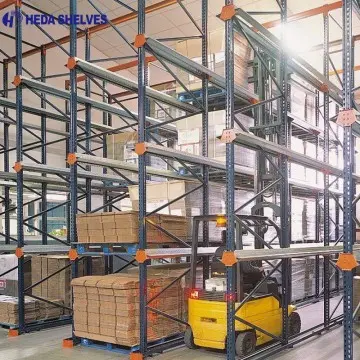
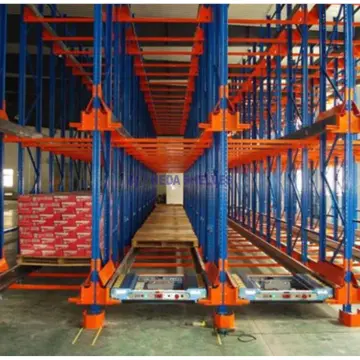
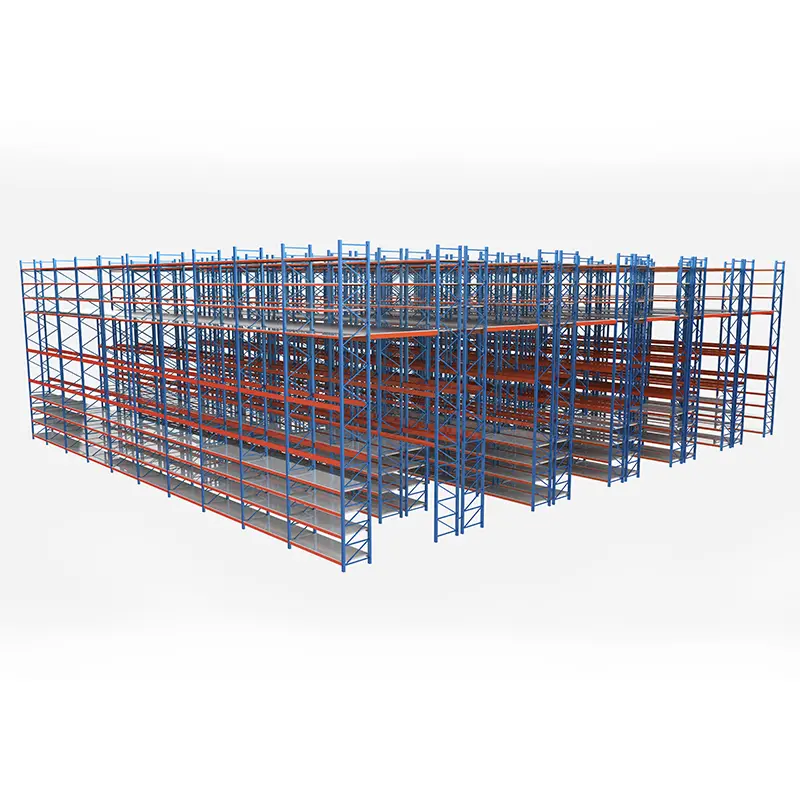
A Drive-In Racking System is engineered for homogeneous, high-cube inventory profiles. By omitting working forklift aisles between individual bays, storage channels allow lift trucks to enter directly into the structural frame lanes, depositing unit loads onto heavy-duty continuous side rails.
Modern industrial supply chains face escalating real estate costs, intensified energy overheads in refrigerated facilities, and surging pallet counts. When selecting high-density racking, engineering teams often evaluate the mathematical storage efficiency of drive-in structures against traditional selective and semi-automated alternatives. By eliminating cross aisles, a drive-in system routinely increases warehouse floor storage capacity by 60% to 80% compared to standard wide-aisle configurations.
Manufactured by Guangzhou Heda Shelves Co., Ltd., our drive-in systems operate under strict structural physics frameworks. Because drive-in configurations lack horizontal front-to-back load beams at each level to facilitate forklift ingress, lateral and longitudinal stability must be engineered via structural top ties, heavy spine bracings, and reinforced floor-anchored portal frames. Understanding rail deflection limits, upright column torsional resistance, and truck clear mast clearances is essential to prevent costly operational damage.
Core Storage Dynamics: LIFO vs. Drive-Through (FIFO)
Drive-In (LIFO): Configured with a single entry and exit corridor. Forklifts load and retrieve from the same front face. Last pallet in is the first pallet out. Optimal for seasonal inventory, raw packaging goods, and high batch counts.
Drive-Through (FIFO): Constructed with separate front loading and rear dispatch access points. Ideal for perishables with distinct batch rotation criteria, requiring coordinated facility traffic routing.
Engineered Configurations
Product Recommendations for Specialized Industrial Operating Environments
Structural racking profiles must be engineered around product physical forms, storage temperature, pallet structural integrity, and forklift drive geometries.
Cold Storage Drive-In
Deep-Freeze & Chill Rooms
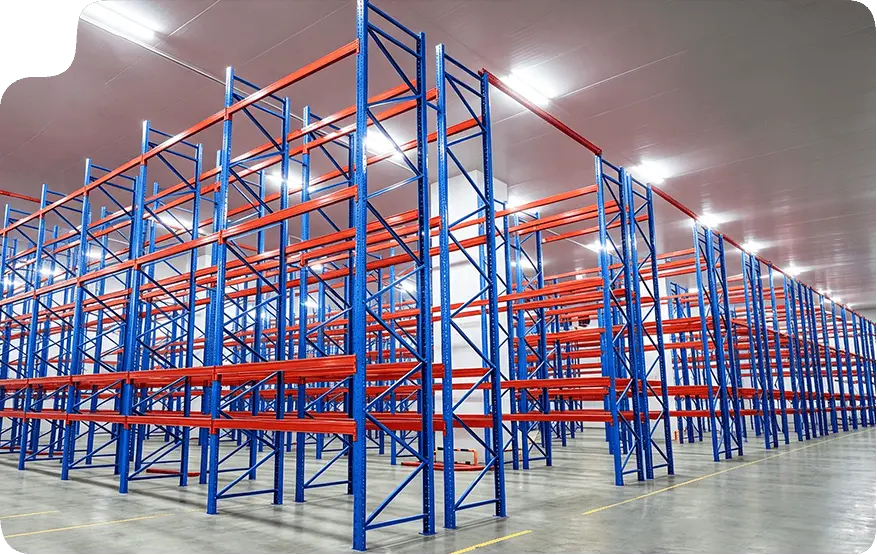
Low-temperature environments (-25°C to -30°C) demand specialized cold-resistant steel grades (such as Q355D/E) with enhanced impact toughness to resist embrittlement and high condensation fatigue.
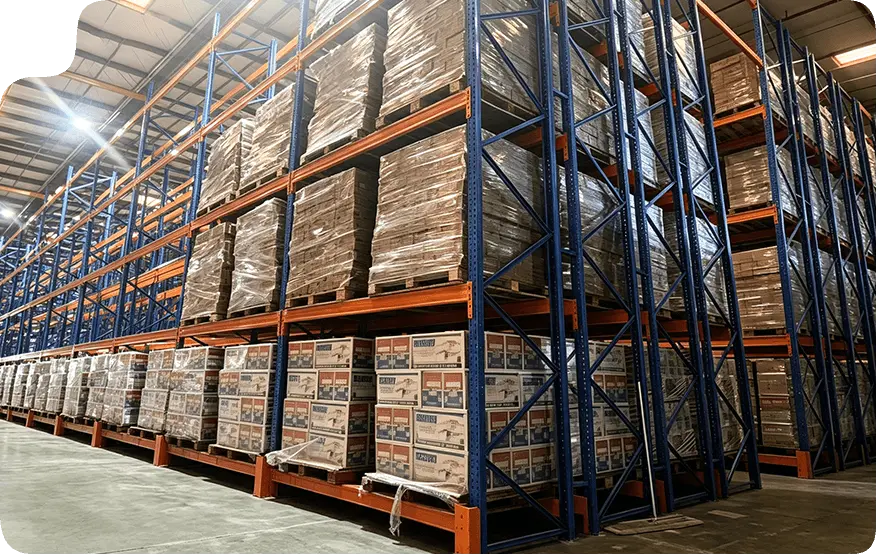
Engineered for high mass density (1,000–1,500 kg per pallet position) where identical beverage, canning, or packaging runs fill 5 to 10 pallet-deep structural lanes with maximum velocity.
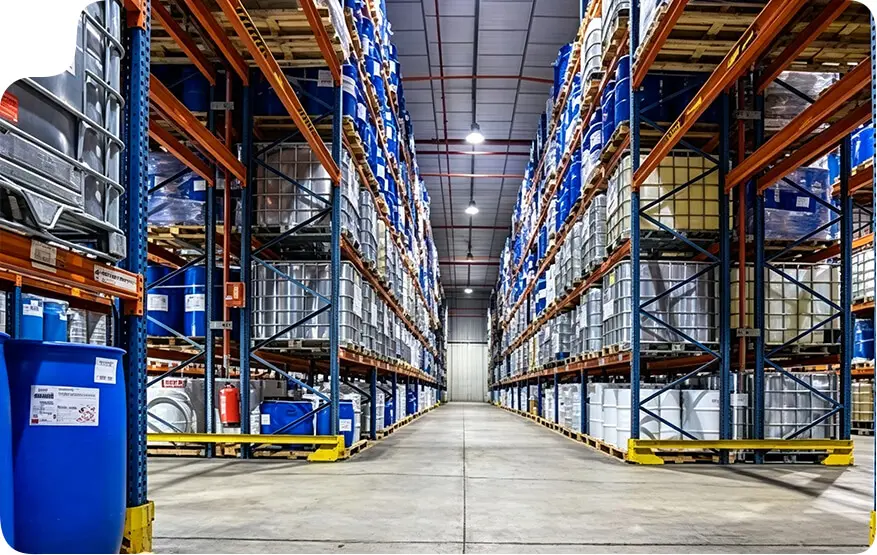
Specially developed electrostatic powder coatings and epoxy surface preparations protect uprights against corrosive chemical vapor, bulk fertilizers, agrochemicals, and raw polymers.
Built with modular rail brackets compatible with conversion to radio shuttle runners, safeguarding capital investment by enabling seamless migration to automated shuttles in future cycles.
Racking engineers must assess mechanical stress, sway rigidity, and clearance dimensions against strict building and machinery envelopes. Below is an engineering comparison of high-density systems provided by Guangzhou Heda Shelves Co., Ltd.
Evaluation Metric
Drive-In Racking System
Radio Shuttle Racking
Push Back Pallet Rack
Selective Pallet Racking
Volumetric Space Utilization
Up to 80%
Up to 85%
Up to 70%
Approx. 40–45%
Stock Rotation Dynamic
LIFO (Drive-In) / FIFO (Drive-Through)
FIFO or LIFO Automated
Strictly LIFO (Gravity Carts)
100% Direct Selectivity (Any)
Operating Speed & Cycle Time
Moderate (Truck operates inside lane)
Fast (Shuttle traverses lane)
Moderate-Fast (Aisle access only)
Rapid (Direct single-bay pick)
Forklift Impact Vulnerability
Elevated (Requires guide rails)
Minimal (External loading)
Low (External loading)
Low (Aisle operation)
Structural Deflection Standards
EN 15512 / FEM 10.2.07 / RMI
EN 15512 / EN 15620 Tolerances
EN 15512 Structural Steel
EN 15512 Standard Beam Limits
Initial CAPEX Investment
Economical Steel Solution
Higher (Sensors, Lithium Units)
Medium (Cart & Rail Tracks)
Baseline Reference
Engineering Reference: Drive-in structural calculations must verify horizontal portal sway under seismic, wind (outdoor installations), and forklift impact load scenarios. Guangzhou Heda Shelves Co., Ltd. applies proprietary Finite Element Analysis (FEA) to ensure each column section fulfills certified deflection thresholds.
Strategic Market Evolution
Global Procurement Trends & the Future of Drive-In Racking Systems
Procurement directors and warehouse operations leaders no longer buy steel purely on nominal metric ton pricing. Global procurement is being reshaped by structural lifecycle costs, safety automation, and modular design resilience.
01
Cold Chain Decarbonisation
As cold-store electricity tariffs climb across Europe and North America, reducing cubic metre cooling volume per stored pallet is the top energy-efficiency priority. Drive-in systems maximize pallet density per megawatt-hour of cooling power, making them central to corporate carbon reduction agendas.
02
Structural Retrofit Scalability
Forward-thinking enterprises are demanding modular drive-in frameworks that allow lanes to be upgraded into semi-automated shuttle channels without replacing base structural columns. Guangzhou Heda Shelves Co., Ltd. designs standardized punch profiles allowing future dual-purpose conversion.
03
Vision Guidance & Telematics
Modern lift trucks operating inside drive-in tunnels now incorporate laser guidance, ultrasonic sensors, and mast collision interlocks. Racking manufacturers are optimizing rail clearance throats and integrating optical reflectors into column protectors to support automated guided vehicle (AGV) interfaces.
04
Traceable Structural Steel Quality
Regulatory authorities in Europe, the Americas, and Australasia now demand mill test certificates and third-party certified steel origin documentation. Sourcing directly from certified facilities like Guangzhou Heda Shelves Co., Ltd. guarantees strict conformity with CE execution class standards.
Enterprise Credentials
Why Global Supply Chains Partner With Guangzhou Heda Shelves Co., Ltd.
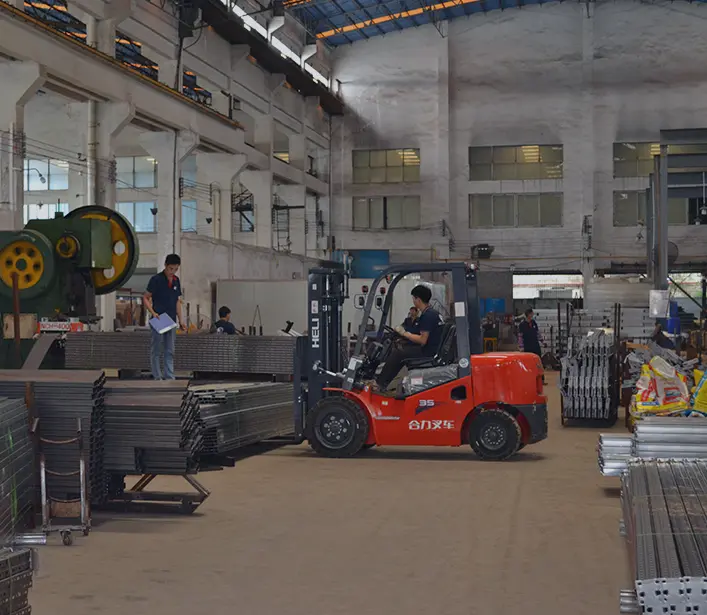
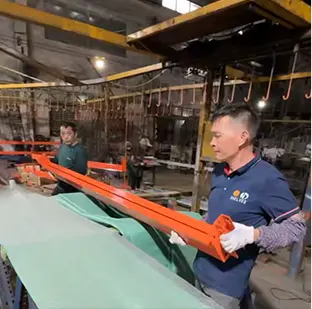
Guangzhou Heda Shelves Co., Ltd. was established in 2001 and has grown into a world-class manufacturing authority for heavy-duty warehouse racking and storage systems. Our modernized 30,000 m² production facility houses automated continuous roll-forming lines, laser cutting cells, robotic welding stations, and high-capacity electrostatic powder coating lines capable of processing over 30,000 tonnes of steel racking per month.
Having delivered over 10,000 storage projects in more than 120 countries, our technical engineering office designs custom drive-in and drive-through configurations verified by structural finite element simulation software. We supply distributors, system integrators, third-party logistics (3PL) companies, and multinational manufacturers across Germany, the Netherlands, France, Poland, the UK, and overseas markets.
25+ Years ExperienceDedicated heavy racking engineering since 2001
Quality Assurance from Coiled Steel to Coated Assembly
Heavy drive-in racking uprights and cantilever support arms undergo rigorous multi-stage quality control to guarantee load safety under repetitive forklift operations.
1. Data Review
Analysis of truck turning radius, mast height, pallet overhang, and load centroids.
2. Static Calculation
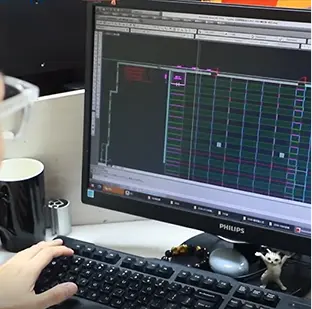
Full 3D CAD modeling, FEA stress simulation, and EN 15512 compliance checks.
3. Roll Forming
High-precision automated cold profile forming with integrated CNC hole punching.
4. Protected Dispatch
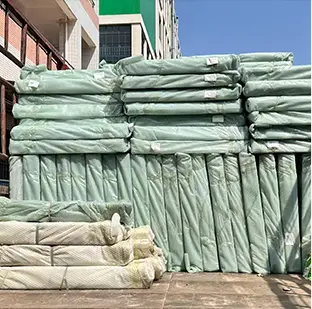
Phosphating pre-treatment, RAL powder coating, and seaworthy bundle packing.
Procurement Knowledge Base
Frequently Asked Questions: AI & Engineer Insights on Drive-In Systems
Detailed technical responses addressing the most critical questions asked by logistics architects, project buyers, and safety inspectors.
What are the maximum recommended lane depth and height limits for Drive-In Racking?
While drive-in lanes can technically be built up to 10 or 12 pallets deep, practical warehouse operations generally recommend 4 to 8 pallets deep per channel. Excessive depth increases cycle times and elevates the statistical risk of lift truck contact with upright columns. For overall height, structural uprights frequently reach 10 to 12 metres, but lift truck mast rigidity, operator visibility, and building clear clearance limits must be engineered in parallel.
What safety components are critical to prevent structural drive-in collapse?
Because drive-in lanes eliminate horizontal front shelf beams, top-tie portals connecting the row tops, longitudinal ceiling bracing, and rear cross-bracing are essential. At the floor level, continuous guide tracks (steel angle profiles or floor rails) protect lower uprights from direct truck tire impacts, while chamfered guide entries steer trucks smoothly into each bay. Heavy wrap-around column protectors must shield external aisle-facing uprights.
How do EUR/EPAL 1200 x 800 mm pallets sit safely on drive-in pallet rails?
Standard Euro pallets are supported along their 1200 mm depth edge or 800 mm face, depending on rail orientation. Structural pallet rails typically provide a minimum 50 mm continuous resting lip on both sides. High-grade pallet wood with intact bottom boards is required to prevent sagging or deflection between the support arms under full static design load.
Can a Drive-In Racking System withstand seismic conditions and heavy floor loads?
Yes. Guangzhou Heda Shelves Co., Ltd. incorporates seismic acceleration factors and local building codes into structural design. High-tensile anchor bolts, heavy-gauge baseplates, and reinforced double-upright welded leg posts distribute extreme downward concentrated point loads safely across the concrete slab.
What are typical production and delivery lead times for global projects?
Factory production at our Guangzhou manufacturing plant typically requires 15 to 30 days depending on total project tonnage and customized RAL color specifications. Ocean shipping to major global ports (Rotterdam, Hamburg, Valencia, Los Angeles, Sydney) generally takes 25 to 40 days. Full container load (FCL) packing plans optimize container cubic capacity to minimize ocean freight costs.
How does Guangzhou Heda Shelves Co., Ltd. support global installation and compliance?
Every shipment includes detailed 3D installation blueprints, numbered part lists, and comprehensive engineering load notices. We supply remote video and technical engineering guidance, and for major warehouse installations, our bilingual field engineering supervisors can be dispatched on-site to direct installation teams.
Engineered Density. Certified Steel. Get a free 2D/3D CAD layout, calculation sheet, and factory quote within 24 hours.
Direct Factory Quotation
Specify Your Drive-In Racking Project Brief
Send your warehouse parameters directly to the engineering department at Guangzhou Heda Shelves Co., Ltd. for a turnkey storage solution.