0%

Choosing among China’s best Warehouse Racking System suppliers starts with the work your facility must perform. A pallet rack for fast-moving cartons has different demands from a system storing heavy, slow-moving goods. Measure clear height, aisle width, pallet dimensions, forklift turning space, and floor condition before comparing quotations. Small omissions matter. A beam that fits the drawing may still obstruct a sprinkler line or leave too little clearance for a forklift.

MHI’s 2024 Annual Industry Report found that 55% of surveyed respondents planned to increase supply-chain technology investments. That figure signals ongoing attention to warehouse operations, but it does not measure demand for racking or verify any supplier. Treat it as context, not proof. Martin Christopher, professor emeritus at Cranfield School of Management and a supply-chain author, wrote, “Supply chains compete, not companies.” His point is useful here: racks are part of a working system, not a standalone purchase. The Rack Manufacturers Institute’s ANSI MH16.1 standard covers the design, testing, and use of industrial steel storage racks. Ask suppliers how their engineering and documentation address applicable standards, stated load capacities, and your site conditions.

Price alone is a poor test. Request project drawings, load calculations, material specifications, production records, and references for comparable installations. Check how the supplier handles installation guidance, inspection questions, and replacement components. A polished catalog proves very little. Even a careful checklist has limits; site measurements and qualified engineering review still matter. This guide compares Chinese suppliers through practical criteria, while recognizing that one supplier will not suit every warehouse.
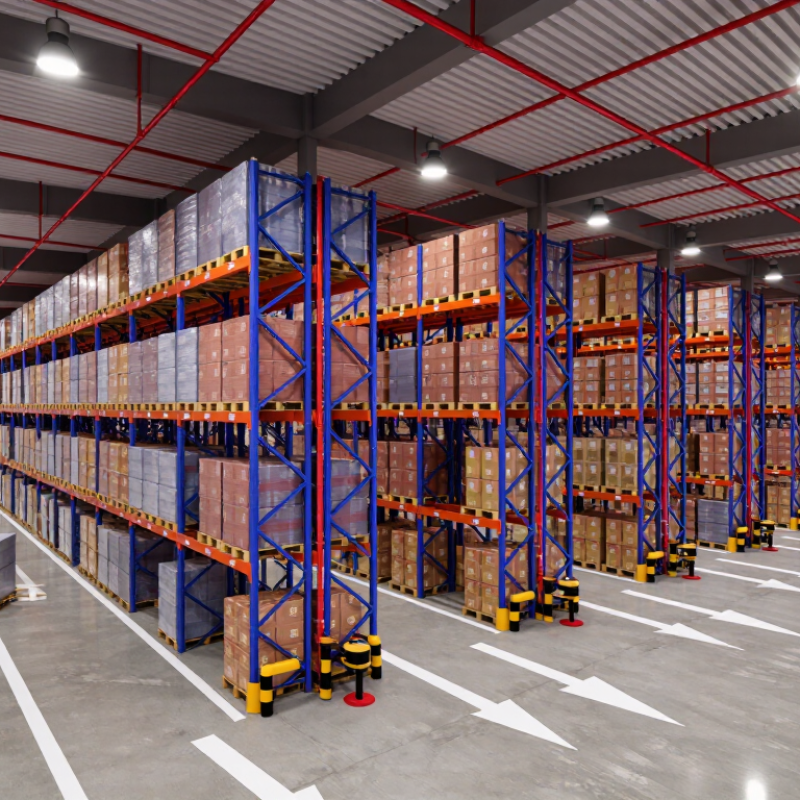
China Best Warehouse Racking System Suppliers?

Understanding China’s Warehouse Racking Supplier Landscape

China Best Warehouse Racking System Suppliers?

Understanding China’s Warehouse Racking Supplier Landscape

China’s racking market includes steel fabricators, specialist storage-system manufacturers, and automation integrators. Their capabilities differ. Some focus on selective pallet racks for forklift access; others design drive-in, shuttle, or automated systems. Buyers should compare engineering support, production controls, installation experience, and spare-parts availability—not just quoted price.

The World Bank’s Logistics Performance Index 2023 ranked China 19th, with a score of 3.7 out of 5.

This reflects the wider logistics environment, not the quality of any individual supplier. MHI’s 2024 Annual Industry Report found that 55% of surveyed organizations planned to increase supply-chain technology investment. That trend makes compatibility with conveyors, scanners, and warehouse software worth checking early. Ask for drawings, load calculations, steel specifications, and clear inspection records. A neat catalogue is not enough.

For a real comparison, request references for projects with similar bay heights, pallet weights, and floor conditions. Check how the supplier handles uneven floors and protects upright frames near busy forklift lanes. Small details matter. Confirm who coordinates installation and who responds when a beam is damaged. These checks take time, and supplier documents can be difficult to compare. That limitation deserves attention. A low initial quote may exclude design changes, transport, or commissioning, so compare the complete project scope before deciding.

Common Racking Systems Offered by Chinese Manufacturers

Chinese manufacturers commonly offer selective pallet racking, drive-in systems, double-deep racks, push-back racks, pallet-flow lanes, cantilever racks, and steel mezzanines. Selective racks suit mixed SKUs because each pallet remains directly accessible. Drive-in designs store more pallets in less floor space, but forklifts enter the rack lanes, so traffic control and impact protection matter. For long steel bars or timber, cantilever arms provide clear, adjustable storage.

The choice depends on more than warehouse size. Check pallet dimensions, load weight, forklift turning radius, floor flatness, and required aisle width before comparing quotations. Small details matter. Beam connectors, upright thickness, bracing, and anchor specifications affect stability; ask suppliers for load tables and installation drawings, not only a price per bay. MHI and Deloitte’s 2024 Annual Industry Report found that 55% of surveyed companies planned to invest more than $1 million in supply-chain technology over the next two years. That figure reflects broad technology investment, not rack purchases, but it signals rising pressure to use warehouse space efficiently.

High-density systems can increase storage capacity, yet they may reduce selectivity or slow access. Pallet-flow racks also need suitable pallets and consistent loading; uneven pallets can disrupt movement. Not always. A lower-cost layout may prove costly when product mixes change. Request a site-specific design and verify the proposed loads against actual operating conditions.

Criteria for Assessing Supplier Quality and Capabilities

When comparing warehouse racking suppliers, assess engineering depth, not just price per bay. Ask for project-specific load calculations, clear beam and upright specifications, steel traceability, and documented weld inspections. Drawings should state the assumed pallet weight, load distribution, and floor conditions. Check that the design follows the applicable edition of ANSI MH16.1 and addresses seismic or corrosion risks where relevant. Details matter.

A supplier’s installation and inspection support also deserves scrutiny. Request a site survey, installation method, handover records, and a clear process for reporting damaged uprights. The U.S. Bureau of Labor Statistics’ 2022 Survey of Occupational Injuries and Illnesses reported 4.8 recordable cases per 100 full-time workers in warehousing and storage, versus 2.7 across private industry. This does not measure rack failures, but it underlines why safe access, sound installation, and worker training belong in supplier evaluation.

Check references for projects with similar loads, aisle widths, and operating conditions. Ask how replacement parts are identified and how quickly technical questions receive a written answer. A polished brochure proves little. A sample calculation and a transparent inspection record reveal more. I would still question any promise of “maintenance-free” storage: impacts, layout changes, and uneven floors can alter real conditions. No checklist catches everything. Evaluate the supplier’s evidence, then verify it against your own site.

China Best Warehouse Racking System Suppliers? - Criteria for Assessing Supplier Quality and Capabilities

Supplier Evaluation Scorecard — Use the same project specifications and evidence requirements for every supplier. The weights below are a practical comparison framework, not ratings of specific companies.

Assessment Dimension Weight What to Assess and Verify Strong Evidence / Practical Benchmark Score (0–5)
Structural engineering and design 20% Check load calculations, rack configuration, connection design, stability, and design assumptions for the specified site and operating conditions. Project-specific calculations and drawings; clearly stated load limits and assumptions; design reviewed against applicable local codes and relevant standards, such as EN 15512 where applicable. ____
Material quality and traceability 15% Review steel grades, thickness tolerances, incoming-material checks, and the ability to trace materials through production. Material test certificates or equivalent records; documented inspection procedures; traceable batch or lot records linked to delivered components. ____
Manufacturing and process control 15% Assess forming, welding, punching, dimensional checks, equipment maintenance, and inspection records. Documented quality-control checkpoints; calibrated measurement equipment; consistent component dimensions; corrective-action records for nonconformities. ____
Welding and connection quality 10% Check welding procedures where relevant, workmanship controls, connection fit, and inspection or testing records. Defined acceptance criteria and documented inspections; qualified procedures or personnel where required by the project specification and applicable rules. ____
Coating and corrosion protection 8% Match the finish to the operating environment; review surface preparation, coating process, coverage, and inspection method. Written coating specification; stated coating type and thickness requirements; inspection results and sample panels or representative finish samples. ____
Standards, testing, and compliance 10% Confirm which standards and regulations apply to the destination market, rack type, and project. Check that test reports match the proposed product. Relevant, current documentation; reports from an appropriately qualified testing body where required; standards identified by edition and scope. Examples may include EN 15512, EN 15620, and EN 15635 where applicable. ____
Customization and system compatibility 7% Evaluate fit with pallet sizes, forklifts, aisle widths, building constraints, automation interfaces, and future expansion needs. Layout drawings based on verified site data; documented interface details; clear identification of any limits on compatibility or future modifications. ____
Delivery, packaging, and project coordination 5% Review production planning, shipment documentation, export packing, component labeling, and communication during project changes. A project schedule with stated milestones; packing and labeling plan; clear responsibilities for shipping documents and issue escalation. ____
Installation guidance and after-sales support 5% Check installation instructions, spare-parts availability, warranty terms, response process, and support for inspections or repairs. Written warranty and service terms; illustrated installation and inspection guidance; defined contact and response channels. ____
Commercial transparency and total cost 5% Compare scope, exclusions, payment terms, packaging, freight assumptions, installation costs, and lifecycle considerations. Itemized quotation tied to the approved specification; explicit exclusions and delivery terms; documented change-order process. ____
TOTAL 100% Weighted result = sum of (criterion score ÷ 5 × criterion weight). Verify critical safety and compliance requirements separately; a high total score does not replace technical approval. ____ / 100
Scoring guide: 0 = no evidence; 1 = major gaps; 2 = partial evidence; 3 = meets stated requirements; 4 = strong, verified evidence; 5 = comprehensive evidence with project-relevant validation.

Comparing Leading Warehouse Racking Suppliers in China

Comparing leading warehouse racking suppliers in China means looking beyond price lists and polished catalogs. Suppliers may offer selective pallet racks, drive-in systems, or shelving, but their engineering support can differ. Ask for a layout based on your pallet dimensions, forklift turning radius, and expected storage height. Details matter. A beam that looks suitable on paper may not fit your actual load or handling routine.

Compare how clearly each supplier explains rated capacities, steel specifications, surface finishes, and installation requirements. Request load tables and drawings, then have a qualified engineer check them against site conditions. Good suppliers also ask about floor quality, seismic considerations, and future layout changes rather than quoting from a single photo. Ask what inspection records and replacement parts they can provide. These answers help distinguish practical support from sales promises.

Factory visits or independent inspections can offer useful evidence, though one visit cannot confirm every production batch. Check sample welds, coating consistency, and the fit of beam connectors. Small mismatches matter. Communication is another real test: can the supplier revise drawings after you correct a column spacing measurement? I would not choose on the lowest quotation alone; I once underestimated how much clearer installation instructions could reduce on-site confusion. Compare the full scope, including packing, delivery terms, installation guidance, and after-sales response.

How to Select and Verify a Chinese Racking Supplier

Selecting a Chinese warehouse racking supplier starts with the load, not the catalogue. Share pallet dimensions, maximum weight, forklift type, aisle width, and ceiling height. Ask for drawings that show beam levels, frame spacing, and floor anchors. A polished quotation is useful, but it cannot replace engineering details. Small details matter.

Check whether the supplier can provide material specifications, load calculations, inspection records, and clear installation guidance. Compare the proposed steel thickness and finish with your requirements. Ask how load capacity changes when beam levels or bay widths change. Then request a live video walkthrough of production and quality checks. Photos alone prove little. If possible, arrange an independent inspection before shipment; it adds time and cost, but may reveal inconsistent welds or coating damage.

Verify the supplier’s experience with projects similar to yours. Request customer references, then ask about delivery accuracy, installation support, and how issues were handled. Review the contract for agreed specifications, packing details, replacement procedures, and warranty terms. Keep drawings and approvals in writing. I would not rely on a single impressive factory visit; it can create confidence without answering every question. Some checks may still be imperfect, so record what remains uncertain before approving production.

China Warehouse Racking Supplier Selection: Check Pallet Compatibility

Confirm that the supplier’s rack design matches the dimensions of your unit loads. These are two common nominal pallet footprints recognized in ISO 6780; the 1200 × 800 mm size is also specified for EUR pallets in EN 13698-1.

Supplier check: Ask for a rack layout and load calculations based on your actual pallet dimensions, load weight, handling equipment, and required clearances. Pallet dimensions alone do not determine rack capacity.

FAQS

What types of warehouse racking suppliers operate in China?

Some fabricate steel racks, while others specialize in storage systems or warehouse automation. Their capabilities vary.

What should buyers compare beyond the quoted price?

Compare engineering support, production controls, installation experience, and spare-parts availability. Check the full project scope. A low quote may exclude transport or commissioning.

What technical documents should a supplier provide?

Request drawings, project-specific load calculations, steel specifications, and inspection records. Check the assumed pallet weight and floor conditions. A catalogue is not enough.

How can buyers assess whether a rack design suits their site?

Compare references from projects with similar bay heights, pallet weights, aisle widths, and floor conditions. Ask how uneven floors are handled. Details matter.

What should buyers check about installation and after-sales support?

Confirm who coordinates installation and provides handover records. Ask how to report a damaged upright and identify replacement parts. Get response expectations in writing.

Why should warehouse technology compatibility be checked early?

Racking may need to work with conveyors, scanners, or warehouse software. Raise these requirements during design discussions, not after installation.

How can buyers evaluate a supplier’s safety practices?

Ask about site surveys, installation methods, safe access, and worker training. Check how upright frames are protected near busy forklift lanes. No checklist catches everything.

Is “maintenance-free” storage a promise buyers should trust?

Treat that claim cautiously. Forklift impacts, layout changes, and uneven floors can affect rack conditions. I would still double-check the site details.

Conclusion

This article explores China’s warehouse racking supplier landscape and the range of storage solutions offered by local manufacturers. It introduces common options, including selective pallet, drive-in, cantilever, and multi-tier systems, and explains how different designs can support varied storage needs, facility layouts, and material-handling workflows. The Warehouse Racking System selected should align with the goods being stored, available space, and expected operational demands.

The article also outlines practical ways to assess supplier quality and capabilities, such as reviewing manufacturing experience, engineering support, material specifications, production processes, and communication. It compares suppliers by their product range, customization capacity, service, and ability to meet project requirements, then describes steps for selecting and verifying a supplier. Buyers can use these criteria to compare proposals, clarify technical details, and make a well-informed choice for a safe, reliable, and efficient warehouse.

Evelyn

Evelyn

Evelyn is a professional marketing specialist with a strong understanding of customer needs, market trends, and product development. As a key member of the company’s marketing team, she combines strategic insight with practical experience to communicate the value of the company’s solutions clearly......