Choosing a Pallet Storage Racking System is not simply a matter of counting pallets and filling empty floor space. It is a decision about safety, access, product flow, and future growth. A rack may look efficient on paper, yet create blocked aisles or difficult picking conditions in daily operations.
Experienced warehouse consultant Roberto Michel has often stressed the practical side of storage design: “The best storage system supports safe, repeatable work, not just maximum capacity.” That principle matters when comparing selective pallet racking, drive-in systems, push-back racks, and automated solutions. Each option changes how workers reach goods, rotate inventory, and respond to damaged pallets.
The right Pallet Storage Racking System should match pallet dimensions, load weights, forklift types, ceiling height, and inventory turnover. It should also allow clear inspections. Look closely at beam deflection, upright protection, aisle width, and floor condition. Small details matter.
Future expansion deserves attention too. A system designed for today’s volume may become restrictive within a year. That mistake is common.
Reliable selection also requires qualified rack suppliers, accurate load data, documented inspections, and installation by trained professionals. Local safety requirements must be checked before purchase. A cheaper rack is not automatically a better investment.
There is no universal answer.
This guide will explain how to compare rack configurations, calculate practical capacity, evaluate access requirements, and avoid costly design assumptions. It will also question a tempting idea: using every available cubic meter may not produce the most productive warehouse.
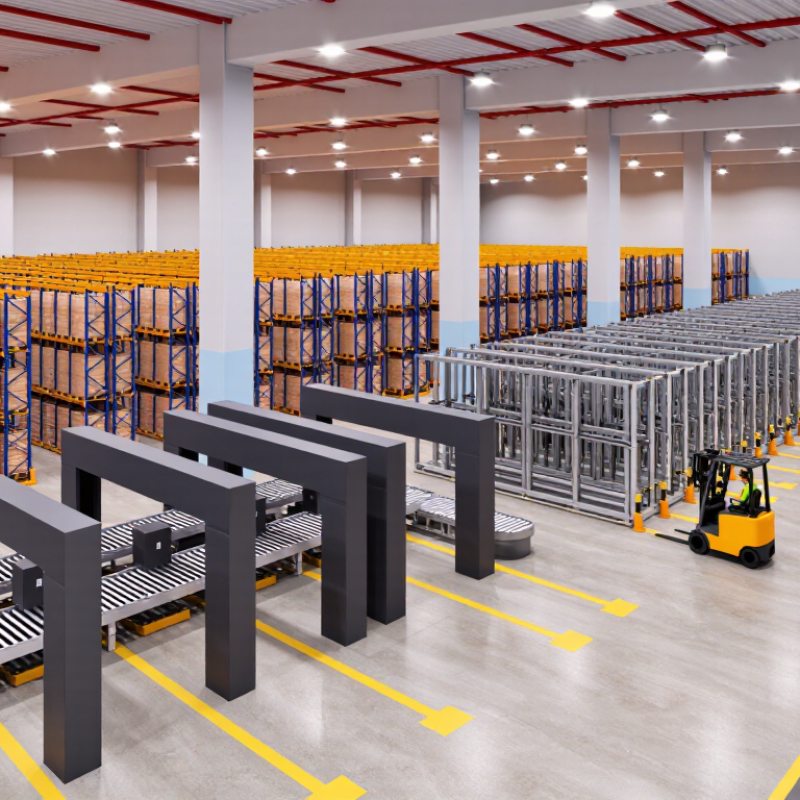
Define Storage Requirements and Warehouse Constraints
How to Choose a Pallet Storage Racking System?
Define Storage Requirements and Warehouse Constraints
Start with the pallet, not the rack. Record pallet length, width, height, weight, and load stability. Measure actual warehouse columns, doors, floor levelness, lighting, and sprinkler clearance. Walk the floor during peak activity. Empty aisles can hide serious congestion.
Calculate the number of pallets needed today and within three years. Separate fast-moving products from reserve stock. A narrow aisle may increase capacity, but it can slow forklift movement. Check turning radii with a loaded truck, not an empty one. The U.S. Occupational Safety and Health Administration requires stable storage and safe clearances under 29 CFR 1910.176. Local seismic and fire requirements may add further limits.
Data should challenge assumptions. The 2024 MHI Annual Industry Report, prepared with Deloitte, found that 55% of respondents expected higher investment in supply chain innovation. That does not mean automation belongs in every warehouse. WERC’s 2024 DC Measures report shows leading operations achieving inventory accuracy around 99.5% or higher. Small picking errors can therefore create large financial effects at scale. Use your own order history to test the design. A neat spreadsheet can still lie. Recheck peak-season volume, damaged pallets, and temporary overflow space. Leave room for inspection, repairs, and imperfect human behavior.
Compare Pallet Racking Types and Configurations
How to Choose a Pallet Storage Racking System
Pallet racking should match your inventory, equipment, and warehouse rhythm. Selective racking offers direct access to every pallet and suits many product types. It uses more aisle space, however. Drive-in racking stores pallets deeply and improves storage density. It works best with fewer stock-keeping units and last-in, first-out movement. Push-back systems provide better access than drive-in racks, but they still reduce selectivity. Pallet flow racking supports first-in, first-out rotation through inclined lanes and rollers. It can improve picking speed, although maintenance demands may increase.
Configuration matters as much as rack type. Check pallet dimensions, load weights, ceiling height, aisle width, and forklift turning space. Double-deep layouts increase capacity, but they require suitable handling equipment and careful stock planning. I have seen warehouses gain space and lose efficiency because operators could not reach rear pallets quickly. That trade-off is easy to miss. Every beam, upright, and connector should match verified load data. Professional design review and regular inspections also reduce avoidable risks.
Tips: Map daily movements before choosing a layout. Mark forklift paths on the floor. Leave practical clearance, not only the minimum. Compare storage density with retrieval time. A crowded aisle is not efficiency. Review damaged frames immediately, even when the damage looks minor. If products change often, preserve flexibility. The perfect configuration rarely stays perfect. Reassess it after seasonal peaks, new equipment, or major inventory changes.
Evaluate Load Capacity, Dimensions, and Safety Requirements
Choose pallet racking by measured risk, not appearance. Begin with the heaviest pallet, its load center, and the number of levels. Add the pallet, packaging, and any uneven weight. A 1,000-kilogram pallet may create a higher point load than its label suggests. Confirm beam capacity at the required span, then check the upright frame, base plates, anchors, and floor strength. Capacity tables are useful, but they are not a substitute for site verification.
Dimensions must match real handling conditions. Measure pallet length, width, height, and overhang. Leave clearance above each load and between adjacent pallets. Include forklift turning space, sprinkler clearance, lighting, and pedestrian routes. The 2024 Annual Industry Report from the Material Handling Institute found that 83% of surveyed organizations planned to increase supply-chain technology investment. A digital rack register can support inspections, but a wrong measurement still produces wrong decisions.
Safety deserves a conservative margin. The U.S. Bureau of Labor Statistics recorded 5,283 fatal workplace injuries in 2023, with a rate of 3.5 per 100,000 full-time workers. That figure is not rack-specific, yet it shows why small oversights matter. Inspect for bent frames, loose anchors, missing load signs, and impact damage. Follow OSHA 29 CFR 1910.176(b) and applicable RMI design guidance. I would recheck every drawing after installation. Field conditions often differ from the plan.
Plan Layout, Accessibility, and Equipment Compatibility
Choosing pallet storage racking starts with the floor, not the rack. Measure clear height, column spacing, doors, sprinklers, and walking routes. A useful layout shows pallet positions, loading zones, pedestrian lanes, and emergency access. Keep fast-moving pallets near dispatch, but never sacrifice safe circulation for speed. In one warehouse review, a small aisle obstruction caused repeated forklift stops. The drawing looked efficient. The daily operation did not. Leave room for turning, repairs, and future stock changes. A rigid plan ages quickly.
Accessibility depends on more than aisle width. Check pallet dimensions, load depth, and the reach limits of handling equipment. Forklifts need enough clearance for turning and placing loads without striking frames. Reach trucks may suit narrower aisles, while counterbalance forklifts usually need more space. Confirm these figures with equipment manuals and an on-site trial. Do not rely only on a standard diagram. Floor levelness, rack height, and operator visibility can change the result. Small differences matter.
Equipment compatibility must be verified before installation. Compare rated capacity, beam levels, pallet condition, and lifting height. Include guards where traffic is heavy, and protect vulnerable corners. Check anchoring points and slab strength with qualified professionals. I would also test the busiest route during a normal shift. That test may expose noise, blind spots, or awkward handovers. Not every design will work perfectly. Record the assumptions, review them with operators, and revise the plan when evidence disagrees.
How to Choose a Pallet Storage Racking System?
Compare common pallet-racking options by layout efficiency, pallet accessibility, and compatibility with standard material-handling equipment.
How to read the chart: Selective and pallet-flow systems provide the highest pallet accessibility, while drive-in systems typically achieve greater storage density at the cost of selectivity. Equipment compatibility depends on aisle width, lift height, load capacity, and whether the operation uses counterbalance or reach trucks.
Assess Costs, Compliance, and Future Scalability
How to Choose a Pallet Storage Racking System?
Assess Costs, Compliance, and Future Scalability
A reliable decision starts with total cost, not the lowest quotation. Include steel, delivery, installation, floor preparation, inspections, repairs, and staff training. A rack that looks inexpensive may require costly aisle changes later. Measure pallet weights, dimensions, turnover, and forklift clearances before comparing layouts. Measure twice. Inventory profiles often change faster than forecasts.
Compliance protects people and investment. Confirm published load ratings for every beam and upright configuration. Check floor capacity, anchoring requirements, aisle widths, sprinkler clearances, and local fire and building rules. Qualified installers should provide drawings, fixing details, and handover records. Schedule documented inspections after impacts or modifications. Do not treat a warning label as a substitute for engineering review. Small omissions can become serious operational risks.
Scalability needs a measurable plan. Select components that can accept additional levels without exceeding design limits. Reserve expansion space near shipping doors, but avoid blocking emergency routes. Consider future pallet sizes, seasonal stock, new handling equipment, and possible automation. A modular layout may cost more initially, yet reduce relocation work. “Future-proof” is an imperfect promise. Not always. Recheck demand every six or twelve months, and revise the layout when evidence changes. The best system leaves safe capacity, clear documentation, and practical options for tomorrow’s warehouse.
Conclusion
Choosing the right Pallet Storage Racking System begins with a clear understanding of your warehouse’s storage requirements, available space, ceiling height, floor conditions, and operational workflow. Consider the types and quantities of pallets you handle, then compare suitable racking configurations based on accessibility, density, rotation frequency, and inventory management needs. Each option should be evaluated for load capacity, beam and upright dimensions, pallet size, clearance, stability, and essential safety features.
A practical layout should support smooth movement, efficient picking, emergency access, and compatibility with forklifts or other handling equipment. Beyond the initial purchase and installation costs, assess maintenance, inspection, energy use, and compliance with applicable safety standards. It is also important to plan for future growth by selecting a flexible system that can be expanded, adjusted, or reconfigured as inventory volumes and operational demands change. A well-planned decision balances safety, efficiency, cost, and long-term scalability.