0%

Choosing the right Pallet Storage System starts with understanding how your warehouse actually works. A layout that looks efficient on a drawing may slow down picking when fast-moving items sit behind slower stock. Before comparing rack types, map your pallet sizes, load weights, SKU counts, and daily movement. Note how often inventory turns, too. These details shape whether selective racks, drive-in lanes, push-back racks, or another configuration makes sense.

Space is never free. Measure clear height, aisle width, door locations, columns, and floor conditions, then consider the forklifts and handling equipment already in use. A system must fit the building and support safe, practical access to stored loads. Confirm design assumptions with qualified storage professionals, and have site-specific structural and safety requirements checked before installation. Small details matter.

The uncomfortable part is that there may be no single best answer. High-density storage can save floor space, yet it may reduce direct access to individual pallets. Selective access can simplify retrieval, but it may use more aisle space. The right balance depends on your operation, not on a product label. Also consider future changes: seasonal peaks, new pallet dimensions, or a growing SKU range can make today’s ideal layout feel cramped. A useful plan should explain its trade-offs clearly. If a proposal promises more capacity without discussing access, equipment, and operating patterns, ask for the assumptions behind the numbers. That extra conversation can prevent an expensive mismatch.
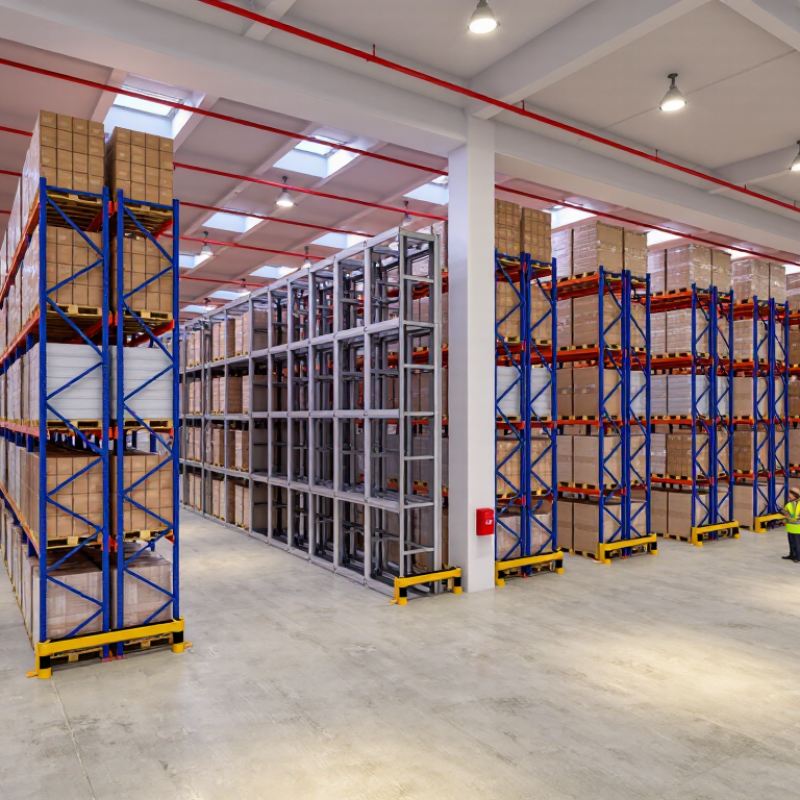
How to Choose the Right Pallet Storage System?

Assess Inventory, Pallet Loads, and Available Warehouse Space

Choosing a pallet storage system starts with the inventory, not the rack catalog. Record how many pallets you store, their dimensions, and how quickly each product moves. A warehouse holding 300 fast-moving pallets needs different access than one holding slow-moving seasonal stock. Track unusual pallet sizes too; averages can hide the awkward ones.

Measure loaded pallets, not just the goods. Include the pallet’s own weight, uneven loads, and any overhang. Then confirm that the proposed beams and uprights are rated for the actual configuration. A simple load chart is useful, but it cannot fix poor placement or damaged components. Leave room for forklift turning and safe handling. Tight aisles may look efficient on paper. They can become frustrating during a busy shift.

Measure clear height, doorways, columns, sprinklers, and floor conditions before planning rack locations. Sketch the space with aisle widths and staging areas included; receiving and dispatch often compete for the same floor. Selective racks allow direct access to many pallet positions, while denser systems can reduce aisle space but may limit access. The best fit depends on inventory rotation and handling equipment. One estimate may still be wrong. Test the layout against a typical busy day, and revise it when real traffic exposes a bottleneck.

Compare Pallet Storage Systems and Their Operating Principles

Pallet storage systems differ in how they balance access, density, and inventory rotation. The right comparison starts with daily picking patterns, not simply the number of pallet positions. Selective rack keeps every pallet reachable from an aisle, making it useful for varied SKUs and frequent picking. It needs more aisle space. It is simple.

Drive-in rack lets forklifts enter storage lanes and place pallets on rails, creating dense blocks for similar loads. Operators usually retrieve the newest pallet first within each lane. Push-back racks use nested carts. Each new pallet pushes earlier loads farther back, so retrieval generally follows a last-in, first-out pattern. Pallet-flow racks use inclined rollers. As workers remove front pallets, gravity moves the next loads forward, supporting first-in, first-out rotation. Rollers and braking components need regular checks.

Compare these principles against SKU variety, pallet weight, replenishment frequency, forklift dimensions, and required stock rotation. A distributor holding many identical pallets may benefit from deeper lanes, while a warehouse picking mixed products may need direct access. Measure the real loads. Damaged pallet boards or uneven cartons can disrupt smooth flow, even when a layout looks efficient on paper. The first space estimate is often too optimistic; test a representative lane with actual pallets and handling equipment before finalizing the design.

Match Storage Design to Throughput and Equipment Requirements

Pallet storage should match how quickly goods arrive, move, and leave—not just the number of pallets on hand. Track peak-hour pallet movements, order profiles, and replenishment frequency before selecting a layout. High-throughput operations often need direct access to many pallet positions, while slower-moving stock may suit denser storage. More capacity is not always better. A compact system can create queues when several orders need the same lane.

Check the equipment as carefully as the inventory. Measure forklift turning needs, aisle width, lift height, and the actual pallet load, including any overhang. A reach truck may work in narrower aisles than a counterbalance forklift, but only if the floor, rack clearances, and operator workflow suit it. Test the proposed layout against real travel paths. Small conflicts near dispatch can cause repeated delays. Assumptions should be checked on site; drawings can miss awkward corners.

Tips: Record peak movements, not just daily averages. Confirm load dimensions and equipment limits. Mark proposed aisles on the floor, then walk or drive the route. If congestion remains, revise the layout before installation.

How to Choose the Right Pallet Storage System? - Match Storage Design to Throughput and Equipment Requirements

Storage system Pallet selectivity Storage density Throughput fit Typical equipment and aisle needs Best suited to Main trade-off
Selective pallet racking High: each pallet is directly accessible Low to moderate; requires access aisles between rack rows High, with frequent mixed-SKU put-away and picking Counterbalanced forklifts commonly need aisles around 3.3–3.8 m; reach trucks can often work in approximately 2.7–3.2 m, subject to load and truck specifications Operations handling many SKUs, variable order profiles, or frequent pallet retrieval Direct access is flexible, but aisle space limits storage density
Double-deep racking Moderate: the rear pallet is accessed after the front pallet Moderate to high; fewer access aisles than selective layouts Moderate to high when SKU turnover is predictable and pallets are stored in pairs Requires a deep-reach truck or suitable attachment and aisles sized for that equipment Facilities seeking more pallet positions while retaining access to multiple SKUs Some pallets are less accessible; inventory rotation and SKU allocation need planning
Drive-in / drive-through racking Low: pallets are stored in lanes, typically by SKU High; storage lanes reduce the need for access aisles Moderate; best for larger quantities per SKU rather than many individual picks Forklifts enter the rack lanes; the truck, load, lane depth, and rack protection must be compatible High-volume storage of uniform products, especially where space is limited Lane access limits selectivity; drive-in operation generally follows last-in, first-out within a lane
Push-back racking Moderate: each lane is usually assigned to one SKU, with access from the aisle face High; pallets are stored several positions deep on inclined carts or rails Moderate to high for multiple pallets per SKU and replenishment from the front Standard forklifts can load from the aisle; lane depth and pallet dimensions must suit the system Facilities needing compact storage with faster access than deep drive-in lanes can offer Typically operates last-in, first-out within each lane; lane depth affects access and inventory control
Pallet-flow racking Low to moderate: lanes are assigned by SKU, with pallets accessible at the discharge face High; gravity-fed lanes use storage depth rather than additional aisles High for consistent, high-volume pallet rotation and separate loading and picking faces Forklifts load from the replenishment side; gravity rollers or wheels move pallets toward the pick face Fast-moving goods requiring first-in, first-out rotation and frequent pallet picking Requires compatible pallets and careful control of lane loading, braking, and maintenance
Automated pallet-shuttle racking Low to moderate: access is organized by lane, with a shuttle moving pallets within lanes High; deep lanes reduce forklift travel inside the storage structure Moderate to high, depending on shuttle count, lane assignment, and lift-truck replenishment rate Requires powered shuttles, compatible rack lanes, charging or battery procedures, and forklifts to transfer pallets High-density operations with many pallets per SKU and repetitive storage or retrieval cycles Higher system complexity and investment than conventional racking; lane-level access still applies

Planning note: Aisle figures are indicative, not design specifications. Confirm actual aisle and rack dimensions against the selected truck’s turning requirements, pallet size and load, building columns, fire protection, and local safety requirements. Assess throughput using peak-period pallet movements, not average daily volume alone.

Evaluate Capacity, Safety, Flexibility, and Total Cost

Choosing a pallet storage system starts with real capacity, not a catalog figure. Count the pallet positions you need today, then include expected growth and peak-season stock. Measure pallet size, load weight, ceiling height, aisle width, and sprinkler clearance. Measure twice. A high-density layout may add positions, but it can slow access when many SKUs need frequent picking.

Safety depends on the building and daily work, not just rack strength. Confirm loaded capacities with a qualified storage professional, and check floor conditions, anchoring, column protection, and forklift clearances. Keep load ratings visible and train staff to report bent beams or damaged uprights promptly. Small impacts matter. A plan that looks sound on paper may still fail if turning space is tight or loads vary more than expected.

Flexibility and total cost deserve equal attention. Adjustable beams can accommodate changing pallet heights, while selective access may suit fast-moving items better than deep-lane storage. Compare purchase and installation costs with labor, handling equipment, inspections, repairs, and the value of usable floor space. That matters. I would also test the proposed layout against a busy shift, not only an average day; traffic patterns are easy to underestimate. A cheaper system can cost more when it forces extra moves or makes future changes difficult.

How to Choose the Right Pallet Storage System? — Evaluate Capacity, Safety, Flexibility, and Total Cost

Compare common system types across four planning criteria. Scores are illustrative, qualitative ratings (1–5), not measured industry data; actual performance depends on the layout, loads, equipment, and operating practices.

A higher score indicates a more favorable fit for that criterion; for lifecycle cost affordability, a higher score indicates lower expected total cost. Validate rack design, load ratings, fire protection, and local safety requirements with qualified professionals.

Select a System and Plan Its Installation and Future Growth

A pallet storage system should fit the work, not just the available floor space. Start by recording pallet dimensions, load weights, and how often each item moves. Then compare selective racking, which offers direct access, with denser options that may require more handling. The right choice depends on your inventory and equipment. Check forklift turning space, aisle widths, floor capacity, and overhead clearance before settling on a layout. Small measurement errors can become costly.

Plan installation around the building and daily operations. Mark proposed rack positions on the floor, then walk the routes with operators and maintenance staff. Confirm that columns, doors, lights, and fire protection equipment remain accessible. Allow qualified professionals to review structural requirements and installation details. A drawing may look clean. The warehouse rarely does.

Leave room for change. Estimate likely pallet growth and identify where extra bays could go without blocking travel paths or work areas. Modular components can make expansion easier, but adding capacity may still change traffic and loading patterns. Revisit the layout when product sizes or picking routines shift. One forecast will be wrong; build in a way to notice and correct it.

FAQS

What information should I collect before choosing a pallet storage system?

Count pallets, measure their dimensions, and note how quickly each product moves. Include unusual sizes and seasonal stock. Averages can hide awkward loads.

Why should I measure loaded pallets?

Include the pallet’s weight, uneven loads, and any overhang. Compare the actual configuration with beam and upright ratings. Measure twice.

How do I decide between direct access and denser storage?

Direct-access racks suit frequent picking and fast-moving stock. Denser systems can save aisle space, but may limit access. More capacity is not always better.

Which warehouse measurements affect the layout?

Check clear height, doorways, columns, sprinklers, floor conditions, and aisle widths. Include receiving and dispatch areas. Even careful drawings can miss a corner.

How should forklift needs influence rack planning?

Check turning space, aisle width, lift height, and load limits for the equipment in use. Mark routes on the floor and walk them. Test the route.

How can I estimate the capacity I need?

Count current pallet positions, then allow for growth and peak-season stock. Test the layout against peak-hour movements, not only daily averages. Queues are costly.

What safety details should I check?

Confirm rack capacities with a qualified storage professional. Check floor conditions, anchoring, column protection, and forklift clearances. Keep load ratings visible, and report bent beams quickly.

How can I compare the total cost of different systems?

Include installation, labor, equipment, inspections, repairs, and usable floor space. A cheaper system may require extra moves. I might still underestimate future changes.

Conclusion

Choosing the right Pallet Storage System begins with a clear understanding of your inventory, pallet dimensions and weights, stock rotation needs, and available warehouse space. Compare how different systems store and retrieve pallets, then consider how each option fits your required throughput and existing or planned material-handling equipment. A design that suits your daily operating patterns can help balance storage density with efficient access to goods.

Before making a decision, evaluate usable capacity, safety provisions, flexibility, and total cost over the system’s expected lifespan. Consider whether the layout can adapt to changes in inventory or workflow, and allow room for future growth. Once you select a system, plan installation carefully around warehouse operations, equipment access, and staff needs. A well-matched design supports reliable day-to-day performance while making better use of space and resources over time.

Evelyn

Evelyn

Evelyn is a professional marketing specialist with a strong understanding of customer needs, market trends, and product development. As a key member of the company’s marketing team, she combines strategic insight with practical experience to communicate the value of the company’s solutions clearly......