0%

For global buyers, Pallet Racking is more than a steel storage purchase. It is a long-term operational decision involving load capacity, warehouse layout, safety, installation, and local conditions. A system that performs well in a dry European warehouse may struggle in a humid coastal facility or a seismic region. Small details matter. Beam connectors, upright guards, floor quality, and pallet dimensions can change the entire result.

John Mann, a respected warehouse-racking safety specialist, once said, “Every rack deserves respect before it deserves stock.” That principle remains practical. Buyers should request clear load tables, material specifications, inspection guidance, and evidence of quality control. They should also confirm whether the supplier understands local building requirements and installation practices. Do not trust attractive photographs alone.

This guide presents ten Pallet Racking tips for international purchasers. It covers supplier evaluation, steel quality, configuration, safety accessories, shipping preparation, and after-sales support. The advice is practical, but not perfect. Warehouse projects differ, and a checklist cannot replace competent engineering review. That is easy to overlook.

Measure twice.

A credible supplier should ask difficult questions before quoting. What pallet sizes will be stored? How often will forklifts turn? Will future expansion be needed? These answers influence rack depth, aisle width, frame height, and protection requirements. Cost still matters, but the cheapest system may create higher maintenance expenses later. Global buyers should compare the complete lifecycle value, not merely the initial invoice.
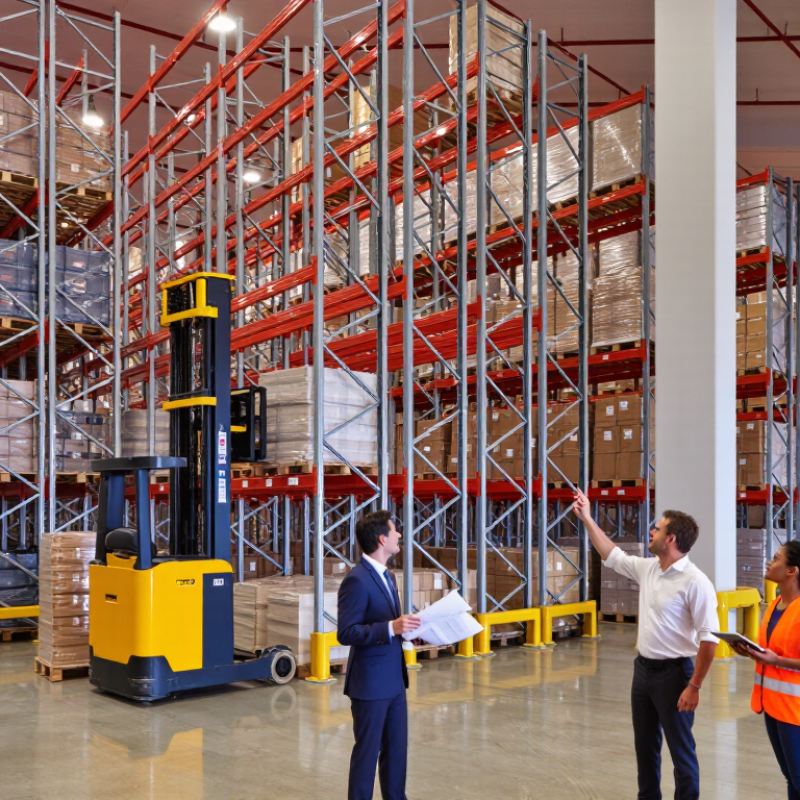
10 Pallet Racking Tips for Global Buyers

Define Your Storage Needs and Pallet Specifications

Before ordering pallet racking, define the goods, pallets, and daily handling conditions. A rack designed for standard pallets may fail your operation if pallet sizes vary.

Record pallet length, width, height, and loaded weight. Include the heaviest realistic load, not the average one. Measure pallet overhang, entry direction, and bottom-board strength. These details affect beam length, frame depth, and support requirements. Leave space for forklift clearance and damaged pallets. Small mistakes become expensive when hundreds of bays are installed.

“ I once reviewed a layout based on a 1,000-kilogram pallet. The actual loads sometimes reached 1,180 kilograms. That early assumption was wrong. We revised the beam capacity and reduced some storage levels. It cost time, but it prevented a more serious problem. Ask suppliers for engineering drawings, rated capacities, material specifications, and installation requirements. Confirm whether capacities apply to each beam level or the complete bay. They are not always the same.

Consider temperature, humidity, floor condition, and future pallet changes. Cold rooms may affect materials and handling equipment. Uneven floors can complicate frame alignment. Keep a physical pallet sample beside the design documents. It reveals issues that spreadsheets miss. Standardization helps, but real warehouses are rarely perfectly standard. Allow controlled flexibility without hiding uncertainty.

Evaluate Rack Types, Dimensions, and Load Capacity

Global pallet rack buying begins with the load, not the catalog photograph. Tip one: identify pallet size, weight, and entry direction. Tip two: compare selective, drive-in, double-deep, and cantilever layouts. Each suits a different flow pattern. Selective racks improve access, while drive-in systems increase density but reduce immediate access. Tip three: measure clear height, aisle width, columns, doors, sprinklers, and floor slopes before requesting prices. A laser measure and marked floor plan can prevent expensive revisions.

Tip four: specify bay width and beam length from actual pallet dimensions. Leave clearance between loads, frames, and neighboring bays. Tip five: calculate unit load, beam, and upright capacities separately. The weakest component controls the safe working limit. Tip six: include pallet overhang, uneven loading, and forklift impact in the assessment. Tip seven: check slab strength and anchor requirements with a qualified local engineer. Site reviews often reveal problems near floor joints. It looked acceptable on paper. It was not.

Tip eight: request engineering drawings, test data, and a clear load plaque. Tip nine: verify coating, corrosion protection, tolerances, and replacement-part availability. Tip ten: confirm inspection routines, installation supervision, and operator training before shipment. Dimensions written in millimeters can still cause mistakes when teams work in inches. Convert and recheck every figure. Do not trust a single capacity number. Ask how it was calculated, under what conditions, and with which beam spacing. A trial bay loaded with representative pallets can reveal blocked aisles or unstable handling.

10 Pallet Racking Tips for Global Buyers

Evaluate rack types, dimensions, and load capacity before selecting a storage system. The chart compares typical working load ranges for common pallet racking configurations.

Key guidance: Select the rack type according to access requirements, warehouse height, pallet dimensions, and inventory turnover. Confirm the rated capacity per beam level, upright frame, and complete bay with a qualified supplier or structural engineer. Actual capacity varies with steel grade, beam span, seismic conditions, anchoring, and local safety regulations.

10 Practical Buying Tips

  1. Match the rack type to pallet access and inventory rotation requirements.
  2. Measure pallet length, width, height, and actual loaded weight.
  3. Allow safe clearance between pallets, beams, uprights, and building structures.
  4. Confirm the rated load per beam level and the total bay capacity.
  5. Check warehouse floor quality, slab thickness, and anchoring requirements.
  6. Review forklift aisle width, lift height, turning radius, and operating method.
  7. Consider seismic, wind, fire protection, and local building regulations.
  8. Specify corrosion protection when racks will be used in humid or cold environments.
  9. Request engineering drawings, load plaques, installation instructions, and inspection guidance.
  10. Plan for future expansion, replacement components, and compatibility between rack parts.

Check Warehouse Layout, Safety Standards, and Installation Needs

10 Pallet Racking Tips for Global Buyers

Check Warehouse Layout, Safety Standards, and Installation Needs

Measure the warehouse before selecting pallet racking. Record ceiling height, aisle width, door positions, and floor conditions. Leave space for forklifts to turn without striking frames. Check lighting, sprinklers, emergency exits, and pedestrian routes. A practical layout often saves more money than cheaper steel.

Tip one: map product flow. Tip two: separate people from vehicles. Tip three: reserve room for future growth. Tip four: confirm the floor can support loaded frames.

Ask for load calculations based on pallet weight, size, and beam levels. Do not rely on an attractive catalogue image.

Tip five: verify upright and beam capacities. Tip six: require clear load plaques. Tip seven: inspect welds, anchors, and protective barriers.

Local seismic, fire, and workplace rules may differ greatly. Use qualified engineers and independent inspections where required. Imported systems still need local approval.

Plan installation before the shipment arrives. Confirm unloading equipment, access routes, assembly space, and working height.

Tip eight: check every component against the packing list. Tip nine: use trained installers and torque tools. Tip ten: schedule a post-installation inspection.

Small errors happen. A missing anchor or uneven frame can become serious later. Recheck damaged parts, aisle clearances, and beam locks after the first loading cycle. Keep inspection records, even when the warehouse feels quiet. Reliable racking depends on disciplined use, not steel alone.

Compare Suppliers, Materials, Pricing, and Delivery Terms

Global pallet racking buyers should compare suppliers beyond catalogue prices. In warehouse audits, the lowest quotation often excludes anchors, protectors, packaging, or unloading fees. Check load ratings, bay dimensions, beam deflection, steel grade, weld quality, coating thickness, and available test documentation. Ask for a sample drawing.

Material quality affects both safety and ownership cost. The World Steel Association reported global crude steel production of about 1.89 billion tonnes in 2023, yet steel grades and forming methods still vary widely. Confirm the stated yield strength, corrosion protection, and inspection process.

Powder coating may suit dry warehouses, while galvanized components can perform better in humid areas. Small details matter.

Compare landed pricing, not factory pricing. Request separate costs for pallets, accessories, packing, inland transport, ocean freight, insurance, duties, and installation. Under Incoterms 2020, clarify who carries transport risk and customs responsibilities. Delivery promises need evidence. The World Bank’s 2023 Logistics Performance Index covered 139 economies and highlighted major differences in customs, infrastructure, and shipment reliability. A cheap supplier with uncertain transit time may create expensive stock delays. Ask for production capacity, port options, milestone updates, and a pre-shipment inspection. Keep a contingency plan. I still see buyers accepting vague lead times because the spreadsheet looks attractive. That shortcut is tempting, but often wrong.

Plan Inspections, Maintenance, Expansion, and Regulatory Compliance

10 Pallet Racking Tips for Global Buyers

Plan Inspections, Maintenance, Expansion, and Regulatory Compliance

A reliable racking plan begins before installation. Measure aisle widths, floor capacity, ceiling height, and forklift turning paths. Record every beam, upright, anchor, and load rating. The U.S. Bureau of Labor Statistics reported 5,283 fatal workplace injuries in 2023. Material-handling risks deserve disciplined controls.

Use daily operator checks for bent frames, missing pins, loose anchors, and damaged guards. A red tag should isolate unsafe equipment immediately. EN 15635 recommends inspections at intervals no longer than twelve months, with shorter intervals when risk increases. Keep dated photographs and repair records. Small damage can become expensive.

Maintenance must follow the original design loads. Do not mix components without engineering approval. During expansion, verify slab strength, fire clearances, sprinkler coverage, seismic demands, and local permit requirements. Regulatory expectations differ across countries. The U.K. Health and Safety Executive recorded 138 worker fatalities in 2023/24, reminding buyers that compliance is practical protection, not paperwork.

Leave room for change. Future pallets may be heavier, taller, or less uniform. An engineer should review revised layouts before purchasing additional bays. I have seen warehouses expand too quickly and lose safe forklift visibility. That mistake is avoidable. A perfect checklist does not exist. It should be reviewed after every impact, near miss, layout change, and inspection finding.

FAQS

What should buyers measure before selecting pallet racking?

Measure ceiling height, aisle width, door positions, and floor conditions. Leave turning space for forklifts. Map product flow before choosing the layout.

How can a warehouse layout improve safety?

Separate pedestrians from vehicles with clear routes and barriers. Check lighting, sprinklers, emergency exits, and forklift turning areas. A wider aisle may cost more, but it can prevent collisions.

How should pallet racking load capacity be verified?

Provide pallet weight, dimensions, and beam levels to a qualified engineer. Verify upright and beam capacities through calculations and test documents. Do not trust attractive catalogue images alone.

What floor conditions matter during installation?

Confirm that the floor supports fully loaded frames. Check for uneven areas, cracks, and suitable anchor points. An uneven frame can become dangerous after loading.

Which supplier details should global buyers compare?

Compare steel grade, yield strength, weld quality, coating thickness, and test documentation. Request a sample drawing before placing an order. Small specifications matter.

What costs should be included in the final price?

Compare landed pricing, not only the factory quotation. Include accessories, packaging, inland transport, ocean freight, insurance, duties, and installation. A cheap quote may exclude anchors or unloading fees.

How can buyers reduce delivery risks?

Ask for production capacity, port options, milestone updates, and pre-shipment inspection. Clarify transport risk and customs responsibilities in the delivery terms. Keep a contingency plan. Vague lead times look harmless, but that judgment can be wrong.

What should happen before and after installation?

Confirm unloading equipment, access routes, assembly space, and working height. Check every component against the packing list. Use trained installers and torque tools. After loading, recheck anchors, beam locks, damaged parts, and aisle clearances. Keep inspection records.

Conclusion

For global buyers, selecting the right Pallet Racking system begins with a clear understanding of storage needs, pallet dimensions, product weights, turnover rates, and future inventory changes. Buyers should compare selective, drive-in, cantilever, and other rack configurations while checking beam lengths, upright heights, aisle widths, and load capacity. The chosen design must fit the warehouse layout, support efficient material handling, and meet relevant safety requirements. Installation conditions, floor quality, access equipment, and local operating practices should also be reviewed before ordering.

A reliable purchasing decision requires more than comparing the lowest price. Buyers should evaluate supplier experience, material quality, protective finishes, production consistency, packaging, lead times, shipping arrangements, and payment terms. Clear documentation for specifications and load ratings is essential. After installation, regular inspections, maintenance, damage reporting, and staff training help preserve safety and performance. Buyers should also plan for future expansion, replacement components, updated operational requirements, and applicable regulatory compliance to ensure the Pallet Racking investment remains practical and dependable over time.

Julian

Julian

Julian is a professional marketing specialist with a strong understanding of the company’s products, customer needs, and evolving market trends. With a practical, research-driven approach, he transforms complex product information into clear, useful, and engaging content for both industry......