0%

Warehouse Pallet Storage Racks can turn scattered floor pallets into clearly defined storage locations. They help teams use vertical space, separate product types, and find stock with less searching. A forklift driver can see the next pallet position. A picker can follow a clearer route. Small changes like these matter during a busy shift.

Industrial engineer Shigeo Shingo is often credited with the warning, “The most dangerous kind of waste is the waste we do not recognize.” That idea applies to warehouse layout: wasted travel, blocked access, and poorly used space can become routine before anyone notices. Well-planned racks can help address these problems, but the right design depends on pallet dimensions, load weights, inventory turnover, equipment, and available aisle space. Details matter.

A rack system is not a cure-all. A layout may look efficient on paper and still feel awkward at the end of an aisle. Safe use also depends on suitable load ratings, clear labels, sound installation, and regular inspection. Those checks deserve attention. This article explores why businesses choose Warehouse Pallet Storage Racks, what benefits they can expect, and which practical trade-offs deserve a closer look before installation.
Why Choose Warehouse Pallet Storage Racks?

What Warehouse Pallet Storage Racks Are and How They Work

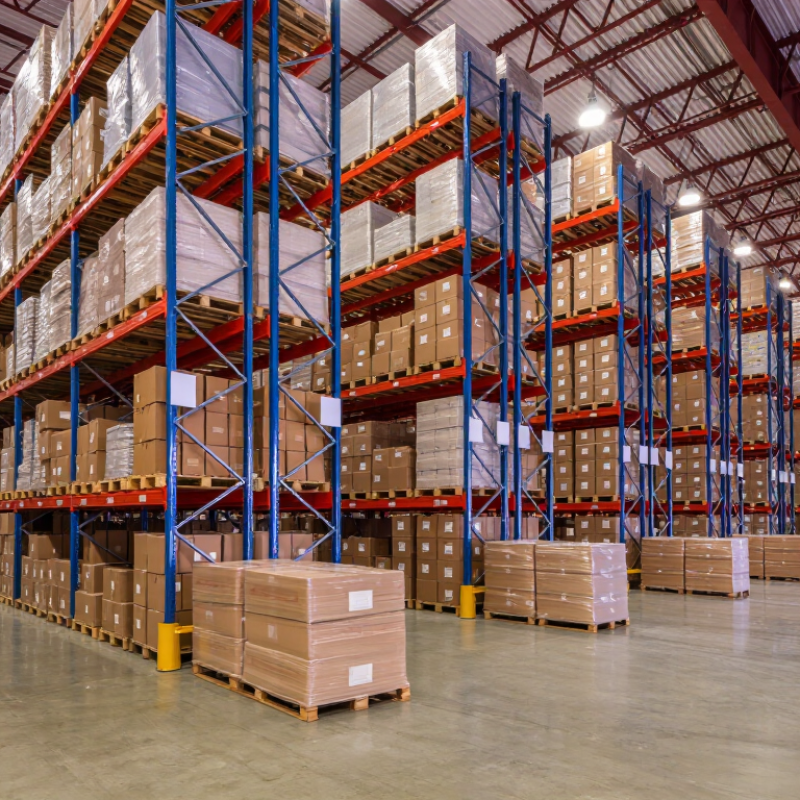
Warehouse pallet storage racks are steel frames that hold palletized goods above the floor. Upright frames carry vertical loads, while horizontal beams support the pallets. A forklift places each load onto a beam level, leaving aisles for access and movement. In a typical selective-rack layout, each pallet position is reachable from an aisle. That makes picking straightforward, but it uses more aisle space than some denser systems.

Rack design changes how stock moves. Drive-in racks let forklifts enter lanes, storing pallets several deep; this increases density but limits direct access to every pallet. Pallet-flow racks use rollers to move loads toward a picking face, often supporting first-in, first-out rotation. The right layout depends on pallet size, load weight, handling equipment, and turnover. Small details matter. Beam connections, floor condition, and clear aisle markings all affect safe daily use.

Warehouse racks are part of a broader shift toward better material-handling infrastructure. MHI’s 2024 Annual Industry Report found that 55% of surveyed supply-chain professionals planned to increase investment in supply-chain innovation over the following two years. That figure does not measure rack purchases specifically, but it shows why storage systems deserve careful planning. A dense layout can look efficient on paper. It may be less practical when forklifts turn, replenish stock, or respond to changing demand. The first design is not always the best one.

Common Types of Warehouse Pallet Storage Racks

Common Types of Warehouse Pallet Storage Racks

Selective pallet racks offer direct access to every pallet position. They suit warehouses with many SKUs and frequent picking, though they use more aisle space. Drive-in racks let forklifts enter deep lanes, storing similar products in compact blocks. They work well for high-volume goods, but access follows a last-in, first-out pattern. Double-deep racks increase density, yet require compatible forklifts and careful inventory planning. Pallet-flow racks use gravity rollers to support first-in, first-out movement for fast-moving, date-sensitive stock. Push-back racks store pallets several positions deep and can improve space use, but may make stock rotation less intuitive.

The right system depends on SKU variety, pallet dimensions, turnover, and forklift clearances. MHI’s 2024 Annual Industry Report found that 55% of surveyed supply-chain professionals planned to increase technology investment. That trend makes it sensible to plan rack layouts around changing workflows, rather than only current stock. Still, higher density is not automatically better; restricted access can slow replenishment. I have seen a tidy plan become awkward when pallet sizes vary.

Tips: Measure loaded pallet depth and aisle width before choosing a system. Mark one proposed bay on the floor, then test forklift turns and picking access with real equipment. Include beam-load signs and inspect racks after impacts.

Key Benefits of Using Pallet Storage Racks

Pallet storage racks turn vertical space into clearly assigned storage locations. Instead of floor-stacked cartons, operators can see pallet positions and retrieve loads with forklifts. That matters. Selective racks keep many products accessible, while denser layouts trade some access for capacity. The right design depends on product turnover, pallet dimensions, aisle width, and load limits. A narrow aisle may look efficient on a plan but become a daily bottleneck.

MHI’s 2024 Annual Industry Report found that 55% of surveyed professionals increased supply-chain technology investment in 2023. That figure covers technology broadly, not pallet racks alone, but it reflects pressure to improve warehouse operations. Labeled bays and consistent locations can make replenishment and cycle counts easier to manage. OSHA’s warehousing guidance also stresses clear aisles, stable loads, and respecting rack capacity. These details matter as much as added storage. One limitation is easy to miss: racks cannot correct inaccurate inventory or poor slotting. Inspect uprights, beams, and anchors regularly; a bent upright should not be ignored.

Why Choose Warehouse Pallet Storage Racks? - Key Benefits of Using Pallet Storage Racks

Benefit How It Helps Operational Consideration
Better use of vertical space Pallets can be stored on multiple beam levels, making use of available warehouse height as well as floor area. Rack height and layout must account for ceiling clearance, sprinkler systems, lift-truck reach, and load requirements.
Organized inventory locations Defined rack bays and levels make it easier to assign, label, and locate pallet positions. Consistent location labeling and inventory records are needed to keep the system accurate.
Direct pallet access Selective pallet rack layouts typically provide access to each pallet from an aisle, supporting operations with many product types. Aisle space is required for lift trucks, so storage density depends on the chosen layout and equipment.
Support for different inventory strategies Rack systems can be configured for different storage and rotation needs. For example, pallet-flow systems can support first-in, first-out (FIFO), while drive-in and push-back systems commonly operate on a last-in, first-out (LIFO) basis. Choose a configuration that matches product rotation, access requirements, and handling procedures.
Scalable storage layout Modular rack components can often be rearranged or extended when storage needs change, subject to engineering and safety requirements. Changes to rack configuration or loading should be reviewed by a qualified rack professional.
Improved separation of goods Assigned bays and levels help separate products by type, lot, destination, or handling requirement. Clear procedures are still needed for lot control, damaged goods, and product segregation.
Clearer material-handling routes A planned rack-and-aisle layout can establish defined travel and picking routes for warehouse equipment. Aisle widths, pedestrian routes, rack protection, and emergency access should be included in layout planning.
More controlled pallet storage Designed rack bays provide designated support for palletized loads and help keep stock off the floor. Rack capacity depends on the structure, beam arrangement, pallet dimensions, and load characteristics; loads must stay within posted limits.

Note: Storage capacity, access, and handling performance vary with rack configuration, warehouse layout, equipment, pallet dimensions, and load limits.

Factors to Consider When Choosing a Rack System

Choosing a rack system starts with the load, not the catalog.

Record pallet dimensions, loaded weight, SKU count, and daily picks; then compare these figures with beam capacity, bay width, and available building height. Measure forklift turning space, too. A rack that fits on paper may leave operators awkwardly maneuvering at aisle ends. Small detail.

Check sprinkler clearance, floor condition, and seismic requirements with qualified professionals.

OSHA’s 29 CFR 1910.176(b) requires stored materials to remain stable against sliding or collapse, so inspect load placement and rack condition as part of the design.

Flexibility matters when inventory changes.

MHI’s 2024 Annual Industry Report found that 55% of surveyed organizations planned to increase supply-chain innovation investment.

That does not prove one rack style suits every warehouse, but it supports planning for change: adjustable beam levels can accommodate shifting pallet heights, while selective layouts offer direct access to each pallet. High-density systems may use space more efficiently, yet can restrict access and complicate rotation.

Compare usable capacity, handling equipment, installation, and inspection needs—not just cost per bay. A marked load rating helps, but it cannot compensate for damaged uprights or uneven loading.

Recheck assumptions against real pallet samples; dimensions in spreadsheets are sometimes optimistic.

How to Match Rack Design to Warehouse Needs

Why Choose Warehouse Pallet Storage Racks?

How to Match Rack Design to Warehouse Needs

A rack plan should start with the work, not the catalogue. Count pallet sizes and weights, then note how many different products need access each day. In a busy picking area, selective pallet racks can keep each load reachable. For fewer product types stored in greater volume, denser systems may use floor space better. The trade-off is access. A neat drawing can still be wrong.

Check the building and the equipment together. Measure clear height, aisle widths, doorways, and the turning space required by forklifts. Confirm floor capacity and rack load ratings with qualified professionals; uneven slabs and heavy loads deserve careful attention. Leave room for sprinklers, lighting, and safe routes. Measure twice. Small errors matter.

Think about stock rotation and future changes, too. If older pallets must leave before newer ones, a flow-through design may suit the process. If product variety changes often, flexible layouts can be more useful than maximum density. I have seen teams focus on capacity and overlook replenishment space. That space is not wasted. Review the layout with the people who load, pick, and inspect it, then revisit it when inventory patterns shift.

FAQS

What are warehouse pallet storage racks?

They are steel frames that store palletized goods above the floor. Uprights carry vertical loads, while beams support pallets.

How does selective pallet racking work?

Each pallet position faces an aisle, so forklifts can reach loads directly. Picking is straightforward. It also requires more aisle space.

How do denser rack systems differ?

Drive-in racks store pallets several deep, using less floor space but limiting access. Pallet-flow racks use rollers to move loads toward a picking face.

What information should guide rack selection?

Record pallet dimensions, loaded weights, product variety, and daily picks. Measure aisle widths and forklift turning space, too. Small details matter.

How can a warehouse check whether a rack will fit?

Compare rack height and layout with building clearance, doors, lighting, and sprinkler space. Check floor conditions and load ratings with qualified professionals.

Which rack design supports stock rotation?

Pallet-flow racks can move older loads toward the picking face first. That may support first-in, first-out rotation, depending on the workflow.

Is maximum storage density always the best choice?

Not necessarily. Dense layouts can restrict access or complicate replenishment. A tidy floor plan can still fail during a busy shift.

How can a rack layout stay useful as inventory changes?

Adjustable beam levels can accommodate different pallet heights. Review the plan with people who load, pick, and inspect stock. Recheck it when product patterns shift.

Conclusion

Warehouse Pallet Storage Racks are structural systems designed to organize palletized goods and make better use of warehouse space. By supporting pallets on beams or specialized supports, they allow products to be stored vertically while remaining accessible for loading and retrieval. Common options include selective racks for direct access to individual pallets, drive-in systems for dense storage, and push-back or flow racks for efficient product rotation. Each design suits different storage volumes, access needs, and inventory patterns.

Choosing a rack system involves considering ceiling height, floor space, pallet dimensions and weight, handling equipment, inventory turnover, and access requirements. The right design can increase storage capacity, improve organization, and support safer, more efficient workflows. Matching rack layout and capacity to a warehouse’s daily operations helps balance density with accessibility, making the storage system practical for both current needs and future changes.

Evelyn

Evelyn

Evelyn is a professional marketing specialist with a strong understanding of customer needs, market trends, and product development. As a key member of the company’s marketing team, she combines strategic insight with practical experience to communicate the value of the company’s solutions clearly......