Industrial-Grade Adjustable Pallet Racking Systems
Custom-fabricated cold-formed structural steel configurations engineered for Euro (1200×800mm) and ISO industrial pallets, tested under stringent finite-element structural analysis.
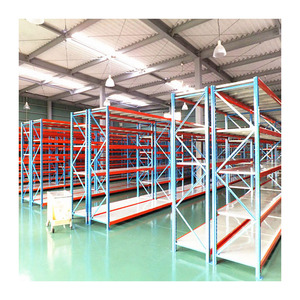
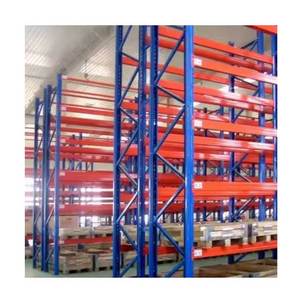
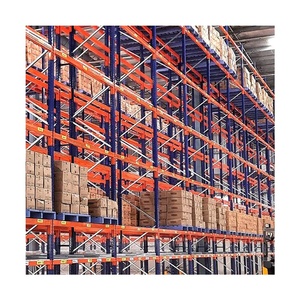
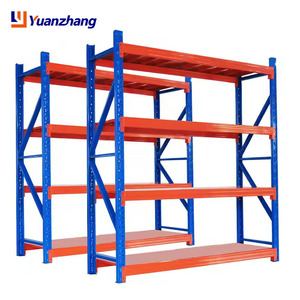
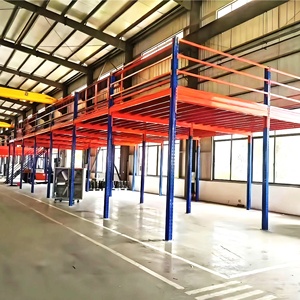
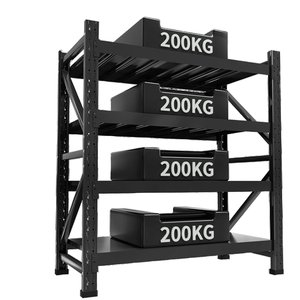
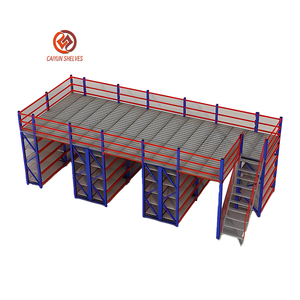
Adjustable Pallet Racking: Structural Mechanics, Metallurgy & Safety Compliance
In modern high-throughput logistics, supply chain infrastructure represents far more than passive physical storage. An adjustable pallet racking system (APR) operates as a load-bearing, semi-rigid structural frame subjected to dynamic material handling forces, cyclic seismic accelerations, and live localized beam deflections. The mechanical integrity of pallet racking systems directly determines occupational safety, pallet turnaround velocity, and facility capital efficiency.
Under European and international engineering standards, racking structures must comply strictly with EN 15512 (Steel static storage systems – Adjustable pallet racking systems – Principles for structural design) and EN 15620 (Tolerances, deformations and clearances). Unlike standardized building construction, pallet racking employs cold-formed thin-gauge open-profile steel columns (such as perforated Omega-shaped uprights) exhibiting distinctive buckling phenomena, including flexural-torsional buckling, distortional buckling, and localized web perforation deformations. As a qualified CE certified racking exporter, structural validation demands physical stub-column testing, base-plate assembly compression tests, and cyclic moment-rotation tests on beam-to-column connector assemblies.
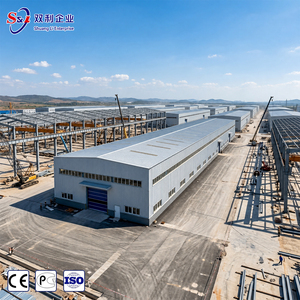
Our engineering manufacturing hub, founded in 2001, operates strictly within the certified scope of CE Certificate No. 2435-CPR-8605159 under the Construction Products Regulation (CPR 305/2011/EU) and ISO 9001:2015 Certification No. 18624Q00169R0M. By controlling the metallurgy from hot-rolled micro-alloyed coil stock (Q235B and Q355B structural grades) through automated continuous cold-roll forming, our production ensures yield tensile strengths exceeding nominal threshold ratings, eliminating brittle failure risks in ambient and cold-chain temperature regimes down to -30°C.
Continuous Omega Profile Section
Uprights roll-formed with up to 13 mechanical bends along the cross-section to optimize the radius of gyration, resisting local torsional buckling under concentrated vertical axial loads.
Patented Interlocking Beam Claws
Beam connectors fabricated with 3-claw to 5-claw interlocking profiles and custom drop-forged safety pins, preventing accidental beam dislodgement under violent upward MHE impact.
Sub-Millimeter Vertical Adjustability
Upright perforation matrix spaced at 50mm, 75mm, or 76.2mm pitch increments enables instant volumetric re-profiling to eliminate vertical head-space wastage when packaging sizes change.
Technical Design Specification Matrix: Selective vs. High-Density Variants
| Racking Typology | Direct Pallet Accessibility | Floor Space Utilization | Standard Load Limit / Tier | Structural Norm | Optimal Logistics Fit |
|---|---|---|---|---|---|
| Adjustable Selective Pallet Racking | 100% Direct Access | 40% – 50% Ground Cover | 800 kg – 4,500 kg | EN 15512 / FEM 10.2.02 | 3PL hubs, multi-SKU retail fulfillment centers |
| Double-Deep Pallet Racking | 50% Immediate Access | 55% – 65% Ground Cover | 1,000 kg – 3,200 kg | EN 15512 / EN 15620 | Staged manufacturing buffer, medium-turnover SKUs |
| Drive-In / Drive-Through System | Last-In, First-Out (LIFO) | 65% – 75% High Density | 1,000 kg – 2,000 kg / pallet | EN 15512 / ISO 9001 | Cold storage freezers, seasonal batch beverage storage |
| Automated Radio Shuttle Racking | Semi-Automated FIFO/LIFO | Up to 85% Volumetric Density | 500 kg – 1,800 kg / shuttle unit | CE Machinery / EN 15512 | Deep-freeze fulfillment, high-velocity bulk FMCG |
| Rack-Supported Mezzanine Floor | Hybrid Pallet + Hand Pick | 200% – 300% Multi-Tier Space | 300 kg – 1,000 kg / m² deck | EN 1090 / Eurocode 3 | E-commerce split-case picking, garment sorting |
Why International Engineers Choose Our Racking Infrastructure
Direct supply-chain integration from our 30,000 m² certified manufacturing base, eliminating middleman markups while enforcing rigorous metallurgical traceabilities.
Structural Engineering Expertise
Over two decades of dedicated racking R&D. Our structural engineers prepare load distribution calculation packages, floor slab anchorage calculations, and finite-element CAD drawings compliant with regional building codes.
Free 3D & DWG Layout Planning
Comprehensive turnkey engineering layouts provided free of charge prior to contract confirmation. We factor in your forklift turning radii (AST), sprinkler clearances, column spacing, and dynamic beam deflection ratios (L/200).
10-Stage Precision Production
Every beam and column passes through automated CNC punching, precision cold-bending, robot-welded end connectors, 9-stage acid pickling & phosphating, and electrostatic powder curing under strict ISO 9001:2015 QC.
Global Export & Port Logistics
Turnkey seaworthy packaging with steel strapping, bubble wrap protective corners, and container load optimization for break-free arrival at major international hubs like Rotterdam, Hamburg, Antwerp, Valencia, and Felixstowe.
Future Sourcing Trends for Warehouse Pallet Racking (2025–2030)
The convergence of omnichannel supply chains, industrial decarbonization, and automation is reshaping procurement criteria across the Americas, Europe, and the Asia-Pacific region.
Low-Carbon Metallurgy and Green Racking Standards
Procurement departments across the European Union and North America increasingly incorporate Life Cycle Assessments (LCA) and environmental product declarations into their tender specifications. With the phase-in of the EU Carbon Border Adjustment Mechanism (CBAM), pallet racking manufacturers must prove low Scope 1, 2, and 3 emissions. Suppliers utilizing scrap-based Electric Arc Furnace (EAF) steel and zero-effluent powder coating processes gain a decisive competitive advantage in corporate ESG audits.
Hybrid Configurations for AMR and AGV Integration
Modern distribution facilities are rapidly shifting away from conventional forklift operations toward Autonomous Mobile Robots (AMRs), Automated Guided Vehicles (AGVs), and Narrow-Aisle (VNA) robotic reach trucks. This transformation requires procurement teams to demand significantly tighter dimensional manufacturing tolerances (EN 15620 Class 300 / 400). Racking uprights now routinely feature bottom guide rail anchorages, QR-code positioning targets, and wire-guidance floor integration.
Circular Repurposing & Reconfigurable Footprints
Logistics operators face shortened warehouse lease cycles and rapid product profile shifts driven by e-commerce SKUs. Rather than purchasing fixed, welded storage systems, forward-looking operations directors invest in modular, bolted adjustable designs. Systems that allow vertical upright splicing, flexible beam-level adjustments without structural torch cutting, and modular conversion into multi-tier mezzanines protect corporate capital expenditure against obsolescence.
Verification of Independent CE Declaration of Performance (DoP)
Municipal building inspectors and occupational safety authorities (such as EU OSHA and UK HSE) are cracking down on uncertified racking imports. Future tenders strictly demand an authentic CE Declaration of Performance (DoP) referencing harmonized structural manufacturing standards. Non-compliant steel racking faces site-closure orders and refusal of warehouse insurance underwriting, solidifying tier-one suppliers as the only risk-free procurement pathway.
Technological & Material Advances in Industrial Storage Systems
How cutting-edge structural simulation, high-yield alloys, and smart sensing are transforming traditional static racking frames.
High-Strength Micro-Alloy Steels
Adoption of advanced thermomechanically rolled Q355B and high-yield steel coils allows a 15% reduction in overall structural dead-weight while maintaining identical payload capacity, dramatically lowering shipping container freight costs per stored pallet position.
IoT Impact & Deflection Telemetry
Integration of wireless tri-axial accelerometers and strain gauge sensors at critical upright baseline anchorages allows real-time structural health monitoring (SHM), automatically alerting management to forklift impacts and dangerous beam overloading.
Eco-Powder Curing & Anti-Corrosion
Modern curing lines utilize TGIC-free polyester powders cured at lower cross-linking temperatures, paired with automated zinc phosphate pre-treatment to deliver salt-spray resistance exceeding 500 hours for high-humidity and agricultural storage environments.
Frequently Asked Questions: Global Sourcing & Compliance
Direct technical answers addressing structural calculations, clearance tolerances, customs documentation, and assembly verification.
Can HEDA Shelves adjustable pallet racking be engineered for European Euro-pallets (EUR 1200 × 800 mm)?
What specific CE certification and structural calculations accompany export shipments?
What is the typical production lead time and shipping duration to major European and global ports?
How is structural deflection calculated and what is the allowable vertical limit?
What parameters are needed for an accurate structural design proposal and quotation?
Do you manufacture OEM and custom RAL powder coatings for regional distributors and racking installers?
Transform Your Warehouse Volumetric Capacity Today
Speak directly with our senior racking structural engineers. Submit your warehouse floor plan and receive an engineered 3D layout, load deflection analysis, and factory-direct quotation within 24 hours.