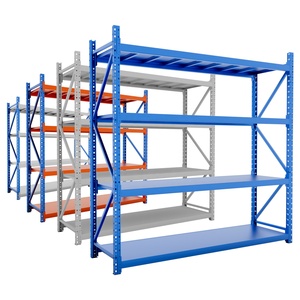
Factory Direct 4-Layer 800kg Medium Heavy Duty Pallet Racking System Steel Adjustable Longspan Warehouse Storage Pallet Racks
800kg/Layer
Adjustable Pitch
CE Compliant
Direct factory-manufactured racking profiles designed for European and international warehouse configurations, verified for heavy payload stability.
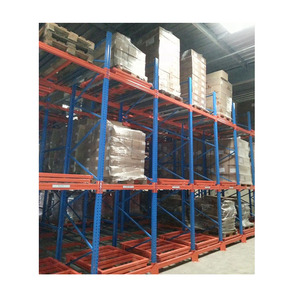
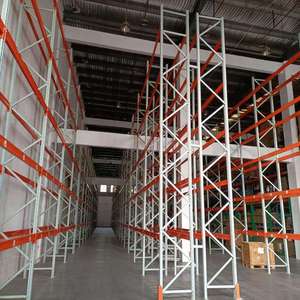
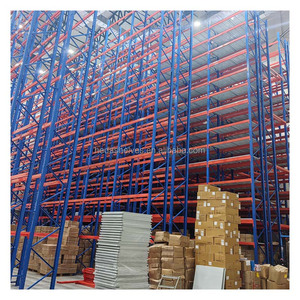
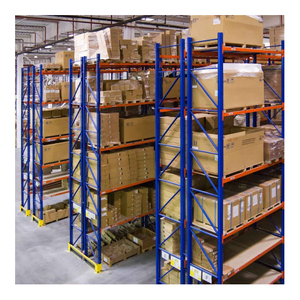
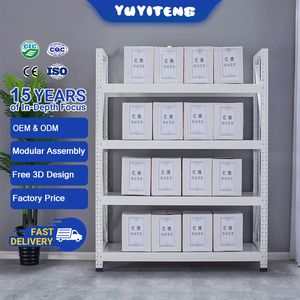
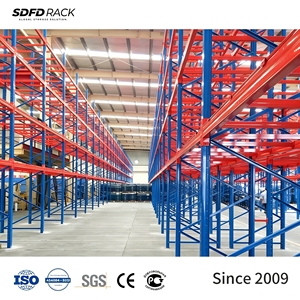
Drive-In and Drive-Through racking configurations embody the pinnacle of space-utilization efficiency within static industrial warehousing. Operating on continuous pallet rails rather than horizontal load beams, these systems eliminate intermediate operating aisles to consolidate up to 80% more storage volume within an identical spatial footprint compared to traditional selective racking architectures. Structurally classified under European Standards EN 15512 (Cold-formed structural steel racking systems) and EN 15620 (Tolerances, deformations and clearances), our CE-certified manufacturing methodology guarantees structural integrity against static, seismic, and dynamic forklift impact loads.
“Operational integrity in drive-in racking relies upon continuous lateral stability systems. By eliminating transverse load beams, structural safety depends strictly upon custom upright frame geometries, top-tie cross-bracing channels, floor anchor shear values, and heavy-gauge reinforced pallet support rails designed to absorb continuous guide loadings.”
In standard Drive-In configurations, pallet staging follows the Last-In, First-Out (LIFO) rotation principle, utilizing a single access face for both deposit and retrieval cycles. Conversely, Drive-Through architectures introduce dual-aisle accessibility, allowing full First-In, First-Out (FIFO) batch rotation across long storage lanes. This design differentiation makes Drive-In solutions indispensable for homogeneous bulk storage, raw ingredient buffer staging, and severe temperature-controlled environments where warehouse cubic refrigeration costs are exorbitant.
| Engineering Attribute | Drive-In Pallet Racking | Drive-Through Pallet Racking | Selective Pallet Racking |
|---|---|---|---|
| Stock Rotation Logic | LIFO (Last-In, First-Out) | FIFO (First-In, First-Out) | Any (100% Direct Selective) |
| Volumetric Space Utilization | Up to 80% Effective Footprint | Up to 75% Effective Footprint | 35% – 45% (Aisle Bound) |
| Pallet Load Capacity | 500 kg to 2,000 kg per position | 500 kg to 2,000 kg per position | 1,000 kg to 4,500 kg per bay |
| Structural Deflection Standards | EN 15512 / FEM 10.2.02 Standards | EN 15512 / FEM 10.2.02 Standards | EN 15512 / EN 15620 Standards |
| Primary Industrial Sector | Cold Storage, Beverage, Seasonal Agro | Food Processing, Batch Pharma, Chemical | E-Commerce, Multi-SKU 3PL Distribution |
Over two decades of precision cold-formed steel manufacturing, automated robotic processing, and accredited certifications supporting global supply chains.
Certified under CE Certificate No. 2435-CPR-8605159 and ISO 9001:2015 No. 18624Q00169R0M, delivering complete traceability and full conformity with EN regulations.
Our dedicated engineering department models structural loads, floor plans, and clearance tolerances before metal fabrication begins, ensuring zero-clash installation.
Continuous steel quality inspection, automated column punching, continuous roll-forming lines, pickling/phosphating pre-treatment, and electrostatic RAL powder coating.
The global intralogistics environment is undergoing a fundamental structural transition driven by real-estate cost escalation, cold-chain capacity demands, and carbon-footprint reduction initiatives. Procurement decision-makers evaluating Drive-In and Drive-Through systems are adopting a lifecycle total cost of ownership (TCO) methodology rather than treating racking purely as a capital equipment expenditure.
While conventional drive-in systems mandate that lift trucks physically navigate internal storage channels, advanced operations increasingly adopt hybrid configurations. Pallet channels are fitted with dual-purpose structural profiles compatible with high-capacity Radio Shuttles. This evolutionary hybrid architecture allows facilities to transition smoothly from forklift-driven LIFO dense channels to semi-automated deep-lane systems, reducing truck driver collision rates by up to 92% while boosting pallet exchange speeds.
Structural sustainability targets are accelerating the adoption of high-tensile, micro-alloyed steel grades (such as Q355B and specialized cold-work structural alloys). These advanced materials yield equal or superior static load ratings with reduced structural self-weight. When deployed in complex seismic environments, optimized cold-formed geometries reduce structural dead loads, lowering seismic foundation reinforcement expenses while cutting raw carbon emissions per pallet position.
Future drive-in installations are moving rapidly toward intelligent asset tracking. With continuous forklift entries into narrow storage bays, microscopic column deflections and guide-rail stresses present ongoing safety management challenges. Integrated IoT impact-sensor nodes and RFID-coded bay location identifiers are transitioning annual EN 15635 inspections toward continuous, automated structural condition monitoring.
Essential technical, compliance, and logistics questions addressed by our structural engineering and export project management teams.
The primary engineering distinction lies in cross-bracing continuity and operational access. A Drive-In racking system features an enclosed back face secured with structural X-bracing, requiring forklift operators to enter and reverse out of the same aisle face, operating on a Last-In, First-Out (LIFO) schedule.
A Drive-Through racking system eliminates central rear bracing, allowing forklifts to drive through the complete structural block from entry aisle to exit aisle. This provides First-In, First-Out (FIFO) stock rotation. Because drive-through systems lack rear upright bracing, our engineers incorporate heavy-duty overhead portal tie beams and reinforced top bracing to maintain lateral stiffness under full load capacities.
Our complete structural range is manufactured under official CE Certificate No. 2435-CPR-8605159 and ISO 9001:2015 Certificate No. 18624Q00169R0M. Structural engineering calculations are developed in rigorous compliance with European Standards:
• EN 15512: Steel static storage systems - Adjustable pallet racking systems - Principles for structural design.
• EN 15620: Tolerances, deformations, and operational clearances for automated and manual warehouses.
• EN 15635: Steel static storage systems - Application and maintenance of storage equipment.
Full engineering calculation sheets, structural PE stamps, and material mill test certificates are supplied for local building control and insurance verification.
Yes. Every Drive-In and Drive-Through layout is customized to the specific pallet footprints utilized in your logistics network, including standard EUR/EPAL 1 (1200 x 800 mm), EUR 2 (1200 x 1000 mm), US GMA (48 x 40 in), and Australian standard pallets (1165 x 1165 mm).
Continuous pallet guide rails are cold-rolled with precise horizontal lips to ensure correct pallet overhang and support bearing, preventing pallet deflection or dislocation regardless of wood, composite, or hygienic polymer pallet construction.
Due to the concentrated leg loads exerted by continuous multi-tier pallet lanes, floor slab integrity is critical. A reinforced concrete slab of minimum C20/25 or C25/30 grade with a minimum thickness of 150 mm to 200 mm is typically required, depending upon overall bay height and load weight.
Each upright column is anchored using high-tensile concrete mechanical wedge anchors or chemical anchor bolts sized according to seismic category calculations. Slab flatness must conform to EN 15620 Class 300 or 400 specifications to prevent lift mast swaying inside high-bay channels.
Because lift trucks operate directly inside pallet lanes, structural protection is an essential design component. Our systems incorporate:
1. Heavy-duty structural floor-mounted guide rails (steel angle or solid tubular tracks) that guide forklift wheels safely down channel centers.
2. Reinforced wraparound column base guards fabricated from 6 mm to 8 mm heavy-gauge steel.
3. Flared channel entry guides powder-coated in high-visibility safety yellow (RAL 1023) to center drivers upon channel entry.
Standard fabrication lead times range from 15 to 30 operational days depending on total project tonnage and RAL powder-coat requirements. Global sea freight transit from our manufacturing facilities in Guangzhou to major European ports (Rotterdam, Hamburg, Antwerp, Valencia) or North American entry ports averages 28 to 38 days.
All structural parts are bundled in custom seaworthy export packaging with protective wrapping, and every shipment includes comprehensive erection drawings and color-coded component tagging for efficient on-site installation.
Submit your architectural layout, building clear heights, and pallet specifications. Our senior structural logistics engineers will generate a complimentary, fully engineered 3D CAD proposal and structural load calculation package.