Engineered Racking & Industrial Storage Systems
Explore our certified high-density racking configurations. Manufactured under strict ISO 9001:2015 quality control, our modular components feature heavy-duty cold-formed steel and electrostatic powder finishes engineered for high-throughput European supply chains.
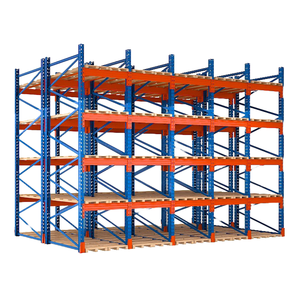
Warehouse Pallet Shelving Systems Heavy Duty Rack 2000kg Cold Storage
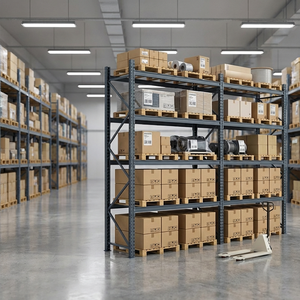
Industrial Storage Warehouse Pallet Racking Multi-Level Steel Shelves
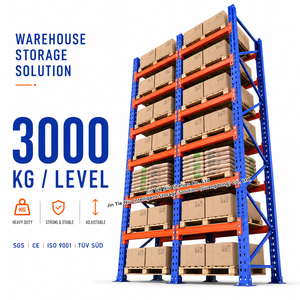
7 Loading Levels 3000KG High Load Pallet Rack Heavy Duty Industrial Shelf
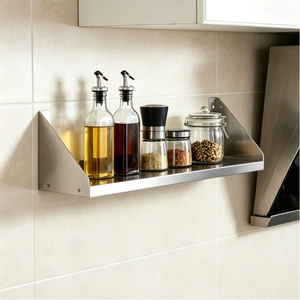
Hanging Stainless Steel Metal Shelf Floating Wall Mount Storage Shelving
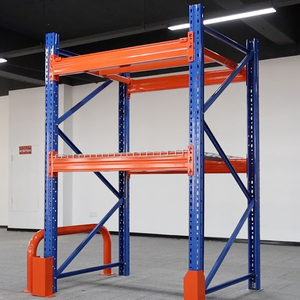
Modular Warehouse Pallet Racking for Wholesale Distribution Centers
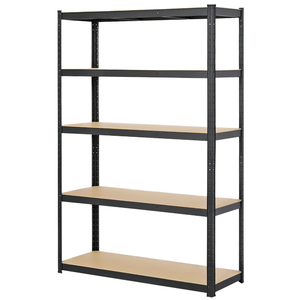
Grocery Shop Boltless Rivet Storage & Display Shelving Systems
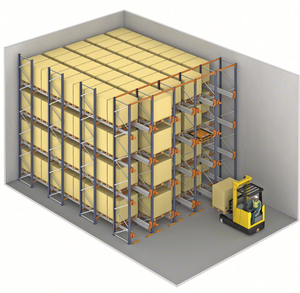
Intelligent Pallet Rack System 4-Way Radio Shuttle Automated Storage
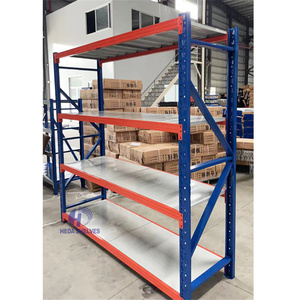
Industrial Workshop Customized Iron Storage Shelves & Light Racks
Structural Anatomy & Engineering Physics of Drive-In Racking
Drive-In and Drive-Through pallet racking systems eliminate operating aisles by allowing counterbalanced or reach forklifts to enter the structural racking bays directly, creating continuous cantilever lane storage.
From an engineering perspective, Drive-In systems operate on the Last-In, First-Out (LIFO) inventory logic, whereas Drive-Through setups enable First-In, First-Out (FIFO) stock rotation by granting dual-sided entry and exit. Traditional selective racking requires roughly 60% of total warehouse footprint for forklift operating aisles. In contrast, CE Certified Drive-In systems decrease floor space dedicated to aisles down to less than 20%, generating an exponential increase in volumetric cubic storage density—typically boosting pallet position capacity between 65% and 85%.
Because cross-beams cannot run continuously across the pallet access channels, stability must be engineered using cold-formed portal frames, cantilever support arms, reinforced run-in guide rails, and heavy-duty structural top and rear diagonal bracing trusses. Our structural calculations rigorously compute horizontal sway forces, asymmetric eccentric loading moments, dynamic pallet placement impact factors, and seismic ground shear coefficients in complete compliance with EN 15512:2020 limit state design criteria.
Cantilever Pallet Rails
Formed from continuous, heavy-gauge galvanized steel profiles featuring flared front entry horns and side locating flanges. The self-centering geometry guides forklift drivers safely, reducing off-center placement and pallet drop risks.
Ground Guide Rails & Bumpers
Heavy-duty rolled steel angle or channel profiles anchored securely to the concrete slab guide the forklift’s chassis precisely down the center of each lane. Upright base posts are wrapped in shock-absorbing floor-mounted column protectors.
Overhead Structural Bracing
High-tensile longitudinal and transverse horizontal cross-bracing ties upper frames into an unyielding, monolithic steel box framework. This counteracts dynamic forklift impact forces and prevents cumulative progressive buckling.
CE Certified Manufacturing & European Verification Standards
European logistics infrastructures operate under strict structural engineering frameworks. Guangzhou Heda Shelves Co., Ltd. builds and exports pallet racking backed by third-party audit credentials and complete traceability.
Compliance is not an afterthought; it dictates cold-rolled profile geometry, perforation pitches, connection weld throats, and chemical bath treatments. HEDA products are covered by CE Certificate No. 2435-CPR-8605159 and manufactured under certified ISO 9001:2015 Quality Management (No. 18624Q00169R0M). We furnish comprehensive structural design calculations aligned with:
- EN 15512:2020: Steel static storage systems – Adjustable pallet racking systems – Principles for structural design, including non-linear second-order P-Delta frame analysis and stub-column testing.
- EN 15620: Steel static storage systems – Tolerances, deformations, and clearances, specifically optimizing aisle widths and top clearance for reach trucks, articulated trucks, and automated guided vehicles (AGVs).
- EN 15635: Steel static storage systems – Application and maintenance of storage equipment, ensuring our load capacity plates and component markings enable local periodic technical safety audits.
- FEM 10.2.02: Federation of European Materials Handling design guidelines for Drive-in and Drive-through structural systems.
| Storage Racking System | Volumetric Density | Pallet Accessibility | Inventory Rotation | Floor Space Efficiency | Typical Investment CAPEX |
|---|---|---|---|---|---|
| CE Drive-In Racking | Very High (85%) | Lane Dependent | LIFO (Last-In, First-Out) | 80% – 85% Usable | Moderate / Cost-Efficient |
| Standard Selective Racking | Standard (45%) | 100% Direct Access | FIFO or LIFO | 35% – 45% Usable | Baseline Economy |
| Radio Shuttle Racking | Ultra High (90%) | Channel Automated | FIFO or LIFO | 85% – 90% Usable | High (Includes Robotics) |
| Push-Back Cart Racking | High (70%) | 2–6 Pallets Deep | LIFO (Gravity Cart) | 65% – 70% Usable | Moderate to High |
| Gravity Pallet Flow Rack | Very High (85%) | Face Picking Lane | Strict Dynamic FIFO | 80% – 85% Usable | High (Full Roller Beds) |
Engineered Application Profiles: Where Drive-In Outperforms
Drive-in pallet racking yields the highest return on investment in facilities handling substantial volume with low SKU variety, or where conditioned building cubic space commands high operating overheads.
Cold Storage & Freezers
Cooling empty air aisles wastes electric utility budgets. In blast chillers (-20°C to -30°C), Drive-In racking condenses pallet storage to the physical limit, reducing refrigerated cubic volume by up to 40% and optimizing thermal mass inertia.
Beverage & Bulk Bottling
Breweries, soft drink bottlers, and dairy plants manufacture thousands of identical pallets per product line run. Drive-In lanes accommodate high-tonnage pallet stacks safely without subjecting fragile beverage packaging to crushing loads.
Seasonal Agricultural Storage
Canning facilities, seed warehouses, and chemical fertilizers experience sharp inventory surge peaks. Drive-In racking provides the dense buffer capacity required to absorb harvest surges without renting secondary off-site square footage.
HEDA Shelves: 25 Years of Precision Manufacturing Excellence
Founded in 2001 in Guangzhou, HEDA Shelves runs a 30,000 square meter advanced production campus staffed by over 300 technical specialists, processing over 30,000 tonnes of certified structural steel monthly.
Every Drive-In racking system is manufactured from certified high-tensile structural coil steel (Q235B and Q355B equivalent to European S235JR and S355JR). Continuous profiling on multi-stage CNC rolling mills delivers millimeter-level alignment tolerances, preventing column camber, sweep, and lane twisting over heights exceeding 12 meters.
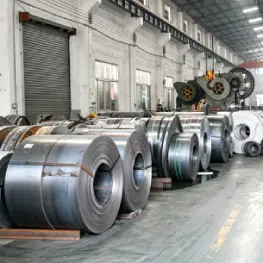
Raw Material Inspection
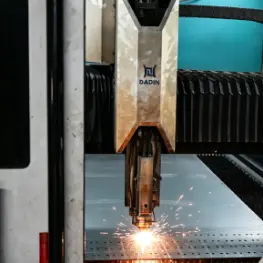
Precision Steel Cutting
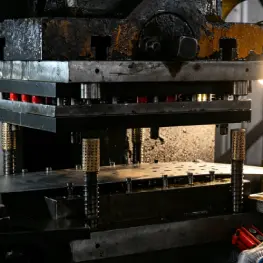
Automated Punching
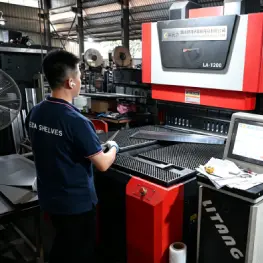
Cold Bending Forming
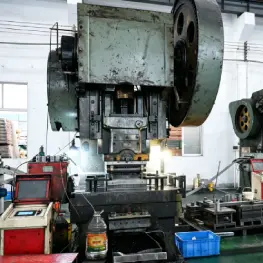
Profile Roll Forming
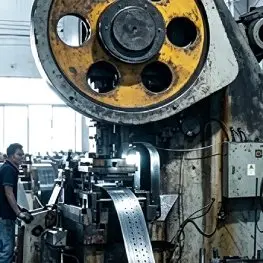
Surface Polishing
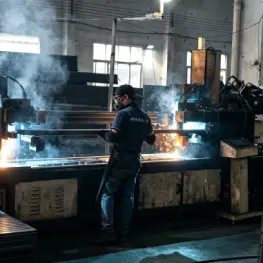
Robotic Welding
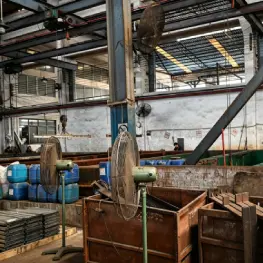
Pickling & Phosphating
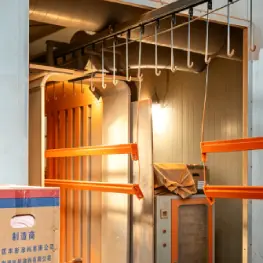
Powder Coating Line
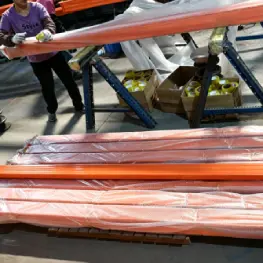
QC & Seaworthy Pack
Future Procurement Trends & Technological Evolutions
Warehouse automation, decarbonization mandates, and AI-optimized warehouse management systems (WMS) are reshaping how high-density drive-in systems are engineered and purchased.
1. Hybrid Radio-Shuttle Upgradability: Modern warehouse operators increasingly demand Drive-In profiles that can be converted to semi-automated 2-way and 4-way radio shuttle channels. By standardizing track notchings and upright geometry during initial Drive-In deployment, enterprises protect their capital investment, enabling drop-in robotic shuttle conversion when throughput demands surge without dismantling the primary racking skeleton.
2. AGV & Autonomous Reach Truck Interfacing: The rise of self-driving forklifts requires tighter structural fabrication tolerances. Because autonomous guided vehicles lack the human operator's visual compensation, Drive-In entry funnels, laser alignment targets, and ground rail tolerances must adhere strictly to EN 15620 Class 300 / 400 specifications to prevent optical sensor tripping and lane jams.
3. Low-Carbon Steel & CBAM Compliance: With the European Union's Carbon Border Adjustment Mechanism (CBAM) entering definitive phases, procurement directors evaluate the embodied carbon footprint of imported steel. HEDA leads by optimizing steel coil profiles through high-strength micro-alloying (Q355B/S355 equivalent), shaving 12% off total dead-weight tonnage while preserving required load deflection limits and reducing embedded freight emissions.
4. Dynamic Seismic Damping & Resiliency: As industrial logistics clusters expand across seismically active zones in Southern Europe and Latin America, standard static Drive-In racking is giving way to dynamic base-isolation dampeners and energy-dissipating top torsion boxes. These configurations absorb horizontal seismic shear without transferring destructive torque into pallet load supports.
5. Digital Structural Health Monitoring (SHM): Smart Drive-In installations now incorporate impact sensors embedded directly into lower upright column protectors. If an entering forklift strikes an upright beyond allowable safety parameters, the telemetry unit immediately pings facility safety managers via the WMS, flagging the bay for structural re-inspection under EN 15635 guidelines.
Technical Questions European Buyers Ask Before Ordering
Clear, definitive engineering answers addressing structural integrity, European standard compatibility, container logistics, and installation safety.
Can HEDA Drive-In systems be configured for standard EUR/EPAL pallets (1200 x 800 mm)?
What documents and structural calculations are supplied for EU building inspector approval?
How do you resolve forklift collision risks within deep Drive-In channels?
What lead times can European distributors anticipate from order sign-off to port arrival?
Is on-site installation supported across EU member states?
Can private label and custom RAL powder coatings be provided for OEM distributors?
Request an Engineered CAD Layout & Project Quote
Send your warehouse architectural drawings (DWG/PDF), pallet weights, and forklift specifications. Our structural engineers will return a complete 3D layout, pallet capacity optimization model, and factory-direct price quotation within 24 hours.