Industrial Pallet & Logistics Racking Lineup
Engineered for high cube utilization, structural longevity, and multi-tier picking environments.
Engineering Fundamentals of Drive Through Pallet Racking Systems
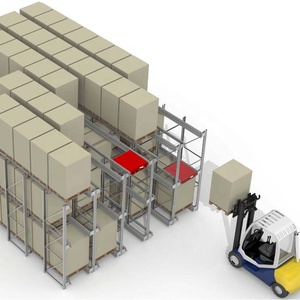
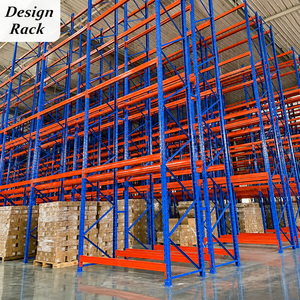
Drive-through and drive-in pallet racking configurations represent the peak of volumetric cube utilization in high-density distribution hubs. While drive-in structures utilize a single entrance/exit aisle functioning on a Last-In, First-Out (LIFO) inventory model, drive-through systems provide dual-access portals across separate operating aisles. This structural layout establishes a pure First-In, First-Out (FIFO) material management protocol without requiring intermediate aisles, achieving space recovery efficiencies of up to 80% compared to traditional selective racking arrangements.
Structural Anatomy and Load Dynamics
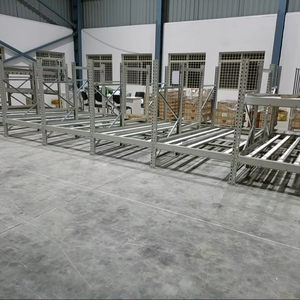
Drive-through racks eliminate traditional cross-bay load beams. Instead, pallets sit directly on heavy-gauge cantilevered support rails anchored to upright columns via multi-hook connector brackets. Because forklifts physically traverse the interior storage lanes, standard diagonal bay bracing cannot cross the drive aisles. Dynamic stability relies entirely on heavy-duty overhead portal tie beams, rear external horizontal bracing networks, anchored structural guide rails, and high-tensile column base plates anchored directly into reinforced concrete foundations.
| Evaluation Parameter | Drive-Through Racking | Drive-In Racking | Radio Shuttle Racking | Selective Pallet Racking |
|---|---|---|---|---|
| Inventory Rotation | FIFO (Strict First-In, First-Out) | LIFO (Last-In, First-Out) | Configurable (FIFO & LIFO) | Random Direct Access |
| Cube Utilization | Up to 75% - 80% | Up to 80% - 85% | Up to 85% - 90% | 40% - 45% |
| Direct Pallet Access | Lane Facing Only | Front Lane Face Only | Lane Facing Automatic | 100% Instant Selectivity |
| Forklift Mast Exposure | High (Operates Inside System) | High (Operates Inside System) | Zero (External Lane Transfer) | Low (Aisle Operation Only) |
| Cold Storage Feasibility | Exceptional (High Efficiency) | Exceptional (High Efficiency) | Maximum (Reduced Labor Heat) | Moderate (High Energy Cost) |
Cold-Chain & High-Volume Batch Logistics Optimization
In temperature-controlled storage, such as blast freezers and sub-zero cold-chain cold stores (-25°C to -30°C), cubic volume carries direct energy costs. Conventional aisles waste refrigerated atmosphere on transit zones. Implementing CE-certified drive-through pallet storage consolidates thermal mass, accelerates FIFO batch lot turnover for perishable products, pharmaceuticals, and fast-moving consumer goods (FMCG), and enforces non-negotiable shelf-life expiration safety tolerances.
Future Procurement Trends in Industrial Racking & Intralogistics
Procurement directors and supply chain engineers are no longer purchasing steel weight in isolation; structural investments are directly tied to automation readiness, carbon accountability, and dynamic safety monitoring over decades of deployment.
1. Migration Toward Hybrid Semi-Automated Shuttle Infrastructure
While traditional drive-through layouts require operators to drive forklifts inside the racking matrix, market trends point toward shuttle-ready retrofitting. Leading logistics facilities specify drive-through frame geometry engineered to house autonomous battery-powered radio shuttles. This hybrid evolution eliminates the primary drawback of drive-through systems—forklift impact risks to upright columns—while slashing cycle times by up to 40%.
2. Structural Life-Cycle Traceability and High-Yield Steels
With volatile steel commodity prices and stringent European sustainability regulations (including CBAM—Carbon Border Adjustment Mechanism metrics), enterprise procurement teams require verifiable raw material sourcing. The transition from heavy low-grade profiles to high-tensile, cold-rolled steel alloy profiles (e.g., Q235B and Q355B equivalent grades) enables thinner material thickness without losing load-bearing thresholds, reducing sea-freight deadweight, handling stress, and production emissions.
3. Real-Time Telemetry and Automated Structural Inspection
Future-ready storage facilities are rapidly piloting optical beam sensors, load-cell upright bases, and IoT-enabled impact monitoring devices mounted to ground-level column protectors. These digital frameworks provide continuous structural compliance data aligned with EN 15635 standards, warning warehouse directors of deflections, accidental mast collisions, or uneven seismic load shifts before structural failure occurs.
Enterprise Advantages: Guangzhou Heda Shelves Co., Ltd.
Delivering heavy-duty warehouse infrastructure from our 30,000 m² factory direct to global logistics operators since 2001.
Full CE & ISO Quality Credentials
Strict structural verification verified by CE Certificate No. 2435-CPR-8605159, ISO 9001:2015 No. 18624Q00169R0M, and comprehensive RoHS compliance across all electrostatic powder-coated surfaces.
Free 3D Layout & CAD Engineering
Our senior logistics architects provide bespoke CAD building layouts, static stress calculations, and 3D virtual walkthroughs before component manufacturing, guaranteeing precise dock-to-clearance tolerances.
Ten-Stage In-House Quality Control
From automated CNC sheet punching, roll-forming, and robotic beam welding to pickling, phosphating, and automatic powder line curing, every component undergoes load-sample testing before export seaworthy crating.
Global Export Logistics Delivery
Direct supply line access through deep-water ports to Europe, the UK, the Americas, and the Middle East with custom bundle packaging, indexed component identification, and step-by-step installation guides.
Custom RAL & Dimension Specification
Support for custom frame depths, beam heights, guide-rail orientations, and powder-coat RAL color selections to align with customer branding and warehouse aisle safety markings.
Professional Lifetime Technical Support
Dedicated engineer support across all implementation phases—from initial project review to third-party engineering inspections, load recalculations, and facility expansion planning.
Procurement & Technical Engineering FAQ
Essential guidance for warehouse operators, safety inspectors, and procurement specialists.
What is the core structural difference between Drive-In and Drive-Through pallet racking?
How does your manufacturing process meet European Standard EN 15512 and CE requirements?
Can Drive-Through racking systems be tailored to EUR-pallets (1200 x 800 mm) and ISO pallets?
What floor slab specifications and anchor foundations are required for high-density installation?
What active and passive safety features protect against forklift impact inside the lanes?
What is the standard production timeline and sea freight lead time to European and global ports?
Ready to Maximize Your Facility’s Storage Density?
Consult directly with our logistics engineers. Submit your warehouse floor plan, ceiling clear heights, and pallet specifications to receive a free, customized 3D CAD design proposal and structural load calculation.
Get a Quote