Heavy-Duty Galvanized & High-Density Pallet Storage Systems
Manufactured under strict ISO 9001:2015 controls and CE Certificate No. 2435-CPR-8605159. Fully compatible with EUR/EPAL standard pallets (1200×800mm, 1200×1000mm) and high-load industrial logistics equipment.
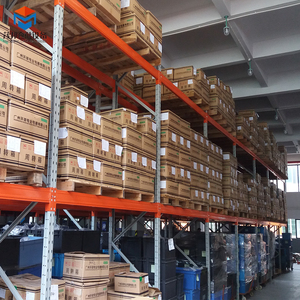
Warehouse Large Capacity Storage Racking Long Span Display Steel Shelving Pallet Heavy Duty Pallet Racking System
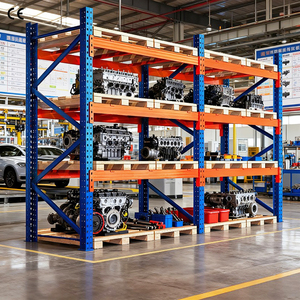
Pallet Racking Shelves & Racks Heavy Duty Metal Pallet Storage Racking 1000kg for Garage Warehouse
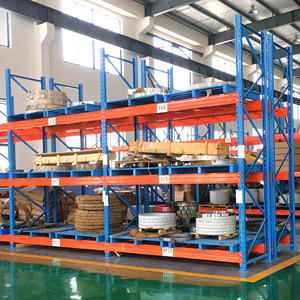
OEM Factory Wholesale Warehouse Racking Industrial Racks Customized Pallet Racking System Heavy Duty Steel Racks For Storage
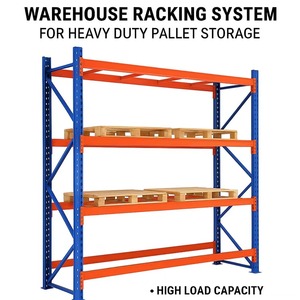
Material Handling-Warehousing-Stacking Racks & Shelves | Warehouse Racking System for Heavy Duty Pallet Storage
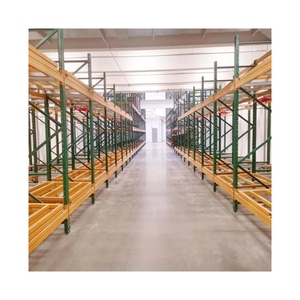
Custom Storage System Stacking Racks Shelves Warehouse Rack Push Back Pallet Racking With Guide Rail
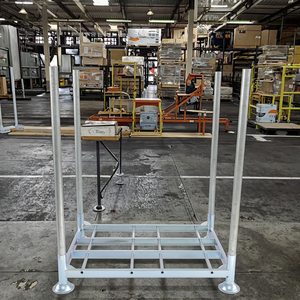
Easy Transport Corrosion Protection Steel Pallet Galvanized Zinc Stacking Post Demountable Rack for Cargo Storage OEM Supplier
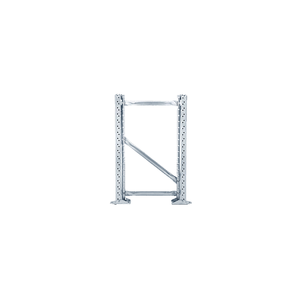
METALSISTEM Superbuild Heavy Duty High Strength Industrial Steel Pallet Rack Shelving System Multi-Level Design Galvanized
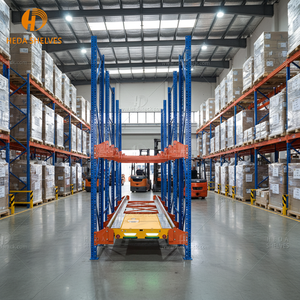
High Density Industrial Warehouse Shuttle Storage Racking Radio Pallet Racking OEM/ODM Supplier
Direct-From-Manufacturer Engineering Scale Since 2001
Operating a modernized 30,000 m² heavy industrial production base in Guangzhou, HEDA Shelves integrates raw coil slitting, cold roll profiling, automated continuous punching, and rigorous mechanical quality testing.
European CE & ISO Certification
Our structural production holds accredited CE Certification (Certificate No. 2435-CPR-8605159) verifying cold-formed structural steel execution, along with ISO 9001:2015 Quality Management (Certificate No. 18624Q00169R0M). Every project includes structural calculation documentation referencing EN 15512 and EN 15620 guidelines for effortless municipal sign-offs.
- Factory Production Control (FPC) audit compliance
- EN 10204 3.1 Mill Test Certificates provided with mill heats
- Full traceability from raw strip coil to packed pallet bays
Free CAD & FEM Structural Design
Warehouse logistics efficiency begins at the layout table. HEDA Shelves engineers utilize advanced CAD and Finite Element Method (FEM) software to evaluate upright column bucking, beam deflection limits (1/200 per EN 15512), aisle turning radiuses for reach and VNA trucks, and optimal egress pathways.
- Detailed DWG and 3D architectural renders within 48 hours
- Calculations for floor slab loading and anchor pull-out ratings
- Seismic zone adaptation based on Eurocode 8 standards
End-to-End European Seaborne Logistics
Serving distributors, system integrators, and logistics contractors across Germany, the Netherlands, France, Poland, Italy, Spain, and the UK. All components are packed in seaworthy bundles with clear part labelling, numbered cross-bracing, and bundled frame sections to accelerate mechanical erection.
- Regular sailings to Rotterdam, Hamburg, Antwerp, Valencia, Gdańsk
- FOB, CIF, or fully cleared DDP delivery straight to warehouse slab
- Color-coded installation blueprints with numbered torque specs
Engineering Evaluation: Hot-Dip Galvanized, Pre-Galvanized, and Powder Coated Systems
Selecting the correct protective finish dictates the lifecycle return on investment (ROI) in industrial environments. Review our comparative technical matrix below.
| Evaluation Parameter | Pre-Galvanized (Sendzimir / EN 10346) | Hot-Dip Galvanized (Batch / ISO 1461) | Electrostatic Powder Coated (Epoxy-Polyester) |
|---|---|---|---|
| Zinc Coating Thickness | 15–25 µm (Z140–Z275 g/m²) | 55–100+ µm (≥ 500 g/m²) | 60–90 µm (Polymer resin film) |
| Cut Edge Protection | Cathodic Self-Healing (Zinc ions migrate over slit steel edges) | Total Metallurgical Enclosure (All holes & welds fully sealed) | None (Scratches or hole edges expose bare steel to rust creep) |
| Cold Storage Performance (-30°C) | Exceptional (No brittle failure, unaffected by frost condensation) | Exceptional (Extreme mechanical resilience under sub-zero cycling) | Moderate (Thermal shock can cause micro-fissures over long duty) |
| Outdoor Yard Exposure | Indoor only / Covered dry depots | 25–50+ Years in industrial marine C3–C4 atmospheres | Unsuitable for rain/sun (UV chalking and rust blistering within 24 mo) |
| Impact Resistance (Forklift Tines) | High ductility (Coating does not flake off) | High hardness alloy layers (Tough, metallurgically bonded) | Moderate (Local impact leads to paint chipping) |
| Initial Capital Outlay | Cost-Effective (Similar to high-grade paint lines) | Higher upfront premium (15–25% above paint) | Standard industrial baseline |
| Primary Application Fit | Automated racking, food FMCG, cold chain logistics hubs | Chemical docks, timber yards, outdoor builders' merchants, fertilizer plants | Standard ambient dry distribution centers and parts stores |
The Metallurgy Behind Galvanized Steel Racking Durability
In humid or low-temperature warehouse conditions, standard painted steel faces severe rust proliferation at punching apertures and beam connector joints due to thermal condensation cycles. Hot-dip galvanizing per ISO 1461 forms three distinct metallurgical iron-zinc alloy layers (Gamma, Delta, and Zeta) topped with pure zinc (Eta layer). This forms an intermetallic bond stronger than the base steel itself. Even in Pre-Galvanized profiles (such as S350GD+Z structural grade), zinc's sacrificial galvanic property ensures that raw punched slots and sheared edges remain shielded against rust via natural galvanic protection. For facility operators, this translates to zero downtime for repainting, compliance with HACCP food hygiene norms, and over 30 years of operational safety without section degradation.
Future Procurement Trends in European & Global Warehouse Logistics (2025–2030)
How supply chain executives, warehouse developers, and procurement managers are restructuring their capital expenditure for storage infrastructure over the next decade.
Decarbonization & Circular LCA Procurement
Corporate ESG mandates and European Corporate Sustainability Due Diligence Directive (CSDDD) policies are compelling logistics directors to evaluate racking lifecycles. Galvanized racking eliminates repetitive solvent emissions associated with field repainting and requires 100% recyclable structural steel with lower 30-year lifecycle environmental impact metrics.
- Elimination of volatile organic compound (VOC) painting phases
- Residual steel salvage value remains highest with unoxidized zinc coatings
- Verification of raw steel mill carbon credits per metric ton shipped
Integration with Automated Guided Equipment
Autonomous mobile robots (AMRs), automated storage and retrieval systems (ASRS), and cold-chain radio shuttles require tighter upright plumb tolerances and deflection limits (EN 15620 Quality Classes 100 to 400). Procurement specifications are shifting from traditional manual forklift clearances to millimetric laser-aligned rail racking profiles.
- Galvanized running rails offer smooth, low-wear tracks for autonomous shuttles
- Zero paint flaking prevents contamination of optical AMR navigation sensors
- Integration of localized floor anchoring designed for continuous autonomous vibration
Shift to Total Cost of Ownership (TCO)
While standard painted selective racking carries an initial 10–15% lower unit cost, facility operators report substantial maintenance liabilities within 3–5 years in high-turnover food, beverage, and refrigerated sites. Buyers increasingly evaluate TCO models: zero maintenance recoating costs, zero pallet contamination risk, and extended structural life.
- Maintenance interventions reduced by up to 75% over 15 years
- Lower insurance premiums from verified seismic load certifications
- Enhanced resale and relocation flexibility across multi-facility operations
Product Development & Technological Trends in Galvanized Pallet Racking
How cutting-edge metallurgy, smart monitoring, and advanced profile geometry are redefining safety and structural efficiency across the racking industry.
Zinc-Aluminum-Magnesium (Zn-Al-Mg) Alloys
The next frontier in pre-galvanized sheeting involves tertiary alloy coatings (e.g., Magnelis-type finishes). Combining 3% magnesium and 3.5% aluminum creates an ultra-dense protective barrier that outperforms conventional pure zinc by a factor of three in accelerated salt spray tests.
High-Strength Cold Roll Optimization
Advancements in roll-forming software allow complex 12-bend to 16-bend upright column cross-sections using thinner gauge, high-yield steel (S350GD, S420GD). This yields a lighter profile with increased moment of inertia and enhanced resistance to torsional buckling during accidental forklift impacts.
IoT Strain & Impact Sensor Telemetry
Smart upright protectors equipped with tri-axial accelerometers and wireless mesh nodes can now log beam overload events or forklift base strikes in real time. Facility managers receive instant alerts when impact force thresholds defined under EN 15635 amber or red risk levels are breached.
Demountable Modular Post Architecture
For seasonal agricultural hubs and high-density yard staging, demountable galvanized stacking nests have evolved into rapid-assembly socket frames. These eliminate specialized onsite welding and allow complete yard reconfiguration within hours while retaining full CE structural integrity.
Frequently Asked Questions by Industrial Sourcing Directors
Clear, engineering-grounded answers addressing standards, international shipping, cold-store configurations, and compliance checks.
What specific certifications and structural calculations are supplied with your CE certified pallet racking?
Can your galvanized pallet racking be configured for standard EUR/EPAL pallets?
How does hot-dip galvanized racking compare against pre-galvanized racking in cold storage (-25°C to -30°C)?
What is your typical production lead time and shipping transit to European container ports?
What engineering data is required from our site to generate a free layout proposal?
Do you offer OEM / Private-Label manufacturing for European racking distributors and installers?
Request an Engineered Layout & Factory Quote
Collaborate directly with our structural engineering team. Submit your warehouse dimensions and receive a fully engineered CAD proposal, structural deflection analysis, and direct factory pricing within 24 to 48 hours.