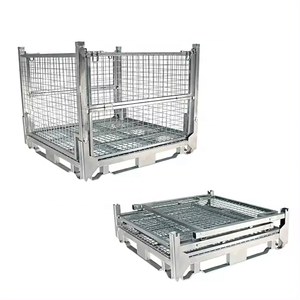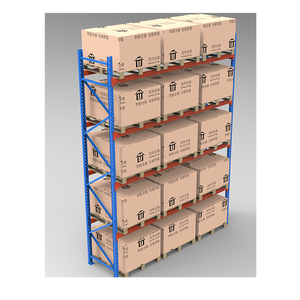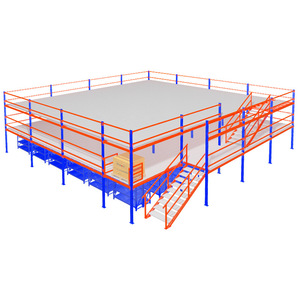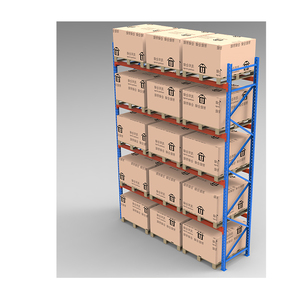
EN 15512 & CE Certified Factory Direct

CE Certified Gravity Racking System Factories & Factory

Engineered First-In-First-Out (FIFO) High-Density Storage Solutions: High-Precision Dynamic Rollers, Speed Controllers, and Certified Structural Reliability for European Logistics Facilities

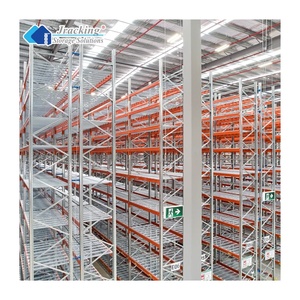
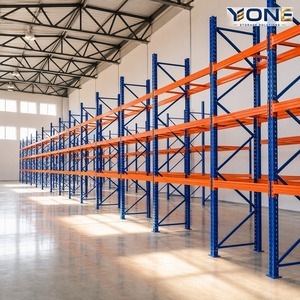
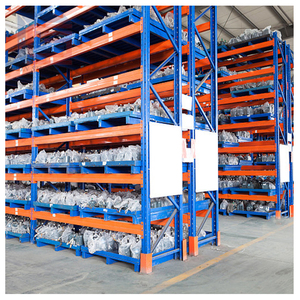
Engineered Heavy-Duty Storage Configurations

Industrial Pallet & Dynamic Flow Racking Systems

Explore our high-performance manufacturing lineup. Manufactured with structural cold-formed Q235B and Q355B steel under strict ISO 9001:2015 and CE certification standards (Certificate No. 2435-CPR-8605159), each system is engineered to maximize cubic storage density, reduce material handling travel distances, and guarantee absolute structural integrity under continuous cyclical loading.

2001.
Factory Established (25+ Yrs)
30,000m²
Manufacturing Plant Floor
30,000t
Monthly Production Volume
10,000+
Global Completed Projects

Engineering Whitepaper: Structural Physics & Mechanical Integrity of CE-Certified Gravity Racking

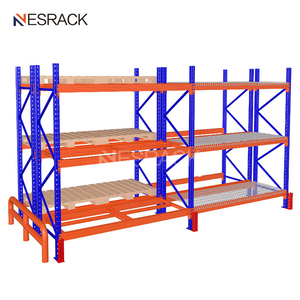
In modern supply chains, warehouse surface footprint represents an exorbitant capital expenditure. Gravity Racking Systems—commonly referred to as live pallet flow or dynamic FIFO racking—utilize inclined gravity-fed roller tracks (typically set between a 3.0% and 4.0% decline gradient) to move palletized unit loads seamlessly from the loading (replenishment) face to the unloading (picking) face. This eliminates redundant interior forklift travel aisles, condensing standard warehouse storage footprints by up to 60% compared to traditional selective racking while ensuring pure, uncompromised First-In, First-Out (FIFO) stock turnover.

However, operating gravity flow systems requires rigorous structural engineering. Unlike static storage frameworks, live flow lanes subject steel members to repeated dynamic impacts, constant vibration, cyclical fatigue, and kinetic momentum transfer when heavily weighted pallets (often varying between 500 kg and 1,500 kg) accelerate downhill. A reliable gravity racking factory must comply strictly with European standards EN 15512 (Steel static storage systems – Adjustable pallet racking systems – Principles for structural design) and EN 15620 (Tolerances, deformations and clearances), verifying all limit states against beam deflection limits ($L/200$) and dynamic column buckling.

Core Kinetic Components of a Certified Pallet Flow Lane

Centrifugal Brake Rollers

Internally geared centrifugal brake drums automatically regulate pallet velocity to a controlled 0.25 to 0.30 m/s regardless of whether the pallet weighs 300 kg or 1,200 kg, preventing runaway collisions and shelf structural shock.

Safety Pallet Separators

Mechanical time-delay pallet extractors decouple the front pick pallet from the continuous line pressure of subsequent upstream pallets. Forklift operators extract the lead pallet without dangerous back-pressure pinching.

Precision Roller Beds

Heavy-duty cylindrical steel rollers supported on sealed ball bearings with polyurethane coatings to accommodate standard European EUR/EPAL wooden pallets (1200×800mm), industrial GMA pallets, and plastic runner skids without skid drag.

Comparative Architecture: Dynamic Flow vs. Static Storage Systems

Storage Topology Space Utilization Stock Rotation Forklift Operating Travel Risk of Rack Impact CE & EN Compliance Factor
Live Gravity Pallet Flow Optimal (Up to 85%) Strict FIFO Minimal (Loading / Unloading Aisle Only) Extremely Low (Trucks never enter lanes) EN 15512 / EN 15620 / EN 15635
Drive-In Racking High (Up to 75%) Strict LIFO High (Trucks enter deep inside uprights) High (Frequent upright collision) EN 15512 / FEM 10.2.07
Push-Back Cart Racking Medium-High (70%) Strict LIFO Moderate (Single aisle interface) Low-Medium EN 15512 / FEM 10.2.02
Standard Selective Racking Standard (35-40%) Any (Flexible) Maximum (Every lane requires truck access) Moderate (Aisle-wide exposure) EN 15512

Next-Generation Procurement Trends in Global Gravity Racking Systems

Procurement engineers and supply chain directors are no longer purchasing warehouse racking based merely on cost per metric ton of cold-rolled steel. Modern intralogistics procurement has transitioned into a Total Cost of Ownership (TCO) discipline influenced by several evolving global market dynamics:

Cold Chain Decarbonization

Refrigerated warehouse energy costs have quadrupled across Europe. Procurement officers are deploying dense gravity flow racking in sub-zero facilities (-28°C) to cut cubic cooling volume by up to 50%, dramatically shrinking industrial refrigeration power demand and shortening payback cycles to under 24 months.

Hybrid AGV/AMR Interface Integration

Modern distribution centers demand gravity loading ramps engineered with optical sensor clearance plates, allowing Autonomous Mobile Robots (AMRs) and Automated Guided Forklifts (AGVs) to drop loads automatically at feeding faces with millimeter positioning accuracy.

Carbon-Indexed Circular Steel

Corporate ESG mandates in the EU and North America require traceable EPD (Environmental Product Declaration) filings. Tier-1 factories that utilize low-emission electric arc furnace (EAF) certified steel coils and zero-VOC electrostatic powder coatings gain preferential procurement scoring.

Furthermore, supply chain resilience is dictating longer-term partnerships directly with OEM/ODM manufacturers capable of supplying standardized components with guaranteed cross-generational dimensional compatibility. Procurement directors actively avoid proprietary lock-ins, demanding European standard open-profile systems certified by accredited test laboratories.

Technological & Engineering Frontiers: The Evolution of Dynamic Live Storage

The future of gravity flow technology relies on mechanical precision combined with smart sensing. As material handling velocities increase, gravity racking factories are pioneering several cutting-edge innovations:

Non-Contact Magnetic Eddy-Current Braking

Traditional friction brake rollers suffer from wear, heat fade, and oil seal ruptures in continuous cold storage. Emerging magnetic eddy-current brake drums provide zero-wear, contactless progressive deceleration without internal gears, extending maintenance intervals from 12 months to over 7 years.

Composite Self-Lubricating Rollers

Novel high-crystallinity polymer roller sleeves combined with ceramic hybrid bearings eliminate the need for hydrocarbon greases. This prevents fluid contamination in pharmaceutical and food grade cleanroom staging buffers while lowering the rolling resistance coefficient by 22%.

Embedded Telemetric Load Cells

Smart discharge stops now feature micro-strain gauge transducers and wireless LoRaWAN nodes. These feed real-time inventory mass, pallet dwell times, and live track congestion data directly into client Enterprise Resource Planning (ERP) and Warehouse Management Systems (WMS).

Guangzhou Heda Shelves Co., Ltd. — Certified Factory Excellence Since 2001

As an established industrial racking manufacturer with over 25 years of specialized metal fabrication experience, Guangzhou Heda Shelves operates a state-of-the-art 30,000 m² production facility backed by 300+ seasoned technical and production staff. Producing over 30,000 tonnes of high-precision cold-formed steel racking per month, we have engineered and shipped more than 10,000 successful warehousing projects across Europe, the Americas, Oceania, and Southeast Asia.

Verified Accreditations

Full CE Certificate (No. 2435-CPR-8605159), ISO 9001:2015 Quality Management (No. 18624Q00169R0M), and independent RoHS testing compliance for all surface finishes.

Free 3D & CAD Layouts

Our in-house project engineering office supplies comprehensive AutoCAD floor layouts, 3D BIM structural models, and finite element method (FEM) load calculations before production.

Direct Port Logistics

Automated export packing in seaworthy steel cages and pallet cradles, shipped with component serialization direct from Guangzhou to Rotterdam, Hamburg, Antwerp, Valencia, and Felixstowe.

Turnkey OEM/ODM

Dedicated contract manufacturing for European racking distributors, system integrators, and racking contractors with custom RAL electrostatic powder colors and private-label embossing.

Our 10-Stage Precision Manufacturing Workflow

01
Steel Inspection

Spectrometric tensile verification of raw Q235B/Q355B coils.

02
Laser Cutting

CNC decoiling and precise longitudinal shearing.

03
Column Punching

Automated CNC continuous 50mm pitch punch lines.

04
Roll Forming

Multi-station cold roll-forming with tight omega tolerances.

05
Beam Profiling

Continuous interlocking box beam cold-weld forming.

06
Robotic Welding

Multi-axis automated MIG/TIG welding of beam claws.

07
Shot Blasting

Surface descaling and mechanical polishing to Sa 2.5.

08
Phosphating

Multi-stage ultrasonic degreasing, pickling & phosphating.

09
Powder Coating

Automatic electrostatic powder line cured at 200°C.

10
Export Packing

Numbered component bundling in seaworthy steel crates.

Gravity Racking System Procurement: Technical & Engineering FAQ

Clear, comprehensive answers to technical questions raised by structural consultants, warehouse safety inspectors, and procurement directors evaluating live storage systems:

1. How is the optimal lane inclination angle calculated for diverse pallet weights? +
The standard gravitational slope for industrial live pallet flow ranges between 3.0% and 4.0% (approximately 1.7° to 2.3°). The exact inclination depends on pallet bottom contact quality, runner deflection, and total mass variation. For lighter loads (250–500 kg), a 3.8% to 4.0% pitch ensures overcoming initial static inertia without stalling. For heavy unit loads (1,000–1,500 kg), a 3.2% slope combined with centrifugal speed controllers positioned every pallet length ensures stable, controlled descent without runaway kinetic energy.
2. Can HEDA gravity racking handle damaged, plastic, or variable-sized Euro pallets? +
Yes, but lane roller configurations must be matched to the pallet interface. Standard EUR/EPAL 1 (1200×800 mm) wooden pallets with intact bottom skids traverse three-roller tracks effectively. However, pallets with missing bottom boards, plastic skids with irregular ribs, or varying base dimensions require full-width continuous galvanized steel rollers or specialized three-track split-wheel assemblies. During layout reviews, our engineers test your exact pallet profile to eliminate sagging or track jam risks.
3. What certifications and load calculation standards govern your racking manufacturing? +
All structural frameworks are designed in strict conformance with European standard EN 15512:2020 (Limit state design of steel static storage systems). Guangzhou Heda Shelves Co., Ltd. holds CE Certificate No. 2435-CPR-8605159 and ISO 9001:2015 Certification No. 18624Q00169R0M. We provide complete finite element analysis (FEA) reports, material mill certificates, and seismic design calculations validated against Eurocode 3 (EN 1993-1-3) and Eurocode 8 upon customer request.
4. How do speed controller brake rollers prevent pallet impact damage over deep lanes? +
In gravity lanes deeper than four pallets, accelerating inertia creates severe impact force at the unloading face. Our centrifugal brake rollers are calibrated with internal planetary gearboxes that expand internal brake shoes against the roller drum shell in direct proportion to rotational velocity. This automatically governs pallet rolling speed between 0.20 and 0.30 m/s, preventing unit damage, load shedding, and structural fatigue on the end-stop buffers.
5. What maintenance regimes are recommended under European standard EN 15635? +
Under EN 15635 (Application and maintenance of storage equipment), gravity racks require weekly visual checks by internal safety personnel and comprehensive 12-month expert inspections. Focus areas include: verifying roller free-spinning, inspecting centrifugal brake engagement, checking spring return mechanisms on pallet separators, ensuring safety clip retention on upright connectors, and inspecting floor column anchor torques. Component serialization from our factory ensures rapid dispatch of identical modular replacement components.
6. What technical parameters must be submitted to receive a free 3D CAD proposal? +
To generate an optimized, engineered proposal, please share: (1) Warehouse architectural floor layout (DWG or PDF) including column centers and clear heights under fire sprinkler heads; (2) Pallet dimensions (Length × Depth × Height, including pallet overhang); (3) Minimum, average, and maximum gross pallet weight; (4) Pallet base construction material (wooden, composite, plastic, 2-way or 4-way entry); (5) Handling equipment specifications (forklift mast lift height, turning radius, and chassis model); (6) Target inventory turnover throughput (pallets per hour per SKU).
Direct Engineering Support

Optimize Your Warehouse Footprint With Certified Racking

Partner directly with a certified manufacturer. Connect with our engineering department today for free structural consultations, customized AutoCAD layouts, and factory-direct commercial estimates tailored to European and global logistic standards.

Send an Inquiry