Factory-Direct Pallet Racking & Industrial Storage Racks
Designed, roll-formed, and structurally verified for industrial intralogistics. Every rack assembly undergoes rigorous tensile, load-bearing, and deflection analysis to guarantee complete load safety across EUR/EPAL and non-standard warehouse configurations.
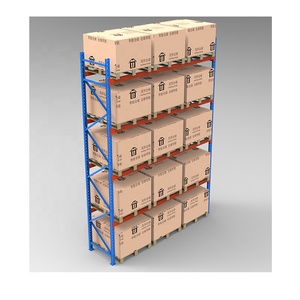
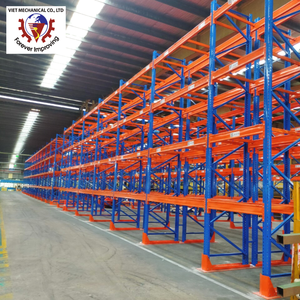
Structural Safety, Regulatory Compliance, & CE Marking
A comprehensive examination of why CE certification is non-negotiable for structural steel racking systems operating under EN standards.
For warehouse architects, logistics managers, and supply chain directors, buying industrial pallet racking goes far beyond simply matching steel tonnage. Industrial storage racks are load-bearing structural frameworks regulated under rigorous safety directives. In the European Union and allied global markets, compliance with EN 15512 (Principles for structural design), EN 15620 (Tolerances, deformations and clearances), and EN 15635 (Application and maintenance of storage equipment) forms the baseline of technical accountability.
Construction Products Regulation
Under the CPR (EU No 305/2011), steel structures intended for permanent warehouse installations require third-party assessment. Our official CE Certificate No. 2435-CPR-8605159 certifies factory production control, mill-traceable chemical analysis, and yield point verification.
ISO 9001:2015 Traceability
Manufacturing consistency matters. Every beam connector, roll-formed profile, and baseplate is manufactured under certified QMS certificate No. 18624Q00169R0M. We track steel coils from primary blast mills through automated robotic welding.
Anti-Seismic & Wind Modeling
Racking structures installed in seismic-active zones must calculate lateral sway and horizontal dynamic shear forces. Our dedicated CAD engineering department performs custom finite element analysis (FEA) to confirm safety against structural collapse.
Future Procurement Trends in Industrial Storage (2026–2030)
How automation, warehouse automation robotics, carbon taxation, and dynamic layouts are reshaping warehouse procurement decisions globally.
The global warehousing ecosystem is undergoing an unprecedented shift. Driven by skyrocketing square-meter land leasing rates, acute warehouse labor shortages, and corporate ESG mandates, static storage infrastructure is rapidly giving way to agile, high-density, automated systems. B2B procurement heads and logistics procurement executives must consider three dominant market dynamics:
1. Convergence of Steel Racking with Autonomous Mobile Robots (AMR/AGV)
Conventional wide-aisle counterbalance configurations are transitioning toward semi-automated radio shuttle racking and fully automated storage and retrieval systems (AS/RS). Procurement teams are standardizing pallet racking tolerances according to EN 15620 Class 300 standards. Racks are now precision-machined to interact seamlessly with laser-guided AGVs, pallet lifts, and radio shuttles without human entry into storage lanes.
- Reduction of physical rack upright collision damage by up to 75%
- Zero-emission lithium-ion radio shuttles handling deep-lane pallet transfers
- Continuous real-time optical inventory scanning integrated at beam levels
2. Low-Carbon Steel & Eco-Compliant Surface Treatments
Under emerging cross-border carbon adjustment mechanisms (such as the EU CBAM) and global Scope 3 supply-chain ESG reporting requirements, procurement specialists actively audit steel manufacturing carbon intensity. Our manufacturing lines use cold-formed roll forming processes alongside heavy metals-free, RoHS-compliant electrostatic powder coating.
- 9-stage pre-treatment: Acid pickling and phosphating without VOC emission
- Optimized profile strength-to-weight ratios reducing redundant raw steel tonnage
- 100% recyclable structural steel profiles delivering full life-cycle circularity
| System Architecture | Volumetric Efficiency | Direct Pallet Accessibility | Inventory Flow | Automation Compatibility |
|---|---|---|---|---|
| Standard Selective Racking | Base Reference (40-50%) | 100% Immediate Direct Access | FIFO / LIFO | Standard Forklifts / AGVs |
| Narrow Aisle (VNA) Systems | High (+40% vs Selective) | 100% Direct Access | FIFO / LIFO | Wire-Guided Turret Trucks |
| Drive-In / Drive-Through | Very High (+65% vs Selective) | Lane Dependent (Restricted) | LIFO (FIFO Drive-Through) | Counterbalance / Reach Trucks |
| Radio Shuttle Automation | Maximum (+85% vs Selective) | Automated Lane Retrieval | Flexible FIFO / LIFO | Fully Automated Shuttle Integration |
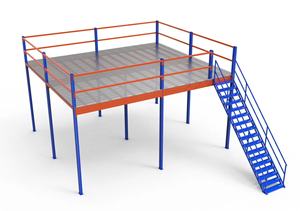
| Rack-Supported Mezzanine | Doubles Working Floor Area | Tier-Specific Multi-SKU Access | Batch / E-Commerce Picking | Vertical Reciprocating Lifts / Conveyors |
Why Tier-1 Warehouse Operators Trust Our Manufacturing
Combining 25 years of heavy fabrication expertise with turnkey engineering accountability.
30,000m² Plant Capacity
Over 300 skilled technical personnel producing 30,000 tons of racking monthly to support global high-bay installations without project delays.
Complimentary 3D & CAD Design
Certified logistics layout engineers create optimized DWG structural drawings, deflection metrics, and 3D renderings before raw coil shearing begins.
Full OEM/ODM Customization
Tailored to your specific EUR/EPAL dimensions, custom RAL color palettes, special galvanizing requirements, and client-branded private labeling.
Global Port Logistics
Direct export bundling and seaworthy component packing shipping to Rotterdam, Hamburg, Antwerp, Valencia, Felixstowe, and over 120 global ports.
Frequently Asked Questions on Steel Pallet Racking
Expert engineering insights covering safety, logistics, customization, and operational installation.
What specific structural calculations are provided to satisfy local building control?
Every engineering proposal includes comprehensive structural design reports based on EN 15512 calculation methods. We document ultimate limit state (ULS) and serviceability limit state (SLS) calculations, frame buckling coefficients, beam deflection thresholds (typically limited to L/200), and floor anchor pull-out stresses for review by local municipal inspectors.
Can the pallet rack bays accommodate both EUR/EPAL and US standard pallets?
Yes. We customize beam clear entry spans (e.g., 2700mm for three standard 800×1200mm Euro pallets, or 2300mm for two 1000×1200mm industrial pallets) and adjust upright frame depths (from 800mm to 1100mm) with precision pallet support bars, row spacers, and wire decking to prevent pallet drop-through.
What grade of raw steel is specified for cold-formed uprights and load beams?
We use high-grade structural hot-rolled and cold-rolled coil steels, primarily Q235B and high-yield Q355B (equivalent to European S235JR and S355JR). All raw steel undergoes automated incoming tensile and elongation testing to ensure ductility and prevent brittle failure under heavy cyclic dynamic loadings.
How do your surface treatments perform against rust in cold chain and high-humidity facilities?
For standard humidity operations, components pass through a 9-stage pre-treatment bath followed by an electrostatic thermosetting epoxy-polyester powder coat baked at 180°C–200°C. For sub-zero freezers, blast chillers, or outdoor installations, we offer continuous pre-galvanized coils or full hot-dip galvanization conforming to ISO 1461 standards.
What is the standard production cycle and lead time for multi-container projects?
Factory fabrication typically spans 15 to 30 working days depending on tonnage and customization. Ocean freight transit to main European ports (Hamburg, Rotterdam, Antwerp) generally requires 30 to 40 days. Racks arrive flat-packed, tagged by bay, and accompanied by detailed CAD assembly schematics.
Do you accommodate third-party pre-shipment inspections?
Yes. We welcome international quality verification agencies (such as SGS, TÜV, or BV) to our Guangzhou plant. Inspectors can witness dimensional validation, hole pitch precision, coating film thickness (dry film thickness 60–90µm), cross-hatch adhesion tests, and full mock-up bay assembly testing prior to container dispatch.