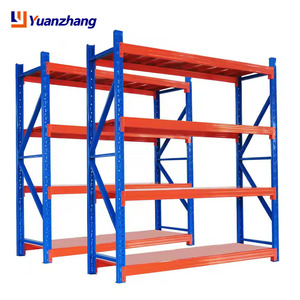
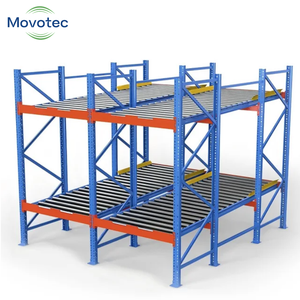
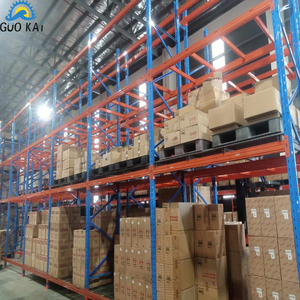
Direct factory configurations manufactured from high-tensile cold-rolled steel (Q235B / Q355B). Designed to meet EN 15512, EN 15620, and international load capacity parameters with certified finite element verification.
As a tier-one racking systems manufacturer founded in 2001, Guangzhou Heda Shelves Co., Ltd. operates with end-to-end accountability. Every column section, connector claw, and shelf profile undergoes continuous Quality Assurance verified by independent testing bodies.
Our industrial pallet racks and mezzanine platforms hold authentic CE Marking under Certificate No. 2435-CPR-8605159 and ISO 9001:2015 accreditation (Cert No. 18624Q00169R0M). Every structural calculation references EN 15512 and EN 15620 execution standards to ensure regulatory acceptance by European building inspectors.
We deploy continuous automated roll-forming units capable of multi-station progressive profile shaping with tolerances within ±0.5mm. Utilizing certified Q235B and high-yield Q355B structural steel, our omega-profile uprights exhibit exceptional modulus of elasticity against torsional and flexural buckling.
Steel components undergo automated shot-blasting, acid pickling, zinc phosphating, high-pressure DI water cascades, and thermosetting electrostatic epoxy-polyester powder coating. Cured at 200°C, the coating resists extreme humidity, abrasive chemical contact, and sub-zero cold store conditions down to -30°C.
Our in-house team of structural engineers translates warehouse architectural drawings (DWG/Revit) into optimized storage layouts within 24 to 48 hours. We simulate forklift turning radii (AST), picking cycles, flue space fire code compliance, and calculate exact safe working load (SWL) capacities without cost.
All beams and frames are bundled with protective steel strapping, edge corner guards, and humidity-barrier poly-wrapping. Export containers are packed with numbered assembly tags for swift on-site sorting. Regular container departures connect our Guangzhou factory directly to Rotterdam, Hamburg, Antwerp, Valencia, and Felixstowe.
We empower regional material handling dealerships, system integrators, and racking contractors with private-label manufacturing. Offerings include custom corporate RAL powder coats, custom profile stampings, distributor branding tags, and engineering document support for municipal permitting.
Selecting the ideal storage medium requires balancing spatial density against SKU selectivity and handling throughput. The table below outlines technical criteria utilized by logistics project directors.
| System Architecture | Volumetric Density | Pallet Selectivity | Operating Principle | Standard Load / Level | Standard Compliance |
|---|---|---|---|---|---|
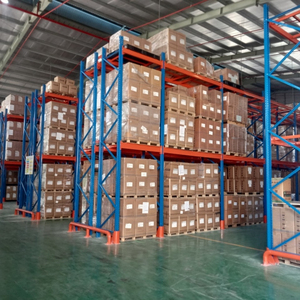
| Selective Pallet Racking | Baseline (100%) | 100% Direct Access | FIFO / LIFO (Universal) | 1,000 kg – 4,500 kg | CE / EN 15512 |
| Drive-In / Drive-Through | High (+65% vs Selective) | Last Pallet Face Only | Strict LIFO (Drive-In) / FIFO | 1,000 kg – 2,000 kg / lane | EN 15620 Class 400 |
| Radio Shuttle Automation | Maximum (+85% vs Selective) | Lane-Level Automated | Configurable FIFO / LIFO | 500 kg – 1,500 kg / pallet | CE / Machinery Dir. |
| Gravity Roller Flow Rack | Very High (+60% vs Selective) | Front Picking Face Direct | Continuous Gravity FIFO | 300 kg – 1,200 kg / pallet | EN 15512 / ISO 9001 |
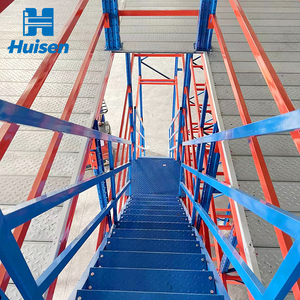
| Structural Mezzanine Platform | 2x to 3x Footprint Area | 100% Manual / Cart Access | Continuous Staging | 300 kg – 1,000 kg / m² | EN 1090-2 Execution |
| Heavy Duty Cantilever Rack | Linear Continuous | 100% Frontal Long-Loads | Universal for Timber/Pipes | 500 kg – 3,000 kg / arm | CE Structural Steel |
As macro-economic shifts, escalating industrial real-estate lease costs, and carbon border adjustment mechanisms (CBAM) alter logistics dynamics, B2B procurement strategies are pivoting rapidly toward four pivotal paradigms.
Rising land lease expenses across European hubs (e.g., Rhine-Ruhr, Rotterdam, Midlands) have rendered low-density conventional selective racking economically unviable for fast-moving consumer goods (FMCG). Facility directors are migrating rapidly toward semi-automated radio shuttle lanes and 4-way deep-storage racking. These configurations eliminate fork truck travel aisles, boosting storage volume utilization from 40% to over 80% within existing building envelopes.
Procurement teams are transitioning away from historic permissible stress calculations toward modern Limit State Design (LSD). Structural racking must now account dynamically for seismic ground accelerations, beam-to-column semi-rigid rotational joint stiffness, and floor anchorage ductility under cyclic vibration. Suppliers unable to provide certified engineering dossiers with finite element stress simulations are systematically being excluded from major European corporate tenders.
Under the EU Corporate Sustainability Due Diligence Directive (CSDDD) and CBAM import disclosures, warehouse owners evaluate racking lifecycle CO₂ equivalents per pallet position. Manufacturers that utilize electric arc furnace (EAF) low-carbon steel, energy-efficient electrostatic curing lines, and solvent-free non-toxic epoxy coatings offer tangible competitive advantages during institutional ESG procurement audits.
Global supply chain interoperability mandates that storage uprights adapt seamlessly between European standard EUR-EPAL (1200 × 800 mm), UK industrial pallets (1200 × 1000 mm), and automated plastic slave pallets. Furthermore, surging e-grocery cold storage requires structural steel with guaranteed Charpy V-notch impact toughness at -30°C to prevent brittle fracture phenomena in automated deep freeze facilities.
Modern racking is no longer a passive commodity; it is an active, precision-engineered structural sub-assembly designed to interact seamlessly with autonomous guided vehicles (AGVs), AS/RS cranes, and warehouse management software (WMS).
Traditional racking utilizes heavy-gauge Q235B hot-rolled profiles. Contemporary manufacturing leverages advanced Q355B micro-alloyed steel formed into complex multi-bend omega shapes. By placing longitudinal stiffener ribs along the column flanges, torsional warping resistance increases by 28% while overall steel consumption drops, reducing both dead-weight floor stress and oceanic shipping freight.
Beam-to-upright connection mechanics dictate the overarching structural integrity of high-bay installations. HEDA Shelves utilizes robotically welded 5-tooth drop-forged connector brackets. Engineered to exert progressive wedge-locking action under load, these connectors maintain rigid deflection ratios well within the EN 15620 limit of L/200 under maximum safe working load (SWL).
Emerging intralogistics standards integrate wireless triaxial accelerometers into column base protectors. These battery-free, RFID-harvested impact monitors transmit real-time telemetry whenever a forklift collides with an upright, logging impact severity directly into facility maintenance dashboards for proactive EN 15635 compliance.
Precision fabrication under rigorous ISO 9001:2015 quality surveillance.
Tensile yield & chemical composition spectrometry.
High-precision coil strip preparation with clean edges.
High-speed hydraulic 50mm/75mm pitch tooling.
Multi-roller progressive shaping of omega uprights.
Automated twin C-beam interlocking seam welding.
Gas-shielded MIG weldment of 5-prong connector brackets.
Complete scale elimination and surface degreasing.
Micro-crystalline conversion coating for paint adhesion.
Lead-free epoxy-polyester powder baked at 200°C.
Coating thickness check, bundled with corner buffers.
Critical considerations covering structural standards, factory production control, Euro-pallet tolerances, and logistics turnaround times.
In the European Union, static steel pallet racking and structural mezzanine platforms are governed by the Construction Products Regulation (CPR 305/2011) and harmonized structural standard EN 1090-1 / EN 15512. Guangzhou Heda Shelves Co., Ltd. holds CE Certificate No. 2435-CPR-8605159 issued by notified bodies. We deliver Factory Production Control (FPC) documentation, raw material mill test certificates (MTC 3.1), and CE Declarations of Performance (DoP) required for final facility sign-off.
Under EN 15620 clearance guidelines, a standard 3-pallet wide bay storing 1200 × 800 mm pallets with short-side handling requires a clear beam length of 2700 mm. This provides 75 mm lateral clearance between adjacent pallets and 100 mm between the outer pallets and the upright frame. For heavy 2-pallet bays, a 1800 mm or 1850 mm clear beam span is standard. Beam depths and upright frame depths are engineered at 1050 mm or 1100 mm to ensure a safe 50 mm front and rear overhang.
In compliance with EN 15512 guidelines, beam vertical deflection under uniform static load must not exceed 1/200th of the clear span length (Span / 200). For example, a 2700 mm beam carrying a rated 3,000 kg load cannot deflect more than 13.5 mm at mid-span. Furthermore, our designs integrate a certified structural safety factor of 1.4 to 1.5 against ultimate yield failure, preventing catastrophic failure under transient shock loading.
To prepare an accurate engineering drawing and structural quotation, our engineering team requires: (1) Architectural floor plan in DWG or PDF format indicating clear ceiling height, building column grids, and dock doors; (2) Pallet specifications including width, depth, overall height, and maximum gross weight; (3) Materials handling equipment (MHE) model, lift height, and minimum right-angle stacking aisle width (Ast); (4) Target working temperature (ambient or cold room).
Standard fabrication lead time is 15 to 25 business days depending on overall tonnage and customization requirements (e.g., custom RAL powder hues or heavy-gauge hot-dip galvanizing). Ocean transit from Guangzhou or Shenzhen ports to major European gateway container terminals (Rotterdam, Hamburg, Antwerp, Valencia) typically requires 28 to 35 calendar days. We supply comprehensive bills of lading, packing manifests, and commercial invoices under CIF, FOB, or DDP terms.
Every shipment is accompanied by sequential numbered installation schematics, frame assembly cross-bracing charts, and torque tightening parameters for anchor bolts. We provide direct remote video guidance by bilingual structural engineers and can dispatch on-site erection supervisors for large-scale logistics hub projects. Components are supplied with certified load warning plaques designed to facilitate mandatory annual EN 15635 safety audits.
Connect directly with HEDA Shelves' technical engineering department in Guangzhou. Receive a complimentary 2D/3D DWG spatial layout, structural load verification tables, and factory direct container pricing within 24 hours.