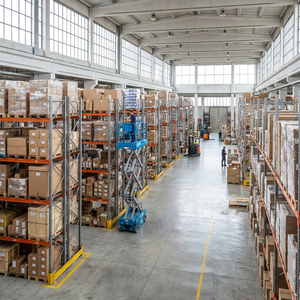
EN 15512 & CE Certified Structural Steel Engineering

CE Certified Structural Racking Suppliers & Exporter

Precision-engineered cold-formed and hot-rolled structural steel storage systems for global logistics hubs, cold storage distribution centers, and high-bay warehouses.

Engineered Storage Portfolio

High-Capacity Industrial Racking & Mezzanine Systems

Discover our certified structural configurations manufactured with premium Q235B/Q355B structural steel, tailored for international pallet standards including EUR/EPAL, UK standard, and ISO industrial footprints.

2001
Founded & Engineered
30,000m²
Smart Factory Facility
30,000t
Monthly Steel Output
10,000+
Global Logistical Projects
Enterprise Credentials & E-E-A-T

Certified European Structural Compliance & Direct Manufacturing Scale

Operating continuously since 2001, Guangzhou Heda Shelves Co., Ltd. delivers direct factory-to-port structural pallet racking systems backed by verifiable European CE certification and stringent ISO 9001:2015 quality assurance.

End-to-End Control Over Heavy Structural Integrity

Unlike intermediaries, our unified 30,000 m² Guangzhou production base coordinates every stage of the structural lifecycle. From the incoming spectroscopic inspection of high-tensile certified steel coils to automated multi-stage roll-forming lines, every batch conforms strictly to EN 15512 (European standard for steel static storage systems) and EN 15620 tolerances.

  • Verifiable CE Certificate No. 2435-CPR-8605159: Ensuring compliance with Construction Products Regulation (CPR) for structural steel integration across the EU, UK, and EFTA zones.
  • Certified ISO 9001:2015 Management (Cert. No. 18624Q00169R0M): Documented process traceability from raw mill test certificates (MTC) to final torque testing.
  • Comprehensive OEM & ODM Supply for European Distributors: Full custom RAL electrostatic coating profiles, specialized stamping, and export-compliant palletizing for containerized transit.
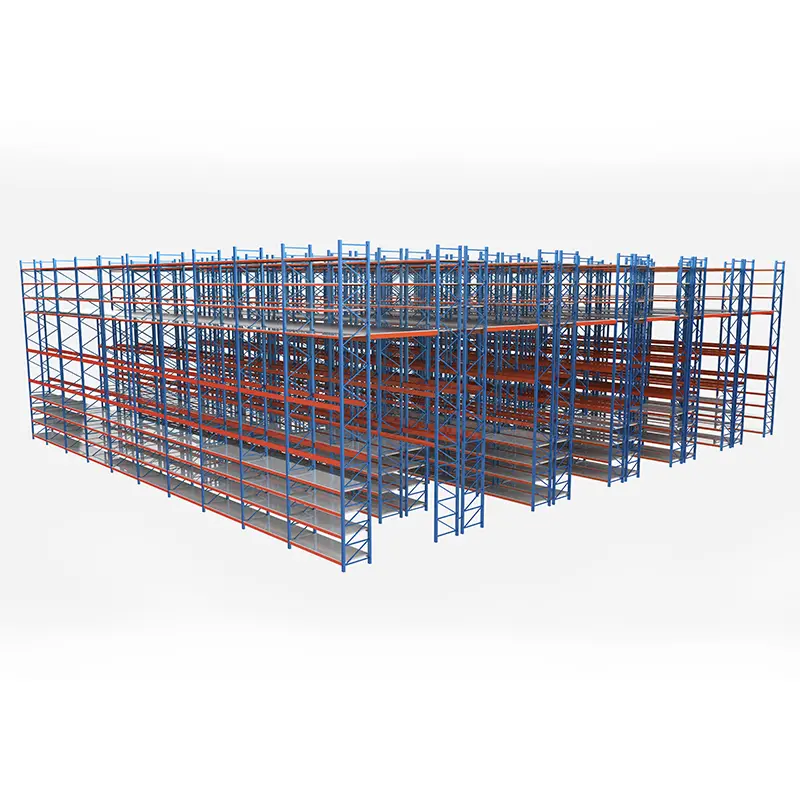
Certified Warehouse Racking Layout CAD Engineering

The HEDA Industrial Manufacturing Matrix

Our continuous processing sequence utilizes 10 automated stages: Raw Material Physical Testing → High-Precision CNC Slitting → Automated Upright Punching → Progressive Roll-Forming → Structural Profile Calibration → Dual-Side Robotic Welding → 7-Stage Pre-treatment (Pickling & Phosphating) → Electrostatic Powder Polymerization (60–90μm) → Ultrasonic Weld Non-Destructive Testing (NDT) → Seaworthy Protective Strapping.

Structural Parameter HEDA Certified Structural Systems Standard Commercial Racks Engineering Benefit
Primary Steel Grade Certified Q235B / Q355B (Yield Strength ≥ 235–355 MPa) Commercial Grade Low-Carbon Mixed Steel Predictable deflection curves (L/200 max) under extreme static loads
Punching Precision CNC multi-station automated continuous piercing (±0.1mm) Mechanical single-stroke mechanical stamping Seamless connector lock engaging without loose vibration under forklift impact
Corrosion Resistance 7-tank chemical degrease + zinc phosphating + pure polyester cure Single-stage wash with flash air dry Resistant to 500+ hours neutral salt spray; ideal for cold storage (−30°C)
Seismic Verification Static finite element analysis (FEA) compliant with Eurocode 3 & 8 Nominal gravity calculation only Life-safety preservation in seismic activity zones across Southern Europe
Industry Whitepaper Analysis

Structural Engineering Evolution: The Shift to High-Density Intralogistics

Modern supply chains demand unprecedented vertical utilization, severe impact resilience, and hybrid compatibility between automated guided vehicles (AGVs) and heavy structural racking.

Industrial warehousing is undergoing a fundamental structural transition. Driven by soaring industrial land lease costs across prime European logistics corridors (such as the Rhine-Ruhr hub, Rotterdam-Antwerp logistics gateway, and the Midlands Golden Triangle), supply chain directors are moving away from traditional light-duty selective racks toward structural-grade, high-rigidity racking ecosystems. Structural racking utilizes hot-rolled structural steel profiles or engineered heavy cold-formed open channels that withstand recurring vehicle collisions that would instantly deform lightweight commercial racking.

Furthermore, the convergence of automated material handling and traditional racking mandates tighter deflection tolerances. Standard automated crane systems, AS/RS stackers, and four-way radio shuttles demand beam level deflections strictly controlled under 1/200th to 1/300th of the span length. Failure to engineer for these micro-tolerances results in automated sensor fault shutdowns, pallet jamming, and catastrophic load shedding.

AS/RS & Shuttle-Ready Engineering

Integration of precision-leveled guide rails and continuous structural track supports that allow autonomous radio shuttles to transport pallet loads up to 1,500 kg through continuous storage channels up to 40 meters deep.

Multi-Tier Space Expansion

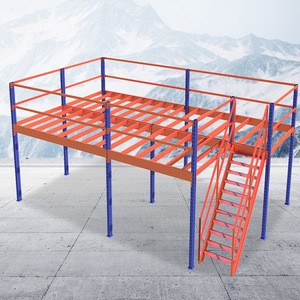
Transforming clear warehouse vertical height into active picking real estate. Heavy structural columns carry mezzanine decking with point-load capacities up to 1,000 kg/m², avoiding costly external building expansion.

Dynamic Seismic Safeguarding

Full 3D finite element simulation referencing EN 1998 (Eurocode 8) seismic dynamics. Upright base footings and portal bracing configurations designed to absorb ground acceleration without catastrophic structural buckling.

Strategic Sourcing Intelligence

Global Procurement Trends: What Enterprise Buyers Must Anticipate

Procuring structural racking for 2025 and beyond requires balancing Total Cost of Ownership (TCO), carbon accountability, modular lifespan, and supply chain lead-time security.

Trend 01

Shift from CapEx to Lifecycle TCO

Procurement teams are shifting focus from initial steel purchase cost to lifecycle maintenance. Certified structural racks reduce replacement cycles caused by everyday forklift impact by over 60% compared to thin roll-formed columns.

Trend 02

CBAM & Carbon Footprint Auditing

With the European Carbon Border Adjustment Mechanism (CBAM), enterprise buyers require full environmental product declarations (EPD) and quantifiable carbon emissions metrics for imported hot-rolled and cold-formed structural steel.

Trend 03

Modular Standardized Interchangeability

Modern mega-DCs demand standardized structural beam-to-column connections that allow rapid re-profiling of bay heights as retail SKU velocity shifts from bulk pallet distribution to broken-case item picking.

Trend 04

Direct Mill-to-Port Containerized Sourcing

By eliminating middle-tier warehousing markups, logistics operators partner directly with certified tier-1 manufacturers offering full engineering packages, numbered installation drawings, and direct sea-freight booking to major global ports.

Procurement Due Diligence

Frequently Asked Questions on Structural Racking Engineering

Technical, regulatory, and logistics clarifications to assist procurement managers, consulting engineers, and plant managers during tender evaluation.

What distinguishes structural racking from conventional roll-formed pallet racking? +

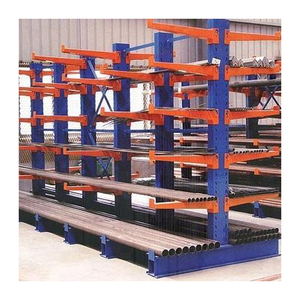
Conventional roll-formed racking is fabricated from thin-gauge cold-rolled steel coils folded into open C-sections or omega profiles. While cost-effective for light pallet loads, they are susceptible to torsional buckling when struck by industrial forklifts. Structural racking, by contrast, utilizes hot-rolled structural steel channels (such as C-channels, I-beams, or heavy structural hollow sections) or heavy cold-formed profiles with material thickness up to 3.0mm–5.0mm. Structural racks offer significantly higher torsional rigidity, higher impact energy absorption, and substantially greater capacity in high-turnover logistics hubs, drive-in systems, and heavy outdoor cantilever applications.

How does the CE Certificate (No. 2435-CPR-8605159) protect the importer of record in the EU? +

Under the European Construction Products Regulation (CPR 305/2011/EU), structural racking permanently anchored into a building slab that forms part of the facility's active load-bearing envelope requires verified CE documentation. Our CE Certificate No. 2435-CPR-8605159 verifies that our factory production control (FPC) system, raw steel sourcing, welding quality, and load-bearing calculations satisfy mandatory EU harmonized standards. Having verified CE documentation provides immediate sign-off during local building authority inspections, satisfies commercial facility insurance underwriting, and protects corporate directors from regulatory compliance liability.

How are structural deflection calculations conducted for automated crane (AS/RS) interfaces? +

Structural calculations for automated facilities follow EN 15512 and FEM 9.831 guidelines. Unlike standard manual selective racking where elastic vertical deflection of beams is capped at L/200, AS/RS and automated shuttle systems require maximum beam deflection limited to L/300 or L/400 to maintain laser optical sensor accuracy. Upright frame sway under transient seismic and wind/crane reaction forces is assessed using 3D finite element structural analysis (FEA), ensuring horizontal deflection along the aisle axis does not exceed H/500, preventing stacker crane collisions.

What surface finishing process is utilized to prevent corrosion in deep-freeze (−30°C) cold stores? +

In deep-freeze cold chains, thermal shock and condensation create extreme corrosion and paint peeling risks. HEDA structural racking undergoes a continuous 7-stage chemical pre-treatment comprising hot alkaline degreasing, acid pickling, rinse baths, and amorphous zinc phosphating. This creates a dense crystalline conversion coating that anchors an electrostatic high-grade TGIC-free polyester powder finish (thickness: 60–90 μm) cured at 180–200°C. For harsh humid or brine cold-store environments, we provide hot-dip galvanization conforming to EN ISO 1461 with average coating thicknesses exceeding 65–85 μm, guaranteeing decades of rust-free performance.

What documents are delivered with each export shipment for seamless port customs clearance? +

Each container shipment is supported by a comprehensive technical export package including: Original Bill of Lading (B/L), Commercial Invoice with accurate HS Code classifications (typically 7308900000 for structural steel frameworks), Detailed Packing List with piece counts and container distribution maps, Certificate of Origin, Mill Test Certificates (MTC) according to EN 10204 3.1 verifying steel chemical and mechanical properties, CE Declaration of Performance (DoP), ISO 9001:2015 certificate copies, and step-by-step structural erection blueprints with numbered component tags.

How does HEDA handle custom seismic calculations for facilities located in active earthquake regions? +

For installations in designated seismic zones (such as Southern Europe, parts of Central America, Japan, and the Pacific Rim), our in-house structural engineering department inputs your warehouse GPS coordinates, ground soil classification, and peak ground acceleration (PGA) metrics into dynamic FEA structural modeling software. Calculations are verified under Eurocode 8 (EN 1998) or local seismic codes. Based on results, we engineer high-ductility baseplates, enlarged anchor bolt arrays, increased upright gauge thickness, and additional horizontal portal ties to prevent brittle structural collapse during seismic events.

Design Your CE Certified Structural Storage Facility Today

Submit your architectural floor plans (DWG/PDF), clear interior heights, pallet load parameters, and handling equipment models. Our structural engineers deliver comprehensive CAD layout options and stamped load tables within 24 to 48 hours.