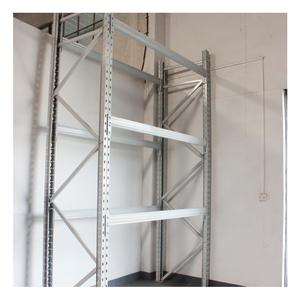
Heavy Duty Boltless Shelf Rack Adjustable Metal for Warehouse Storage Steel Low Price
Interlocking clip-in beam connections allow rapid vertical height adjustment without specialized hardware, ideal for dense multi-tier manual pick zones.
Discover our certified, precision-manufactured rack configurations designed for cold chains, high-bay distribution centers, automated workstations, and heavy pallet operations worldwide.
Interlocking clip-in beam connections allow rapid vertical height adjustment without specialized hardware, ideal for dense multi-tier manual pick zones.
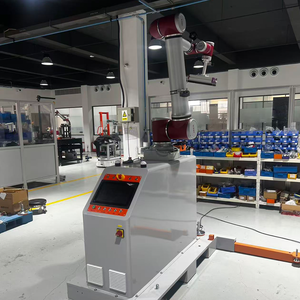
Robotic automated stacking node seamlessly bridging double deep infeed conveyors and high-speed pallet loading decks with zero human intervention.
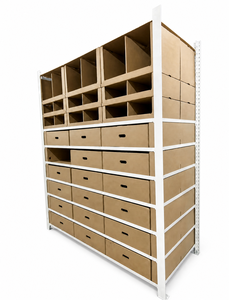
High-tensile slotted angle geometry combined with modular pull-out drawers for high-density automotive spare parts picking and sub-assembly storage.
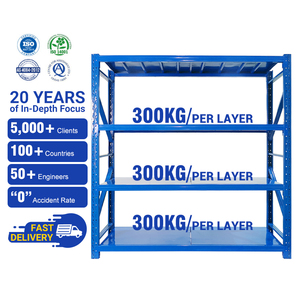
Electrostatic polyester powder coating tested against corrosive industrial atmospheres, optimized for variable carton footprints and micro-fulfillment hubs.
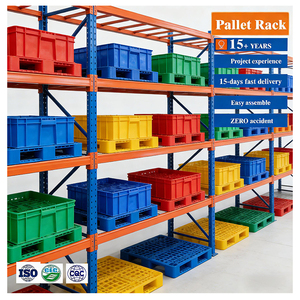
Triple-flange connector brackets and boxed beam profiles capable of carrying 3000 kg per beam level under EN 15512 safety deflection criteria.
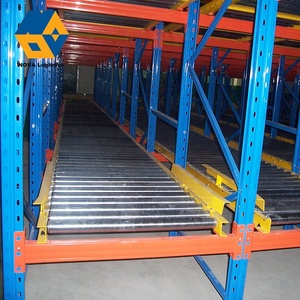
First-In First-Out (FIFO) dynamic gravity roller channels with centrifugal speed governors, engineered for date-sensitive perishable goods and cold stores.
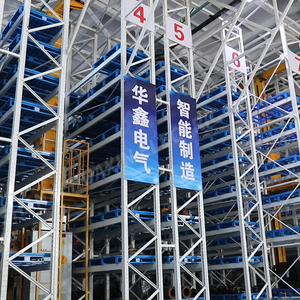
Fully automated ASRS racking superstructure designed for integration with automated stacker cranes, miniload AGVs, and intelligent WMS platforms.
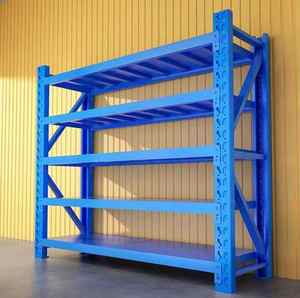
Wide-span steel decking with 500 kg per level uniformly distributed load (UDL) capacity, precision roll-formed for heavy carton and tool storage applications.
Double deep warehouse racking represents the quintessential engineering balance between 100% selective accessibility and extreme high-density block stacking. By placing two pallet positions back-to-back from a single operating aisle, this system eliminates up to 42% of unnecessary transit corridors.
Double deep bays require specialized pantograph reach trucks or deep-reach telescopic forks. The front pallet position is accessed identically to standard selective racking, while rear pallet engagement requires mechanical articulation with minimal mast deflection.
Dual-row frame configurations are physically coupled using heavy-gauge bolted row spacers. This structural pairing creates a wide-base truss system that dramatically increases the transverse resistance against seismic shear forces and horizontal impact.
Because rear pallet placement relies on driver depth perception, double deep beams incorporate pallet support bars, drop-in wire mesh decking, or raised rear pallet backstops to prevent pallet slip, uneven point-loading, or frame puncturing.
When evaluating China racking exporters, industrial supply chain managers must calculate volumetric storage efficiency against equipment capital expenditure. Review our engineering trade-off matrix below.
| Racking Architecture | Floor Footprint Utilization | Pallet Selectivity | Stock Rotation Strategy | Required Handling Equipment | Relative CAPEX / Position |
|---|---|---|---|---|---|
| Double Deep Racking | 55% - 65% (High) | 50% Direct Access | FILO / Batch FIFO | Double-Reach Truck / Telescopic AGV | Economical Medium |
| Standard Selective Pallet Racking | 35% - 42% (Low) | 100% Immediate | Unrestricted FIFO / LIFO | Standard Counterbalance / Reach | Lowest Initial Cost |
| Drive-In / Drive-Through Racking | 65% - 75% (Very High) | Low (Lane-Based) | Strict FILO (LIFO) | Standard Counterbalance Truck | Medium |
| Radio Shuttle Cart Racking | 75% - 85% (Maximum) | Automated Lane-Based | Dynamic FIFO or LIFO | Standard Forklift + Radio Shuttle Cart | High (Automation Grade) |
| Very Narrow Aisle (VNA) Racking | 50% - 60% (High Vertical) | 100% Direct Access | Unrestricted FIFO | Specialized Man-Up / Turret Truck | High Equipment Cost |
Procuring warehouse storage from Chinese exporters is evolving rapidly from purchasing static steel hardware to integrating cyber-physical logistics infrastructure. Engineering directors must prepare for these distinct structural and operational transformations.
Traditional pantograph reach trucks operated by human drivers are being rapidly complemented by autonomous mobile robots (AMRs) and autonomous guided reach vehicles equipped with 3D LiDAR SLAM navigation. Double deep racking must now be manufactured with millimeter-precise beam pocket tolerances and optical reflector fiducials on upright posts.
Refrigerated warehouse operation costs are dominated by electrical thermal losses per cubic meter. Double deep systems cut building volume by up to 35% compared to selective designs. Leading export fabricators utilize specialized low-temperature alloyed steels that prevent cold embrittlement down to -30°C without micro-fracturing under cyclic pallet dynamic shock.
International tender standards increasingly enforce carbon footprint tracing under CBAM (Carbon Border Adjustment Mechanism) and ISO 14064. Tier-1 Chinese exporters are shifting to blast furnace-scrap electric arc furnace (EAF) hybrid coils, non-toxic lead-free polyester powders, and phosphate-free silane ceramic surface pretreatments.
Founded in 2001, Guangzhou Heda Shelves Co., Ltd. operates an advanced 30,000 m² production complex with monthly fabrication output surpassing 30,000 metric tons. With verified CE Certificate No. 2435-CPR-8605159 and ISO 9001:2015 Quality Management accreditation, we engineer, calculate, and fabricate full-scale warehouse logistics racking systems for distributors, 3PL giants, and industrial developers worldwide.
Detailed engineering, operational, and logistic answers addressing critical concerns during the specification of double deep storage systems.
Double deep racking provides 50% immediate pallet selectivity across front-row positions. For rear-row positions, stock rotation operates on a First-In, Last-Out (FILO) per bay discipline. It is the optimal engineering choice for warehousing operations handling 2 to 4 pallets per distinct SKU, such as FMCG food batching, dry ingredients, packaging materials, and identical manufactured sub-assemblies.
Operating aisle width (AST) for pantograph double-reach forklifts typically ranges from 2,800 mm to 3,200 mm depending on pallet dimension (e.g., standard 1200 x 800 mm Euro or 1200 x 1000 mm ISO/GMA). By contrast, conventional counterbalance forklifts in selective racking require 3,500 mm to 4,200 mm. Double deep immediately recaptures approximately 25% of dedicated aisle floor space.
HEDA Shelves conducts static finite element analysis (FEA) and physical prototype testing in line with EN 15512 (Steel static storage systems – Adjustable pallet racking systems – Principles for structural design). Upright frame stub-column compression, beam end-connector moment-rotation characteristics, and beam deflection testing are validated with stamped engineering calculation dossiers for local building regulatory approval.
Racking components are nested using custom steel dunnage to maximize volumetric container payload up to 26–28 metric tons per 40ft High Cube container. Upright frames are either flat-packed unbolted or pre-assembled based on regional site labor rates. Beams are strapped in protective corrugated bundles with protective polymer corner guards to prevent maritime transit coating abrasion.
Yes. Because our beam punch profiles utilize standardized pitch increments (50mm or 75mm), double deep frames can be retrofitted with push-back roller carts, gravity flow tracks, or modified for automated telescopic satellite shuttles. Upright load capacity should be initially specified to accommodate potential automated payload upgrades.
For ambient warehouses, our 80–120 micron thermosetting epoxy-polyester powder coat provides robust anti-scratch protection. For cold stores with condensation cycles, coastal zones, or chemical warehouses, we supply hot-dip galvanized (HDG) upright frames and beams tested in 1,000-hour neutral salt spray chambers (ASTM B117) to prevent zinc oxide degradation.
Submit your warehouse AutoCAD DWG floor plan, pallet dimensions, maximum unit load weight, and building clear clearance height. Our senior structural logistics engineers provide complete 2D layout drawings, 3D renders, and certified load capacity tables within 24 hours.