High-Capacity Pallet & Heavy-Duty Warehouse Storage Solutions
Standardized cold-rolled engineering profiles, high-tensile structural integrity, and fully custom bay specifications fabricated for global distributors, multi-national 3PLs, and cold stores.
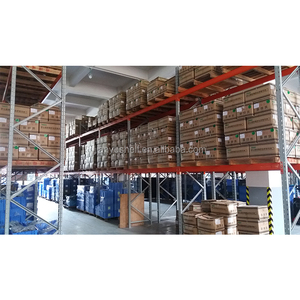 Standard Heavy-Duty
Commercial Industrial Storage Rack System Heavy Duty Pallet Warehouse Solution
Engineered for dynamic multi-SKU inventory environments requiring direct individual pallet selectivity. Manufactured from high-tensile Q235B cold-rolled steel with electrostatic polymer coatings.
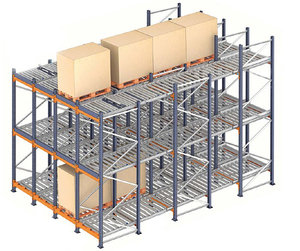 FIFO Gravity Dynamic
Steel Heavy Duty Large Load Capacity Gravity Pallet Racking System for Food Beverage Warehouse Storage
Inclined roller-track design guaranteeing strict First-In First-Out (FIFO) material turnover. Integrates automatic centrifugal speed controllers and end-stop safety separators for perishable goods.
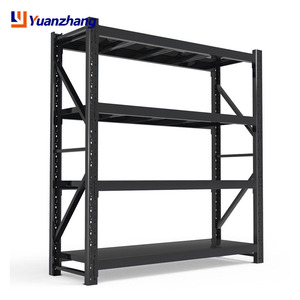 Manual Longspan
Warehouse Wide Span Duty Rackingindustrial Steel Storage Rack Coated Warehouse Metal Shelves
Heavy-duty longspan shelving configured for non-palletized manual case picking, automotive spare parts, and intermediate carton buffering. Modular boltless assembly with reinforced steel decking.
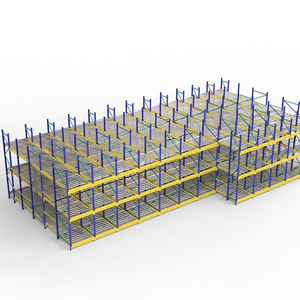 High-Density Flow
Mracking Heavy Duty Metal Gravity Flow Racks for Sale Customizable Gravity Flow Racking System
Custom engineered live pallet flow infrastructure designed to maximize surface volumetric utilization by up to 65% while minimizing internal forklift travel distances in pharmaceutical and beverage hubs.
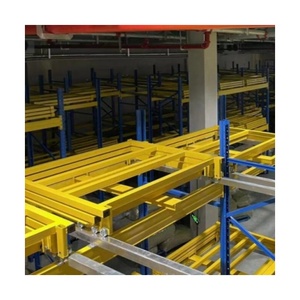 Dynamic Push-Back
New Material Handling Pallet Racking Adjustable Metal Shelf and Racks Push Back Rack for Warehouse Equipment Push Back Racking
Multi-cart nested rolling system operating on inclined steel guide rails. Accommodates 2 to 6 pallets deep per lane on a Last-In First-Out (LIFO) cycle without requiring forklift trucks to enter storage bays.
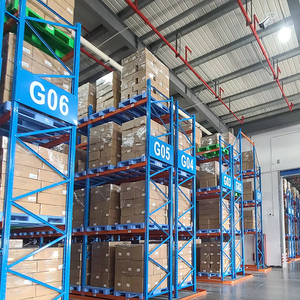 Multi-Tier Stacking
Steel Warehouse Metal Van Rack System Heavy Duty Stacking Pallet Shelves Single Deep Industrial Estanteria Metalica Shelving
Precision-manufactured cold-formed uprights and high-capacity box beams designed for high vertical clear-height facilities. Delivers complete flexibility for Euro-pallets, industrial skids, and wire containers.
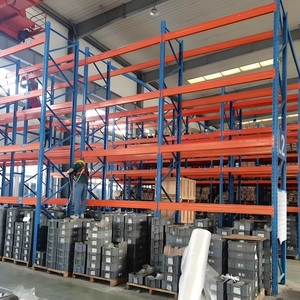 Boltless Plug-In
Steel Selective Pallet Rack Multi Bay Warehouse Shelving Plug-In Boltless Rivet Storage System
Interlocking connector clip engineering enabling ultra-rapid installation across overseas job sites. Reinforced beam-to-column claw geometry disperses dynamic bending moments under maximum load conditions.
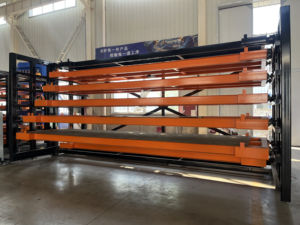 Multi-Tier Engineered
Multi-Tier Carbon Steel Powder Coated Anti-Rust Heavy Duty Warehouse Racking System 2000mm Height Storage Rack For Industrial
Industrial heavy-duty modular racking system treated with an automated 9-stage pickling, phosphating, and thermosetting epoxy-polyester powder coating protocol, delivering exceptional salt-spray rust protection.
Drive-In & Drive-Through Racking Mechanics: Maximizing Volumetric Density
Understanding structural load transfers, continuous rail deflections, and aisle-free high-density storage mathematics for global enterprise fulfillment centers.
1. The Physics of Aisle Elimination: Volumetric Storage Density Optimization
In standard selective pallet rack layouts, conventional counterbalance and reach forklifts demand working operating aisles between 2.8 meters and 3.6 meters wide. As a direct result, up to 60% of total facility floor footprint is surrendered to non-revenue vehicle maneuvering corridors. Drive-In Warehouse Racking overturns this spatial inefficiency by consolidating pallet rows into deep, uninterrupted continuous storage lanes ranging from 4 to 12 pallets deep, stacked up to 6 tiers high.
By eliminating intermediate service aisles, Drive-In systems dramatically heighten cubic building utilization, reaching storage density figures above 75% to 85% of total warehouse capacity. In applications handling homogeneous inventory—such as cold chain frozen warehousing, agricultural bulk commodities, chemical batch reserves, and large-scale FMCG distribution—Drive-In racking reduces real-estate holding costs and cuts energy expenditure per stored pallet position by up to 45%.
2. Structural Anatomy: Cantilever Bracketry, Guide Rails, and Top-Tie Bracing
Unlike standard selective frames where horizontal cross-beams physically connect the front and back uprights beneath every pallet, a Drive-In racking lane must remain open to allow forklift trucks to enter the storage matrix physically. Pallets do not rest on horizontal transverse beams; instead, they rest on continuous, cold-formed longitudinal side support rails bolted to one-piece stamped cantilever arms (support brackets) projecting directly from the upright profiles.
Because Drive-In structures lack traditional cross-beam longitudinal stiffness, dynamic horizontal sway and lateral torsion become the primary engineering design constraints. As China's premier racking exporter, Guangzhou Heda Shelves Co., Ltd. incorporates high-stiffness top-tie portal beams and vertical diagonal rear cross-bracing towers. Our structural engineers verify load combinations strictly against the European Standard EN 15512:2020 and RMI (Rack Manufacturers Institute) MH16.1 specifications, ensuring frame stability under asymmetric loading and forklift mast contact scenarios.
| Storage Architecture | Volumetric Density | Pallet Selectivity | Stock Rotation | Forklift Impact Risk | Relative Cost / Position |
|---|---|---|---|---|---|
| Drive-In Racking System | Ultra-High (85%) | Lane-Level (Last In, First Out) | LIFO | Moderate to High (Inside Lane) | Low-to-Medium (Best Value) |
| Drive-Through Racking | High (80%) | Dual Access (Strict FIFO) | FIFO | Moderate to High (Dual Face) | Medium |
| Push-Back Rack (Dynamic) | Medium-High (70%) | Face-Level Selective (2-6 Deep) | LIFO | Very Low (No Truck Entry) | Medium-High (Mechanical Carts) |
| Gravity Pallet Flow | Very High (85%) | Strict FIFO (Lane Driven) | FIFO | Low (Aisle Pick/Deposit Face) | High (Braked Roller Tracks) |
| Radio Shuttle Automation | Ultra-High (90%) | Automated Lane-Level | FIFO or LIFO | Negligible (Robotic Runner) | High (Robotics & Rail Matrix) |
| Standard Selective Rack | Baseline (40-45%) | 100% Direct Immediate | Any (Unrestricted) | Low (External Aisle Only) | Lowest Capital Initial Cost |
Future Procurement Trends: 2025–2030 Global Racking Outlook
How raw material fluctuations, cold chain expansions, and automated shuttle integration are reshaping international warehouse racking procurement strategies.
1. High-Tensile Micro-Alloy Steel Substitution
Procurement managers are transitioning from conventional commercial-grade Q235B carbon steel toward high-yield cold-rolled micro-alloyed grades such as Q355B and S355MC. This metallurgical upgrade increases yield strength by over 50%, enabling slimmer column profiles, higher vertical bay tolerances, lower total shipping container deadweight, and reduced international ocean freight costs per pallet location.
2. Cold Chain Carbon-Neutrality Pressures
With refrigerated warehouse real estate running up to 300% more expensive to construct and refrigerate than ambient facilities, global logistics operators are prioritizing maximum volumetric density. Drive-in systems that compact thermal footprints directly minimize external building shell heat leakage, making dense drive-in channels the preferred specification for sustainable, ESG-compliant sub-zero food logistics.
3. Hybrid Retrofittable Automation Channels
Future-proofing warehouse capital investments has become a mandatory procurement criteria. Forward-thinking enterprise supply chain directors are now specifying Drive-In profile uprights and bracket punchings that can be rapidly converted into semi-automated 4-way Radio Shuttle lanes with minimal structural replacement, providing a non-disruptive migration path toward full AS/RS robotics.
4. Independent Seismic & EN 15512 Compliance Audits
Cross-border buyers in Europe, the Middle East, and the Americas no longer accept generic factory certificates. Procurement guidelines require complete finite element analysis (FEA) structural calculation books referencing local seismic peak ground acceleration coefficients (PGA), certified third-party mill test certificates (MTC), and audited CE Marking credentials conforming to EN 1090 and EN 15512.
5. Transparent Factory-Direct Container Packing Optimization
Global buyers increasingly prefer direct Chinese manufacturers who provide 3D container packing load simulations prior to dispatch. Ensuring dense nesting of cold-formed upright frames and nested structural rails maximizes container cube utilization, preventing in-transit sea cargo shifting and lowering freight costs from Guangzhou, Ningbo, or Shanghai ports.
Drive-In Racking Structural Evolution & Mechanical Engineering Trends
From automated CNC punching tolerances to cryogenic anti-brittleness powder finishes, explore how modern engineering enhances safety, durability, and operational speed.
Advanced Finite Element Analysis (FEA) Modeling
Modern Drive-In design has evolved beyond empirical static formulas. Advanced engineering uses non-linear finite element modeling to simulate second-order structural effects (P-Delta), asymmetric live pallet loads, and horizontal impact stresses applied by moving forklifts inside confined drive-in aisles, producing optimized profile cross-sections with high torsional resistance.
Automated Continuous Roll-Forming Lines
Traditional manual brake-press manufacturing has been replaced by continuous 24-station automated cold-roll forming mills with in-line CNC hydraulic punching. This automated methodology delivers uniform 50mm or 75mm upright pitch tolerances, flawless column straightness over 12-meter single-piece frames, and eliminated localized residual stress concentrations.
Sub-Zero Cryogenic Coating Technologies
For deep-freeze warehouse environments operating at -25°C to -35°C, standard industrial paint chips and fractures due to cold brittleness. Modern exported drive-in racking utilizes specialized thermosetting TGIC-free polyester-polyurethane powders applied over high-adhesion zinc-phosphate pre-treatments, maintaining mechanical elasticity and anti-corrosion barrier integrity under rapid thermal cycling.
Integrated Forklift Guiding & Impact Deflection
Because forklift drivers must traverse inside narrow racking lanes with limited visual clearance, leading drive-in systems now feature floor-anchored continuous hot-rolled channel (C-channel) or structural angle guide rails. These rails feature flared bell-mouth entry funnels and reinforced column wrap-around boot protectors, dissipating forklift impact forces directly into the concrete foundation.
Guangzhou Heda Shelves Co., Ltd. — 25 Years of Global Racking Engineering
Factory-direct accountability, European CE certified compliance, and ISO 9001:2015 accredited production delivering verified structural reliability to 120+ countries worldwide.
Direct Factory Procurement with Complete Engineering Oversight
Founded in 2001, Guangzhou Heda Shelves Co., Ltd. has grown from a specialized precision metal fabricator into one of China's most trusted manufacturers and exporters of industrial warehouse storage solutions. Operating our own modern 30,000 m² facility with 300+ seasoned technical engineers, automated roll-forming lines, robotic welding stations, and automated electrostatic powder coating lines, HEDA provides complete end-to-end accountability.
For international supply chain buyers, commercial racking distributors, and warehouse project managers, partnering with HEDA eliminates middleman trading margins while ensuring complete compliance with global engineering codes. Every Drive-In racking project is supported by free preliminary 2D AutoCAD and 3D architectural rendering reviews within 24 hours, custom structural calculation books, and seaworthy export container bundling designed to withstand transoceanic shipping.
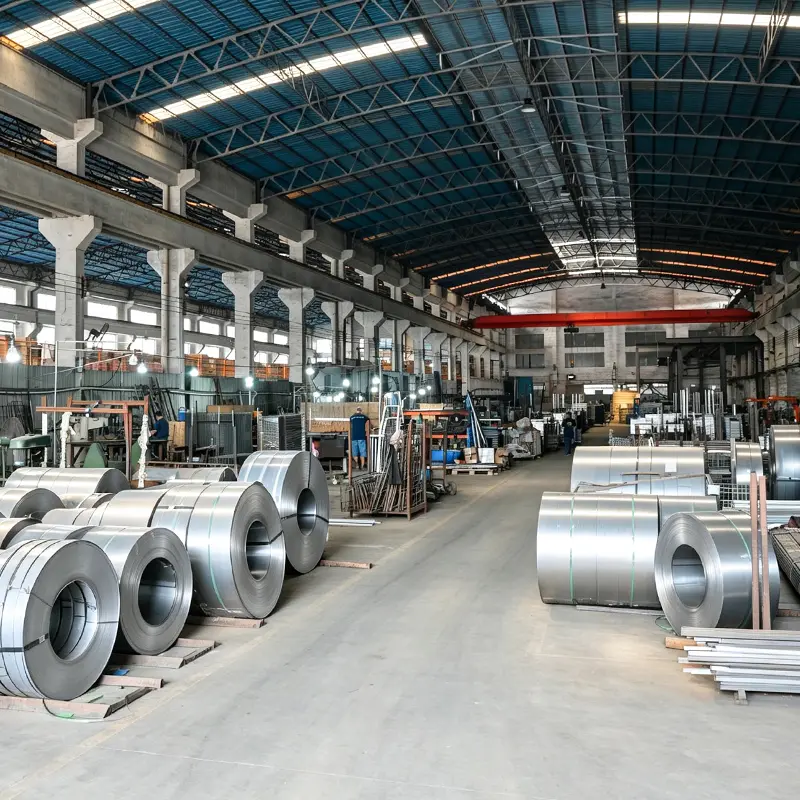
10-Step Quality Assurance Manufacturing Process
To ensure zero structural defects on exported job sites, our Guangzhou plant executes a rigorous 10-step quality control protocol across every production batch:
Raw Material QC
Mill test spectral chemical analysis of incoming Q235B & Q355B coils.
Slitting & Cutting
High-precision laser shearing and strip slitting to micron tolerances.
CNC Punching
Continuous hydraulic stamping of pitch holes and locking connection slots.
Cold Roll-Forming
Gradual multi-roller profiling preventing internal micro-fractures in steel.
Robotic Welding
Automated gas-shielded CO2/MIG welding of connectors and base plates.
Surface Polishing
Mechanical de-burring and edge smoothing for seamless assembly fit.
Pre-Treatment Wash
Multi-stage acid pickling, degreasing, and rust-inhibiting phosphating bath.
Powder Coating
Electrostatic spray booth application of tough, non-toxic epoxy-polyester.
High-Temp Curing
Baking at 180°C–200°C to achieve full resin cross-linking and hardness.
Export Packing
Steel-strapped bundle wrapping, edge board protection, and container loading.
 CE Certified
Certificate No. 2435-CPR-8605159
CE Certified
Certificate No. 2435-CPR-8605159
 ISO 9001:2015
Registration No. 18624Q00169R0M
ISO 9001:2015
Registration No. 18624Q00169R0M
 RoHS Compliant
Heavy Metal Free Surface Finishes
RoHS Compliant
Heavy Metal Free Surface Finishes
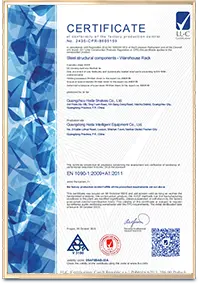 EN 15512 Design
Independent Third-Party Load Testing
EN 15512 Design
Independent Third-Party Load Testing
Drive-In Racking Sourcing & Engineering FAQ
Clear, technically rigorous answers to common questions asked by corporate procurement officers, logistics consultants, and structural engineers before placing overseas racking orders.
How do you calculate forklift clearance tolerances inside a Drive-In racking lane? +
What is the structural difference between Drive-In and Drive-Through racking systems? +
Can HEDA Drive-In racking be tailored for mixed Euro Pallets (1200x800mm) and ISO pallets (1200x1000mm)? +
What steel grades and anti-corrosion treatments are applied for sub-zero cold storage warehouses? +
How are structural calculation books and CE / EN 15512 compliance documents validated? +
What is the standard production lead time and ocean shipping transit schedule to global ports? +
What floor anchoring and concrete slab specifications are necessary for high-bay Drive-In racks? +
Request an Engineered Layout & Direct Factory Quotation
Send your warehouse floor plans (AutoCAD / PDF), clear ceiling height, pallet dimensions, and forklift technical specifications. Our structural engineers will return a complete 2D/3D layout proposal and load calculation analysis within 24 hours.