Featured Heavy-Duty Industrial Shelving & Racking Components
Engineered with Q235B/Q355B structural steel, standardized European punching profiles, and high-resilience powder coating designed for seamless global supply chains.
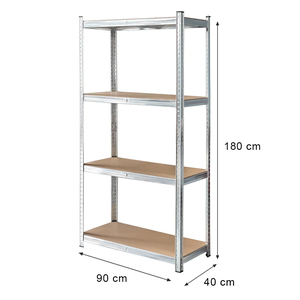
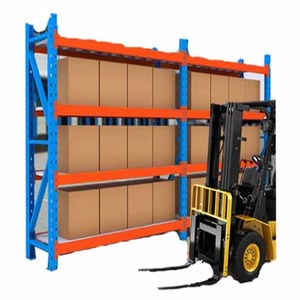
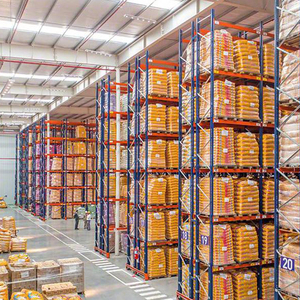
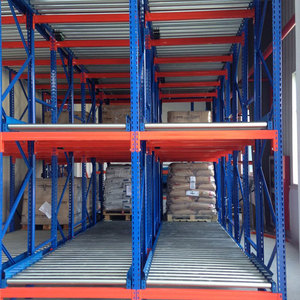
The Engineering Foundation of Industrial Shelving Components
In modern industrial intralogistics, shelving components are structural elements that ensure facility safety, inventory integrity, and operator throughput. As high-density intralogistics accelerates, industrial shelving components from China have transitioned from simple cold-rolled profiles into highly engineered, cold-formed structural assemblies. The performance of these systems relies on steel metallurgy, precise roll-forming roll-flower design, continuous pre-treatment coatings, and strict compliance with European standard EN 15512:2020 and American RMI MH16.1 criteria.
Whether configuring automated material handling platforms, multi-tier rack-supported mezzanines, or heavy selective pallet rows, systemic resilience hinges upon structural components designed with high yield points, predictable buckling behavior, and verified torsion resistance. High-grade industrial racking components produced in our Guangzhou manufacturing base integrate premium Q235B and Q355B low-carbon alloys to deliver optimum strength-to-weight efficiency, helping global distributors and Tier-1 warehouse builders balance cost with structural integrity.
Upright Frame Profiles
Continuous CNC-punched uprights featuring closed omega-beam and open multi-bend geometries designed to resist eccentric and dynamic axial stresses.
Interlocking Beam Connectors
Drop-forged, precision robotic-welded connector claws with 3-tooth and 4-tooth cold-stamped patterns delivering rigid upright-to-beam moment connections.
Surface Passivation & Finish
Automated 8-stage immersion pre-treatment with zinc-iron phosphating topped by electrostatic thermosetting polyester powder coating (60–90µm).
| Component Type | Standard Steel Grade | Yield Strength (fy) | Tensile Strength (fu) | Applicable Testing Standard |
|---|---|---|---|---|
| Heavy Upright Columns (80-140mm) | Q355B (Equivalent S355JR) | ≥ 355 MPa | 470 - 630 MPa | EN 15512 / ISO 9001 / CE CPR |
| Box & Interlocking Step Beams | Q235B (Equivalent S235JR) | ≥ 235 MPa | 370 - 500 MPa | EN 15620 / ANSI MH16.1 |
| Diagonal & Horizontal Bracings | Q235B Cold-Formed Channel | ≥ 235 MPa | 370 - 500 MPa | EN 15512 Stub Column Test |
| Base Plates & Floor Expansion Anchors | Structural Carbon Q235B / 8.8 Anchor | ≥ 355 MPa (Anchor) | ≥ 800 MPa (Class 8.8) | ETAG 001 Seismic Testing C1/C2 |
Future Trends in Industrial Shelving Procurement
Procuring industrial racking components is moving away from transactional, catalogue-based spot buying toward predictive, collaborative engineering partnerships. Industrial buyers, EPC contractors, and global material handling integrators face evolving operational demands, stricter supply chain audits, and carbon border adjustments. The following strategic trends are reshaping global procurement decisions:
1. Carbon Accounting & Closed-Loop Metallurgy: International environmental regulations, such as the EU Carbon Border Adjustment Mechanism (CBAM), require industrial shelving suppliers to provide transparent life cycle assessments (LCAs). Tier-1 Chinese exporters are adopting electric arc furnace (EAF) processed steel feeds, clean power coating applications, and low-waste automated coil slitting lines to help importers verify their scope 1, 2, and 3 emissions profiles.
2. Structural Design for AMR/AGV Swarm Automation: Warehouses are moving beyond manual reach trucks toward Autonomous Mobile Robots (AMRs) and automated shuttle systems. Component design now requires tighter tolerances, ultra-flat ground interface baseplates, and specialized low-deflection beam joints to support smooth robot docking and continuous sensor-guided navigation.
3. Supply Chain Resiliency & Modular Commonality: Global logistics teams are shifting to standardized, modular connection pitches. Utilizing universal 50mm and 76.2mm hole geometries lets global distributors stock universal uprights and interchangeable beams, reducing regional SKU complexity, lowering buffer stock investments, and shortening project installation timelines.
Emerging Technological Directions in Storage Component Manufacturing
Component engineering continues to evolve alongside advances in automated fabrication. The industrial shelving industry is introducing technical innovations that improve load capabilities, structural safety, and operational service life:
High-Frequency In-Line Quality Monitoring: Advanced roll-forming lines integrate real-time optical laser inspection systems that monitor punch centering, bend angles, and profile spring-back in real time. This ensures upright straightness within 1/1000 length tolerances, helping prevent residual internal stresses and installation delays during high-bay field assembly.
Anti-Seismic & Dissipative Base Connections: Warehouses are increasingly constructed in seismically active regions, requiring engineered components capable of predictable energy dissipation. Next-generation baseplates incorporate slotted seismic foot designs, rotational friction dampers, and ductile anchoring brackets that absorb shock waves during seismic events, protecting storage frames from sudden collapse.
Self-Healing Thin-Film Pretreatment Coatings: To support cold storage and damp agricultural facilities, advanced nano-ceramic zirconium conversions are replacing traditional heavy zinc phosphating. This chemistry provides higher corrosion resistance, salt spray performance exceeding 500 hours, and reduced hazardous chemical waste during factory production.
Why Global Buyers Partner with Our Manufacturing Base
Guangzhou Heda Shelves Co., Ltd., established in 2001, operates as a factory-direct industrial manufacturing enterprise spanning over 30,000 square meters. With a monthly capacity exceeding 30,000 metric tons and a team of more than 300 technical production specialists, our engineering hub supports global distributors, intralogistics system integrators, and industrial facilities across more than 120 countries.
Full Regulatory Certification
Certified CE Factory Production Control (No. 2435-CPR-8605159), ISO 9001:2015 quality system verification, and full compliance with EN 15512 and FEM intralogistics standards.
Free Engineering CAD & 3D Modeling
Our in-house structural engineers evaluate building layouts, floor loading capacity, and handling equipment clearances to produce verified CAD drawings and 3D models before fabrication starts.
10-Stage Precision Production
From automated coil slitting and progressive CNC punching to cold profile bending, multi-point robotic welding, and thermosetting powder coating, all processes run under strict internal QA tracking.
Direct Containerized Export Packing
Standardized steel strapping, protective edge cushioning, and moisture barrier wrapping protect components during sea freight transit to global deep-water ports.
Frequently Asked Questions (FAQ) - Component Sourcing & Procurement
How do you verify the load-bearing capacity and structural deflection of custom beam profiles?
Can your factory provide custom punching pitches for European replacement markets?
What surface coating techniques are used to ensure long-term durability in cold storage environments?
What is the standard production lead time and typical ocean freight packing arrangement?
Do you offer white-label / OEM manufacturing programs for logistics equipment dealers?
Plan Your Industrial Storage Architecture With Confidence
Connect with our technical engineering team to review site layouts, request custom load calculations, and receive a factory-direct component quotation tailored to your warehouse project.
Send an Inquiry