Industrial Storage Systems & Heavy-Duty Warehouse Platforms
Engineered for intense material throughput, automated picking accessibility, and vertical volumetric expansion across global manufacturing hubs and distribution centers.
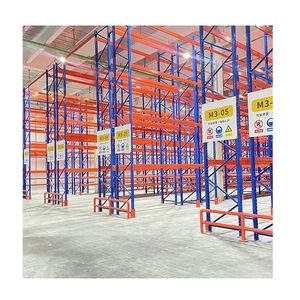
Heavy Duty Certificated Industrial Pallet Warehouse Racking System
Certified structural pallet racking configured for 100% selective stock retrieval, custom beam profiles, and high seismic resistance.
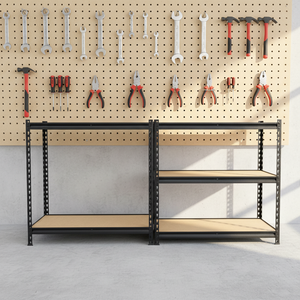
5-Layer Industrial Warehouse Storage Shelving Boltless Rivet Rack
Rapid snap-in assembly rivet shelving featuring anti-corrosion powder coating, designed for manual picking and high SKU density.
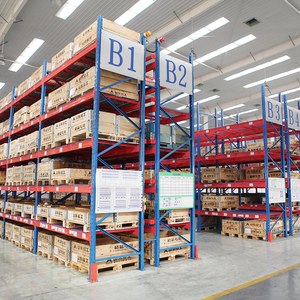
Automotive Parts Heavy Load Customized Selective Racking System
Dedicated multi-tier beam spacing for bulky engine blocks, body panels, and sub-assemblies with integrated anti-fall safety panels.
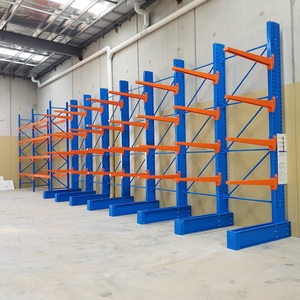
Steel Cantilever Salvage Racking Vehicle & Long-Material Storage
Unobstructed frontal loading profile engineered for end-of-life vehicle dismantling yards, long pipes, timber, and heavy profiles.
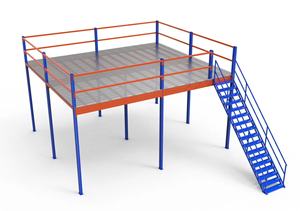
Industrial Storage Warehouse Mezzanine Systems & Floor Platforms
Doubles or triples usable facility footprint using upright rack-support columns, cold-rolled steel decking, and modular staircase runs.
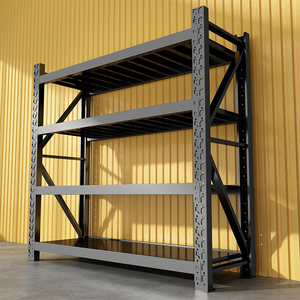
Adjustable Steel Slotted Angle 5-Layer Shelving System (500KG)
Cost-efficient, customizable light-to-medium utility racking offering rapid reconfiguration for workshop tools, cartons, and spare bins.
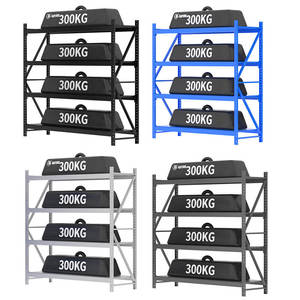
RD-33# Q235 Steel Multi-Level Medium Duty Storage Rack System
Reinforced steel upright frame design with precision interlocking step beams for intermediate weight distribution and carton replenishment.
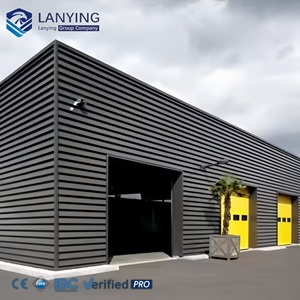
Prefabricated Industrial Logistics Workshop Steel Structure Building
Engineered primary and secondary structural frame envelopes designed to harmonize with internal high-bay racking and mezzanine platforms.
Engineering Principles of Heavy-Duty Racking Mezzanine Systems
Maximizing vertical clearance through structurally validated cold-formed and structural steel mezzanine floors without expanding external civil footprints.
Structural Steel vs. Rack-Supported Mezzanines
Rack-supported mezzanine floors utilize high-tensile cold-rolled upright frames as the primary load-bearing columns. This architectural approach converts standard selective racking or longspan shelving into self-supporting multi-tier walkways, saving up to 40% in structural steel weight compared to freestanding structural I-beam platforms.
Finite Element Analysis & Deflection Limits
Every industrial platform supplied by certified Chinese exporters must adhere to stringent structural criteria under EN 15512 and FEM 10.2.02 regulations. Floor main-beam and sub-beam deflection criteria are calculated strictly at L/200 under dead weight plus live load, and restricted to L/300 under dynamic pallet truck operations to eliminate deck resonance.
Decking Matrix & Fire Protection Compliance
Selecting decking involves balancing structural load capacity with fire suppression compliance. Perforated galvanized steel planks and open bar gratings allow up to 50% water penetration for in-rack sprinkler systems (NFPA 13 compliant), while heavy-duty B-decking combined with 25mm high-density tongue-and-groove boards ensures smooth rolling resistance.
| System Type | Primary Steel Profile | Typical Load Range | Deck Clear Height | Sprinkler Permeability | Optimal Deployment Context |
|---|---|---|---|---|---|
| Rack-Supported Mezzanine | Q235B Roll-Formed Omega Uprights | 300 – 600 kg/m² | 2.2m – 2.8m per tier | Up to 50% with Grating | E-commerce fulfillment, dense manual picking, spare parts hubs |
| Structural I-Beam Mezzanine | Hot-Rolled H/I-Beam Sections | 500 – 1,500 kg/m² | 3.0m – 5.5m per tier | Integrated Ducting | Heavy assembly stations, pallet buffer staging, office consolidation |
| Shelving-Supported Platform | C-Channel / Slotted Box Beams | 200 – 400 kg/m² | 2.1m – 2.4m per tier | Open Plank Configurable | Pharmaceutical stock, archival records, automotive components |
| Cantilever Multilevel Deck | Heavy Column with Cantilever Arms | 400 – 800 kg/m² | 2.4m – 3.2m per tier | Solid or Mesh Planks | Timber distributors, extruded piping warehouses, sheet stock yards |
Future Procurement Trends in Industrial Mezzanine Platforms
How global distribution supply chains are shifting specifications toward automation-ready platforms, low-carbon prefabrication, and digital twinning integration.
1. Convergence with Autonomous Mobile Robots (AMRs)
Modern mezzanine engineering is decoupling from manual foot traffic alone. Facilities increasingly integrate fleets of lightweight autonomous mobile robots and sorting shuttles on elevated platforms. This procurement pivot mandates sub-millimeter deck leveling tolerances, abrasion-resistant resin coatings, and enhanced dynamic point load dissipation under continuous wheel stress cycles.
2. Digital Twinning & BIM Parametric Modeling
Global procurement teams now require manufacturers to supply Industry Foundation Classes (IFC) and Autodesk Revit-compatible BIM models. Sourcing from top-tier Chinese manufacturers now integrates full clash detection against mechanical, electrical, and plumbing (MEP) infrastructure, HVAC routing, and automatic safety gate clearances prior to container loading.
3. Decarbonized Steel & Eco-Responsible Coatings
International environmental criteria (including EU CBAM compliance) are pushing suppliers to adopt electric arc furnace (EAF) low-carbon steel coils and TGIC-free electrostatic epoxy-polyester powder coating lines. Verified supply chains must substantiate volatile organic compound (VOC) compliance and provide comprehensive material traceability certificates from raw billet to finished roll-formed component.
10-Step High-Precision Fabrication Pipeline
Strict adherence to CE Certificate No. 2435-CPR-8605159 and ISO 9001:2015 Quality Management Standards ensures every structural component withstands rigorous industrial duty cycles.
Spectrometric Raw Steel Verification
High-Speed CNC Coil Slitting & Blanking
Continuous Automated Column Punching
Multi-Station Cold Bending & Roll Forming
Precision Upright Profile Calibration
Automated Robotic Weld Connector Assembly
Mechanical Surface Cleaning & Polishing
Multi-Bath Acid Pickling & Phosphating
Electrostatic Powder Polymer Curing (180°C)
Full Batch Stress Load Testing & Sea Packing
Frequently Asked Questions for Mezzanine Sourcing
Authoritative insights addressing critical regulatory compliance, slab calculations, installation engineering, and logistics planning.
What concrete slab thickness is required to support a rack-supported mezzanine?
Rack-supported mezzanines transfer concentrated point loads through baseplates to the building slab. Generally, a reinforced concrete floor with a minimum thickness of 150mm to 200mm, an unconfined compressive strength of 25–30 MPa (C25/30 rating), and adequate sub-base compaction is necessary. For installations exceeding 800 kg/m² uniform distributed load, our engineering team designs enlarged floor-load distribution plates or under-slab footings based on structural soil calculations.
How are fire suppression and smoke clearances integrated into multi-tier mezzanines?
Compliance with NFPA 13 and local European/US life-safety codes mandates that if solid decking is used on mezzanines exceeding 2,000 square feet, in-rack sprinkler pipework must be plumbed underneath each deck level. Alternatively, choosing open steel bar grating or perforated planks with a minimum of 50% open surface area allows water from roof-mounted ESFR sprinkler systems to penetrate downward, often bypassing the need for auxiliary secondary sprinkler levels.
What is the difference between Q235B and Q355B steel in structural calculations?
Q235B steel exhibits a minimum yield strength of 235 MPa and is the cost-effective global benchmark for light-to-medium pallet rack uprights, cross braces, and catwalk sub-beams. Q355B (equivalent to European S355JR or ASTM A572 Grade 50) delivers a yield threshold of 355 MPa. We specify Q355B for high-stress bottom upright columns, primary cantilever uprights, and heavy-duty structural main beams, reducing overall dead steel weight while elevating live load security margins.
How are shipping dimensions optimized for 40ft High Cube (HQ) container loads?
Shipping long profiles internationally introduces freight waste if components exceed container doorway parameters. Our engineering department structures vertical upright columns with mechanical bolted splice joints, enabling modular sectioning below 11.8 meters. Palletized beams and decking packs are bundled using heavy steel strapping, wooden chocks, and bubble wrap, achieving up to 26 tonnes per container with zero ocean transit deformation.
Can the mezzanine platform accommodate hand pallet trucks or electric stackers?
Yes. While standard mezzanines are engineered for human pedestrian foot traffic (typically 300 to 500 kg/m² UDL), operating manual or semi-electric pallet jacks requires designing for dynamic wheel point loads (often 5 to 10 kN per wheel). In these scenarios, beam center spacing is condensed, thicker B-deck profiles are coupled with solid steel checkered wear plates, and joist deflections are locked to L/300 or L/400 to prevent structural sway.
What certification documents are supplied for municipal building permits?
We supply a complete engineering documentation package with every export consignment. This encompasses 3D CAD general layout drawings, anchor bolt load reaction tables, material mill test certificates (MTC) proving steel chemical composition and tensile limits, CE Declarations of Performance (DoP under EN 1090-1 / EN 15512), and ISO 9001 factory compliance documentation ready for review by your certified local structural engineer.
What safety accessories are mandatory on export industrial mezzanines?
Global industrial safety standards (including OSHA 1910 and EN ISO 14122) demand edge protection systems comprising handrails at 1,100mm height, intermediate knee rails at 500mm, and continuous kick-plates (toe-boards) at least 100mm tall to stop falling objects. In addition, pallet loading zones must feature self-closing pivot gates or up-and-over safety turnover gates, ensuring maintenance workers are never exposed to open platform edges during pallet staging.
What is the standard production and shipping lead time from China?
Production lead times for bespoke projects ranging between 500 m² and 5,000 m² typically span 15 to 25 working days following signed CAD approval. Sea freight from our primary loading ports in Guangzhou or Shenzhen reaches key European hubs (Rotterdam, Hamburg, Antwerp) in 28–35 days, North American West Coast ports in 14–18 days, and East Coast destinations in approximately 25–30 days under FOB, CIF, or DDP terms.
Ready to Engineer Your Vertical Warehouse Expansion?
Send our senior logistics design engineers your warehouse CAD layout, clear overhead roof height, and target load capacity. Receive a complimentary 3D layout rendering, finite element structural deflection review, and comprehensive CIF quotation within 24 business hours.