Sanitary / Chemical
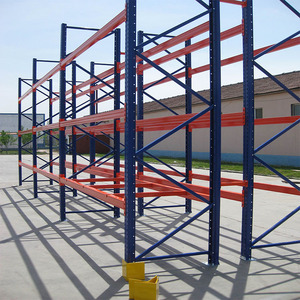
Manufactured to international structural tolerances from certified Q235B and Q355B cold-rolled structural carbon steel. Explore our primary industrial product lines below.
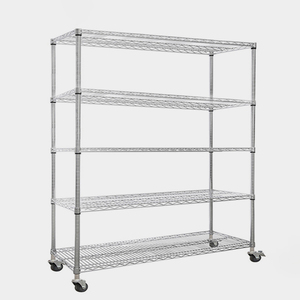
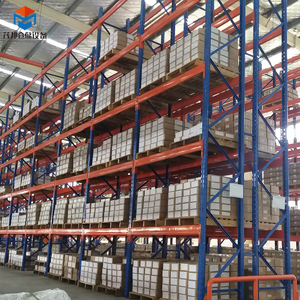
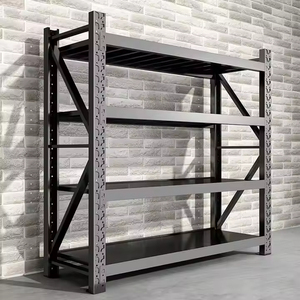
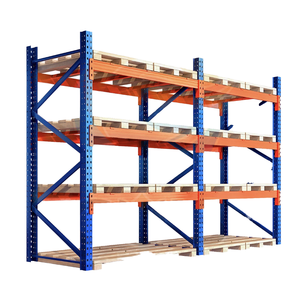
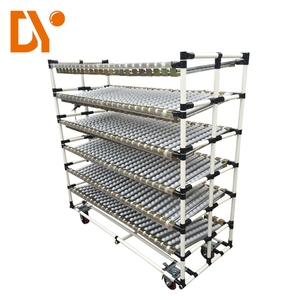
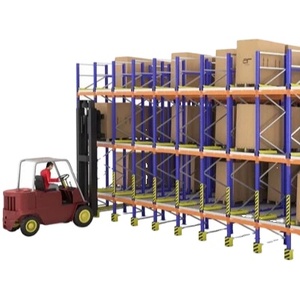
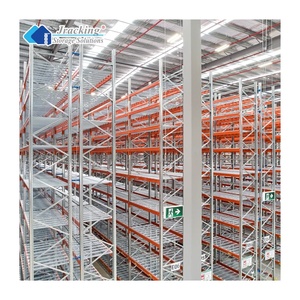
For logistics directors, warehouse expansion project engineers, and supply chain managers worldwide, procuring industrial shelving and heavy-duty pallet racking is no longer merely a pricing calculation. In modern automated and high-density logistics, pallet racking serves as the primary structural skeleton of the distribution center. Racking failure under full load conditions represents catastrophic corporate liability, inventory destruction, and personnel hazard.
China continues to dominate global pallet rack fabrication, representing more than 60% of worldwide heavy structural racking production capacity. However, the quality spectrum among Chinese factories is vast. Tier-1 manufacturers operate fully automated CNC cold-roll-forming extrusion lines, in-line laser perforation punching, robotic CO₂ shielded welding systems, and multi-stage silane nano-coating pre-treatment. Conversely, lower-tier suppliers compromise on raw coil carbon ratios, roll profiles without sufficient bending radii, and utilize non-certified powder paints that flake under fork-truck vibration.
To achieve genuine Information Gain and de-risk your procurement supply chain, international buyers must assess vendors across five essential structural dimensions: certified steel chemistry (Q235B vs Q355B), upright perforation geometric load-reduction factors ($Q$), semi-rigid beam-end connection moment-rotation characteristics ($M-\phi$), automated weld non-destructive testing (NDT), and documented compliance with recognized standards including EN 15512:2020 (Europe) and ANSI/RMI MH16.1:2021 (Americas).
System selection determines floor utilization, throughput speed, handling fleet requirements, and capital expenditure amortization over a 15-year operational lifecycle.
| Racking Architecture | Floor Space Utilization | Selectivity & Access | Inventory Rotation | Typical MHE (Forklift) Required | Optimal Industry Application |
|---|---|---|---|---|---|
| Selective Pallet Racking | 40% – 50% | 100% Direct Access to Every Pallet | FIFO or LIFO | Standard Counterbalance / Reach Truck | 3PL Distribution, FMCG with high SKU count, Spare Parts |
| Double-Deep Pallet Racks | 60% – 65% | 50% Immediate Access | LIFO | Pantograph Double-Reach Forklift | Cold Storage, Manufacturing Buffer with multiple pallets per SKU |
| Drive-In / Drive-Through | 75% – 85% | Low (Lane-by-lane access) | LIFO (Drive-In) / FIFO (Drive-Thru) | Narrow Counterbalance / Specialized Reach | Beverage warehousing, seasonal cold food, bulk raw ingredients |
| Radio Shuttle Automation | 85% – 90% | Semi-Automated Lane Indexing | FIFO / LIFO Dynamic | Standard Reach (Pallet placed at entry lane) | High-throughput deep freezer facilities (-25°C), Dairy, Meat |
| Gravity Pallet Flow (FIFO) | 80% – 85% | Direct pick face; self-replenishing | Strict FIFO | Forklift loading back; picking front | Pharmaceuticals, perishables, fast-turning consumer packaged goods |
| Heavy-Duty Cantilever | Specialized | 100% Linear Unobstructed Front | Dynamic | Side Loaders, 4-Way Multi-Directional Trucks | Steel pipes, extrusion bars, structural timber, drywall sheets |
| Rack-Supported Mezzanines | 100% – 200% Added | Full integration with multi-tier bin picking | FIFO / Piece-Pick | Conveyors, Vertical Reciprocating Lifts (VRC) | E-commerce fulfillment centers, fashion retail, apparel sorting |
Structural Engineering Notice: Maximum allowable deflection for pallet support beams under full rated design load is governed by $L/200$ (under EN 15512 / FEM 10.2.02) or $L/180$ (under ANSI MH16.1), where $L$ is clear span between upright columns. Under no circumstances should uncertified aftermarket beam modifications be deployed without stamped calculations by a registered structural engineer.
Witness how raw hot-rolled steel strip is transformed into certified, high-rigidity structural pallet rack components inside our 30,000 m² Guangzhou production facility.
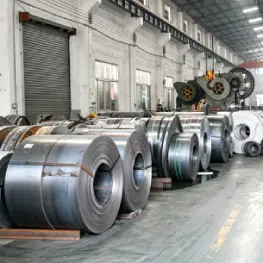
Spectrometric analysis verifying chemical carbon, silicon, manganese, and yield tensile strength $\ge 235\text{ MPa}$.
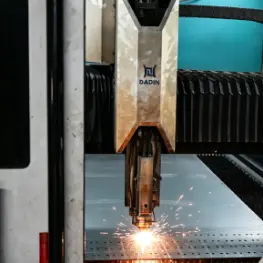
High-speed rotary longitudinal slitting to exact coil widths with strict camber tolerances ($\le 1.0\text{mm}$ per 10m).
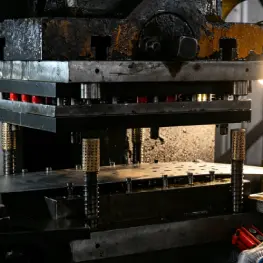
Synchronous multi-die hydraulic punching establishing 50mm / 75mm teardrop and diamond pitches with zero pitch creep.
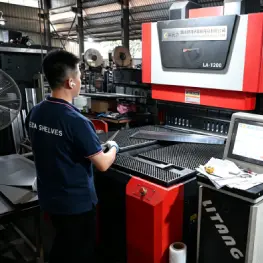
16- to 24-station rolling passes ensuring structural cold work hardening and exact cross-sectional profile rigidity.
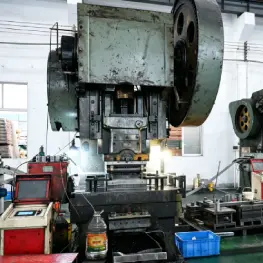
Interlocking dual C-profile continuous roll forming producing heavy double-wall box beams for maximum torsion resistance.
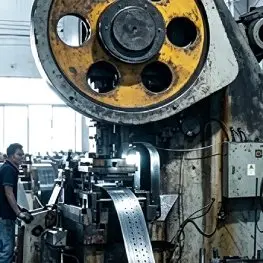
Rotary abrasive polishing eliminating weld splatter and sharp edges, preventing coating defects and operational injuries.
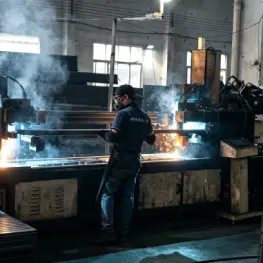
Multi-axis robotic GMAW welding connecting 3-prong and 4-prong heavy cast end-connectors with 100% deep penetration.
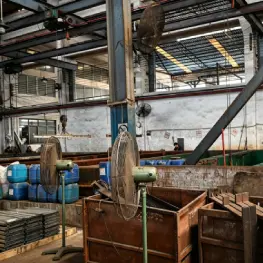
Automated 8-stage chemical immersion: degreasing, acid descaling, water rinse, and micro-crystalline zinc phosphating.
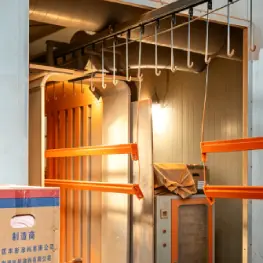
Automatic powder reciprocators applying thermoset polyester at 70–90 microns, cured at 200°C for exceptional impact durability.
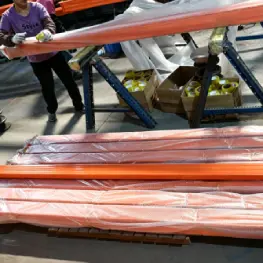
Steel-strapped dunnage, corrugated edge protectors, moisture barrier wrapping, and direct container weight distribution planning.
How warehouse automation, decarbonization mandates (CBAM), and robotic material handling are redefining pallet rack structural specifications globally.
Standard pallet racking tolerances ($\pm 3.0\text{mm}$) are no longer acceptable in automated facilities. Modern automated shuttle and reach-truck systems demand precision deflection tolerances ($\le L/300$) and strictly calibrated upright verticality ($\le 1/1000$ of total frame height). Chinese Tier-1 plants have shifted from generic batch-stamped components to laser-referenced fabrication lines to accommodate robotic shuttle optical guide sensors and high-speed automatic crane interfaces.
With the full enforcement of the European Union Carbon Border Adjustment Mechanism (CBAM) and corporate Scope 3 ESG auditing, international buyers face rising carbon tariffs on embedded emissions within imported steel products. Leading Chinese manufacturers are actively shifting steel coil sourcing toward electric arc furnace (EAF) mills using high scrap ratios, providing comprehensive Mill Test Certificates (MTC) and verified product Environmental Product Declarations (EPD).
Procurement teams are transitioning from static 2D catalog drawings to intelligent BIM (Building Information Modeling) and ANSYS non-linear finite element structural simulations. By modeling second-order $P-\Delta$ and $P-\delta$ geometric effects under seismic ground accelerations ($a_g$), engineers can optimize steel cross-sections—increasing load ratings while decreasing deadweight by 12% to 18%, radically trimming oceanic container freight expenses.
Historically, Western distributors procured Chinese racking via three to four trading intermediaries, compounding markups by 35% to 50% while obscuring factory quality accountability. Forward-thinking enterprise buyers now establish direct technical contracts with certified Chinese factories that possess in-house English-speaking structural design teams, transparent factory audit rights, and FOB/CIF/DDP multimodal logistics capabilities.
Where standard Q235B (yield strength $f_y=235\text{ MPa}$) was once the industry baseline, modern tier-1 designs heavily integrate cold-formed micro-alloyed Q355B/S355JR steel ($f_y=355\text{ MPa}$). This 51% increase in yield strength permits thinner gauge uprights with higher torsional-flexural buckling resistance, enabling rack structures to achieve clear heights exceeding 18 meters without sacrificing structural safety margins.
Labor shortages in destination installation regions (North America, Europe, Australia) have forced Chinese manufacturers to deliver pre-assembled, boltless, or snap-fit bracing modules. Factory-installed splice plates, drop-lock safety pins with secondary visual shear indicators, and laser-etched bay capacity plates reduce on-site assembly time by upwards of 40%, preventing human error during warehouse commissioning.
Headquartered in Guangzhou since 2001, Guangzhou Heda Shelves Co., Ltd. combines heavy manufacturing scale with rigorous European and American structural compliance.
Established in 2001, HEDA Shelves has completed over 10,000 logistics and warehouse installations across 120+ countries. Our 300+ technical staff and registered structural engineers eliminate costly field errors prior to production.
Our expansive 30,000 m² factory compound features multi-line automated roll-forming machines and robotic welding stations capable of outputting 30,000 metric tons per month—guaranteeing rapid lead times on multi-megawatt distribution projects.
Specifically engineered for international supply chains, our beam spans, frame depths (1,100mm, 1,000mm, 800mm), and load tables strictly align with EUR/EPAL standard pallet dimensions (1200×800mm, 1200×1000mm) and local building regulations.
Every prospective project receives complimentary DWG CAD space planning, 3D photorealistic renderings, and engineering load calculation sheets referencing design codes to simplify approvals with local building authorities and insurers.
From numbered component packing diagrams and multilingual assembly video guides to on-site project engineer installation supervision, HEDA provides end-to-end accountability from our dock to your final facility commissioning.
We empower overseas distributors, warehouse racking installers, and system integrators with customized RAL powder coating colors, custom branded beam stickers, unique column punch patterns, and distributor-specific seaworthy bundling.


Straightforward technical answers regarding standards compliance, ocean logistics packaging, steel grades, and installation safety verification.
In international structural engineering, Chinese Q235B corresponds directly to European EN 10025 S235JR and American ASTM A36, offering a minimum yield strength ($f_y$) of $235\text{ MPa}$ and tensile strength between $370\text{--}500\text{ MPa}$ with high ductility. Q355B corresponds to European S355JR and ASTM A572 Grade 50 ($f_y \ge 355\text{ MPa}$). For sub-zero cold chain environments down to -30°C, we specify Q355D or Q355E which undergo Charpy V-notch impact testing at -20°C and -40°C respectively to eliminate low-temperature brittle fracture risks.
Yes. European logistics standardizes primarily on EPAL 1 (1200×800mm) and EPAL 2/3 (1200×1000mm) pallets. We manufacture frame depths precisely sized at 1,100mm (providing the mandatory 50mm front and rear overhang required under EN 15620) or 800mm depths for transversal loading. Beam clear spans are configured at 2,700mm for 3-pallet bays (800mm wide) or 3,600mm for 4-pallet bays, ensuring code-compliant 75mm clearances between adjacent pallets and adjacent upright posts.
For every project, HEDA provides complete structural documentation packages. This includes structural calculation reports referencing EN 15512 or ANSI MH16.1, Finite Element Analysis (FEA) deflection plots, connection moment-rotation stiffness curves ($k_i$), raw material mill test certificates (MTC), anchor bolt pullout shear calculations, and layout CAD drawings showing seismic exit clearances, flue spaces, and MHE travel aisle widths.
Ocean freight exposes steel components to aggressive salt air, high humidity, and continuous container vibration. Upright frames are banded with high-tensile polyester strapping over channeled timber runners. Upright baseplates and beam connectors are enveloped with multi-layer bubble wrap and corrugated impact caps. Bundles are wrapped in heavy-duty polyethylene stretch film with industrial silica desiccant bags placed inside each 40ft High Cube container to prevent condensation rust.
Factory fabrication typically requires 15 to 25 calendar days depending on tonnage volume and custom powder coat colors. Transit time via ocean freight from our Guangzhou port terminal to major European hub ports (Rotterdam, Hamburg, Antwerp, Valencia) averages 28 to 35 days. Shipments to North American West Coast ports (Long Beach, Vancouver) take 16 to 22 days, while East Coast ports (New York, Savannah) average 30 to 38 days.
Under industrial safety codes (such as EN 15635), end-of-row upright frames must withstand minimum impact absorption of 400 J in the direction of the operating aisle. We provide heavy-gauge ($4.5\text{--}6.0\text{mm}$) anchor-bolted steel column protectors, wraparound polyurethane upright guards, heavy double-rail aisle end barriers with safety yellow powder coating, and drop-forged spring locking pins that resist accidental 5 kN vertical beam uplift forces.
Connect directly with HEDA Shelves' senior structural design engineers. Provide your facility floor plan, clear building height, pallet specifications, and target storage capacity to receive a complimentary 3D layout, load simulation, and competitive factory-direct quote.