Direct Factory Catalog
High-Efficiency Warehouse Stacking Racks & Systems
Explore heavy-duty modular racking built with Q235B cold-rolled structural steel, certified load stability, and electrostatic corrosion-resistant coatings.
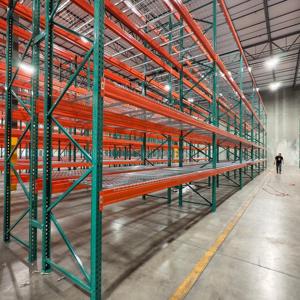
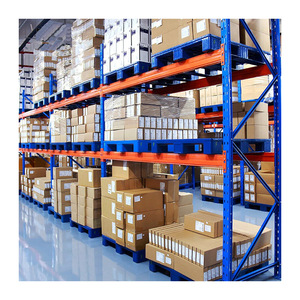
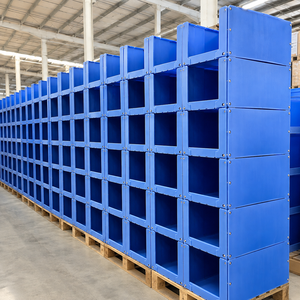
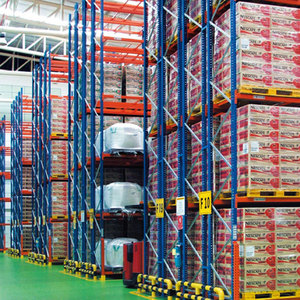
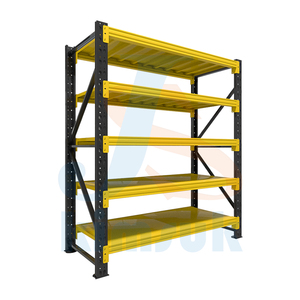
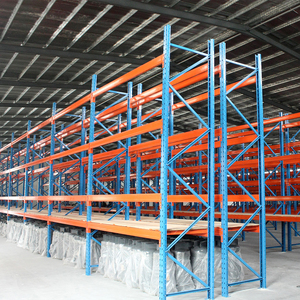
Years of Engineering Excellence (Est. 2001)
Global Export Markets & EU Hubs
Automated Production & Roll-Forming Plant
Delivered Heavy Logistics Projects
Manufacturer Edge
Why International Supply Chains Rely on Our Racking Plants
Combining heavy-gauge Chinese metallurgical capabilities with European structural engineering specifications for safety and durability.
Full CE & ISO Compliance
Certified under CE (No. 2435-CPR-8605159) and ISO 9001:2015. All structural calculations and deflection limits rigorously adhere to EN 15512, EN 15620, and FEM logistics standards.
Complimentary 3D & CAD Layouts
Before issuing final fabrication sheets, our civil and structural engineers deliver free spatial modeling, aisle clearance simulations, and live seismic deflection validation in DWG and 3D formats.
10-Step Automated Production
From high-grade Q235B steel verification, automated multi-point CNC punching, to continuous roll-forming and 120-micron electrostatic powder coating with German pre-treatment washlines.
Global Seaport Logistics (DDP/CIF)
Export-ready pallet bundled packaging with modular numbered assembly sequences. Direct shipments from Guangzhou/Shenzhen to Rotterdam, Hamburg, Antwerp, Los Angeles, and Felixstowe.
Strategic Procurement Analysis
Future Sourcing Trends for Industrial Stack Racks & Systems
A data-informed framework guiding procurement executives, 3PL managers, and plant operations toward resilient intralogistics infrastructure.
1. Shift to Modular Stackability Over Fixed Racks
Dynamic supply chains require flexible floor configurations. Warehouses are pivoting away from permanent, bolt-anchored selective racks toward portable nesting stack racks that can be broken down to 10% of their volume during seasonal troughs, dramatically decreasing real estate costs per storage unit.
2. Total Cost of Ownership (TCO) Over Purchase Price
Global procurement teams prioritize steel micro-alloying and high-tensile grades (Q235B and Q355B). Premium electrostatic powder coatings with multi-stage degreasing withstand chemical exposure and refrigeration cycles, reducing rust-induced structural replacement cycles from 5 years to well beyond 15 years.
3. Factory-Direct Engineering Transparency
Supply chain disruptions have eliminated the viability of intermediary trading brokers. Tier-1 global firms now mandate direct mill test reports (MTR), unedited weld seam ultrasonics, verified CE structural documentation, and direct digital collaboration with plant engineering departments.
Evolutionary Roadmaps: Stack Racks in Next-Generation Intralogistics
Traditional warehousing relied on rigid selective pallet racking systems anchored permanently to concrete slabs. However, modern FMCG, e-commerce, and cold chain distribution centers face acute seasonal inventory spikes. Today's manufacturing developments focus on dynamic load resilience and high-compatibility footprint designs.
By engineering stack racks that nest inside one another when unloaded, facilities gain up to 400% additional clear floor capacity during low-stock periods. Furthermore, as Autonomous Mobile Robots (AMRs) and Automated Guided Vehicles (AGVs) become standard across Asian, North American, and European warehouses, factory tooling is evolving. Upright post tolerances and pallet pocket guides are now precision-stamped with sub-millimeter tolerances to ensure autonomous retrieval systems seat without operational jamming.
| Racking Architecture | Standard Load Capacity | Footprint Flexibility | AGV / AMR Readiness | Primary Use Case Scenario |
|---|---|---|---|---|
| Modular Stack Racks (Nesting) | 1,000 kg – 2,500 kg / tier | High (Foldable / Movable) | High (With Alignment Cups) | Seasonal tires, bulk bags, fabric rolls, cold chain |
| Selective Pallet Racking | 1,000 kg – 4,000 kg / level | Low (Permanent Anchor) | Standard Forklift / VNA Guided | Multi-SKU distribution, continuous SKU picking |
| Double Deep Systems | 2,000 kg – 3,500 kg / level | Static (Floor Fixed) | Specialized Reach Trucks | High-volume identical SKU lots, raw ingredients |
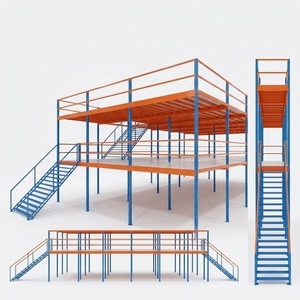
| Structural Steel Mezzanines | 300 kg – 1,000 kg / sqm | Semi-Permanent Expandable | Integrated Vertical Lifts / Conveyors | Multi-tier manual packing, spare parts, sorting zones |
Technical Inquiries
Frequently Asked Questions on Stack Rack Procurement
Detailed engineering and procurement insights answering the core questions asked by warehouse managers and industrial sourcing agents.
Q1: What steel grade and surface finish are standard for industrial stack racks?
We primarily utilize certified Q235B and Q355B hot-rolled and cold-formed structural steel. For surfaces, components undergo an automated 4-stage chemical pre-treatment (degreasing, acid pickling, phosphating, pure water rinse) followed by thermosetting electrostatic powder coating (60-120 microns) or hot-dip galvanizing for sub-zero freezer operations.
Q2: How do modular stack racks compare structurally to traditional pallet racks?
Traditional pallet racking is mechanically bolted into the concrete building slab. Modular stack racks use self-aligning conical stacking targets (cup feet and target crowns) allowing 3 to 5 units to stack vertically under full dynamic load without applying stress to warehouse walls or requiring permanent floor damage.
Q3: Can rack bases be engineered to fit non-standard European or US pallet footprints?
Yes. As an OEM/ODM direct manufacturer, our standard layouts support EUR/EPAL (1200 x 800 mm), UK (1200 x 1000 mm), and US GMA (48 x 40 inch) dimensions. We also customize custom cradles, cylindrical pipe saddles, and side retention bars for non-palletized cargo such as roll coils, heavy drums, and carpets.
Q4: What structural load calculation reports and safety certificates are provided?
Every commercial production run is accompanied by raw steel material certificates (MTR), Mill Quality Inspection reports, and formal finite element analysis (FEA) deflection calculations confirming compliance with CE 2435-CPR-8605159, ISO 9001:2015, and European EN 15512 safety deflection thresholds.
Q5: What is the average manufacturing lead time and export container load capacity?
Standard project production ranges between 15 to 25 business days depending on tonnage. Stack racks are designed with removable posts or nesting bases, allowing high-density packing that fits up to 120-150 collapsed rack sets per 40ft High Cube (HQ) container, cutting ocean freight costs per unit significantly.
Q6: Do you provide installation supervision and after-sales field support?
Yes. Every shipment includes 3D exploded layout blueprints and numbered modular component lists. We provide remote visual engineering support globally, and for high-density automated or mezzanine installations, certified factory technicians can be deployed directly to your facility.
Transform Your Warehouse Space & Reduce Operating TCO
Submit your warehouse floor plans, load requirements, or forklift specifications. Our senior structural logistics engineers will prepare a detailed 3D CAD layout and commercial factory proposal within 24 hours.