Featured Structural Racking & High-Density Storage Systems
Every warehouse facility presents unique logistical constraints: clear ceiling heights, seismic zonal requirements, floor slab ratings, and material handling fleet configurations. Explore our factory-direct industrial racking systems designed for intense global supply chains.
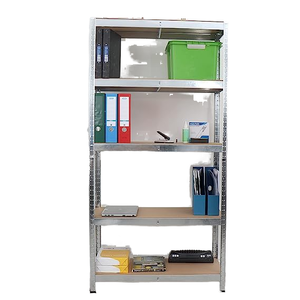
5 Layer Boltless Steel Shelving Unit with Powder Coated Finish for Warehouse Storage
Precision cold-rolled steel unit engineered for rapid rivet-lock assembly. Designed for high-density multi-tier binning, spare parts fulfillment centers, and industrial archive vaults with zero hardware fastening requirements.
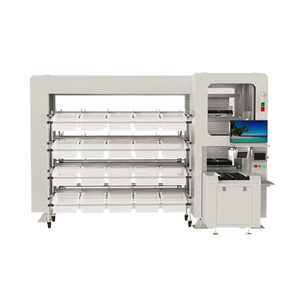
Omnistorage Mini Warehouse Storage Racking High Speed 3d Intelligent Warehousing
Automated ultra-dense storage matrix interfacing seamlessly with high-speed automated mini-load cranes and autonomous guided vehicles (AGVs). Configured with micro-millimeter rail deflection tolerances.
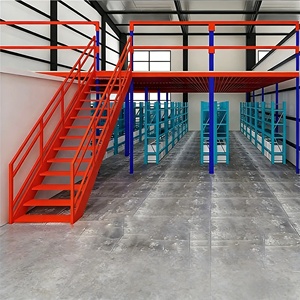
Heavy Duty Rack System Shelf Warehouse Storage Steel Loft Platform Structural Mezzanine
Heavy structural I-beam and column-supported mezzanine transforming vertical warehouse volume into dual or triple operating tiers. Ideal for combined bulk pallet staging and upper-deck e-commerce manual picking.
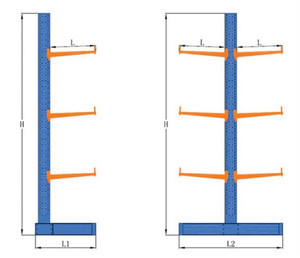
Jracking CE Certified Adjustable Heavy-Duty Cantilever Rack for Steel Profile Storage
Obstacle-free linear storage engineered from heavy hot-rolled H-sections (Q235B/Q355B). Eliminates front-column interference for crane-loaded structural tubes, timber bunks, aluminum extrusions, and heavy plate steel.
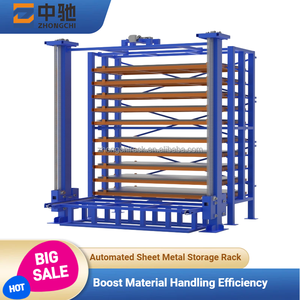
Intelligent Automated Warehouse System Steel Sheet Metal Storage Rack 8-Layer System
Specialized automated cassette drawer rack developed for high-tonnage sheet steel, laser cutting feed stations, and heavy die tooling. Features automated extractor arms and integrated weighing sensors.
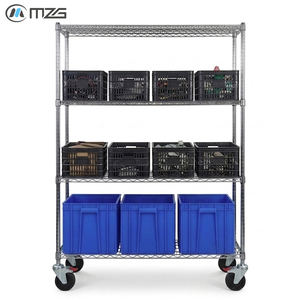
MZG ODM Industrial Metal Heavy Duty Storage Wire Shelving System with Wheels
High-permeability open-wire shelf deck ensuring complete compliance with NFPA/FM Global warehouse overhead fire suppression sprinkler systems. Mounted on high-impact poly casters for industrial flexibility.
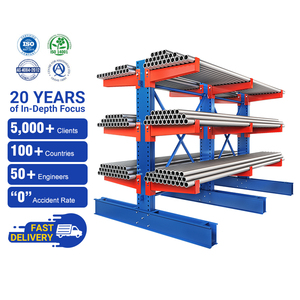
Durable Heavy-Duty Adjustable Cantilever Arm Racks System for Warehouse Storage
Engineered for heavy building material distributors, piping yards, and plastic extrusion producers. Arms adjust along upright columns on a 100mm pin connector pitch with impact-absorbing rotational design.
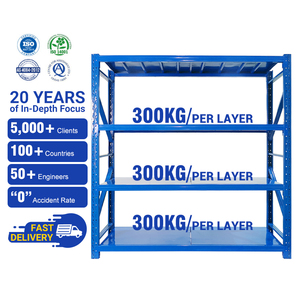
Durable Compact Powder Coated Steel Light-Duty Warehouse Rack for Small Parts Storage
Optimized for high-SKU automotive spares, retail stockrooms, and pharmaceutical distribution centers. Features integrated modular dividers, clip-in shelf retaining locks, and scratch-resistant thermoset finishes.
Why Global Supply Chains Trust Our Engineering & Export Infrastructure
Guangzhou Heda Shelves Co., Ltd. has stood at the forefront of China's heavy-duty structural steel fabrication industry since 2001. We do not act as trading intermediaries; our 30,000-square-meter facility executes complete vertical integration from structural coil slitting to automated robotic welding, 10-stage chemical surface conversion, and containerized seaworthy packing.
Certified Structural Metallurgy
Every structural upright, load beam, and connector is manufactured using certified Q235B and Q355B (equivalent to European S235JR and S355JR / ASTM A36) prime hot-rolled and cold-formed structural steel. Mill test certificates (MTC) detailing yield stress, elongation, and Charpy V-notch impact values accompany every shipment.
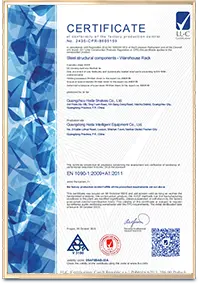
EN 15512 & CE Certified Production
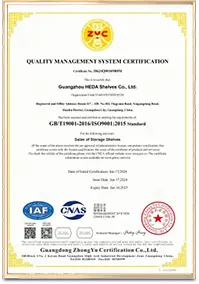
Our manufacturing procedures adhere strictly to EU Construction Products Regulation (CPR) 305/2011/EU under CE Certificate No. 2435-CPR-8605159 and ISO 9001:2015 Certificate No. 18624Q00169R0M. Frame designs conform rigorously to EN 15512, EN 15620, EN 15629, and ANSI MH16.1 structural stability codes.
Seismic & Wind Dynamic FEA
We provide complete structural finite element calculations (FEA) validating baseplate anchor shear, upright column buckling under seismic ground accelerations, and beam deflection ratios (L/200 standard or L/400 for robotic handling). All engineering calculations are pre-verified for municipal permit approvals.
Automated Continuous Roll-Forming
Our manufacturing floor runs automated CNC multi-station continuous roll-forming lines capable of producing 60–120mm upright profiles in lengths exceeding 14 meters without spliced joints. Fully programmable automated punching stations guarantee consistent 50mm and 75mm beam adjustability pitches.
Chemical Pretreatment & Coating
Durability starts with chemistry. Our automated 10-step immersion line performs degreasing, acid rust descaling, and zinc-phosphate/nano-zirconium conversion before applying thermoset epoxy-polyester electrostatic powder. Coated surfaces pass 500+ hours of continuous salt-spray testing under ASTM B117 standards.
Global Export & Custom Bundling
With over 10,000 project deliveries to 120+ countries, our logistics team executes seaworthy heavy steel packaging: high-tensile steel banding, edge-protection angles, vapor-corrosion-inhibiting (VCI) films, and categorized bay bundle indexing. Shipped efficiently via Guangzhou, Shenzhen, or Foshan ports to European, North American, and Middle Eastern hubs.
Structural Engineering Evolution & Technological Trends
The industrial pallet rack sector has transitioned from static storage steel into active structural envelopes interfacing with robotics, dynamic thermal zones, and strict seismic building criteria. Understanding material metallurgy and design dynamics is vital for technical procurement managers.
Hot-Rolled Structural C-Channels vs. Cold-Formed Steel
For demanding distribution centers operating around-the-clock reach trucks, forklift impact accounts for over 85% of rack system damage. The industry is witnessing a strategic shift toward genuine structural hot-rolled C-channel uprights (structural pallet rack) for high-impact front upright locations. Unlike roll-formed sheet steel (1.5mm–2.5mm) which buckles upon direct collision, hot-rolled structural steel (3.0mm–6.0mm structural web thickness) withstands significant corner impact energy without cataclysmic load shed.
- Hot-Rolled Structural Sections: Superior impact absorption, ductile failure modes, and bolt-in structural cross ties ideal for frozen food and beverage handling.
- Omega-Profile Cold-Formed Steel: Maximum strength-to-weight ratio utilizing multi-bend cold working, delivering high axial load efficiency in stable, reach-truck guided aisles.
Sub-Millimeter Deflection Criteria for AS/RS & Shuttle Lanes
Traditional manual pallet racking tolerates beam deflections up to L/200 under maximum design load. However, the rise of Radio Shuttle Racking, Mini-Load 3D Shuttles, and AS/RS Stacker Cranes imposes stringent dimensional tolerances referencing FEM 9.831 and EN 15620 Class 100 to 400. In automated bays, beam deflection must not exceed L/400 or a maximum of 10mm to avoid triggering optical positioning sensor faults on autonomous retrieval vehicles.
- Continuous Rail Alignment: CNC laser-cut shuttle guide rails maintaining lateral tolerances within ±1.5mm across 80-meter long storage tunnels.
- Dynamic Vibration Dampening: Enhanced cross-aisle and down-aisle bracing towers engineered to suppress harmonics generated by acceleration/deceleration of heavy stacker cranes.
Sub-Zero Ductility & Thermal Contraction Dynamics
Modern cold-storage logistics facilities operating at -25°C to -35°C face severe structural challenges: steel embrittlement and thermal shrinkage. Standard commercial carbon steels undergo a ductile-to-brittle transition at temperatures below 0°C, increasing the risk of sudden brittle fracture under shock forklift loads. Our engineering team selects specialized fully killed low-carbon structural steels (such as Q355D or S355NL) tested for minimum 27 Joules Charpy V-notch impact energy at -40°C.
- Thermal Contraction Clearances: Beam connections designed with slotted hole patterns to absorb structural movement during thermal pull-down cycles.
- Frost-Resistant Zinc Polymer Powders: Highly flexible powder chemistries preventing micro-cracking and subsequent sub-film oxidation when exposed to freeze-thaw condensation cycles.
Rack-Supported Clad Buildings (Silohouse Systems)
Rising industrial land values across Europe, Southeast Asia, and North America have accelerated adoption of Rack-Supported Buildings (Clad Rack Warehouses). In these high-bay structures exceeding 30 to 45 meters in height, the structural pallet racking system itself carries the roof, wall cladding, photovoltaic panels, and building envelope dead loads, eliminating external concrete or standalone structural steel framework.
- Dual Purpose ROI: Reduces civil construction timelines by 30–45% while optimizing volumetric storage footprint per square meter of concrete slab.
- Comprehensive Wind & Seismic Loads: Engineered under Eurocode 1 (actions on structures) and Eurocode 3 (steel structures), factoring 100-year local wind pressure and ground drift.
Future Procurement Trends: Navigating TCO, ESG, and Global Compliance
For procurement directors, logistics engineers, and 3PL operational executives, capital expenditure (CapEx) evaluation has evolved far beyond basic "cost-per-pallet-position." Sustainable asset lifecycle, structural flexibility, and international regulatory alignment dictate long-term project profitability.
1. Shift from Upfront Purchase Price to Lifecycle Integrity
Historically, procurement teams prioritized low initial bids, often leading to thin-gauge uprights (1.5mm) and minimal baseplate anchoring. Modern Tier-1 logistics operators now evaluate total lifecycle costs across 15–20 year operational windows. A damaged upright bay in an active e-commerce fulfillment center can cause up to $25,000 per hour in throughput downtime during replacement. Investing in heavy-duty structural bottom upright inserts, heavy 10mm floor baseplates, and wrap-around column protectors reduces operational repair budgets by over 70%.
2. Decarbonization & Scope 3 Supply Chain Compliance
With European Carbon Border Adjustment Mechanism (CBAM) and corporate ESG mandates taking effect, global buyers demand verified Environmental Product Declarations (EPD) for structural steel products. Heda Shelves is advancing green manufacturing via electric-arc furnace (EAF) recycled scrap integration, high-efficiency closed-loop electrostatic powder coating lines with zero VOC emissions, and low-energy phosphating chemistries to lower embedded carbon per ton of delivered steel.
3. Hybrid Modular Architecture for Changing SKU Velocities
The acceleration of omnichannel retail has rendered static warehouse layouts obsolete within 3 to 5 years. Procurement teams are specifying hybrid modular systems: heavy structural pallet racking lower levels capable of receiving conversion kits into carton-flow gravity roller tracks, cantilever overhung arms, or integrated multi-tier mezzanine decking without field welding or altering the building foundation anchors.
4. Third-Party Pre-Shipment Inspection (PSI) Integration
Enterprise procurement mandates stringent third-party quality control protocols (SGS, TÜV Rheinland, Bureau Veritas) prior to export container sign-off. Critical inspection parameters include magnetic coating thickness measurements (ensuring 60–80 microns), cross-cut adhesion tests (ISO 2409 Class 0), ultrasonic weld penetration checks on beam end connectors, and precise beam roll cambers to prevent down-aisle binding.
Engineered to Pass Rigorous European & American Safety Audits
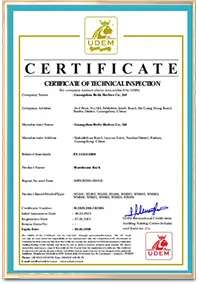
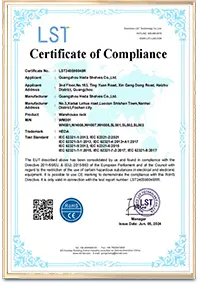
In international structural rack procurement, engineering safety cannot rely on verbal assurances. We publish our formal accreditation certificates and technical test reports to empower your structural engineers, building code inspectors, and safety insurance auditors to verify our credentials directly.
Our systems comply with European EN 15512 (Steel static storage systems – Adjustable pallet racking systems – Principles for structural design), EN 15620 (Tolerances, deformations and clearances), American RMI ANSI MH16.1, and Australian AS 4084-2012 structural rack codes.


Frequently Asked Technical & Purchasing Questions
Clear, authoritative technical answers addressing structural calculation methodology, clearance tolerances, pallet configurations, export packaging, and installation supervision.
What are the critical engineering differences between structural pallet racking and roll-formed racking?
Structural Pallet Racking is manufactured from heavy hot-rolled structural steel C-channels and structural I-beams (typically Q235B/Q355B with minimum flange/web thicknesses of 3.0mm to 6.0mm). Connections are fastened using high-strength Grade 8.8 structural bolts. This provides massive torsional rigidity, high impact resistance, and maximum resilience in harsh environments such as cold storage or heavy manufacturing.
Roll-Formed Racking is manufactured by cold-forming light-gauge sheet steel coil (1.5mm–2.5mm) into complex multi-bend open omega profiles. Beams connect using teardrop or hook-style end connectors secured by drop-pins. Roll-formed systems offer fast adjustability and lower raw material mass, making them cost-effective for standard retail and light-to-medium industrial distribution.
Can your racking systems be engineered around standard Euro Pallets (EPAL) as well as US GMA pallets?
Yes. Every layout proposal is calculated according to your target pallet geometry. For European projects handling EUR/EPAL 1 (1200 mm × 800 mm) or EUR 2/3 (1200 mm × 1000 mm) pallets, upright frames are typically configured at 1050 mm or 1100 mm depths to ensure the required 50 mm front-and-rear pallet overhang per EN 15620 guidelines.
For North American GMA 48" × 40" (1219 mm × 1016 mm) pallets, frame depths of 42" or 44" are engineered, maintaining 3" (75 mm) clearance between adjacent pallets and adjacent upright columns. We also provide customized heavy-duty wire mesh decking or welded structural pallet support crossbars to accommodate unpalletized slip-sheet loads.
What structural calculation documentation is provided for municipal and building permit approval?
We supply a comprehensive technical documentation package designed for third-party engineering review and municipal building authority sign-off, which includes:
- Structural Calculation Dossier: Upright frame axial load capacity, global Euler buckling safety factors, beam deflection ratios under uniform distributed loads (UDL), and anchor bolt pull-out/shear verification against concrete slab strength (e.g., C25/30).
- Seismic Engineering Analysis: Ground acceleration design spectrum calculations according to Eurocode 8, IBC (International Building Code), or ASCE 7.
- AutoCAD Layout Drawings: Stamped plan views, bay elevation views, beam connector details, and clear aisle dimension plans confirming forklift minimum turning radius (AST).
How do you ensure anti-corrosion performance for cold-storage (-30°C) and humid outdoor environments?
For indoor dry ambient warehouses, our automated electrostatic epoxy-polyester powder coating (60–80 microns thickness) provides superior scratch and chemical protection. However, for deep-freeze cold storage (-30°C) where high condensation occurs during defrost cycles, or for outdoor lumber/steel yards, we recommend Hot-Dip Galvanization (HDG).
Our hot-dip galvanizing process complies with ISO 1461 / ASTM A123 standards, producing an alloyed zinc coating thickness of 70 to 100 microns. This metallurgical zinc-iron layer provides sacrificial cathodic protection that completely prevents steel oxidation even if the surface is scratched during daily handling.
What is your typical production lead time and export sea freight packaging protocol?
Standard project production ranges between 15 to 30 calendar days following technical drawing sign-off and deposit receipt. For rapid-turnaround distribution center projects, staggered shipping schedules can be coordinated.
To ensure zero transit damage during transoceanic shipping, all components undergo industrial seaworthy bundling: upright frames are nested with corrugated protective separator pads and high-tensile steel banding; box beams are stacked on custom timber skids with protective corner angles; small hardware, baseplates, and safety pins are crated in export-grade fumigated wooden cases.
Do you offer on-site installation guidance or turnkey commissioning in our destination country?
Yes. Every container shipment includes a detailed installation manual with 3D exploded assembly diagrams and part identification numbers matching the export packing list. Furthermore, we offer two levels of technical field assistance:
1. Remote Video Engineering Support: Dedicated structural engineers conduct scheduled video briefings with your local installation team, answering anchoring, vertical plumbing, and torque setting questions in real time.
2. On-Site Technical Supervision: For major projects (>5,000 pallet positions or complex multi-tier mezzanine floors), we dispatch seasoned project engineers to supervise site layout marking, upright assembly, vertical laser plumb checking, and load testing verification.
Request a Certified Engineering Layout & Structural Proposal
Partner directly with China's premier structural rack manufacturing facility. Send your warehouse floor plan, clear ceiling height, pallet specifications, and handling equipment model to receive a complimentary AutoCAD bay layout, 3D conceptual rendering, and structural load calculation proposal within 24–48 hours.
- Free 2D/3D CAD Layout Optimization
- EN 15512 & RMI Calculation Verification
- Direct Mill-Price FOB / CIF / DDP Quotes
- Full OEM/ODM Specification Flexibility
Consult an Engineering Specialist
Our senior warehouse layout engineers are online to evaluate your site parameters and logistical constraints.
Contact Us