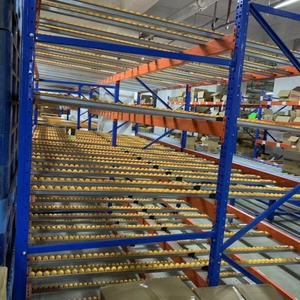
Heavy-Duty Picking
Explore our industrial-grade, gravity-fed flow rack inventory. Built for seamless first-in, first-out (FIFO) case picking, parts staging, and automated warehouse fulfillment.
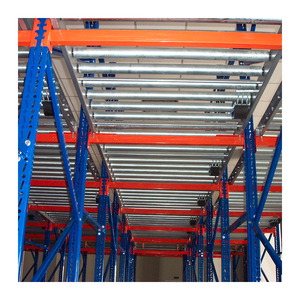
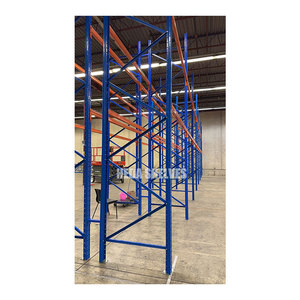
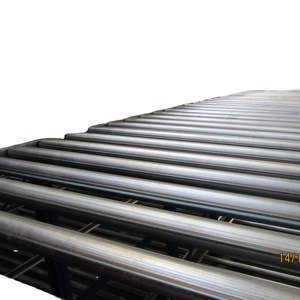
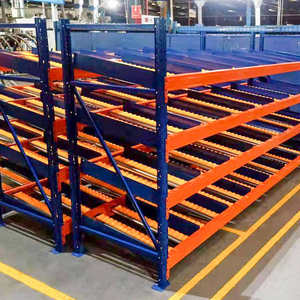
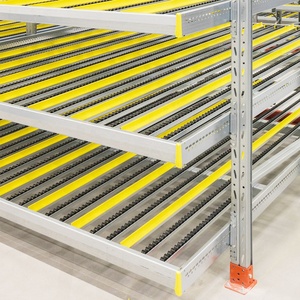
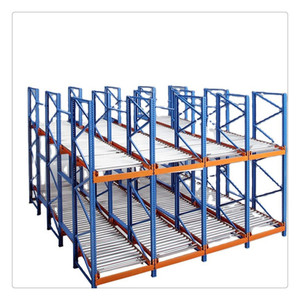
In high-velocity omnichannel order fulfillment centers, traditional static shelving represents a critical labor and spatial bottleneck. Case flow racking—alternatively recognized across intralogistics literature as carton flow racking, gravity-fed roller racking, or dynamic pick systems—leverages gravitational potential energy to autonomously propel stock from the restocking face (charge end) to the retrieval face (discharge end). As an authority among China top case flow rack suppliers, Guangzhou Heda Shelves Co., Ltd. analyzes the complex physics, material sciences, and tribological characteristics necessary to deploy safe, jamming-free dynamic storage lines.
Fundamental Operational Maxim: A meticulously calculated case flow bed separates replenishment personnel from pick operators, eliminating aisle cross-traffic congestion by 100%, slashing picker travel transit times by up to 75%, and creating an intrinsic, deterministic First-In, First-Out (FIFO) stock turnover rotation essential for pharmaceuticals, perishable grocery items, and fast-moving consumer electronics.
The successful operation of a case flow bed depends upon finding the balance between static friction ($\mu_s$) and rolling resistance ($\mu_r$). If the pitch angle ($\theta$) is too shallow, cartons with irregular cardboard footprints, moisture-laden bottoms, or lightweight plastic totes will stall mid-lane, inducing operator intervention and inventory desynchronization. Conversely, if the pitch is excessively steep, heavy cases accelerate uncontrollably, impacting front stop plates with excessive kinetic energy, causing packaging deformation and structural fatigue.
Our engineering standards mandate a baseline inclination gradient between 2.5° and 4.5° (approximately 4.5% to 7.8% drop grade), calibrated across four specific packaging parameters:
| System Configuration | Load Capacity (per Level) | Wheel / Roller Profile | Inclination Grade | Ideal Application Profile |
|---|---|---|---|---|
| Light-Duty Carton Flow | 150 kg – 300 kg | Ø28mm High-Density PE Wheels | 3.0° – 4.0° (5.2% – 7.0%) | E-commerce cosmetics, apparel picking, small electronic components |
| Standard Medium Case Flow | 300 kg – 600 kg | Ø38mm Engineering Nylon Rollers | 2.5° – 3.5° (4.4% – 6.1%) | Pharmaceutical distribution, automotive assembly line kitting, FMCG |
| Heavy-Duty Stacking Case Flow | 600 kg – 1,200 kg | Full-width Galvanized Steel Rollers | 2.0° – 3.0° (3.5% – 5.2%) | Automotive casting spares, heavy hardware, beverage multi-packs |
| Cryogenic Cold-Storage Flow | 400 kg – 800 kg | Low-Temp Impact Modified Copolymers | 3.5° – 4.5° (6.1% – 7.8%) | Frozen food logistics (-30°C), biomedical vaccine distribution |
Founded in 2001 in Guangzhou, Heda Shelves delivers integrated R&D, precision manufacturing, and strict international quality assurance.
Every case flow rack and upright frame is fabricated under strict quality criteria, holding CE Certificate No. 2435-CPR-8605159 and ISO 9001:2015 No. 18624Q00169R0M. Load ratings and static structural deflection calculations comply with EN 15512 and EN 15620 European standards.
Equipped with computerized multi-station roll-forming lines, automated laser-guided punching presses, robotic seam welding stations, and an automated continuous pickling, phosphating, and electrostatic epoxy-powder coating system producing up to 30,000 tonnes of steel racking monthly.
Before material sourcing begins, our dedicated structural engineers generate full-scale 2D AutoCAD floor plans and 3D realistic BIM models. We analyze column grids, clearance heights, pallet interaction margins, and fire sprinkler clearance protocols to prevent costly site installation issues.
The global warehousing landscape is experiencing structural disruption driven by SKU proliferation, labor scarcity, and the expansion of sub-hour quick-commerce deliveries. Case flow racking is evolving from passive mechanical shelving into a dynamic, digitally augmented intralogistics node.
Modern case flow beds increasingly integrate built-in wiring channels, busbars, and snap-in LED display interfaces directly onto the front discharge beams. Connected with warehouse management systems (WMS), Pick-to-Light hardware guides pickers to exact lanes with near-zero error rates.
Rather than relying on human replenisher personnel, future case flow racking layouts are being engineered with back-end Autonomous Mobile Robot (AMR) docking interfaces. Collaborative mobile robots position tote bins onto loading tracks, creating fully automated hybrid human-to-goods picking stations.
Next-generation wheel and roller tracks incorporate bio-based, high-modulus polymers and self-lubricating micro-bearings. These materials eliminate environmental microplastic shedding caused by carton abrasions, while providing smoother flow characteristics across -35°C to 50°C operating conditions.
Procuring industrial racking systems from China requires looking beyond the unit price per bay. Strategic buyers across North America, Europe, Australia, and ASEAN focus on total landed cost, structural compliance, packaging density, and modular expansion flexibility.
Experienced procurement teams calculate TCO by accounting for freight volume efficiency, on-site assembly labor, and lifecycle maintenance. Knock-down (KD) case flow designs engineered by Heda Shelves ship disassembled in flat-pack seaworthy configurations, fitting up to 35% more linear meters of flow beds into a standard 40-foot High Cube (40HC) container compared to pre-welded frames, significantly offsetting transoceanic shipping rates.
Global logistics operators require mill test certificates (MTC) proving that cold-formed uprights and load-bearing beams are constructed from prime certified structural steel (such as Q235B or Q355B grades) with documented tensile strength, yield points, and elongation percentages. Surface finish guarantees against micro-cracking and salt-spray corrosion (ASTM B117 standards) protect investments in high-humidity regional distribution hubs.
Due to shortening consumer product lifecycles, fixed-width dedicated carton flow lanes are being phased out in favor of universal "drop-in" full-bed roller systems with tool-less snap-in lane dividers. This allows warehouse managers to adjust lane widths from 150 mm to 600 mm in minutes when carton dimensions change, avoiding structural replacement costs.
Answers to common technical, logistics, and manufacturing questions when sourcing case flow rack systems from China.
Collaborate with HEDA Shelves' engineering team to optimize your pick-face density, eliminate warehouse travel waste, and receive an engineered 2D/3D layout with structural load calculations within 24 hours.