Engineered Industrial Racking & High-Density Storage Solutions
Manufactured under strict ISO 9001:2015 and CE certification protocols, our cold-rolled structural steel systems deliver high-density pallet and SKU optimization tailored to European, American, and Asia-Pacific material handling standards.
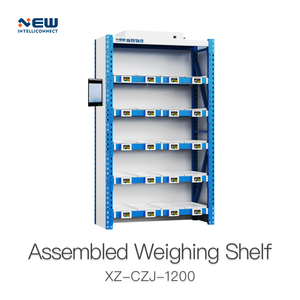 WMS Ready
Smart Warehouse Shelf for Industrial Inventory Tracking and Management
- Real-time RFID / IoT barcode integration
- High precision cold-rolled uprights
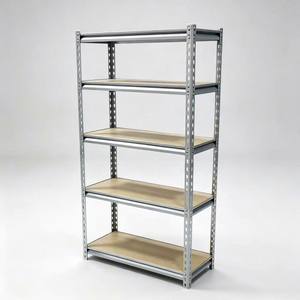 Modular Boltless
5 Tier Heavy Duty Boltless Shelving Unit 150kg Per Layer Metal Storage Rack With MDF Board For Garage Warehouse
- 150kg/layer uniform distributed load
- Rapid snap-fit setup without tooling
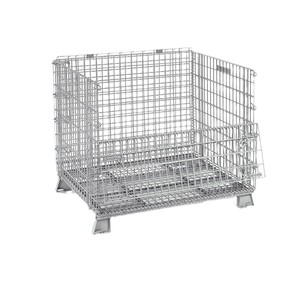 Logistics Unit
OEM ODM Metal Wire Mesh Cage Heavy Duty Stackable Pallet Bin Factory Direct Supply Logistics Storage Cage
- 4-way forklift and pallet truck access
- Foldable collapse profile saves 80% freight
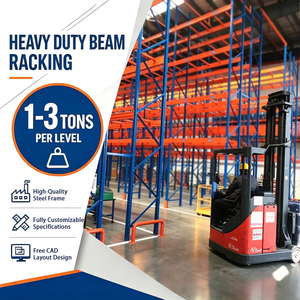 Heavy Engineering
Custom Heavy Duty Steel Pallet Rack Industrial Storage Rack System for Warehouse Warehousing
- Up to 5,000kg load capacity per tier
- 50mm / 75mm adjustable pitch pattern
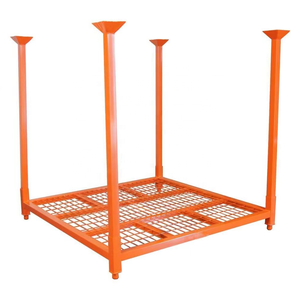 Cold Chain -30°C
Manufactures Cold Room Vertical Stackable Pipe Rack System Transport Storage Metal Pallet Racking Stacking Racks
- Low-temperature impact-resistant alloy
- Vertical modular stack interlock safety
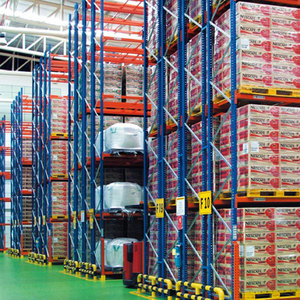 Double Deep
Heavy Duty Double Deep Steel Pallet Racking System with Corrosion Protection Adjustable Beam Industrial Warehouse Storage Racks
- Increases pallet density up to 60% vs APR
- Multi-stage epoxy anti-corrosive finish
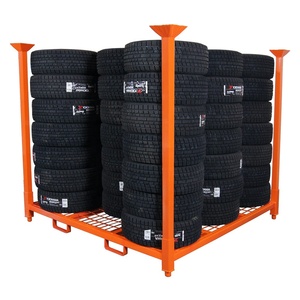 Automotive Grade
Customized Warehouse Heavy Duty Portable Rack Metal Spare Steel Detachable Stackable Pallet Tire Storage System 1000KG Powder
- 1,000kg load rating per modular post
- Detachable upright design for reverse freight
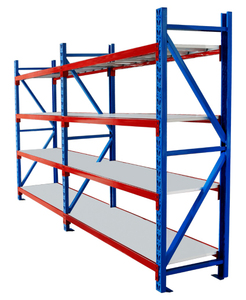 Industrial Flexible
Modular Industrial Grade Steel 5-Layer Adjustable Powder Coated Storage Rack for Factory
- High-grade Q235B cold rolled steel
- Fully compliant with EN 15635 standards
Kinematics & Structural Mechanics of Push Back Racking Systems
Push back racking systems represent the apex of dynamic, gravity-assisted high-density pallet storage designed specifically for high-throughput Last-In, First-Out (LIFO) inventory matrices. Operating on an inclined rail profile (typically calibrated between 1.5% to 2.5% slope), the system utilizes a series of nested, telescoping steel carts that ride on heavy-duty flanged wheel bearings.
When the initial pallet load is placed via standard counterbalance or reach forklift onto the uppermost nested carrier cart, the subsequent pallet gently pushes that cart backward into the bay, exposing the secondary nested cart beneath. Upon picking, the removal of the face pallet allows the trailing pallets to glide smoothly to the retrieval front driven entirely by controlled gravitational inertia.
Density vs. Selectivity Optimization: Unlike Drive-In racking which demands forklifts to navigate inside structural rack bays—elevating upright impact risk—Push Back racking confines truck maneuvers to the operating aisle while recovering up to 75% more storage volume than conventional Adjustable Pallet Racking (APR).
By engineering systems from 2-deep up to 6-deep configurations, warehouse operators eliminate the vast aisle real estate demanded by selective systems while safeguarding structural integrity under stringent European EN 15512 and American ANSI/RMI MH16.1 design parameters.
Core Structural Parameters: Push Back Systems
- Lane Depth Capacity: 2 to 6 Pallets Deep
- Standard Pallet Weights: 500 kg to 1,500 kg / pallet
- Incline Gradient Range: 1.5% - 2.5% Slope
- Steel Grade Compliance: Q235B / Q355B / S355JR
- Upright Pitch Adjustability: 50mm / 75mm Punched Centers
- Operating Temperatures: -30°C Cold Store to +45°C Ambient
Push Back System vs. Alternative High-Density Racking
A rigorous structural and logistical evaluation comparing Push Back architecture against traditional and dynamic racking formats.
| Storage Topology | Space Utilization | Aisle Access Rule | Forklift Collision Risk | Selectivity Rate | Typical SKU Profile |
|---|---|---|---|---|---|
| Push Back Racking (Nested Cart) | 75% - 85% High | LIFO (Front Access Only) | Very Low (Truck Stays in Aisle) | Medium (1 SKU per lane) | 2–6 pallets per SKU, Medium turnover |
| Selective Pallet Racking (APR) | 40% - 50% Low | FIFO or LIFO | Low (Open Bay Access) | 100% Direct Access | High SKU variety, 1 pallet per SKU |
| Drive-In / Drive-Through Racking | 80% - 90% Very High | Strict LIFO (Drive-In) | High (Truck Operates Inside Rack) | Low (Deep lane trapped) | Homogeneous bulk goods, seasonal peaks |
| Pallet Flow Racking (Gravity Rollers) | 85% - 90% Very High | Strict FIFO (Rear In, Front Out) | Low (Dedicated load/pick aisles) | High per aisle face | Perishables, FMCG, strict expiry cycles |
| Radio Shuttle Automation Racking | 90% - 95% Maximum | FIFO or LIFO Dynamic | Negligible (Robotic shuttle cart) | Programmed selectivity | Mass cold storage, mega distribution hubs |
Guangzhou Heda Shelves Co., Ltd. 10-Step Quality Assurance Cycle
Every export rack system undergoes our proprietary automated manufacturing cycle to guarantee structural compliance with international load-deflection limits (1/200th span under full dynamic service loads).
Raw Material QC
Mill test certificates verified for high-tensile Q235B/Q355B coils.
Precision Slitting
CNC laser and rotary slitting lines maintaining ±0.2mm tolerances.
Automated Punching
Continuous hydraulic stamping of 50mm / 75mm tear-drop & diamond holes.
Cold Roll Forming
Multi-stand profiling lines creating cold-rolled omega upright columns.
Profile Rolling
Closed box beams and interlocking step profiles formed without seam stress.
Surface Polishing
Mechanical deburring and automated surface weld slag conditioning.
Robotic Welding
Dual-torch CO2 shielded robotic arms welding beam end connectors.
Acid Phosphating
9-stage chemical wash, ultrasonic degreasing, and rust passivation.
Powder Coating
Automated electrostatic epoxy-polyester cured at 200°C for wear protection.
Seaworthy Packing
Export bundling with steel frame supports, corner guard cushioning & QA check.
Emerging Trends Reshaping Push Back Racking Procurement
Global supply chain volatility, urban real-estate premiums, and strict warehouse ESG regulations have fundamentally altered how international project engineers evaluate push-back and high-density racking contracts.
Cold Chain Optimization
Refrigerated and blast freezer facilities face soaring kilowatt-hour cooling overheads. Procurement trends show a decisive shift toward 4-deep and 5-deep push back systems in cold rooms. By minimizing cubic air volume and packing thermal mass tighter, operators achieve 30% reduction in per-pallet refrigeration costs while preserving individual SKU lane accessibility without forklift-induced thermal leakage.
Hybrid Pallet & Cart Precision Engineering
Global logistics hubs increasingly handle non-standardized multi-pallet fleets (Euro 1200x800mm, UK 1200x1000mm, and US GMA 48x40in). Procurement specifications now dictate universal cradle carts fitted with laser-aligned guide wheels and anti-lift mechanical retention lugs. These prevent cart derailment during aggressive forklift entry and ensure structural adaptability across diverse pallet undercarriages.
Total Cost of Ownership (TCO) Direct Sourcing
Enterprise procurement departments are bypassing regional middlemen to contract directly with premier Chinese manufacturers like HEDA Shelves. Direct factory engagement slashes initial CapEx by 35% to 45%, provides direct access to factory structural engineers for customized CAD/3D finite element calculations, and delivers end-to-end containerized export packaging with verifiable mill certificates.
Frequently Asked Questions: Push Back System Specification & Sourcing
Direct technical answers compiled by our senior structural engineering team to streamline international project feasibility studies.
What is the structural clearance penalty of nested carts in vertical bay planning?
Because each nested cart rests inside the next higher carriage profile, Push Back systems consume approximately 120mm to 200mm of vertical height per tier compared to static beam racking. When designing clear ceiling heights, our engineers incorporate this nesting profile along with standard 100mm forklift lift-off clearances to ensure pallets never collide with upper beam levels.
Can Push Back systems safely accommodate poor-condition or varying wooden pallets?
Yes, particularly nested cart configurations. In roller-based gravity systems, cracked or missing bottom boards cause catastrophic hang-ups. However, in our nested cart system, the pallet is supported fully on four corners by the solid steel cart deck. The pallet itself never rolls on wheels; rather, the robust steel cart travels along the inclined structural channel rails.
How much pushing force is required by standard counterbalance forklifts?
Due to precision sealed flanged bearings and an optimized 2% gradient, the rolling resistance coefficient is remarkably low. Forklifts generally exert only 3% to 4% of the total cumulative payload weight to push nested carts back. Standard electric or LPG warehouse forklifts execute these loading cycles effortlessly within regular throttle parameters.
What documentation and certification are provided for local municipal permits?
Every export shipment from Guangzhou Heda Shelves Co., Ltd. includes certified structural calculations referencing EN 15512 or RMI standards, full CAD layout prints (DWG/PDF), steel grade mill inspection certificates, our ISO 9001:2015 quality certificate (No. 18624Q00169R0M), and CE Declaration of Performance (No. 2435-CPR-8605159) for streamlined engineering approval.
Request an Engineered Layout & Factory-Direct Quotation
Send your warehouse architectural drawings, floor plan, and pallet specifications to our senior structural engineering team. Receive free 3D CAD visualization layouts, load tables, and comprehensive CIF/DDP cost breakdowns within 24 hours.