Featured Industrial Pallet Racking & Heavy-Duty Storage Systems
Explore our certified warehouse storage configurations designed for logistics hubs, cold chain facilities, 3PL distribution centers, and industrial manufacturing plants worldwide.
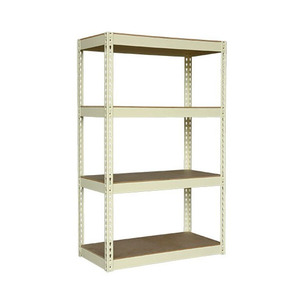
Mracking Factory Direct Sale Boltless Shelving and Racks, Custom Teardrop Rack
- 2.0" Standard Teardrop Pitch
- High-grade Q235B cold rolled steel
- Boltless fast-lock assembly
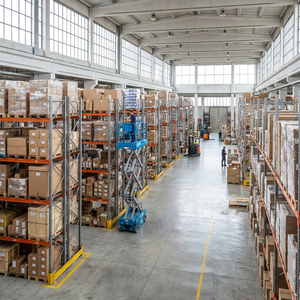
Professional Industrial Racking System Steel Warehouse Storage Equipment Supplier
- Up to 4,500 kg/beam tier capacity
- CE certificate No. 2435-CPR-8605159
- Custom RAL powder coat finish
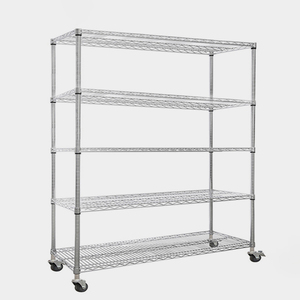
Racks Heavy Duty Metal Steel Storage Shelves 5 Layer Wire Shelf for Sale Racks Shelves
- 5-tier dynamic loading layout
- Fire-safe sprinkler water permeability
- Zinc-electroplated / epoxy coated
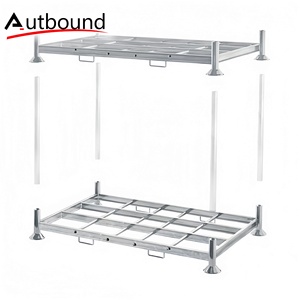
Mild Steel Q235 Modular Rack Hot-Dip Galvanized Warehouse Easy Stacking Post Pallet Forklift Customized Sizes OEM Equipment
- Hot-dip galvanized anti-corrosion
- 4-way forklift access compatibility
- Foldable & modular stackable
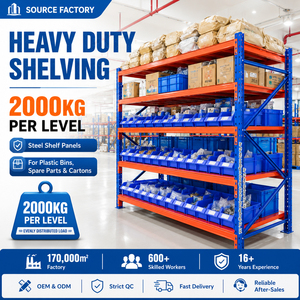
2000KG Adjustable 5 Storage Levels Heavy Duty Shelving System For Bins Spare Parts And Cartons Steel Decks Panel Racking
- High-load solid steel deck plates
- 50mm pitch vertical adjustment
- Suitable for manual & bin pickings
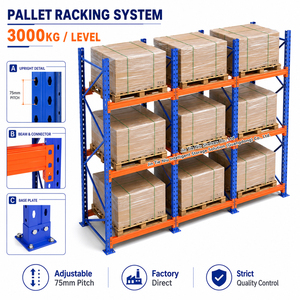
3 Pallet Levels Heavy Duty Steel Warehouse Rack Selective Pallet Racking System 3000KG
- 100% individual pallet access
- Euro & ISO pallet compatibility
- Heavy interlocking beam connectors
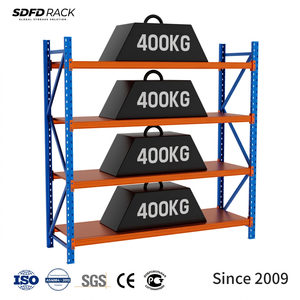
400KG Adjustable Racking Galvanized Sheet Metal Shelving Steel Industrial Storage Rack Heavy Duty Long Span Warehouse Shelves
- High tensile galvanized deck plates
- Abrasion-resistant cold rolling
- Adaptable to multi-tier mezzanines
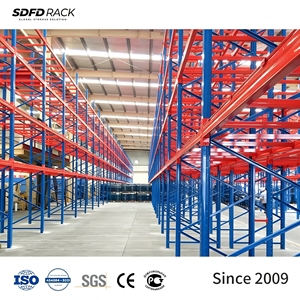
Warehouse Storage Pallet Racks Durable Adjustable Steel Metal Customized Heavy Duty Selective Pallet Racking System
- Seismic load engineering design
- Integrated safety locking pins
- Free 3D warehouse layout sizing
Structural Architecture of Modern Pallet Racking Systems
Demystifying structural deflection ratios, cold-formed steel yield thresholds, and spatial utilization metrics to empower procurement teams with verified technical facts.
Yield Stress & Material Grade Purity
Industrial warehouse racks rely primarily on cold-formed high-tensile carbon steel grades such as Q235B and Q355B (equivalent to European EN 10025 S235JR and S355JR). Structural integrity is dictated by yield strength (ReH ≥ 235-355 MPa) and ultimate tensile strength (Rm between 360-510 MPa). Advanced manufacturing employs multi-roll continuous roll-forming machines with inline punch presses, delivering an unbroken grain microstructure along upright columns. This prevents shear strain failure and local buckling under heavy vertical point loads.
Deflection Criteria (EN 15512 & RMI)
According to the rigorous EN 15512:2020 and RMI ANSI MH16.1 design codes, horizontal beam deflection under a fully rated maximum uniformly distributed load (UDL) must not exceed L/200 for standard pallet storage, and L/300 for semi-automated systems such as Radio Shuttle or VNA configurations. Selecting engineered box beams with seam-welded step profiles ensures structural deflection stays within legal tolerances, avoiding permanent structural fatigue, connector loosening, and seismic vulnerability during peak operational loads.
Pre-Treatment & Surface Adhesion
Long-term chemical resistance and protection against oxidation require automated 10-stage pre-treatment pipelines: hot alkaline degreasing, ultrasonic water rinsing, pickling, and acid phosphating, followed by demineralized flushing. Upright frames and beams undergo automated electrostatic application of 60–90 μm polyester epoxy powder, cured at 180–200°C. This guarantees salt-spray corrosion resistance exceeding 500 hours (ASTM B117 standards), essential for food processing plants and variable cold-storage moisture conditions.
Engineering Matrix: Warehouse Pallet Racking Topologies
Direct structural comparison between conventional selective racks, deep storage, dynamic gravity flow, and automated pallet shuttle systems.
| System Architecture | Storage Density | Direct Selectivity | Stock Rotation Rule | Standard Load / Bay | Forklift Compatibility |
|---|---|---|---|---|---|
| Standard Selective Racking | Baseline (40-50%) | 100% Direct Access | FIFO / LIFO Flexible | 1,000 – 4,000 kg | Counterbalance, Reach Truck |
| Double Deep Racking | High (+30% vs Selective) | 50% Direct Access | LIFO | 1,500 – 3,200 kg | Deep-Reach Pantograph |
| Drive-In / Drive-Through | Very High (65-75%) | Lane Dependent (<15%) | LIFO (Drive-In) / FIFO | 1,000 – 2,000 kg | Counterbalance, Narrow Reach |
| Radio Shuttle System | Maximum (>80%) | Semi-Automated Lane | Programmed FIFO / LIFO | 500 – 2,000 kg/pallet | Standard Forklift (Aisle only) |
| Gravity Pallet Flow | High (70-80%) | Face Picking Only | Strict FIFO (Continuous) | 800 – 1,500 kg | Standard Forklift (Separated Aisles) |
| Very Narrow Aisle (VNA) | High (+40% Footprint) | 100% Direct Access | FIFO / LIFO Flexible | 1,000 – 3,500 kg | Specialized Turret / Man-Up Truck |
Future Procurement Trends in Pallet Racking & Logistics
How corporate supply chains, cross-border buyers, and 3PL contractors are shifting procurement strategies toward total lifecycle value and decarbonization.
1. Total Cost of Ownership (TCO) Prioritization
Global buyers no longer evaluate quotes solely on initial purchase price per ton of steel. Modern supply chain executives evaluate TCO over a 15-year horizon, focusing on zinc-coating life cycles, column impact deflection resistance, modular interchangeability, and availability of replacement parts. Purchasing certified components engineered to European EN 15635 standards prevents early decommissioning and reduces recurring insurance premiums.
2. Decarbonization & Green Steel Audits
European Corporate Sustainability Due Diligence Directive (CSDDD) and US SEC Scope 3 supply chain emission disclosures are directly impacting warehouse fixture sourcing. Leading exporters provide certified carbon footprint disclosures for Electric Arc Furnace (EAF) steel versus traditional Blast Furnace production, alongside heavy metals-free, zero-VOC electrostatic powder coatings that adhere to strict EU RoHS and REACH mandates.
3. Modular Adaptability & Circular Logistics
Lease agreements in modern logistics hubs are shortening to 3-5 years, prompting warehouse operators to favor bolted modular uprights over fully welded systems. Specifiers mandate teardrop and universal slot designs that can be disassembled, re-spaced on 50mm increments, expanded into multi-tier mezzanines, or reconfigured from standard selective into drive-in or cart-pushback systems without structural hot-work or on-site welding.
Next-Gen Development Trends in Warehouse Racking Systems
Discover how the rapid emergence of high-bay ASRS, AMR mobile robotics, and digital twin monitoring is redefining physical storage infrastructure.
Integration with Autonomous Mobile Robots (AMR) & ASRS
The convergence of Automated Storage and Retrieval Systems (ASRS) and autonomous mobile base-lifters necessitates dimensional fabrication tolerances tighter than standard commercial warehouse framing. Columns roll-formed to EN 15620 Tolerance Class 100/200 minimize cumulative deviation up to 30-meter high-bay silos. Guide rails, optical tracking reflectors, and robotic floor plates are increasingly integrated during factory roll-forming to streamline robotic commissioning.
IoT Structural Health Monitoring & Smart Deflection Sensors
Racking installations in high-seismic zones are pioneering fiber-optic strain gauges and wireless MEMS accelerometers bonded to critical upright base plates and lower beam tiers. These IoT sensors stream real-time micro-strain and structural deflection metrics directly to warehouse management systems (WMS). When a forklift collision occurs or operational loads exceed engineering safety thresholds, maintenance alerts trigger immediate localized inspection, preventing catastrophic racking collapse.
World-Class Manufacturing Prowess & Global Export Competence
Guangzhou Heda Shelves Co., Ltd. combines a quarter-century of engineering precision with an expansive 30,000 square meter intelligent manufacturing base.
Certified Structural Compliance
Every upright frame, beam connector, and bracing truss is verified by third-party testing institutions. We hold CE Certificate No. 2435-CPR-8605159, ISO 9001:2015 Certificate No. 18624Q00169R0M, and full RoHS environmental verification. All load calculations strictly comply with European EN 15512, EN 15620, and American RMI MH16.1 codes.
Complimentary 3D CAD & Load Simulation
Our 30+ senior structural engineers provide free 2D architectural DWG layouts, complete 3D photorealistic BIM models, and Finite Element Analysis (FEA) stress simulations prior to contract signing. This ensures aisle turning clearances for reach trucks, vertical lift mast heights, and sprinkler systems are precisely planned before manufacturing begins.
Seaworthy Export Logistics & Packing
With over 10,000 international projects delivered across 120+ nations, our shipping department packages components using heavy-duty steel strapping, corrugated corner protection, and moisture-barrier air-cushion wrapping. Upright columns and beams are bundled with dedicated color-coded labels matching sequential installation drawings to expedite container destuffing and on-site assembly.
Frequently Asked Questions on Pallet Racking Sourcing
Detailed engineering clarity on international certifications, custom dimensions, shipping lead times, and structural safety standards.