Heavy-Duty Racking
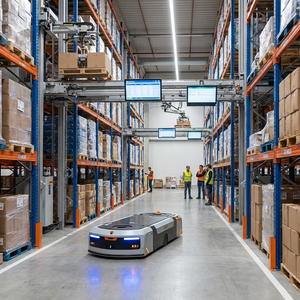
Engineered for demanding industrial distribution centres, parts consolidation hubs, and cold chain facilities. Fabricated with high-tensile Q235B/Q355B cold-rolled steel and electrostatic anti-scratch polymer powder coatings.
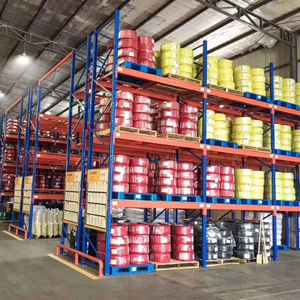
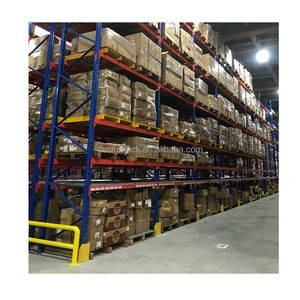
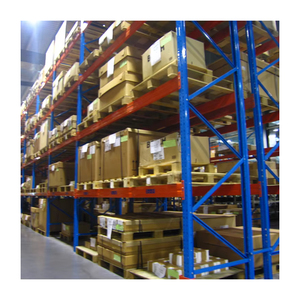
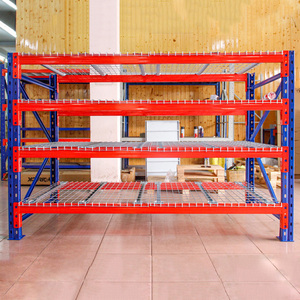
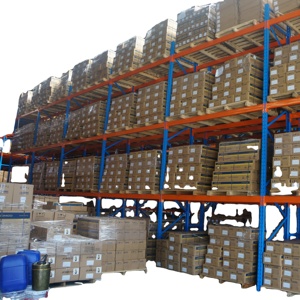
Headquartered in Guangzhou, Guangdong, Guangzhou Heda Shelves Co., Ltd. has operated continuously since 2001 as a premier original equipment manufacturer (OEM) and structural intralogistics provider. Operating with over 300 precision fabricators, certified structural engineers, and welding specialists, our factory transforms hot-rolled and cold-rolled certified coils into ultra-durable storage assets.
Backed by official CE Certificate No. 2435-CPR-8605159, ISO 9001:2015 Registration 18624Q00169R0M, and rigorous RoHS chemical safety validations. Every production batch is certified to withstand static, dynamic, and seismic forces compliant with European EN 15512 and FEM 10.2.02 codes.
Eliminate design errors before steel is rolled. Our in-house technical department provides complete BIM/DWG architectural integration, aisle-deflection simulation, clear height optimization, and structural calculations without upfront licensing or design retainers.
Containerized shipping departing Pearl River Delta deep-water terminals directly to Rotterdam, Hamburg, Antwerp, Valencia, Felixstowe, and Los Angeles. We engineer custom seaworthy metal strapping, wooden crating, and export-grade bubble wrapping to guarantee pristine delivery.
Industrial longspan shelving bridges the mechanical gap between manual light-duty boltless angle shelving and heavy-duty automated pallet racking. Below is an engineering overview of structural steel selection, deflection metrics, and safety thresholds required for zero-failure warehouse environments.
The structural integrity of HEDA longspan systems relies exclusively on prime structural grade Q235B and Q355B high-tensile carbon steel (equivalent to European S235JR and S355JR according to EN 10025). Upright frames are roll-formed into continuous 50mm-pitch omega (Ω) columns through 20-station precision rolling mills.
The continuous omega section features multiple directional return folds, substantially elevating the moment of inertia ($I_x$ and $I_y$) and radius of gyration. This geometry neutralizes torsional flexure, local flange buckling, and asymmetrical bending under unevenly distributed manual shelf loading.
All structural longspan beams are engineered with an ultimate partial material factor $\gamma_M \ge 1.4$ against ultimate yield stress, ensuring an operational safety buffer well beyond standard commercial shelving.
HEDA longspan configurations utilize fabricated tubular step beams or P-type profiles with 3-claw or 4-claw stamped hook connectors. The beam ends engage seamlessly into column teardrop or butterfly perforations, converting downward dead and live weight into rigid compressive wedging forces.
In conformance with international safety codes (including FEM 10.2.02 and ANSI MH16.1), the maximum allowable deflection ($\delta_{max}$) for any horizontal beam tier subjected to uniformly distributed loads (UDL) is rigorously capped at $\le L/200$ (with high-precision logistics applications holding tolerances at $L/250$).
Every single beam-to-column intersection is secured with spring-loaded, zinc-electroplated high-shear safety locking pins that resist dislodgement from upward forklift tine strikes or improper pallet maneuvers.
| System Category | Material Standard | Typical Bay Width | Load Capacity (UDL) | Vertical Adjustment | Primary Sector Application |
|---|---|---|---|---|---|
| Industrial Longspan Shelving | Q235B Cold-Formed Steel | 1,200 mm – 2,700 mm | 300 – 1,000 kg / level | 50 mm Pitch | Manual Picking / E-Commerce / Automotive |
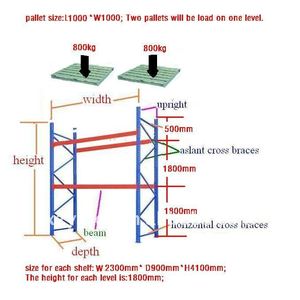
| Selective Pallet Racking | Q355B High-Yield Alloy | 2,300 mm – 3,900 mm | 1,000 – 4,500 kg / tier | 75 mm / 50 mm Pitch | Standardized Euro/ISO Pallets / 3PL Hubs |
| Double-Deep Racking | Q355B Heavy Structural | 2,300 mm – 3,300 mm | 1,500 – 3,000 kg / tier | 75 mm Pitch | High-Density Cold Stores / Homogeneous SKUs |
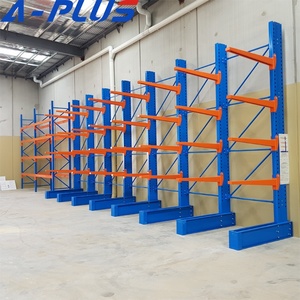
| Cantilever Stacking System | Hot-Rolled H-Section & Cold Coil | 1,000 mm – 1,800 mm arm | 500 – 2,000 kg / arm | 100 mm / 140 mm Pitch | Pipes / Timber / Extrusions / Sheet Metal |
| Multi-Tier Mezzanine Rack | Combined Q235B/Q355B | Multi-Bay Integrated | 300 – 1,000 kg / m² floor | Architectural Grid | Vertical Airspace Expansion / Garment & Retail |
To maintain strict tensile strength and surface adhesion across 30,000 metric tons per month, every industrial rack undergoes a non-stop, monitored metallurgical manufacturing cycle in our Guangzhou facility.
Chemical and mechanical inspection of high-grade hot and cold-rolled prime steel coils for yield point and elongation integrity.
Automated hydraulic rotary slitting heads cut precise strip dimensions with zero edge burring or mechanical stress micro-fissures.
Continuous progressive stamping punch lines form 50mm pitch teardrop, diamond, or butterfly slots within ±0.1mm alignment.
20-pass synchronized profile cold-forming mills gradually bend steel strips into high-torsion omega uprights and box beams.
High-speed flying saw hydraulic shear stations slice profile lengths up to 12 meters with strict perpendicular square tolerances.
Multi-axis robotic arms perform continuous gas metal arc welding (GMAW/MIG) joining beam connectors with deep penetration fillets.
A 9-stage chemical immersion tunnel: acid pickling, ultrasonic degreasing, and zinc phosphating to prevent sub-film oxidation.
Automated Swiss Gema powder booths deposit thermosetting polyester resin (60–90 μm) cured in 200°C baking tunnels for high impact resistance.
Hydraulic cyclic test benches evaluate upright crushing, beam deflection under UDL, and connector shear before serial packing.
Corrugated edge protectors, high-density polyethylene wrapping, and custom structural steel cradles engineered for sea freight stability.
Warehouse real estate costs, supply chain volatility, and decarbonization mandates are shifting longspan and racking procurement priorities worldwide. Operations directors must account for these macroeconomic and technological shifts when specifying multi-year facility plans.
Traditional manual shelving is rapidly transitioning into hybrid automation-ready architecture. Modern procurement protocols require shelf profiles to support autonomous mobile robot (AMR) under-chassis navigation, standardized tote placement, and vertical shuttle integration. Buyers are transitioning from static shelving to modular profiles that allow future retrofitting of pick-to-light (PTL) sensor tracks, automated tote extractors, and conveyor tie-ins without dismantling upright frames.
With the European Union Carbon Border Adjustment Mechanism (CBAM) entering definitive operational phases, enterprise buyers in Europe and North America require mill test certificates (MTCs) itemizing Scope 1, 2, and 3 embedded carbon emissions. HEDA Shelves addresses this by partnering with electric arc furnace (EAF) steel recyclers and implementing energy-efficient closed-loop pretreatment lines, giving global distributors clear ESG compliance dossiers.
Warehouse risk underwriters now demand site-specific seismic hazard modeling ($S_s$ and $S_1$ spectral acceleration coefficients). Rather than installing generic stock shelving, procurement teams require suppliers to customize baseplate dimensions, anchor bolt diameters (M12 to M18 wedge anchors), and sway bracing topologies to accommodate regional soil classes, protecting warehouse staff and avoiding catastrophic collapse liabilities.
Equipment distributors and intralogistics system integrators are actively bypassing domestic middlemen. By working directly with certified Chinese manufacturing plants, distributors achieve 25% to 40% capital expenditure reductions while accessing private-label color schemes (custom RAL palettes), barcode SKU serialization on components, and project-specific pre-assembled upright trusses that slash local site installation hours.
Detailed engineering answers to the most frequent technical, compliance, and commercial questions asked by supply chain executives, warehouse developers, and equipment distributors.
Contact our Guangzhou engineering headquarters for complimentary warehouse CAD layout drawings, finite element load calculations, and competitive factory-direct pricing for standard or customized longspan racking systems.