Core Industrial Racking & High-Density Storage Solutions
Manufactured using high-tensile Q235B/Q355B structural steel, our certified racking systems deliver unmatched load stability, optimized pallet clearances, and strict First-In, First-Out throughput for global distribution centres.
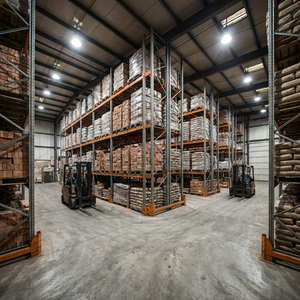
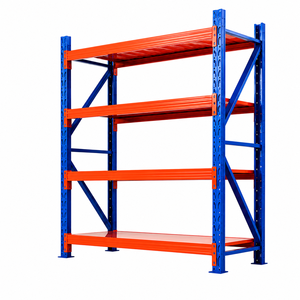
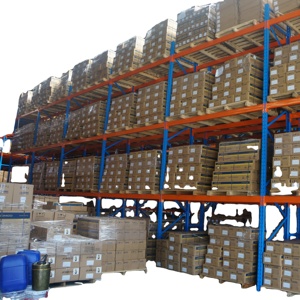
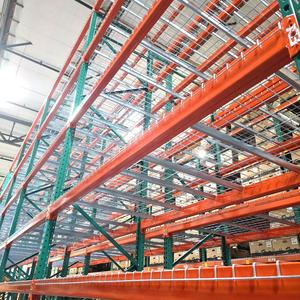
Engineering First-In, First-Out (FIFO) Intralogistics: Physics, Kinematics, and ROI
In high-velocity supply chain operations, First-In, First-Out (FIFO) storage is not merely an inventory rotation methodology—it is an engineering discipline designed to eliminate pallet expiration risks, mitigate warehouse bottlenecking, and compress internal travel paths. For sectors handling FMCG, pharmaceuticals, chilled dairy, precision electronics, and perishable goods, deploying a factory-direct FIFO infrastructure from leading Chinese manufacturers guarantees structural optimization and significant capital expenditure savings.
Gravity Flow Roller Dynamics
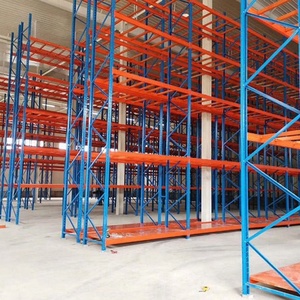
Pallet flow racks utilize an engineered slope (typically 3% to 4% gradient) combined with centrifugal brake rollers and entry separators. Gravity propels unit loads along steel roller tracks from the loading aisle to the picking aisle, achieving automatic stock sequencing without external power inputs.
Semi-Automated Shuttle FIFO
Four-way and two-way radio shuttles execute high-density FIFO tasks within deep lanes. Shuttles navigate on precision-formed cold-rolled channels, accepting optical-sensor commands to index pallets forward, reducing forklift travel into racking channels and protecting frame columns from structural impact.
Structural Compliance & Deflection
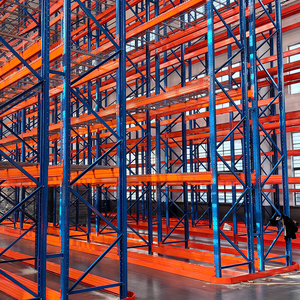
Calculated in accordance with EN 15512:2020 and RMI standards, structural upright profiles are cold-formed from high-yield Q235B/Q355B steel coils. Beam-to-column connections are engineered to limit elastic deflection to less than 1/200th of the clear span under rated maximum live load.
| Racking Topology | Inventory Rotation | Space Utilization | Forklift Interaction | SKU Profile Suitability | CAPEX Ratio |
|---|---|---|---|---|---|
| Gravity Pallet Flow | Strict FIFO | Up to 85% volumetric density | Separated charging and picking aisles | High turnover, perishable, batch-controlled | Medium - High |
| Radio Shuttle System | Configurable FIFO / LIFO | Up to 90% volumetric density | External aisle handling only (remote shuttle) | Mass production, cold storage, FMCG | High (Fast ROI) |
| Drive-Through Racking | Pure FIFO | Up to 75% volumetric density | Forklift enters rack core from rear | Seasonal goods, uniform pallet dimensions | Economical |
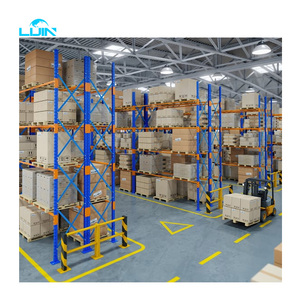
| Selective Pallet Racking | FIFO (via WMS scheduling) | 40% - 50% volumetric density | Continuous aisle maneuvering | High SKU variety, direct pallet selectivity | Baseline Economy |
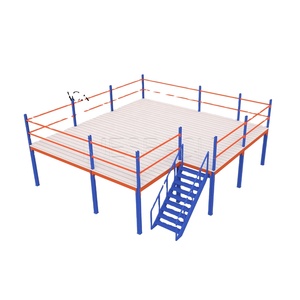
| Multi-Tier Mezzanine | FIFO for broken-case picking | 200% - 300% floor expansion | Integrated goods lifts, staircases, AGVs | Spare parts, e-commerce fulfillment, light assembly | Custom Engineering |
*Deflection limits, dynamic load coefficients, and aisle dimensioning calculated per EN 15620 / FEM 10.2.02 standards.
Future Procurement & Technology Trends in Warehouse Racking
The warehouse equipment manufacturing sector in China is undergoing an aggressive transition toward digital manufacturing, zero-carbon coatings, and native robotic integration. International procurement managers must assess upcoming multi-year deployment lifecycles based on these evolving factors.
AMR & AGV Native Integration
Traditional static FIFO flow beds are transitioning to autonomous mobile robot (AMR) docking stations. Chinese manufacturers are standardizing beam heights and bottom-level clear spans to accommodate sub-pallet lifters and counterbalanced AGVs, enabling complete "lights-out" warehouse picking environments.
High-Yield Cold-Rolled Steels
To reduce shipping tare weight while elevating load-bearing safety margins, modern production utilizes micro-alloyed, continuous-cast Q355B and automotive-grade high-yield cold-formed steel coils. This results in 15% thinner profiles with 25% higher torsional and compressive structural resistance.
Sub-Zero Cold Chain Optimization
Cold chain logistics operations consume up to 60% of their operational expenditure on refrigeration energy. Next-generation FIFO racking maximizes cubic density inside freezer vaults (-25°C to -30°C), using specialized cold-resistant powder coatings that prevent micro-cracking and steel embrittlement.
Direct Manufacturing Power: 25+ Years of Global Logistics Engineering
Operating out of an advanced 30,000 m² smart manufacturing center, Guangzhou Heda Shelves Co., Ltd. has supplied high-tolerance warehouse racking to over 120 countries. Certified under CE Certificate No. 2435-CPR-8605159 and ISO 9001:2015 No. 18624Q00169R0M, we control every facet of production—from raw metallurgical inspection to automated CNC punch-pressing, precision roll-forming, and non-toxic electrostatic epoxy powder finishing.
Our 10-Step Quality Assurance & Fabrication Pipeline
Frequently Asked Questions on China Wholesale FIFO Racking
Critical engineering considerations, shipping economics, and safety verification protocols addressed directly by our senior structural engineering team.
How do Chinese factories ensure EUR/EPAL pallet compatibility in gravity flow systems?
Standard European pallets (1200 × 800 mm) and UK industrial pallets (1200 × 1000 mm) have differing bottom board orientations. In our design phase, roller track width, tripartite roller dividers, and roller pitch (typically 50 mm, 75 mm, or 100 mm) are custom-spaced so that at least three rollers remain in continuous contact with the pallet bottom skids at all times, preventing skidding, sagging, or unexpected lane jams.
What documentation and test reports are provided for municipal building permits?
Every export shipment is backed by verified CE Factory Production Control (FPC) documentation, ISO 9001:2015 quality certificates, steel mill metallurgical certificates (MTC confirming yield strength and elongation), structural static calculation sheets referencing EN 15512 or RMI standards, and detailed DWG assembly drawings stamped by licensed structural engineers.
What is the typical production and transit lead time for full container load (FCL) orders?
Standard fabrication takes 15 to 25 business days from CAD layout approval and deposit confirmation. Shipping from Guangzhou/Shenzhen to main European base ports (Rotterdam, Hamburg, Antwerp) takes approximately 30 to 35 days, while shipments to North American West Coast ports take approximately 14 to 18 days.
How are dynamic impact loads calculated for warehouse slabs housing high-density racks?
Our project team calculates point loads transferred through footplates to the concrete slab, checking punching shear and subgrade settlement risks. In heavy-duty gravity flow racks, dynamic impact factors (typically 1.15 to 1.25) are integrated into the static load to account for forklift placement forces and moving pallet momentum, ensuring the warehouse floor slab does not crack over time.
What surface treatment is utilized to prevent corrosion in humid or seaside logistics hubs?
Components undergo an automated 8-stage pre-treatment cycle including degreasing, acid descaling, pickling, and micro-crystalline zinc phosphating. This is followed by an electrostatic application of thermosetting polyester or epoxy powder baked at 180°C–200°C. For aggressive coastal or chemical zones, hot-dip galvanizing per ISO 1461 is available, providing zinc coatings exceeding 65–85 microns.
Plan Your Warehouse Optimization Project Today
Send your building dimensions (CAD/PDF), required pallet capacity, and handling equipment specifications. Our structural design team provides a complete 2D/3D layout with calculation sheets within 48 hours.