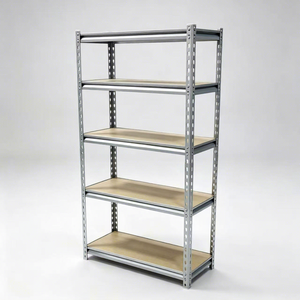
Factory-Direct Heavy-Duty Systems
Featured Racking & Industrial Storage Solutions
Explore our heavy-duty cold-formed structural racking portfolios engineered for high-density volume throughput, rapid FIFO order fulfillment, and stringent international structural loading codes.
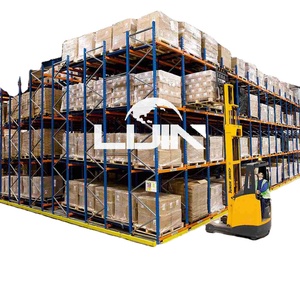
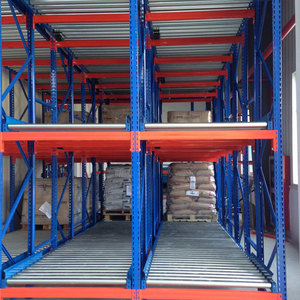
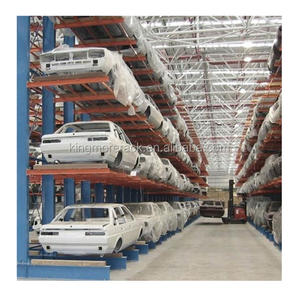
Engineering Whitepaper: Flow Through Pallet Racking Mechanics & Physics
Flow through pallet racking—commonly designated as gravity flow racking, dynamic live storage, or pallet roller racking—is an ultra-high-density storage methodology relying fundamentally on gravity, inclined roller tracks, and kinetic braking engineering. Designed around strict FIFO (First-In, First-Out) materials handling logic, this system isolates loading operations from picking operations, establishing autonomous replenishment lanes that maximize spatial cube utilization up to 85% compared to standard wide-aisle selective configurations.
From an engineering standpoint, every dynamic flow lane functions as an unpowered, mechanical conveyor system. Pallets placed on the loading face (charging side) travel down a gradient bed configured typically between 2.5% and 3.5% inclination (1.5° to 2°) under controlled gravitational force. As the unit load accelerates, integrated centrifugal speed controller rollers (brake drums) engage frictionally against the pallet underside. This kinetic deceleration keeps descending velocity within safe thresholds (typically 0.1 to 0.3 m/s), preventing collision damage against front staging inventory.
Centrifugal Brake Rollers
Direct mechanical governors that modulate rotational resistance based on kinetic descent velocity, eliminating thermal runaway and stabilizing pallets weighing up to 1,500kg.
Load Separator Mechanisms
Bi-stable mechanical locks positioned at the unloading discharge face isolate the lead pallet from lane backpressure, ensuring instantaneous, pinch-free forklift extraction.
Rigorously Tested Steel Profiles
Manufactured using high-tensile Q235B and Q355B cold-formed structural steel, treated via automated phosphating pre-wash and electrostatic thermoset epoxy-polyester coatings.
For large-scale international distributors, wholesale logistics operations, cold stores, and pharmaceutical consolidation centers, dynamic flow racking eliminates cross-aisle traffic bottlenecks. Lift truck drivers no longer drive deep into racking structures as required in Drive-In bays; structural collisions are minimized, operational cycle times decrease by 40%, and energy consumption in climate-controlled warehouses drops dramatically.
Technical Specifications & Structural Parametric Data
When procuring flow through racking from Chinese manufacturers for European, North American, or Middle Eastern deployment, precise structural calculation under EN 15512, EN 15620, or RMI ANSI MH16.1 is imperative. The table below delineates critical design parameters across standard high-capacity roller lanes.
| System Attribute | Light / Medium Carton Flow | Standard Euro Pallet (1200x800) | Heavy Industrial Pallet (1200x1200) | Cold Chain High-Capacity Lane |
|---|---|---|---|---|
| Load Rating Per Unit | 25 kg – 100 kg / Box | 500 kg – 1,000 kg / Bay | 1,000 kg – 1,500 kg / Bay | Up to 1,800 kg / Position |
| Incline Slope Ratio | 3.0% – 4.5% | 2.8% – 3.2% (Standard 1.8°) | 2.5% – 3.0% | 3.0% – 3.5% (Compensates Frost) |
| Roller Track Matrix | Polypropylene / Steel Skatewheels | Full-Width Carbon Steel Rollers | Triple Track Heavy Welded Rollers | Zinc-Plated Sealed Bearing Rollers |
| Speed Braking Setup | Manual Pitch Variations | 1 Brake Roller per 2 Pallet Depth | 1 Brake Roller per Pallet Position | Low-Temp Synthetic Lubricant Brakes |
| Stock Management Protocol | FIFO High Speed Picking | FIFO Batch Processing | FIFO Bulk Raw Materials | FIFO Strict Expiration Dispatch |
| Structural Compliance | ISO 9001:2015 | EN 15512 / CE Certified | CE No. 2435-CPR-8605159 | EN 15620 Tolerances |
Future Procurement Trends in Industrial Flow Through Racking
Global supply chain engineering is witnessing a transformative shift toward automated intralogistics, sustainability, and risk-resilient cold chain networks. International B2B buyers evaluating China wholesale flow through pallet racking exporters are prioritizing key developmental shifts:
Integration with Autonomous AGV/AMR
Traditional gravity discharge faces are now engineered with automated magnetic alignment sensors and pneumatic stop gates, allowing autonomous mobile robots to collect pallets without human intervention.
Sub-Zero Energy Optimization
With refrigerated warehouse energy rates compounding globally, buyers prioritize ultra-dense gravity lanes that reduce warehouse internal air volume, cutting refrigeration overhead by up to 35%.
Universal Euro/GMA Pallet Tracks
Global cross-border trading demands adaptive roller lanes. Hybrid roller geometry accommodates both bottom-boarded Euro (EPAL) 1200x800mm pallets and GMA 48x40-inch American four-way stringer pallets without jam risks.
Corrosion-Resilient Pre-Treatments
Industrial clients operating in humid, chemical, or maritime environments now mandate 8-stage pickling and phosphating lines paired with high-micron hot-dip galvanized or zinc-rich powder coating formulas.
Next-Generation Engineering & Technology Roadmaps
As warehouse logistics progress toward Industry 4.0, flow-through pallet racking is evolving beyond static metal frames. Research and development teams at leading Chinese production facilities are establishing technical milestones across multiple mechanical axes:
1. IoT-Enabled Kinematic Monitoring: Modern flow lanes are being equipped with embedded vibration, temperature, and speed-sensing telemetry inside the braking rollers. When dynamic friction deviates—indicating bearing fatigue or roller deformation—the system alerts warehouse maintenance engineers prior to lane blockages.
2. Progressive Modular Modifiability: Gone are the days of rigid, fully-welded configurations. New modular systems feature variable bolted connectors with multi-pitch indexing (50mm, 75mm, 76.2mm). This allows warehouse managers to adjust lane inclines and roller density on-site as inventory pallet weights change seasonally.
3. Low-Noise Polyurethane Dynamic Sleeves: To comply with stringent European occupational health and workplace noise directives (Directive 2003/10/EC), steel rollers are increasingly coated with extruded, micro-cellular polyurethane sleeves, reducing decibel output during pallet descent by up to 18 dB.
Why Partner With HEDA Shelves: Enterprise Strengths & Authority
Founded in 2001, Guangzhou Heda Shelves Co., Ltd. has established itself as an authoritative global manufacturer and exporter of warehouse storage systems, heavy-duty pallet racking, industrial shelving, and structural steel mezzanines. Our advanced 30,000 m² modern manufacturing hub produces over 30,000 metric tons of precision racking per month, serving engineering contractors, system integrators, and industrial distributors in more than 120 countries.
2001
Year Founded
30,000 m²
Production Plant
30,000 t
Monthly Capacity
10,000+
Projects Installed
Verified International Certifications
Fully compliant with international testing: Certified CE (Certificate No. 2435-CPR-8605159), ISO 9001:2015 Quality Management (Certificate No. 18624Q00169R0M), and complete RoHS verification.
Complete In-House Manufacturing
From raw cold-rolled steel slitting, precision CNC punching, automated roll-forming lines, robotic beam welding, to eco-friendly powder coating, every stage undergoes tight QA/QC inspection.
Turnkey Engineering & Free CAD/3D Layouts
Our senior structural team provides complimentary DWG/BIM layout engineering, structural load capacity verification, seismic analysis calculations, and complete seaworthy export container packing.
Frequently Asked Questions (FAQ) for Global Racking Buyers
Procuring heavy industrial racking systems across international borders requires exhaustive technical vetting. Below are detailed operational answers to critical procurement queries.
How do you ensure pallet flow racking works safely with varying pallet weights?
Pallet flow lanes rely on carefully calibrated brake roller distribution. We configure centrifugal speed controller brake rollers every 1 to 2 pallet positions depending on the minimum and maximum gross pallet weight. During our free engineering stage, our technical team conducts dynamic kinematic calculations based on your pallet specification (wood, plastic, steel), bottom board orientation, and total load ranges (e.g., 300kg to 1200kg) to ensure steady, safe descent velocities without runaway or stalling.
Can HEDA Shelves flow racking support both Euro (EUR/EPAL) and US GMA pallets?
Yes. Standard Euro pallets (1200 x 800 mm) have specific bottom-runner configurations that travel optimally on dual or triple roller tracks. American GMA pallets (48 x 40 inches) feature different underside runner alignments. We manufacture customized full-width steel roller tracks and adaptive skatewheel beds that accommodate varied pallet architectures, including bottom skids or perimeter bases, eliminating track derailment.
What engineering compliance and documentation do you provide for safety inspections?
We provide comprehensive engineering project dossiers for building inspectors, third-party certification bodies, and municipal authorities. Documentation includes structural design calculations aligned with European standard EN 15512:2020 / EN 15620, factory CE Declarations of Performance (DoP under CE Certificate No. 2435-CPR-8605159), mill test steel certificates (Q235B / Q355B), ISO 9001:2015 quality documents, load notices, and step-by-step CAD installation schematics.
What is the average lead time, and how are components packaged for ocean freight?
Standard fabrication lead times range from 15 to 30 working days depending on order volume and RAL color specifications. Components are packaged for sea freight: upright frames and horizontal beams are nested, banded with heavy steel strapping, protected by edge corner boards, and wrapped in thick waterproof polyethylene film. Small accessories, speed controllers, bolts, and load separators are secured in reinforced export wooden crates to prevent maritime corrosion and transit damage.
How do you resolve pallet hanging or stalling in flow through lanes?
Pallet hang-ups occur primarily due to substandard broken pallets, warped bottom runners, or incorrect track pitch. We mitigate this through three core design features: 1) Precision lane inclination setting (standard 2.8% to 3.2% slope); 2) High-grade shielded bearings with ultra-low startup friction; and 3) Optional entry guides and manual release/jogger mechanisms that allow operators to safely unstick stalled pallets without climbing onto the dynamic rack beds.
Do you offer OEM/ODM services for overseas distributors and system integrators?
Yes, OEM and ODM manufacturing constitutes a substantial segment of our export operations. We engineer proprietary upright hole pitches (50mm, 75mm, 76.2mm teardrop or hexagonal patterns), custom beam profiles, private-label brand stamping, bespoke packaging designs, and customized RAL thermoset powder coatings to seamlessly match our global distributors' existing product lines.
Accelerate Your Warehouse Intralogistics Efficiency
Consult with our senior logistics engineers today. Receive a free, turnkey 3D/CAD warehouse layout, load calculation tables, and factory-direct wholesale pricing within 24 hours.
Inquire Now