Engineered Warehouse Storage Racks & Systems
Factory-direct structural steel configurations designed for modern distribution centers, cold chain hubs, and automated intralogistics fulfillment facilities.
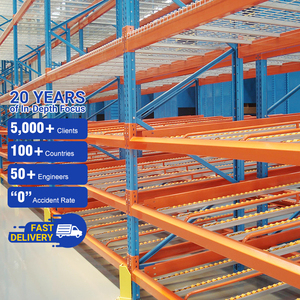
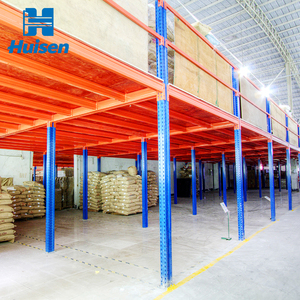
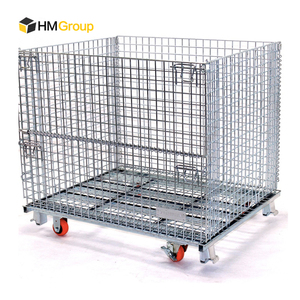
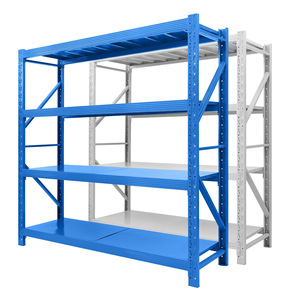
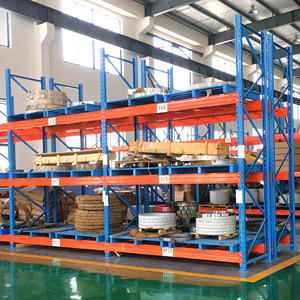
Engineering Architecture of Very Narrow Aisle (VNA) Racking Systems
In the era of hyper-inflated commercial land valuations, industrial logistics real estate has shifted permanently from horizontal expansion to vertical densification. The Very Narrow Aisle (VNA) racking system represents the technological zenith of selective high-density pallet storage. By compressing operating transfer corridors from standard wide-aisle configurations (3,200 mm – 3,800 mm) down to an ultra-compact 1,500 mm to 1,800 mm, VNA configurations reclaim up to 45% to 50% of wasted floor surface, directly transmuting dead circulation space into revenue-generating pallet locations.
Unlike standard selective systems where lateral forklift sway is buffered by generous operational margins, a structural VNA system functions under microscopic structural tolerances governed by FEM 10.2.02, EN 15512, and EN 15620. Operating heights routinely scale from 10,000 mm up to 18,000 mm. At these heights, dynamic mast oscillation, horizontal seismic shear, and deflection under total beam loading require sophisticated metallurgical calculations, reinforced omega upright profiles, and specialized floor-anchored physical or inductive wire-guidance mechanisms.
From a structural physics perspective, structural upright deflection limits in high-bay VNA applications must not exceed 1/200th of the span ($L/200$) for standard configurations, and $L/300$ when integrating high-speed articulated turret trucks or automated guided vehicles (AGVs). Guangzhou Heda Shelves Co., Ltd., leveraging over 25 years of structural metal fabrication expertise since 2001, manufactures high-tensile cold-formed steel sections using certified Q235B and Q355B (equivalent to European S235JR and S355JR) steel coils, ensuring superior yield strength under dynamic continuous pallet handling cycles.
Engineering Specification Comparison: VNA vs. Conventional Racking
Selecting the correct warehouse pallet configuration requires an empirical appraisal of volumetric utilization, material handling capital expenditure (CapEx), and throughput velocity. Below is the comparative engineering matrix utilized by HEDA Shelves structural engineers during the conceptual CAD layout phase:
| Performance / Structural Metric | Standard Selective Pallet Racking | Very Narrow Aisle (VNA) System | Drive-In Pallet Racking | Automated Radio Shuttle Racking |
|---|---|---|---|---|
| Operating Aisle Width | 3,200 mm – 3,800 mm | 1,500 mm – 1,850 mm | 2,800 mm – 3,200 mm | 3,000 mm – 3,200 mm |
| Volumetric Utilization Index | 40% – 50% | 80% – 88% | 70% – 75% | 85% – 92% |
| Direct Pallet Selectivity | 100% Instant Access | 100% Instant Access | Low (LIFO / Block) | Batch Lane Access |
| Floor Flatness Requirement | Standard DIN 18202 Table 3 | VDMA 15251 / TR34 (DM2 / Superflat) | Standard Free Movement | Standard Industrial Floor |
| Material Handling Equipment (MHE) | Counterbalance / Reach Truck | Man-Up / Man-Down Turret Truck | Counterbalance Forklift | Standard Forklift + Radio Shuttle Cart |
| Typical Vertical Ceiling Height | Up to 9,000 mm | Up to 18,000 mm | Up to 10,000 mm | Up to 15,000 mm |
| SKU Differentiation Versatility | High SKU variability | Maximum SKU variability + High Density | Low SKU variability, high bulk | Medium SKU volume per lane |
As demonstrated by structural kinematics, VNA systems bridge the gap between simple manual storage and fully automated AS/RS stacker crane setups. By preserving 100% individual pallet access, logistics operations can house tens of thousands of differentiated Stock Keeping Units (SKUs) without the risk of pallet honeycombing common to drive-in systems.
Tailored VNA System Recommendations
Engineered configurations configured around building structural tolerances, pallet weights, and material handling truck guidance.
Mechanical Rail-Guided VNA
Utilizes continuous hot-rolled structural low-profile steel guide rails (angle profiles or unequal angles with welded base plates) anchored along aisle peripheries. Provides absolute mechanical steering boundaries, reducing driver fatigue and eliminating steering errors inside high-speed picking corridors.
Inductive Wire-Guided VNA
Integrates an embedded frequency-emitting guidance wire saw-cut into the concrete slab center. Yields an unencumbered floor surface without metal kerbing, facilitating rapid pallet cross-docking, streamlined sweeping maintenance, and frictionless lower-tier order replenishment.
Man-Up High-Bay Order Picking
Engineered for high-throughput fulfillment where the turret truck operator ascends with the cabin to picking faces up to 18 meters. Includes specialized anti-sway upright reinforcement, diagonal wind bracing, and integrated dual overhead sprinkler channel supports meeting NFPA 13 standards.
Floor Flatness, Slab Dynamics & Structural Tolerances
A primary point of structural failure and operational bottleneck in Very Narrow Aisle installations stems not from steel superstructure deficiency, but from concrete floor level discrepancies. When a turret truck mast extends to 15 meters within a 1,600 mm aisle, a sub-millimeter floor imperfection of 2 mm at the base wheel footprint amplifies into an mast deflection excursion of 30 mm to 50 mm at the top lift position.
Consequently, European and global engineering frameworks require adherence to defined-movement standards:
VDMA 15251 Specification
German engineering parameters establishing maximum transverse slope ($dZ$) and longitudinal curvature ($dX$) to minimize mast roll and pitch inside narrow channels.
Concrete Society TR34 (DM1 / DM2)
British industrial flooring specification defining allowable height differences between wheel tracks, ensuring continuous high-speed movement without rack impact.
DIN 18202 Group Linearity
European dimensional deviation criteria applied to ensure upright anchors (wedge type or chemical M12/M16 anchors) absorb rated cyclic horizontal shear stresses.
At Guangzhou Heda Shelves Co., Ltd., our engineering department reviews floor survey reports prior to cold-roll manufacturing. By calculating dynamic base-plate sizing and anchor bolt embedment depths tailored to the warehouse slab's compressive strength (typically C28/35 or C30/37), we guarantee zero mast collision risks and rock-solid seismic endurance.
Direct-from-Manufacturer Eminence & Production Integrity
Guangzhou Heda Shelves Co., Ltd. was established in 2001 and has evolved over 25 years into one of China's most trusted heavy-duty racking manufacturers. Operating out of a massive 30,000 square meter standardized production complex staffed by over 300 technical and structural engineering professionals, our mill achieves an industrial throughput capacity of 30,000 metric tons per month.
With more than 10,000 landmark warehouse installations delivered worldwide across 120+ countries, we provide overseas distributors, intralogistics EPC contractors, and direct enterprise buyers with an uncompromised single-source manufacturing partnership.
Our 10-Step Precision Manufacturing Process
Raw Steel QC
Spectrometric & tensile verification of certified Q235B/Q355B coils.
Precision Slitting
High-speed laser cutting & strip slitting within ±0.1mm dimensional variance.
CNC Column Punching
Automated continuous 50mm/75mm pitch diamond/teardrop hole indexing.
Cold Roll Forming
Continuous multi-station roller dies shaping heavy omega column profiles.
Welded Connectors
Multi-claw robotic GMAW beam connector welding for joint rigidity.
Shot Blasting
Mechanical surface oxide removal to Sa 2.5 cleanliness standard.
Phosphating
Chemical multi-stage acid pickling & anti-corrosion phosphate bathing.
Powder Coating
Automated electrostatic spray line with durable epoxy polyester finish.
Thermal Curing
200°C high-temperature polymer crosslinking curing tunnel.
Seaworthy Packing
Barcoded bundling, corner protection, and anti-moisture container stowage.
Our enterprise operations carry dual structural certification: CE Certificate No. 2435-CPR-8605159 and ISO 9001:2015 Certification No. 18624Q00169R0M. Load tables, stress deflection finite element analyses (FEA), and seismic calculation packages are engineered in strict accordance with European standards EN 15512, EN 15620, and EN 15635, ensuring turnkey regulatory compliance during local civil structural building inspections across Europe, North America, Oceania, and the Middle East.
Future Procurement & Technology Trends in VNA Systems (2026–2035)
Procurement directors and supply chain engineers evaluating multi-million dollar warehouse investments must look beyond immediate racking hardware costs. Strategic planning requires aligning steel structures with the decade-long technological trajectory of intralogistics:
1. Convergence with Autonomous Mobile Robots (AMRs)
The manual turret truck is steadily giving ground to driverless, LiDAR-guided Autonomous VNA stackers. Racking tolerances must now feature millimeter-accurate pallet stops, barcode retro-reflective position targets, and zero vertical beam sag to prevent AMR optical sensor abort errors.
2. Cold-Formed High-Yield Micro-Alloyed Steels
To reduce embodied carbon and freight mass, modern manufacturing is pivoting toward high-yield micro-alloyed steel (such as S420MC). This maintains deflection rigidity while thinning component wall thickness by up to 15%, reducing international ocean freight costs per pallet location.
3. Digital Twin & Real-Time Load Strain Sensors
Next-generation VNA installations are embedding fiber-optic and piezoelectric strain gauges inside lower upright frame joints. Connected to cloud warehouse management systems (WMS), they deliver real-time load telemetry, warning facility managers of eccentric overloads or structural seismic events.
The Strategic Sourcing Paradigm: Global procurement teams are consolidating purchases away from regional third-party fabricators to integrated Chinese manufacturing facilities. By engaging directly with manufacturers capable of providing complimentary 3D/CAD layout designs, in-house finite element structural simulations, and certified export manufacturing, multinational companies compress project lead times by 4 to 8 weeks and secure capital savings exceeding 30% compared to local Western sourcing.
Frequently Asked Questions: Technical & Commercial
Clear, authoritative technical answers addressing structural calculation, layout planning, and logistics execution.
What is the exact minimum aisle width required for a VNA racking layout?
How does HEDA Shelves verify structural compliance with European standards EN 15512 and EN 15620?
What are the differences between mechanical guide rails vs. inductive wire guidance?
What floor flatness tolerance must my warehouse slab meet before installing a VNA system?
Can HEDA Shelves manufacture VNA racking tailored for cold storage environments (-25°C to -30°C)?
What lead times and shipping packaging can overseas distributors anticipate for wholesale container loads?
Does HEDA Shelves offer custom OEM branding and private labeling for international racking distributors?
Accelerate Your Warehouse Volumetric Capacity Today
Send our senior engineering team your warehouse architectural floor plan (DWG or PDF), clear ceiling height, and pallet parameters. We will produce a complimentary, fully engineered 3D layout, load calculation matrix, and wholesale project proposal within 24 hours.