High-Yield Industrial Pallet Storage Systems
Manufactured using cold-rolled high-tensile Q235B/Q355B structural steel, our heavy-duty racking systems are custom-calculated for seismic safety, optimum fork-truck accessibility, and maximum vertical volumetric efficiency.
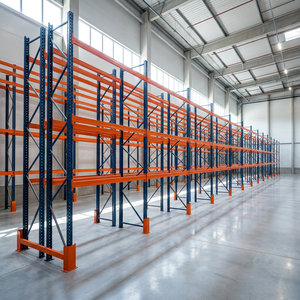
Adjustable Stacking & Heavy Duty Selective Pallet Racking
Versatile selective pallet rack system featuring 50mm/75mm hole pitches for versatile beam level adjustments and 100% immediate pallet access.
- Beam Profile: 80–160mm Box Beam
- Load Capacity: 1,000–4,500 kg/Level
- Upright Section: 80×60 to 120×95mm
- Surface Finish: Epoxy Powder Coated
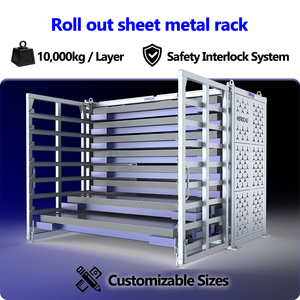
CE Certified Heavy Duty Cargo Steel Pallet Racking System
EN 15512 conforming industrial steel cargo storage framework with precision interlocking connectors, certified for rigorous European logistics hubs.
- Compliance: CE 2435-CPR-8605159
- Material Grade: Q235B / Q355B Steel
- Frame Height: Up to 15,000 mm
- Safety Factor: 1.5 Static Overload
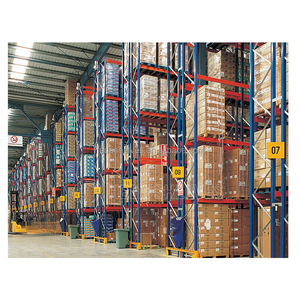
Wholesale Economical Industrial Selective Storage Pallet Rack
Optimized roll-formed structural steel framing engineered to minimize tonnage while maximizing bay span capacities for cost-effective wholesale volume.
- Design Pitch: 75mm Omega Profile
- Unit Cost: Tiered Volume Wholesale
- Access Format: 100% Counterbalance / Reach
- Corrosion Test: 500hr Salt-Spray Passed
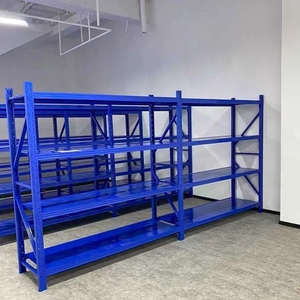
Long Span Multi-Tier 5-Layer Heavy Duty Industrial Shelving
Durable boltless multi-tier racking engineered for manual carton-picking, distribution staging, and high-density industrial retail display operations.
- Capacity: 500–800 kg/Level
- Shelving Infill: Steel / Wire Decking / Wood
- Assembly: Bolt-Free Clip System
- Application: FMCG, Hardware, E-Com
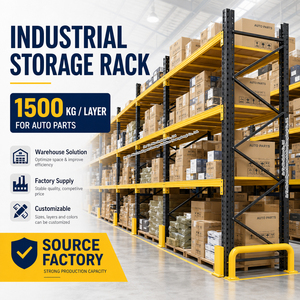
High-Load Auto Parts Tiered Heavy Duty Racking (1500kg/Beam)
High-contrast dual-tone safety design custom-fabricated for automobile powertrain, stamping dies, chassis components, and OEM spare part centers.
- Beam Loading: 1,500 kg UDL Per Tier
- Safety Features: Drop-in Locking Pins
- Colorway: RAL 1023 Yellow / 9005 Black
- Bay Width: 2,300–3,300 mm Custom
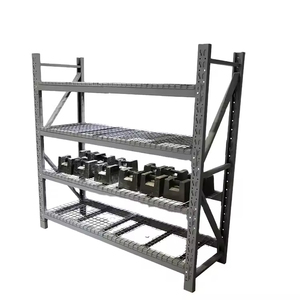
Wide-Span Bolt-Free Industrial Warehouse Shelving System
Rapid-erection medium to heavy-duty shelving framework utilizing butterfly-hole punch geometry, eliminating nut-and-bolt hardware during field assembly.
- Structure: Keyhole / Butterfly Upright
- Shelf Deck: Zinc Galvanized / Powder Coated
- Erection Speed: 60% Faster vs Bolted
- Modularity: Continuous Add-On Bays
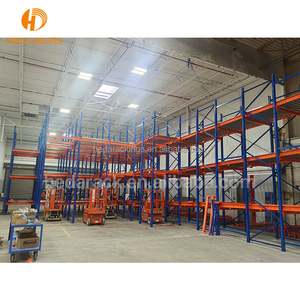
High-Throughput FIFO Gravity Pallet Flow Roller Racks
Precision-inclined gravity roller tracks with integrated centrifugal speed controller brakes to manage dynamic pallet deceleration for strict First-In First-Out inventory.
- Flow Velocity: 0.2–0.3 m/s Controlled
- Lane Depth: 2–20 Pallets Deep
- Roller System: Full-Width Steel / Split Skate
- Suitability: Cold Chain, Pharma, Dairy
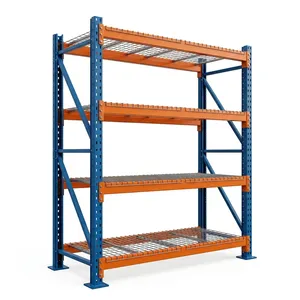
Modular Industrial Adjustable Steel Pallet Storage Unit
All-purpose heavy-duty warehouse racking with dual-pinned claw connectors, compatible with Euro (1200×800mm), ISO, and North American standard skid pallets.
- Frame Depths: 800, 1000, 1100, 1200mm
- Deflection Ratio: ≤ L/200 Under Max UDL
- Baseplate: Heavy Welded / Anchor Bolted
- Certification: ISO 9001:2015 / RoHS
Future Procurement Trends in Warehouse Storage (2025–2030)
The global warehousing landscape is evolving rapidly from static, low-density racking toward automated, carbon-neutral, and high-tolerance structural frameworks. Discover the four transformative vectors reshaping supply chain procurement.
1. Automated Shuttle & AS/RS Hybrid Integration
Procurement teams are shifting away from pure manual-drive forklift aisles toward semi-automated Four-Way Radio Shuttle and High-Bay Automated Storage and Retrieval Systems (AS/RS). High real-estate costs in Europe and North America demand that rack tolerances shift from standard industrial allowances to EN 15620 Class 100–400 specifications, requiring millimetric deflection control under dynamic acceleration forces.
2. Micro-Alloyed High-Yield Steels (Q355B vs Q235B)
Rising ocean container freight rates have transformed structural racking procurement into a fight for cubic weight optimization. By deploying cold-formed micro-alloyed Q355B steel with yield strengths above 355 MPa, structural engineers achieve equivalent or superior load-bearing moment capacities while reducing deadweight steel profile thickness by 14%–18%, significantly cutting carbon footprints and ocean freight fees per bay.
3. Strict ESG, Circularity & TGIC-Free Finishes
International environmental and workplace safety regulations (such as EU REACH and RoHS directives) are forcing global buyers to audit powder coating chemistry. High-performance surface finishing now demands zero heavy metals, TGIC-free polyester resins, and closed-loop non-phosphating silane pre-treatment lines that eliminate hazardous sludge while achieving over 800 hours of ASTM B117 neutral salt spray corrosion resistance.
4. BIM/Digital-Twin Compatibility & Seismic Codes
Modern distribution center procurement mandates full Building Information Modeling (BIM) files prior to purchase order execution. Storage structures must be modeled as dynamic structural frames that simulate site-specific seismic accelerations (Eurocode 8, ASCE 7-22, NZS 1170.5). Baseplate design has transitioned from single-anchor footings to heavy multi-point high-ductility anchor designs capable of withstanding dynamic seismic moments.
Structural Racking Systems: Architecture & Performance Comparison
Selecting the optimal storage topology requires balancing storage density, pallet selectivity, capital expenditure (CapEx), and operational speed. Use this technical matrix to evaluate options against your warehouse throughput metrics.
| Racking Architecture | Volumetric Density | Pallet Selectivity | Rotation Principle | Aisle Clearances Required | CapEx Index | Primary Sector Application |
|---|---|---|---|---|---|---|
| Selective Pallet Rack | Standard (40-45%) | 100% Immediate | FIFO or LIFO | 3.0m - 3.5m (Reach/Counterbalance) | $ Low Benchmark | 3PL Warehouses, FMCG, Diverse SKU Hubs |
| Double-Deep Pallet Rack | Medium (55-60%) | 50% Direct | LIFO | 3.0m - 3.4m (Deep-Reach Mast) | $$ Low-Medium | High-Volume Wholesale, Paper, Manufacturing |
| Drive-In / Drive-Through | High (70-75%) | Low (Lane Access) | LIFO (Drive-In) / FIFO (Drive-Thru) | Dedicated Channel Guide Rails | $$$ Medium | Cold Storage Facilities, Beverage Bottlers |
| Four-Way Radio Shuttle | Ultra-High (85-90%) | Automated Batch | Automated FIFO / LIFO | Aisle-Free Shuttle Lanes + Charging Bays | $$$$ High | Automated Frozen Food, Central Distribution |
| FIFO Gravity Pallet Flow | High (75-80%) | Face Picking Lane | Strict FIFO | Loading Lane + Picking Lane Separation | $$$$ High | Pharmaceuticals, Perishables, Fast Turnover |
| Push-Back Cart Racking | Medium-High (65-70%) | Channel Face (2-6 Deep) | LIFO | 2.8m - 3.2m Single Access Aisle | $$$ Medium | Raw Materials Buffers, Middle Tier SKUs |
| Cantilever Storage Rack | Engineered Linear | 100% Linear Access | Unrestricted | Customized for Long Side-Loading Trucks | $$$ Medium | Pipes, Timber, Aluminum Extrusions, Rebar |
| Rack-Supported Mezzanine | Maximum Vertical (200%) | Multi-Level Tiered | Configurable per Floor | Internal Walkways, Staircases, Lifts | $$$$ Engineered | E-Commerce Picking Centers, Auto Spares |
25 Years of Precision Steel Racking Fabrication
Operating a modernized 30,000 square meter intelligent production complex in Guangzhou, Guangzhou Heda Shelves Co., Ltd. integrates raw structural coil slitting, multi-stage cold roll forming, robotic precision welding, and environmentally compliant powder coating.
Heavy-Duty Engineering Under Direct Factory Control
Unlike trading intermediaries, we control metallurgy, weld penetration, punch hole pitch tolerance, and paint chemistry directly on-site. Every batch of cold-rolled structural steel is chemically analyzed via optical emission spectrometry to verify carbon, manganese, and phosphorus compositions before coil unrolling.
- CE Certificate No. 2435-CPR-8605159: Fully audited compliance under European Construction Products Regulation (CPR) and EN 1090 structural execution classes.
- ISO 9001:2015 Quality Management (No. 18624Q00169R0M): Stringent traceability protocols extending from steel mill heat numbers down to individual beam weld tags.
- High Volume 30,000 Ton/Month Output: Rapid production turnaround (15–25 business days) guaranteeing on-time deployment for large global 3PL distribution centers.
- OEM & Private-Label Customization: Custom column profiles, unique stamping geometries, custom RAL powder shades, and localized bilingual branding for regional distributors.
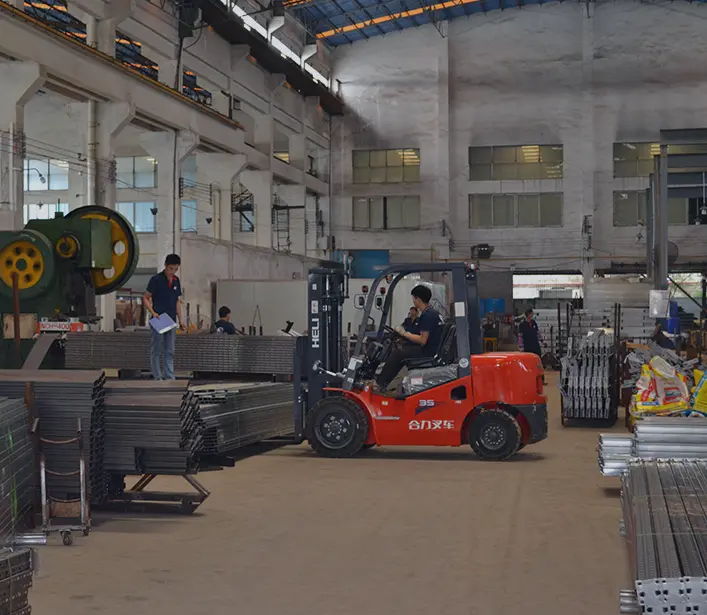
Our 10-Stage Precision Fabrication Workflow
From prime hot-rolled coils to sea-freight bundled skids, every component moves through ten calibrated industrial processing stages.
Spectrometric Raw Material Verification
Inbound coils of Q235B and Q355B prime carbon steel undergo tensile elongation testing and chemical spectrometry to ensure mechanical yield properties match structural certifications.
CNC Precision Slitting & Blanking
High-speed slitting lines cut wide master coils into exact ribbon widths with millimetric edge tolerance, preventing micro-burrs and edge warping during roll forming.
High-Speed Continuous Punching
Servo-driven multi-stage punches pierce tear-drop, butterfly, or omega hole patterns into upright strips at 300 strokes/min, maintaining pitch accuracy within ±0.1mm over 12 meters.
Cold Roll Forming (18–24 Passes)
Multi-roller forming stations progressively shape columns and step beams without stressing steel grain structure, ensuring superior torsional resistance and load-carrying stiffness.
Robotic Beam Claw Welding
Automated multi-axis robotic welding cells attach multi-prong connector claws to interlocking box beams using mixed gas (Ar+CO₂) shielded arc welding for total root fusion.
Mechanical Deburring & Weld Cleaning
Rotary shot blasting and mechanical polishing eliminate weld spatter, mill scale, and microscopic oxides to ensure optimal substrate anchor profiles for subsequent coatings.
Automated 8-Stage Chemical Pre-Treatment
Components travel through degreasing, clean-water cascading rinses, pickling, nano-ceramic conversion, and phosphating tunnels to seal the steel surface against oxidation.
Electrostatic Powder Spray Tunnel
Reciprocating automatic spray guns apply TGIC-free epoxy-polyester powder uniformly across all surfaces, ensuring complete 360-degree coverage inside boxed channels.
High-Temperature Infrared Curing (200°C)
Baking ovens cure the powder film into an impact-resistant, cross-linked protective barrier with 2H pencil hardness, scratch resistance, and brilliant RAL color stability.
Quality Audit & Seaworthy Protective Packaging
Final inspection of paint thickness, hole dimensions, and weld integrity is followed by automated steel strapping, corrugated corner protection, and moisture-barrier film bundling for 40ft HQ export.
Frequently Asked Questions by Industrial Racking Buyers
Comprehensive technical and commercial answers addressing structural safety factors, customs clearance, shipping container cube optimization, and international engineering code compliance.
How does HEDA Shelves calculate racking load limits and beam deflection factors?
Structural capacities are engineered in accordance with European EN 15512 and American ANSI/RMI MH16.1 specifications. Beam design calculations adhere to a maximum vertical deflection limit of L/200 (span length divided by 200) under uniformly distributed load (UDL). Upright frames are evaluated against combined axial compression and bending moments incorporating a structural safety factor of 1.5 to 1.65 above the maximum design working load limit.
What specific details are required to generate an engineered 2D/3D CAD layout?
To produce an optimized CAD proposal within 24 hours, our engineering department requires: (1) Architectural floor plan showing column locations, slab thickness, and door openings; (2) Clear ceiling height to bottom of sprinklers/lighting; (3) Pallet specifications (width, depth, overall height including cargo overhang, and gross weight); (4) Material handling equipment (forklift turning radius, mast lift height, and minimum aisle width); and (5) Operating environment temperatures (ambient vs cold storage).
Can your pallet racking adapt to Euro (1200×800mm) and US standard skids?
Yes. Our systems are engineered universally for EUR-1 (1200×800mm), EUR-2 (1200×1000mm), GMA 48×40 inch, and Australian 1165×1165mm standard skids. Frame depths are configured at 800mm, 1000mm, or 1100mm to guarantee a safe 50–75mm front-and-rear pallet overhang. In addition, step beams can be equipped with heavy galvanized wire decking or cross pallet support bars to accommodate odd-sized crates or non-standard skids securely.
What anti-corrosion protection is provided for cold storage or outdoor use?
For standard dry indoor ambient warehouses, we utilize an automated 8-stage pre-treatment followed by electrostatic epoxy-polyester powder coating (60–80 microns). For chilled and deep-freeze facilities (-30°C), we apply specialized low-temperature modified polyester coatings that prevent brittleness and flaking. For outdoor yards, humid marine coastal areas, or chemical exposure, we supply hot-dip galvanized components conforming to ASTM A123 / ISO 1461 with zinc thicknesses of 65–85 microns.
How are components packed to prevent scratching and maximize container cube utilization?
Upright frames and horizontal beams are nested in matched pairs, separated by dense PE foam spacers, and strapped with high-tensile PET strapping to eliminate in-transit metal-to-metal rubbing. Bundles are protected with heavy-duty cardboard edge guards and wrapped in waterproof stretch wrap. Our loading engineers utilize 3D container packing software to load between 22 to 26 metric tons into a single 40ft High Cube container, reducing per-unit ocean freight costs.
What official documentation and engineering dossiers accompany export shipments?
Every project shipment includes: (1) Stamped structural calculation reports confirming compliance with EN 15512 or ANSI MH16.1; (2) Mill test certificates (MTC) verifying Q235B/Q355B steel chemical and mechanical properties; (3) CE Certificate of Conformity and ISO 9001 quality certificates; (4) Detailed 3D installation assembly blueprints with numbered piece marks; and (5) OSHA/EN-compliant metallic load-warning warning plaques indicating maximum permissible bay capacities.
What is the standard manufacturing lead time and FOB/CIF shipping schedule?
Standard order production runs 15 to 25 business days depending on overall project tonnage and custom paint specifications. Urgent container orders can be prioritized within 10 days. From our factory in Guangzhou, we offer streamlined FOB shipping out of Guangzhou, Shenzhen, or Nansha ports. Average sea freight transit times are: Southeast Asia (5–8 days), Middle East (18–22 days), Western Europe (28–35 days), and North America West Coast (14–18 days).
Do you support OEM manufacturing and distributor private-label agreements?
Yes. Approximately 45% of our monthly 30,000-ton capacity is dedicated to OEM and ODM manufacturing partnerships for leading storage equipment integrators, racking installers, and warehouse distributors worldwide. We can customize upright roll-forming punch dies, emboss distributor logos onto beam connectors, provide custom packaging cartons, and match regional RAL powder coating standards.
Submit Your Project Brief for a Free CAD Layout & Wholesale Price Quote
Send your warehouse architectural drawings or storage dimensions to our senior project engineers. We will analyze your site and provide a comprehensive 3D layout, static calculation breakdown, and competitive factory-direct price quotation within 24 hours.