High-Performance Industrial Pallet Racking Systems
Explore precision-fabricated racking lines manufactured from certified structural steel, calibrated for heavy axle loads, seismic stability, and custom OEM warehouse layouts.
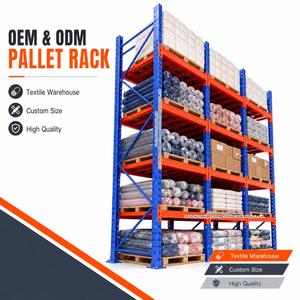
4-level Heavy Duty Rack Warehouse Storage Rack Heavy Duty Pallet Shelving Factory Supply Wholesale Garment Fabric Manufacturer
System Specifications →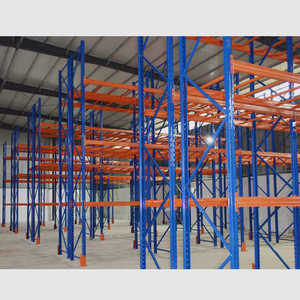
Direct Factory High-Density Double Deep Metal Shelf Durable Pallet Storage Rack Free Layout Design for Warehouses Iron Material
System Specifications →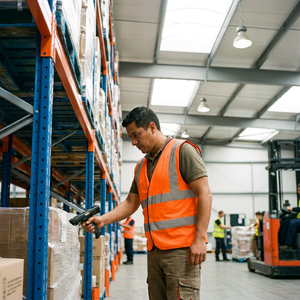
Custom Factory Industrial Heavy Duty Shelf Warehouse Rack Adjustable Steel Storage Shelves
System Specifications →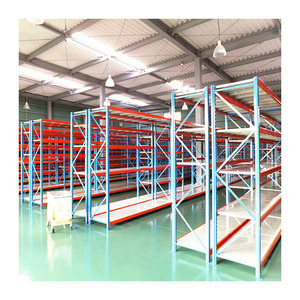
Mracking Medium Duty Warehouse Rack Adjustable Storage Racks and Shelves Selective Pallet Steel Rack Wholesale Sale
System Specifications →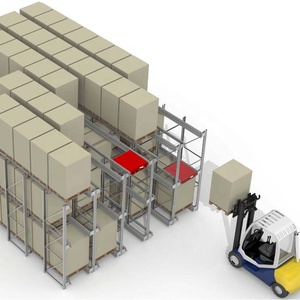
2024 Heavy-Duty Steel Metal Radio Shuttle Pallet Racking New Warehouse Storage Stacking Racks & Shelves
System Specifications →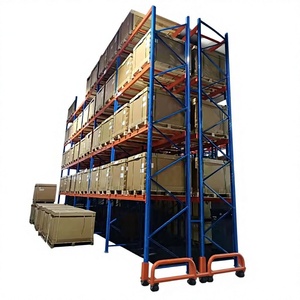
Warehouse Storage Factory High Height Strong Load Capacity Adjustable Anti-corrosion Moisture-proof Sturdy Heavy Duty Cold Rack
System Specifications →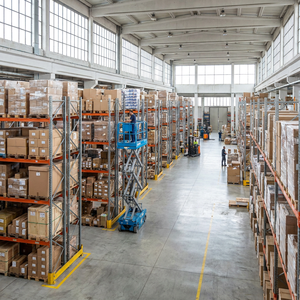
Professional Heavy Duty Pallet Rack Supplier Warehouse Storage System Manufacturer
System Specifications →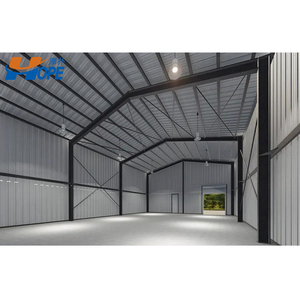
Steel Structure Warehouse Building Prefab Warehouse Steel Structure
System Specifications →Physics, Mechanics, and Volumetric Density of Double Deep Systems
In modern industrial intralogistics, supply chain directors and facility planning engineers face an unrelenting challenge: increasing cube utilization while maintaining acceptable SKU velocity without triggering astronomical material handling expenditures. Selective pallet racking systems deliver instantaneous 100% selectivity; however, their mandatory 1:1 aisle-to-rack ratio frequently leaves 60% of total facility floor space consumed by transit corridors. Conversely, drive-in systems achieve remarkable structural density, yet compromise selectivity down to a single SKU per lane and introduce high structural collision risks.
Double Deep Pallet Racking occupies the definitive sweet spot of warehouse physics. By placing two pallet positions back-to-back from a single operating aisle (creating a 4-pallet deep core between operational avenues), the system immediately eliminates 50% of the interior access aisles demanded by conventional selective layouts. The net engineering result is an immediate 30% to 40% augmentation in overall volumetric capacity within identical floor boundaries, providing an optimal storage framework for medium-velocity SKUs with 2 to 4 pallets per product batch.
From a metallurgical perspective, our OEM manufacturing framework utilizes premium high-tensile cold-rolled steel (grades Q235B and Q355B), engineered with continuous multi-bend omega (Ω) upright profiles. These cold-formed geometries dramatically increase second moment of area ($I_x$ and $I_y$) and torsional rigidity, effectively dissipating the dynamic eccentric loads introduced when pantograph forklifts cantilever full pallet weights into the secondary deep position.
Enhanced Second-Deep Deflection Ratios
Fabricated to withstand stringent EN 15512 serviceability limit state criteria ($\delta \le L/200$), our heavy-duty box beams integrate robotic welded 4-to-5 connector claw plates that preserve rotational beam-end stiffness under maximum cantilevered fork insertion.
High-Grade Alloy Integrity (Q355B/Q235B)
We source hot-rolled structural steel coils from certified tier-one mills. Every heat number undergoes tensile, Charpy impact, and chemical spectrum validation to prevent cold brittleness in harsh multi-temperature distribution centers.
Universal Euro & ISO Pallet Compatibility
Whether configuring storage cells for standard EUR/EPAL 1 (1200 × 800 mm), EUR 2 (1200 × 1000 mm), or North American GMA (48 × 40 in) platforms, our adjustable 50mm/75mm upright pitch guarantees exact horizontal and vertical safety clearances.
Comparative Architectural Analysis: Double Deep vs Alternative Racking
A rigorous engineering benchmark detailing volumetric efficiency, mechanical handling dynamics, capital outlay, and operational throughput characteristics.
| Racking Topology | Volumetric Density | Direct Selectivity | Operating Aisle Width | MHE Investment | Stock Rotation Method |
|---|---|---|---|---|---|
| Double Deep Pallet Racking | High (65–70%) | 50% Immediate (2 deep) | 2,800 – 3,200 mm | Moderate (Reach Truck) | FILO / Batch FIFO |
| Standard Selective Racking | Low (40–45%) | 100% Direct Access | 3,000 – 3,500 mm | Low (Standard Forklift) | Strict FIFO |
| Drive-In / Drive-Through | Very High (75–85%) | Low (Per Lane Access) | Aisles Eliminated | Low to Moderate | Strict LIFO |
| Radio Shuttle Automation | Maximum (80–90%) | Semi-Direct (Per Level) | Aisle-Independent Lanes | High (Robotic Carts) | Configurable FIFO / LIFO |
| VNA (Very Narrow Aisle) | High (60–65%) | 100% Direct Access | 1,600 – 1,900 mm | High (Turret / Guidance) | Strict FIFO |
Data validated against FEM 10.2.02 and EN 15620 guidelines for aisle clearance tolerances and mechanical handling equipment clearances.
Guangzhou Heda Shelves Co., Ltd. — Direct OEM Factory Authority
Founded in 2001, Guangzhou Heda Shelves represents over two decades of metallurgical precision and global racking exports. Operating from our integrated 30,000 m² production complex with 300+ certified personnel, we provide international distributors, 3PL logistics giants, and project contractors with robust turnkey manufacturing solutions.
Our 10-Stage Precision Heavy Racking Manufacturing Process
Structural reliability in double-deep cantilevered environments requires zero-defect manufacturing tolerances. From automated multi-station roll-forming lines to closed-loop environmental powder coating, our factory executes strict stage-gate quality control throughout fabrication.
Raw Material Heat Verification
CNC High-Precision Shearing
Automated Pitch Punching
Continuous Roll-Forming
Box Beam Profile Seaming
Robotic Connector Welding
Shot Blasting & Phosphating
Thermosetting Powder Coat
Curing & Ultrasonic QC
Seaworthy Export Bundling
Independently Audited International Compliance
We believe engineering claims must be verifiable. Guangzhou Heda Shelves maintains accredited international third-party certifications, ensuring seamless local municipal building approvals, rack safety sign-offs, and compliance inspections throughout Europe, the Americas, and Australasia.
- CE Certification No. 2435-CPR-8605159: Confirmed execution under EN 1090-1 factory production control and EN 15512 steel static racking design.
- ISO 9001:2015 Registration No. 18624Q00169R0M: Fully certified quality management across design, laser cutting, cold-bending, welding, and finish curing.
- RoHS Non-Toxic Powder Finish: Heavy metal-free electrostatic powder coatings engineered for food-grade, cold room, and pharmaceutical warehousing.
Building Safety Verified
Quality Assurance
Dynamic Simulation
Calculation Reports
Emerging Procurement & Technology Trends in Double Deep Storage (2025–2030)
Global warehouse procurement is transitioning from transaction-based equipment purchasing to holistic, lifecycle-optimized asset acquisition. Facility operators must future-proof storage systems against aggressive warehouse automation, rising energy costs, and stringent ESG decarbonization mandates. Several pivotal trends are transforming the engineering and procurement specifications of double deep racking frameworks:
Vision-Guided Double-Deep Autonomous AGVs
Traditional reach trucks are increasingly augmented or replaced by autonomous reach AGVs fitted with LiDAR, 3D time-of-flight sensors, and active deflection compensation forks. Racking specifications must now feature tighter structural tolerances, rigid baseplate grouting, and anti-reflective beam finishes to guarantee millimeter-precise automated optical pallet docking.
Cold Chain Cube Compression & Thermal ROI
With industrial refrigeration power driving upwards of 60% of cold store operational expenditure, compressing empty aisle airspace directly slashes cooling utility overheads. Double deep layouts are replacing selective racking in -25°C blast-freezer operations, achieving up to 35% reduction in refrigeration load per stored pallet position.
Integrated IoT Structural Health Monitoring
Next-generation racking columns increasingly feature embedded wireless strain-gauge sensors and accelerometer telemetry. These IoT nodes monitor cumulative stress, dynamic seismic vibration, and minor forklift mast impact events in real-time, delivering predictive maintenance alerts to warehouse management software (WMS) before structural deflection limits are exceeded.
In parallel, OEM supply chain strategies have matured. Tier-one logistics operators no longer purchase piecemeal catalogs; they partner directly with scaled manufacturing exporters capable of providing integrated finite-element simulation (FEM) stress analysis, containerized flat-pack shipping, and private-label custom powder-coat finishing matching enterprise corporate palettes. By eliminating third-party agent layers, direct factory engagement reduces structural racking procurement capital budgets by 25% to 35% while preserving direct accountability from design calculation through to final structural certification.
Frequently Asked Procurement & Engineering Questions (FAQ)
Direct technical answers from our senior structural engineering team addressing load limitations, vehicle interfacing, international standards, and OEM container shipping.
What type of forklift equipment is required for double deep racking systems? +
How does the double deep layout affect stock rotation and order picking efficiency? +
What deflection limits and structural codes govern HEDA Shelves double deep racking? +
How do you protect the front and rear pallets from mishandling or misplaced drops? +
Can HEDA Shelves double deep systems be tailored for harsh cold-storage environments? +
What are typical production lead times and ocean container loading configurations? +
Do you offer custom branding, private labeling, and custom color finishes for distributors? +
What documentation and structural data do we receive to support local engineering permits? +
Ready to Engineer Your High-Density Double Deep Storage Facility?
Submit your warehouse CAD floor plan, ceiling clear heights, and pallet specifications. Our senior structural logistics engineers will deliver a free 3D CAD layout, load capacity calculation report, and factory-direct quotation within 24 hours.