Engineered Portfolio
Featured OEM & Industrial Storage Racking Systems
Factory-direct customized configurations manufactured from premium Q235B/Q355B cold-rolled steel, engineered for rigorous internal logistics and harsh external yard environments.
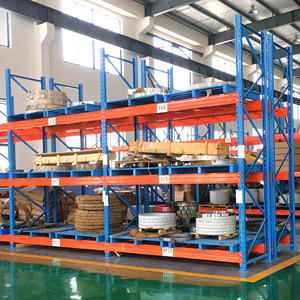
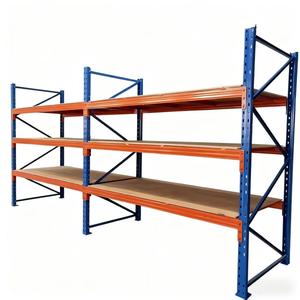
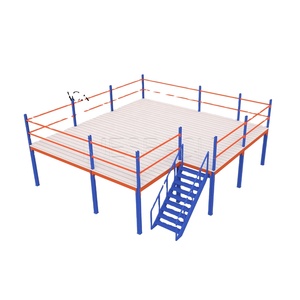
2001.
Founded in Guangzhou, China
30,000m²
Advanced Production Base
30,000t
Monthly Cold-Formed Output
120+
Global Export Territories
Technical Architecture
Engineering Principles for External & Outdoor Pallet Racking
Designing outdoor racking infrastructure requires accounting for static loads alongside aggressive dynamic environmental forces: aerodynamic wind pressure, seismic activity, thermal expansion, and atmospheric chemical degradation.
When engineering external pallet racking systems—whether sheltered under cantilevered canopies or installed in fully open logistical yards—the mechanical margin of safety diverges substantially from indoor warehousing. Indoors, environmental variables remain controlled. Outside, structural integrity relies entirely on compliance with structural building codes such as EN 15512:2020 (Cold-formed structural racking), EN 1991 (Eurocode 1: Actions on structures), and RMI (Rack Manufacturers Institute) ANSI MH16.1. As a vertically integrated OEM exporter, our manufacturing processes prioritize specific metallurgic resilience, baseplate anchor redistribution, and specialized hot-dip zinc coatings designed to prevent catastrophic joint failures under repetitive weather cycles.
| Environmental Vector | Structural Vulnerability | Engineering Mitigation Standard | OEM Quality Metric |
|---|---|---|---|
| Aerodynamic Wind Uplift | Pallet displacement & overturning moments on unanchored frame uprights | EN 1991-1-4 site-specific aerodynamic wind coefficient calculations & rear safety stops | FEA Computer Modeling |
| Hydraulic Salt & Rust | Accelerated crevice corrosion in punched teardrop slots & cold-formed bends | ISO 1461 Hot-Dip Galvanizing (85µm+ zinc bath) or Marine-Grade C4/C5 Powder Finishes | ASTM B117 1000h Salt Spray |
| Thermal Expansion ΔT | Secondary buckling shear in locked horizontal beam connector weld joints | Slotted connector pins, thermal slip expansion joints every 30 linear meters | Stress-Relieved Welds |
| Cyclic Seismic Fatigue | Anchor shearing in ground slabs under variable wind/inertial harmonic resonance | Chemical capsule foundation anchors with oversized thick-gauge structural baseplates | Class 8.8 High-Tensile Bolts |
High-Yield Q355B Steel
Raw structural coils are strictly verified by ultrasonic testing. Our cold-formed profiles provide optimal strength-to-weight ratios without brittle failures at sub-zero temperatures down to -30°C.
Duplex Zinc-Polymer Shield
Combining continuous hot-dip galvanizing with an optional polyester powder topcoat yields an impenetrable dielectric barrier against moisture, acid rain, and coastal saline humidity.
Validated Load Capacities
Every bay profile is simulated under static finite element analysis (FEA) software. Structural calculations include deflection ceilings of 1/200th to ensure absolute operating safety.
Strategic Sourcing Insights
Future Procurement Trends in Heavy-Duty Outdoor Racking
How international logistics operators, retail supply chains, and third-party logistics (3PL) conglomerates are reshaping their capital infrastructure purchasing strategies through 2030.
Hybrid Yard-Buffer Racking
High warehouse building lease costs are driving operators to convert underutilized exterior tarmac yards into high-density storage zones using weatherproof cantilever and push-back systems.
Outdoor Automation Integration
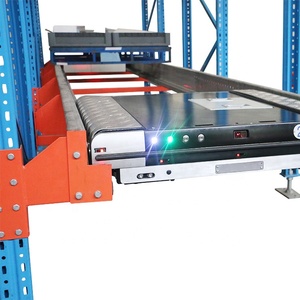
The expansion of outdoor radio shuttles and automated guided vehicles (AGVs) requires tighter mechanical tolerances (±1.5mm) in cold-formed rack guidance profiles to prevent optical sensor alignment faults.
Low-Carbon Steel Sourcing
European buyers operating under EU CBAM carbon tariffs require full Environmental Product Declarations (EPDs), driving steel fabricators toward recycled electric arc furnace (EAF) feedstocks.
Standardized Modular OEM Profiles
Tier-1 distributors are standardizing on open-pitch upright hole geometries (50mm and 75mm patterns) to ensure cross-compatibility across legacy installations and simplify inventory management.
Need Engineered Outdoor Pallet Racking Calculations?
Provide our structural team with your site coordinates, wind speed requirements, and pallet metrics. We deliver complete CAD layouts and structural review documents within 48 hours.
Enterprise Credentials
Guangzhou HEDA Shelves: 25 Years of Heavy-Gauge Manufacturing
From initial raw coil slit processing to multi-axis CNC punching, robotic welding, and automated surface treatments, we maintain end-to-end quality control across our 30,000 m² facility.
Precision CNC Roll-Forming
Our continuous roll-forming lines operate automated high-speed hydraulic punch presses, ensuring exact hole pitch consistency along up to 12-meter continuous upright posts without weld splices.
- ✓ 50mm / 75mm European standard pitch spacing
- ✓ Closed-tube and stepped beam profiles
- ✓ Minimum profile runout tolerance within ±0.5mm
Pre-Treatment & Surface Adhesion
Before powder application, parts go through an automated 9-stage degreasing, pickling, and phosphating tunnel to strip oxidation and form a micro-crystalline conversion layer that locks in primer adhesion.
- ✓ Zero-heavy-metal environmentally friendly rinse
- ✓ 60–90µm uniform electrostatic thermoset coat
- ✓ Fully compliant with EU RoHS and REACH guidelines
Rigorous QA & Third-Party Verification
Every production lot is documented by Mill Test Certificates (MTC) and inspected under EN ISO 9001:2015 processes. Factory testing includes weld penetration checks and ultrasonic thickness testing.
- ✓ CE Certification No. 2435-CPR-8605159
- ✓ ISO 9001:2015 Registration No. 18624Q00169R0M
- ✓ Complete material traceability back to parent steel heats
Operating as a reliable OEM/ODM partner for material handling equipment brands across Europe, North America, the Middle East, and Australasia, HEDA Shelves provides customized branding services: bespoke laser-cut company logos, custom RAL color options, customized packaging, and direct drop-shipping to major job sites. Our engineering division reviews civil engineering foundation plans to calculate seismic base anchoring, wind uplift moment coefficients, and aisle turning clearances before manufacturing begins.
Engineering Knowledge Base
Frequently Asked Questions: Sourcing External Pallet Racking
Clear, technically rigorous answers addressing structural engineering, surface corrosion, container loading, and site installation.
How do outdoor external racking wind load calculations differ from indoor warehouse designs?
Indoor warehouse pallet racking designs consider dead loads (rack component weight) and live loads (pallets and operational forklift impacts). Outdoor external installations must also address wind dynamic pressure under standards like EN 1991-1-4 or ASCE 7. Pallet loads act as wind sails, creating overturning shear moments along upright columns. As a result, outdoor racks require heavier upright profiles (up to 2.5mm–3.0mm wall thickness), oversized anchor footplates with chemical epoxies, and roof or wall bracing ties to redistribute structural loads safely.
What is the operational lifespan difference between Hot-Dip Galvanizing (HDG) and Outdoor Powder Coating?
For unsheltered outdoor installations, standard indoor electrostatic powder coating will blister and rust within 12–24 months as UV radiation and water ingress break down paint bonds. Hot-dip galvanizing per ISO 1461 submerges components in molten zinc at 450°C, creating metallurgically bonded iron-zinc alloy layers with coating thicknesses over 85 microns. This galvanic protection resists corrosion for 25 to 50 years even in harsh coastal environments. Outdoor polyester coatings containing UV inhibitors provide an economical 7- to 12-year lifespan in low-salinity, mild-weather regions.
Can customized OEM racking accommodate mixed pallet standards (Euro, ISO, North American)?
Yes. As an OEM factory exporter, our beam length, frame depth, and support accessory configurations are engineered to order. For standard EUR-pallets (1200 x 800 mm), frame depths are typically set to 1100 mm to ensure the standard 50 mm front and back overhang. For North American GMA pallets (48 x 40 inches / 1219 x 1016 mm), frame depths are set to 42 or 44 inches. When sites handle variable pallets, we integrate galvanized drop-in wire decking, pallet support bars, or solid corrugated steel decks to maintain safe load distribution across varying footprint dimensions.
What container packaging protocols prevent component damage during deep-sea maritime transit?
Long structural members are packaged using steel dunnage saddles, corner protection angles, heavy-duty PET strapping bands, and non-slip moisture-barrier wraps to prevent component shifting and finish abrasion inside 40ft High Cube containers. Small hardware parts like baseplates, anchor bolts, beam safety pins, and diagonal spacers are crated in seaworthy wooden cases with moisture-absorbing desiccant packs to prevent white rust formation during multi-week ocean crossings.
What specific site engineering data is required to generate a PE-stamped structural proposal?
To produce an accurate structural design and quote, our engineering team requires: (1) A warehouse layout or yard survey showing slab dimensions and obstructions, (2) Soil slab bearing capacity (MPa or psi) and slab thickness, (3) Geographic site location to verify local building code wind, snow, and seismic acceleration factors, (4) Pallet load specifications (length, depth, height, and maximum weight), and (5) Operational forklift models with their clear mast lift heights and right-angle aisle turning requirements.
How does HEDA Shelves assist overseas distributors and end users with installation?
Every production batch includes numbered assembly tags matched to detailed 3D exploded layout drawings and structural schematics. We supply step-by-step assembly guides, bolt torque specifications, and anchor torque verification metrics. For turnkey industrial developments, we provide remote video engineering support and can deploy site commissioning engineers to supervise assembly and safety testing alongside local contractor teams.
Direct Factory Collaboration
Launch Your Storage Racking Project With HEDA Engineers
Work directly with our factory engineering office to streamline production, verify structural load compliance, and eliminate intermediary trading margins.