Selective / Heavy-Duty
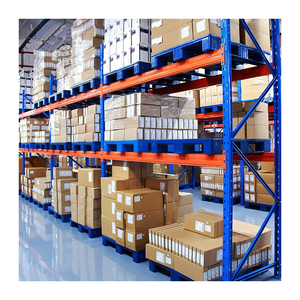
HUAWU 5 Ton Pallet Rack Steel Q235 3-Layer Selective Warehouse Storage Racking System HW-PR33
5000kg/Level
Q235B Steel
50mm Pitch
Standardized cold-rolled Q235B steel sections, automated weldments, and modular beam-column connections engineered for maximum load resilience, seismic compliance, and warehouse floor optimization.
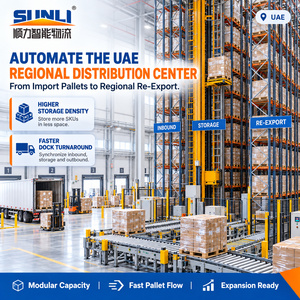
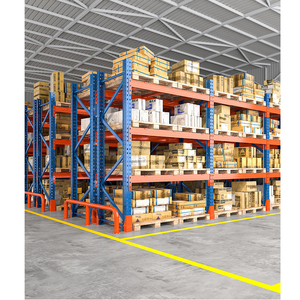
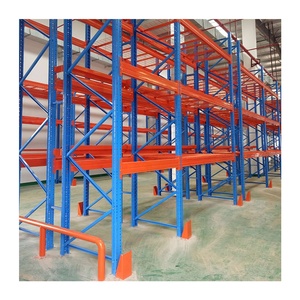
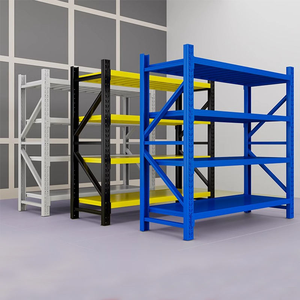
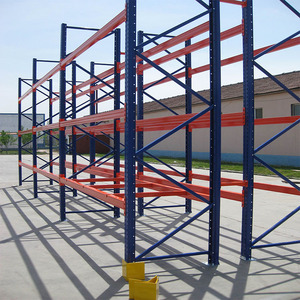
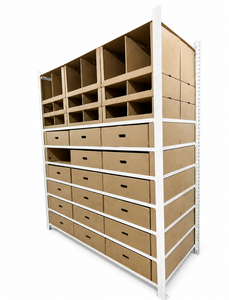
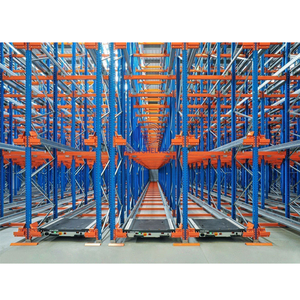
As a dedicated manufacturing exporter, Guangzhou Heda Shelves Co., Ltd. eliminates supply chain fragmentation. Our automated cold roll-forming lines, automated laser profiling, and multi-stage anti-corrosion finishing ensure industrial pallet racks deliver exceptional seismic resilience, minimal deflection, and maximum cycle life.
We utilize premium prime hot-rolled and cold-rolled structural steel coils (Q235B and high-yield Q355B with verified yield strengths up to 355 MPa). Every structural beam, box profile, and perforated upright column is analyzed via Finite Element Analysis (FEA) to ensure structural safety factors conforming strictly to European EN 15512, EN 15620, and American RMI MH16.1 specifications.
Our in-house application engineering department translates warehouse layout schematics into optimized volumetric storage designs. Utilizing AutoCad DWG, 3D BIM, and visual simulation engines, we design bay configurations, pallet clearances, flue space, and forklift aisle widths tailored precisely to your Euro (1200×800mm), ISO, or GMA (48×40") pallet footprint.
Corrosion failure begins beneath the paint layer. Our continuous 8-stage surface treatment incorporates alkaline degreasing, ultrasonic cleaning, and zirconium silane phosphating prior to electrostatic polyester powder coating. Cured at 200°C, the 60–90 µm cured finish withstands impact abrasions, chemical spills, and 500+ hours of continuous salt spray testing.
Selecting the optimal racking typology is a calculated balance between volumetric cube utilization, SKU selectivity, and operational cycle throughput. The table below outlines key engineering metrics used by logistics planners:
| Racking Architecture | Floor Space Utilization | Selectivity | Stock Rotation | Typical Load Rating | Forklift Compatibility | Ideal Application |
|---|---|---|---|---|---|---|
| Standard Selective | 40% – 45% | 100% Direct Access | FIFO / LIFO | 1,000 – 5,000 kg / Beam Level | Counterbalance, Reach, VNA | Multi-SKU Distribution, 3PL Warehousing |
| Double Deep Racking | 55% – 60% | 50% Immediate Access | LIFO | 1,000 – 3,500 kg / Beam Level | Deep-Reach Pantograph Truck | Cold Storage, Homogeneous FMCG |
| Drive-In / Drive-Through | 70% – 80% | Lane Dependent (Low) | LIFO (Drive-In) / FIFO | 1,000 – 2,000 kg / Pallet Spot | Standard Counterbalance, Reach | Beverage Distribution, Bulk Raw Goods |
| Radio Shuttle System | 80% – 88% | Deep-Lane Dynamic Access | Programmable FIFO / LIFO | 500 – 2,000 kg / Pallet Position | Standard Forklift (Outside Racks) | Cold Chain Logistics, High-Throughput Buffers |
| High-Bay Automated AS/RS | 85% – 95% | 100% Computer-Controlled | Automated WMS Directed | 500 – 1,500 kg / Pallet | Automated Stacker Crane / Shuttle | Lights-Out Warehousing, E-commerce Hubs |
Modern warehousing demands more than static load-bearing iron. Supply chain disruptions, rising industrial real estate costs, and decarbonization mandates are driving a rapid evolution in how pallet racking systems are engineered, procured, and managed.
Warehouses are moving rapidly away from pure manual forklift handling. Future-proof pallet racks are increasingly engineered with tighter structural tolerances (±1.5mm deflection thresholds), optical sensor-compatible target zones, and integrated guide rails to accommodate 4-way shuttles, AGVs, and automated vertical stacker cranes. Racking profiles must accommodate continuous dynamic vibrations and cyclic fatigue loading without joint degradation.
Global logistics operators and institutional developers under corporate ESG pledges now scrutinize the embedded carbon of industrial storage equipment. Procurement leaders favor manufacturers employing Electric Arc Furnace (EAF) scrap-recycled steel, heavy-metal-free zirconium surface conversion chemistries, and ultra-durable low-bake epoxy powders that reduce energy intensity while eliminating volatile organic compounds (VOCs).
With pharmaceutical biologics and frozen food e-commerce expanding exponentially, sub-zero racking is an acute growth area. Cryogenic temperatures down to -30°C induce severe embrittlement in conventional carbon steel. Modern installations demand specialized micro-alloyed steels with verified notch toughness. Additionally, IoT wireless strain gauges and seismic displacement sensors are being embedded in baseplates to detect structural impact damage in real-time.
Engineering, compliance, shipping, and specification queries clarified by our chief structural engineers.
Every industrial racking structure is custom calculated against localized seismic design categories (such as Eurocode 8 / EN 1998, US ASCE 7, or NZS 1170). We factor in soil classification, spectral acceleration parameters (Ss and S1), and ductility factors. Based on FEA calculations, we engineer heavier gauge upright columns, multi-bolt baseplates with high-tensile chemical anchors (M12–M16), and heavy-gauge back vertical and horizontal cross-bracing frameworks to prevent progressive collapse under dynamic seismic events.
Under European standard EN 15512 and RMI ANSI MH16.1, the permissible vertical deflection limit for a horizontally loaded beam under uniformly distributed load (UDL) is calculated as L / 200 (where L is the clear span distance between upright frames). For example, a 2700mm beam spanning two standard 1000×1200mm Euro pallets must exhibit a maximum deflection of no more than 13.5mm at full rated capacity, returning elastically without permanent plastic deformation upon unloading.
Yes. Approximately 60% of our export shipments are fully bespoke OEM/ODM configurations. We adjust frame depths (e.g., 1050mm–1100mm for Euro EPAL pallets, 1200mm for 48×48" drums, or 42" for North American standard 40×48" GMA pallets) to ensure the mandatory 75mm–100mm front and rear pallet overhang. Upright hole punching patterns are available in 50mm, 75mm, and 76.2mm (3-inch) pitches to match existing legacy systems or local installer tooling.
Every commercial export order includes a full Quality Assurance dossier containing: Mill Test Certificates (MTC 3.1) verifying steel chemical composition and tensile elongation, raw material QA logs, dry-film coating thickness inspection reports (DFT cross-hatch adhesion tested), dimensional weld inspection reports, dynamic safety pin shear tests, piece-marked structural layout drawings, and stamped CE / ISO compliance certificates.
Pallet rack components endure significant gravitational and humidity stress during ocean voyages. Upright frames and beams are nested using corrugated board dividers, heavy-gauge plastic wrapping, and high-tensile steel strapping mounted on solid steel dunnage feet. Corner edge protectors guard powder-coated contact zones. Small hardware (bolts, leveling shims, safety pins) is vacuum-sealed in marked waterproof wooden crates, optimized for rapid, damage-free un-stuffing via standard forklifts.
Under controlled indoor warehouse operating conditions and adherence to recommended annual EN 15635 inspections, our industrial pallet racking systems possess a service life exceeding 20 years. We provide a comprehensive 5-to-10-year manufacturer warranty against structural steel defects, weld separation, and premature coating flaking, backed by trace-coded product labeling on every major member.
Whether you require standardized selective beam racks, cold-resistant shuttle aisles, or an entire light-out automated AS/RS high-bay infrastructure, our engineering desk delivers full load calculation tables, CAD layout schematics, and factory-direct export quotations.