Engineered Warehouse Storage Racks & OEM Dynamic Systems
Manufactured under ISO 9001:2015 and CE standards, our factory configures heavy-duty pallet live storage, automated shuttles, and industrial cantilever systems to maximize volumetric warehouse efficiency.
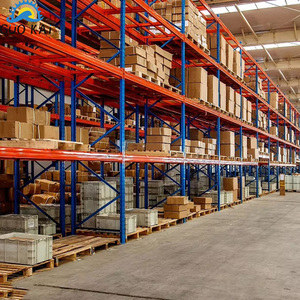
Adjustable Industrial Metal Pallet Storage Racking
Heavy-duty cold-formed structural steel racks with electrostatic powder coating for optimal corrosion resistance in multi-tier logistics facilities.
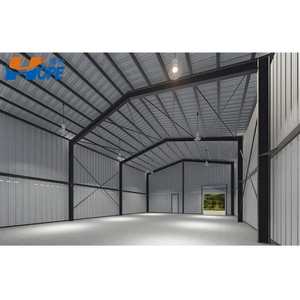
Prefabricated Structural Steel Warehouse Building
Turnkey industrial portal frames integrated with rack-supported mezzanine platforms for comprehensive warehousing infrastructure.
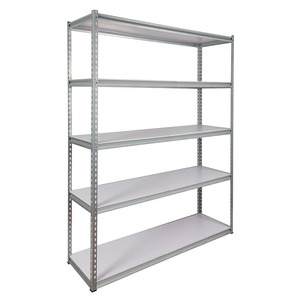
Industrial Steel Stillage Stacking Storage Shelves
Modular post pallet stacking units offering flexible multi-tier footprint densification without bolting, fully powder-coated for heavy use.
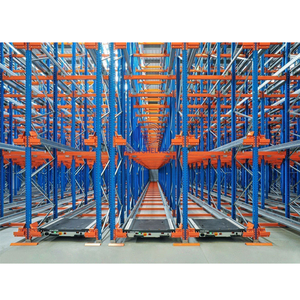
ASRS 4-Way Radio Shuttle High-Density Rack System
Semi-automated and automated multi-lane FIFO/LIFO cold chain storage with intelligent remote-controlled automated shuttles.
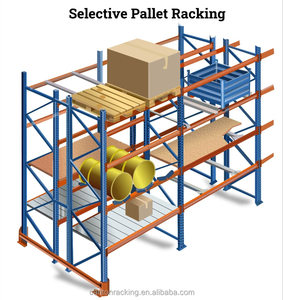
Engineered Double Deep Heavy Pallet Racking
Dual-depth storage design engineered to eliminate aisle redundancy and increase capacity by up to 30% over standard selective layouts.
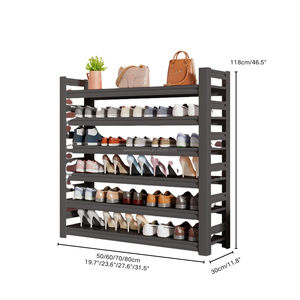
Tianhaida Adjustable Light & Medium Utility Rack
Multi-tier boltless longspan steel shelving designed for maintenance workshops, distribution sub-zones, and automotive spare parts.
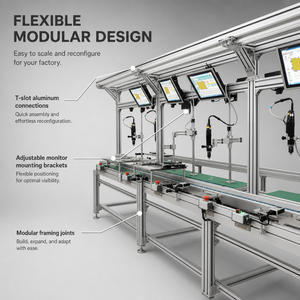
Double Speed Pallet Conveyor Line Automation
High-precision stainless steel motorized pallet transfer line engineered for advanced manufacturing assembly and automated packing integration.
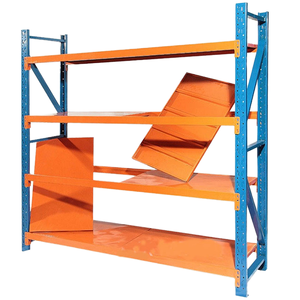
OEM Heavy-Duty Adjustable Cantilever Racks
High-capacity column and arm assemblies designed for uninterrupted longitudinal storage of steel pipes, timber packs, and structural profiles.
Comprehensive Engineering Design of Custom Pallet Flow Racks
A technical breakdown of gravity-driven dynamic storage mechanisms, gradient calibration, speed controller braking kinetics, and metallurgical tolerances for industrial warehouse fulfillment.
1. The Kinematics and Structural Physics of Gravity Pallet Flow Racking
Custom pallet flow rack systems (frequently designated as gravity flow racking or pallet live storage) represent the pinnacle of high-density, First-In, First-Out (FIFO) materials handling. Unlike static selective pallet racking, gravity flow systems rely on an inclined wheel or roller track bed installed at a precise incline—typically calibrated between 2.5% to 4.0% (1.5° to 2.3°)—depending upon pallet bottom geometry, load gross mass, and ambient temperature parameters.
When a pallet is placed into the loading bay (charge side), the gravitational force component ($F_g = m \cdot g \cdot \sin\theta$) overcomes the static roller bearing friction, accelerating the unit down the lane toward the unload face (discharge side). Controlling this descent velocity is the primary engineering challenge. Unregulated gravitational acceleration leads to pallet impact damage, pallet dislodgement, and severe warehouse structural degradation. To counteract excessive velocity, our factory integrates internal centrifugal brake rollers calibrated along each lane at intervals of every two to three pallet depths. These indirect magnetic or centrifugal governor rollers continuously govern pallet transit speeds below a safe threshold of 0.25 to 0.30 meters per second.
| System Parameter | Standard Ambient (+15°C to +35°C) | Cold Storage / Freezer (-30°C to 0°C) | Heavy Industrial Duty (>1500kg) |
|---|---|---|---|
| Incline Slope Gradient | 3.0% – 3.5% (approx. 1.75°) | 3.5% – 4.2% (friction compensation) | 2.8% – 3.2% (controlled inertia) |
| Roller Track Pitch | 50mm – 75mm spacing | 50mm continuous split-roller | Heavy-wall 60mm steel tubes |
| Centrifugal Brake Pitch | Every 2 Pallet Positions | Every 1.5 – 2 Pallet Positions | Every Pallet Position + End Buffers |
| Pallet Separator Mechanism | Mechanical Foot-Pedal / Spring Release | Pneumatic or Low-Temp Lubricated Spring | Reinforced Dual-Stop Load Separator |
| Deflection Limit Standard | EN 15512 (1/200th span length) | EN 15512 (Enhanced stiffness 1/250) | Heavy Cold-Formed Box / Structural C-Channel |
A vital component in multi-pallet depth flow channels (often running up to 15 to 20 pallets deep) is the pallet separator mechanism situated at the pick face. Without a mechanical separator, the cumulative line pressure of consecutive rear pallets exerts enormous kinetic and static pressure on the front-most picking pallet, wedging it tightly against the unload ramp stops and making extraction by standard counterbalanced or reach forklifts hazardous. Our custom-engineered OEM flow stops mechanically isolate the lead pallet from upstream line pressure, allowing the operator to lift the primary pallet safely before the rear queue smoothly rolls forward into the terminal slot.
2. OEM & ODM Engineering Customization: Dimensional Tolerancing and Metallurgy
Commercial off-the-shelf racking rarely meets the intricate demands of specialized manufacturing, pharmaceutical distribution, or automated food processing centers. As a bespoke direct-manufacturing supplier founded in 2001, Guangzhou Heda Shelves Co., Ltd. builds pallet flow rack solutions around specific pallet interfaces: EUR-1 (800 × 1200 mm), industrial standard GMA (48 × 40 in), or custom industrial stillages and steel containers.
Structural Steel Chemistry
Components rolled from certified Q235B and high-yield Q355B hot-rolled strip steel. Automated CNC punching guarantees 50mm and 75mm beam adjustability with minimal mechanical play and precise alignment.
Full-Width Steel Rollers
Equipped with zinc-plated or stainless steel cylindrical rollers featuring labyrinth-sealed precision bearings to resist chemical aerosols, floor washdowns, and ambient humidity spikes without seizing.
Dual-Surface Coating
10-stage pre-treatment featuring chemical pickling, degreasing, and zirconium phosphating, finished with 80–120μm electrostatic epoxy-polyester thermoset powder coating adhering to EN ISO 12944-C3/C4 criteria.
3. Future Procurement Trends in Dynamic Pallet Storage Systems
The warehouse storage industry is undergoing radical technological shifts driven by soaring real estate valuation, escalating power costs for climate-controlled warehousing, and mandatory environmental supply chain legislation. B2B procurement directors and intralogistics architects must evaluate the following procurement trajectories:
A. Convergence of Passive Gravity Flow with Semi-Automated AGV/AMR Fleets: The modern logistics hub increasingly replaces manned forklifts with Autonomous Mobile Robots (AMRs) and Automated Guided Vehicles (AGVs). Pallet flow pick faces are now designed with laser-cut docking targets, optical clearance sensors, and precision centering guides. The pick face must present the pallet with lateral deviations below ±5 mm to enable robotic automated fork insertion without human intervention.
B. Real Estate Optimization via High-Density Cube Storage: Warehouse footprint costs in major transport corridors have doubled over the past five years. Traditional selective pallet racks sacrifice 60% of floor area to operational access aisles. Dynamic pallet flow racks condense staging, buffer zones, and picking into a monolithic block, decreasing aisle requirements to two: an entry loading aisle and an exit extraction aisle. This delivers a 75% improvement in volumetric storage capacity over conventional setups.
C. Decarbonization and Zero-Power Intralogistics: While fully automated shuttle and crane ASRS setups offer massive density, their electrical infrastructure, energy consumption, and periodic maintenance present substantial Capex and Opex challenges. Pallet flow racking harnesses ambient potential energy—gravity—to drive pallet movement without electric motors, sensory wiring, or complex software licensing. For sustainability auditors operating under ESG scopes, gravity flow represents an emission-free dynamic storage choice.
4. Manufacturing Authority: Guangzhou Heda Shelves Co., Ltd.
Selecting a certified manufacturing partner is essential for high-risk dynamic gravity flow installations where component structural failure can yield severe commercial liability. Operating since 2001, Guangzhou Heda Shelves Co., Ltd. has grown from a specialized steel fabrication unit into a premier global warehouse storage manufacturing enterprise.
Full In-House Engineering & Export Verification
Our automated manufacturing facilities incorporate cold-roll profile roll-forming machines, computerized multi-head punching arrays, robotic welding workstations, and fully automatic electrostatic powder-coating conveyor loops. Every pallet flow upright, bed channel, and beam assembly undergoes rigorous non-destructive and destructive load-deflection testing in accordance with EN 15512 and EN 15620 structural standards.
We provide global distributors, tier-one 3PL contractors, and system integrators with direct OEM/ODM supply chains. From custom gauge upright stamping to personalized RAL color coding and project-specific pallet testing on our 20-meter test tracks, HEDA ensures zero onsite fitting deviations.
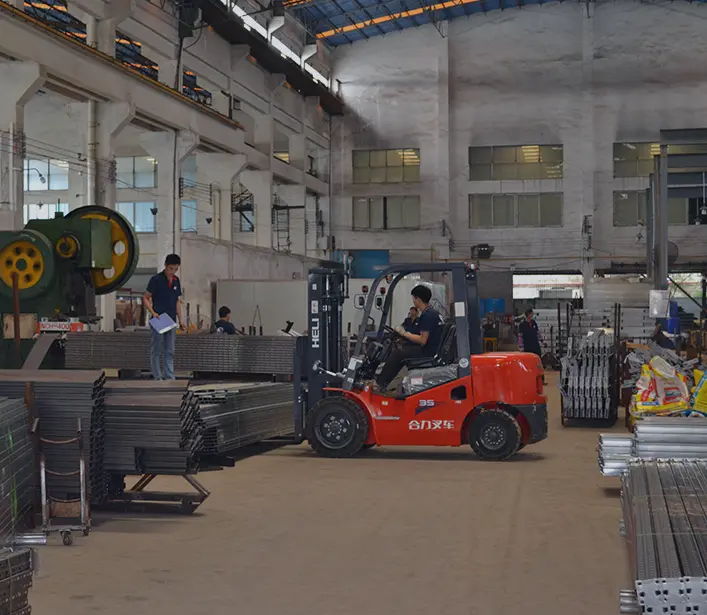
Direct manufacturing facility with 10,000+ completed projects across 120+ countries.
5. Technological Evolution: Next-Generation Roller and Material Formulations
Early iterations of pallet flow rack systems encountered recurring operational hurdles, notably pallet restart failure ("hang-ups") and catastrophic brake runaway events caused by roller surface wear. Modern OEM engineering has solved these failure modes through rigorous tribological design:
Hybrid Polymer Wheels
High-impact polyurethane and ultra-high-molecular-weight polyethylene (UHMW-PE) compound rollers formulated to resist plastic flat-spotting under continuous static pallet residency.
Magnetic Eddy Current Brakes
Contactless magnetic braking rollers that eliminate friction wear and brake pad degradation entirely, delivering uniform retarding force regardless of environmental temperature shifts.
Pallet Profiling Inspection
Integrating in-rack ultrasonic and optical profile scanning gates to detect bottom board splintering, sagging runner beams, and irregular nailed bottom boards before entry into flow channels.
6. Procurement & Engineering FAQ for Warehouse Managers
Common technical inquiries regarding pallet flow rack specifications, system integration, building codes, and logistics procurement:
What pallet structural qualities are required for reliable flow operation?
Pallet flow racks depend strictly on regular contact between the roller tracks and the bottom surface of the pallet. Hardwood EUR (1200x800) or GMA (40x48") pallets with minimal bottom board deflection under load are ideal. Poorly constructed perimeter pallets with broken base runners or protruding fasteners will catch on roller rims and lead to lane jams.
How do cold storage and blast freezer environments affect flow track incline?
Sub-zero conditions (-20°C to -30°C) increase lubricant viscosity in roller bearings and reduce the kinetic coefficient of friction between steel rollers and frost-coated wooden runners. For freezer sites, our engineers increase the slope gradient to 3.8%–4.2% and specify low-temperature synthetic food-grade bearing grease.
Can a pallet flow rack accommodate pallets with varying load weights in the same lane?
Yes, provided indirect centrifugal brake rollers are calibrated correctly. A well-engineered lane can manage payload variations from 400kg up to 1,200kg. The centrifugal brake increases its retarding force proportionally to pallet velocity, maintaining constant rolling speeds across both light and heavy unit loads.
What is the practical maximum depth for a gravity-fed pallet flow lane?
While standard configurations operate between 4 and 10 pallets deep, our custom-engineered tracks can safely extend up to 20 pallets deep. Lanes exceeding 10 pallets in depth mandate precision-stamped load separators, redundant speed governors, and side-guide tracks to prevent tracking drift.
How do Pallet Flow Systems compare with Radio Shuttle Racking in CAPEX/OPEX?
Pallet Flow features zero electrical components, lower preventive maintenance expenses, and no battery replacement overhead. Shuttle systems offer higher flexibility for mixed LIFO/FIFO depth in very deep lanes (up to 40 pallets) but require ongoing electrical maintenance and higher initial capital investment.
What structural verification documents are provided for European and global installations?
Guangzhou Heda Shelves supplies certified static calculations, structural engineering drawings stamped to EN 15512, EN 15620, and EN 15635 compliance criteria, steel material mill test certificates (MTC), CE Declaration of Conformity (No. 2435-CPR-8605159), and ISO 9001:2015 quality paperwork.
Request an Engineered CAD Layout & Flow Rack Quotation
Connect directly with our senior structural racking engineers. Provide your facility footprint, pallet weights, and throughput targets to receive a customized 3D design and factory-direct price estimate within 24 hours.
Get Catalog