Engineered Heavy-Duty Baseplates, Seismic Footings, and Precision Upright Anchoring Interfaces Manufactured to EN 15512, RMI MH16.1 & ISO 9001 Standards
Engineered Product Portfolio
Industrial Racking & Stillage Base Foot Assemblies
Direct factory solutions precision-fabricated for multi-tier warehouse systems, high-density storage, and heavy dynamic pallet loading.
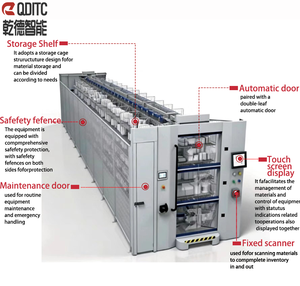
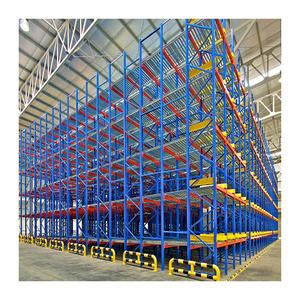
Automated mobile stacking frames engineered with self-centering cup feet, conical nesting posts, and reinforced cold-formed steel corners for error-proof inventory control.
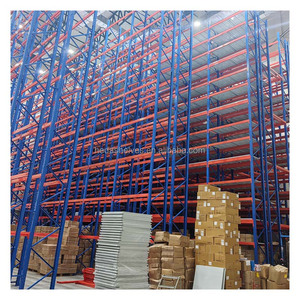
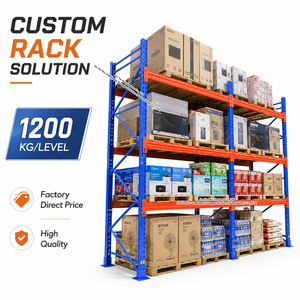
Full-access selective pallet frames outfitted with custom dual-anchor baseplates designed to spread high axial column forces evenly across concrete floor slabs.
Certified industrial racking frameworks integrated with seismic-rated base shoes, high-tensile anchor hardware, and anti-twist floor contact geometry for compliance with EN 15512.
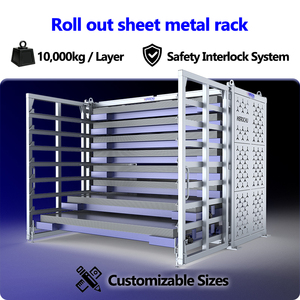
Heavy-gauge stillage units equipped with welded cupped stacking feet and skid runners, providing rock-solid dynamic stability when stacked 4-to-5 tiers high under heavy payload.
Ultra-stout industrial frames with reinforced welded base assemblies and oversized shimming plates, mitigating localized concrete punch failures under severe point loads.
Modular multi-tier storage bays engineered with floor-protecting stamped steel footings and optional leveling shims for quick deployment on uneven commercial and workshop floors.
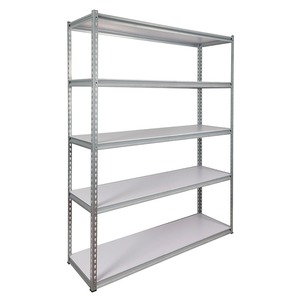
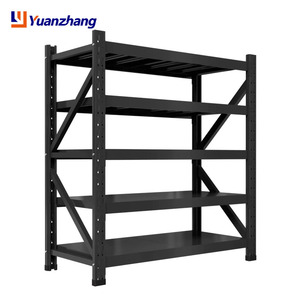
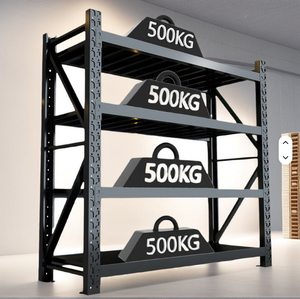
Fast-assembly boltless shelving utilizing precision snap-fit column feet with optional anchor holes, ensuring rigid floor fixation without compromising reconfigurability.
Snap-In FootplateAdjustable PitchGarage & Depot
Industry White Paper
Custom OEM Pallet Racking Feet: The Structural Fulcrum of Warehouse Safety
In high-bay racking and automated intralogistics infrastructure, the pallet racking foot—variously termed the upright baseplate, column base shoe, or footplate—is far more than a simple metal mounting bracket. Structurally, it serves as the critical mechanical interface through which all dead loads, live loads, seismic accelerations, and forklift impact forces transfer directly into the building's concrete slab. A poorly calculated or substandard racking footplate risks localized slab punching failure, anchor shear under horizontal dynamic loading, or catastrophic upright column buckling under overturning moments.
As a global OEM manufacturer and exporter, Guangzhou Heda Shelves Co., Ltd. approaches baseplate production with extreme metallurgical precision and structural engineering rigor. Governed by European standard EN 15512:2020 (Steel static storage systems – Adjustable pallet racking systems – Principles for structural design) and American Rack Manufacturers Institute standard RMI MH16.1, our custom OEM pallet racking feet are manufactured to deliver verifiable safety margins across every logistics installation.
According to EN 1992-1-1 (Eurocode 2) and ACI 318, standard concrete slabs exhibit characteristic compressive strengths ranging between 25 MPa and 35 MPa. Without an engineered baseplate exhibiting optimized surface area ($A_{eff}$) and adequate steel plate thickness ($t_p \ge 4.0\text{mm}$ to $12.0\text{mm}$), concentrated axial upright loads exceeding 150 kN will induce severe slab micro-cracking and eventual punching shear failure.
Mechanics of Load Distribution: Axial, Shear, and Overturning Forces
Modern selective, double-deep, and drive-in pallet racking installations impose complex multi-axial force vectors onto upright feet:
Axial Compressive Forces ($N_{Ed}$): Vertical loads composed of structural self-weight plus maximum pallet capacities. Racking feet must distribute these loads across a calculated contact area to keep compressive slab stresses below allowable limits ($f_{cd}$).
Base Fixity & Overturning Moments ($M_{Ed}$): Forklift braking, pallet placement misalignment, and building settlement produce lateral sway and overturning moments at the upright column base. Semi-rigid baseplate connections engineered with high rotational stiffness ($S_{j,ini}$) minimize frame drift.
Horizontal Shear & Seismic Dynamic Forces ($V_{Ed}$): Ground accelerations in seismic zones (conforming to EN 1998 / FEMA 460) subject anchoring bolts to cyclic shear and tensile pull-out stresses. Baseplates must incorporate precision-toleranced anchor holes or slots that prevent stress concentration and brittle anchor failure.
Structural Steel Metallurgy
Manufactured exclusively from prime structural hot-rolled coil (Q235B, Q355B, ASTM A36, S275JR, S355JR). Certified mill test certificates (MTC) guarantee elongation (>22%) and yield strength to avoid brittle fracture.
Robotic Welding & C-Channel Bosses
Fully automated robotic welding lines produce continuous fillet welds joining the baseplate to the vertical upright shoe, eliminating porosity and ensuring ductile joint performance under cyclic dynamic shock.
Precision Multi-Hole Stamping
CNC stamping and fiber-laser contour cutting enable versatile single, dual, or 4-bolt anchoring layouts. Compatible with M10, M12, M16 mechanical wedge anchors and chemical injection threaded rods.
Future Procurement Trends in Warehouse Racking Components (2025–2030)
Procurement directors and supply chain engineers are no longer purchasing commodity steel hardware based solely on price-per-kilogram. Structural resilience, robotic integration, and compliance transparency have radically shifted the procurement landscape for pallet racking accessories.
1. Demand for Sub-Millimeter Tolerances Driven by AMR & AS/RS Automation
The explosive adoption of Autonomous Mobile Robots (AMRs), Automated Guided Vehicles (AGVs), and Automated Storage and Retrieval Systems (AS/RS) has compressed allowable warehouse floor and rack deflection tolerances. According to EN 15620 (Tolerance, deformations and clearances for high-bay warehouses), automated cranes traveling at speeds exceeding 4 m/s cannot tolerate mast tilt resulting from uneven baseplate settlement. Future-ready procurement contracts increasingly specify CNC-machined, multi-point micro-leveling baseplates with calibrated leveling shims ($0.5\text{mm}, 1.0\text{mm}, 2.0\text{mm}$ thickness) pre-packaged per upright bay.
2. Seismic Engineering and Energy-Dissipating Baseplate Geometries
Global building codes—including Eurocode 8, IBC 2024, and AS 4084—mandate strict seismic performance benchmarks for storage racks accessible by forklift operators. Next-generation upright feet incorporate engineered ductile yield zones. During severe seismic motion, controlled plastic deformation in the baseplate absorbs kinetic energy, safeguarding the vertical column from premature local buckling and shielding the concrete anchor bolt from fatal shear cleavage.
3. Eco-Friendly Corrosion Barriers & Stringent Hot-Dip Galvanizing (ISO 1461)
The rapid expansion of cold chain facilities operating at temperatures as low as -30°C, combined with humid agricultural fertilizer depots, has spurred procurement demand for superior surface finishes. Standard dry epoxy powder coatings (60–80 microns) are yielding ground to hot-dip galvanized baseplates conforming to ISO 1461 (minimum 55–85 microns zinc coating thickness) and zinc-aluminum-magnesium (ZAM) structural alloys that deliver over 50 years of maintenance-free service life in highly corrosive environments.
4. Direct-from-Source OEM Partnerships Over Intermediary Brokers
Supply chain shocks and rising compliance liabilities have accelerated direct OEM sourcing. European, North American, and Australian racking distributors are partnering directly with accredited manufacturers capable of providing end-to-end structural testing data, batch-level raw material mill certificates, and automated robotic fabrication under ISO 9001:2015 QA systems.
25+
Years Engineering (Est. 2001)
30,000m²
Modern Manufacturing Facility
30,000t
Monthly Steel Output Capacity
120+
Export Destination Countries
Technological Evolution
From Flat Metal Tabs to High-Performance Footings
Explore how engineering advances transformed racking base components into mathematically verified, multi-functional safety assemblies.
1st Gen: Static Stamped Plates
Primitive 2mm to 3mm flat steel pieces featuring single anchor holes punched without FEA load modeling. Prone to dishing deformation, edge curling, and rapid loosening under minor forklift bumping.
2nd Gen: Ribbed & Welded Shoes
Introduction of cold-bent vertical side plates, continuous fillet welding, and heavy-gauge base flanges. Delivered significant torsional rigidity and distributed loads across 4mm to 6mm steel footings.
3rd Gen: FEA-Optimized Seismic Hubs
Engineered using 3D Finite Element Analysis (FEA) to eliminate internal stress concentrations. Features dual slotted anchor channels, integrated column protector anchor lugs, and high-tensile hot-dip galvanizing.
Manufacturing Pedigree
Why Global Logistics Leaders Partner With Guangzhou Heda Shelves
Over 25 years of end-to-end industrial racking manufacturing, certified engineering authority, and direct export capabilities.
ADV-01
CE & ISO 9001 Certified
Fully verified credentials including CE Certificate No. 2435-CPR-8605159 and ISO 9001:2015 Certificate No. 18624Q00169R0M. Compliant with European standard EN 15512 and RoHS environmental directives.
ADV-02
Comprehensive OEM / ODM Customization
Tailored baseplate geometries, custom anchor-hole configurations, RAL color powder coating, and specialized hot-dip galvanizing engineered to match your proprietary upright profiles exactly.
ADV-03
30,000 m² Mega Manufacturing Plant
Equipped with automated continuous roll-forming lines, precision fiber-laser cutting, CNC punching presses, and robotic welding stations delivering upwards of 30,000 metric tonnes per month.
ADV-04
Full Export Logistics & Seaworthy Packing
Shipped to over 120 countries through major global ports (Rotterdam, Hamburg, Antwerp, Valencia, Felixstowe, Long Beach). Component bundle numbering and seaworthy steel strapping guarantee zero transit damage.
Procurement & Engineering FAQ
Frequently Asked Questions by Structural Engineers & Buyers
How do you calculate the required baseplate surface area for high-capacity pallet racking?
The minimum required effective baseplate area ($A_{req}$) is derived using the formula: $A_{req} \ge N_{Ed} / f_{cd}$, where $N_{Ed}$ represents the design axial compressive load transferred from the upright column and $f_{cd}$ represents the design compressive bearing strength of the warehouse concrete floor slab (as defined in Eurocode 2 or ACI 318). For example, under a design column load of 150 kN on a C25/30 slab ($f_{cd} \approx 16.7\text{ MPa}$ factoring safety coefficients), the minimum effective contact area must exceed $8,982\text{ mm}^2$. A baseplate measuring $120\text{ mm} \times 120\text{ mm}$ ($14,400\text{ mm}^2$) provides a comfortable safety factor against localized concrete crushing.
What are the international standards governing pallet racking footplate design and installation?
Primary governing standards include EN 15512:2020 in the European Union, which establishes limit-state principles for upright baseplates and anchor fixity; RMI MH16.1:2021 in North America, specifying baseplate thickness, column moment transfer, and anchor shear capacities; and AS 4084:2023 in Australia. Periodic safety inspections must adhere to EN 15635, which requires that any baseplate exhibiting plastic tear, cracked weld seams, or sheared anchor studs be tagged for immediate operational repair.
When should an engineer specify slotted anchor holes instead of round holes?
Slotted anchor holes are predominantly specified in high seismic regions and installations where sub-floor rebar clashes occur during post-slab core drilling. A slotted hole allows slight adjustments ($10\text{mm}–25\text{mm}$) to bypass subterranean steel rebar without structural re-drilling. However, slotted baseplates require heavy-duty hardened structural washers conforming to DIN 6340 to prevent the anchor nut from pulling through the slot under seismic vertical uplift ($N_{t,Rd}$).
What are the regulations regarding leveling shims under pallet racking feet?
Per EN 15512 and SEMA design codes, leveling shims must possess the same footprint area or larger than the baseplate itself to ensure uniform contact stress. Shims must be fabricated from cold-rolled steel (plastic or timber shims are strictly illegal for heavy-duty racking). When total shim pack thickness exceeds 5mm, interlocking slotted shims or tack-welded packs are required. Shimming exceeding 20mm typically mandates structural grouting with high-strength non-shrink cementitious grout (minimum 50 MPa).
Hot-dip galvanizing versus electrostatic powder coating: which finish is best for baseplates?
For climate-controlled, dry indoor warehousing, electrostatic polyester powder coating (60–80 microns, commonly in RAL 5015 blue or RAL 2004 orange) provides exceptional impact resistance and aesthetic alignment. However, for outdoor yards, cold storage freezers (-25°C to -30°C with severe condensation risk), chemical warehouses, and seaside ports, hot-dip galvanizing according to ISO 1461 is essential. The metallurgical zinc-iron alloy layer prevents corrosive attack under the baseplate where trapped moisture frequently compromises painted steel.
Can Guangzhou Heda Shelves manufacture custom OEM feet to match existing third-party upright profiles?
Yes. A primary pillar of our global business is OEM and ODM component manufacturing for racking system integrators, distributors, and retrofit contractors. Clients simply supply their column CAD cross-section (DWG/STEP file) or physical samples. Our engineering office performs reverse-engineering, structural stamping die fabrication, and sample prototyping within 5 to 7 business days, including full static load certification.
Ready to Engineer Your Custom OEM Pallet Racking Feet?
Whether you need seismic-certified high-bay base assemblies, custom slotted upright shoes, or high-volume private label stamping, Guangzhou Heda Shelves delivers factory-direct engineering excellence worldwide.