2001
Established Year of Engineering
30,000+
Factory Area (Square Meters)
30,000 t
Monthly Structural Steel Capacity
120+
Countries Shipped & Installed
Engineered Heavy-Duty Racking & Mezzanine Infrastructure
Explore our precision-rolled, high-yield cold-formed structural storage platforms manufactured for international industrial operations, distribution hubs, and cold chains.
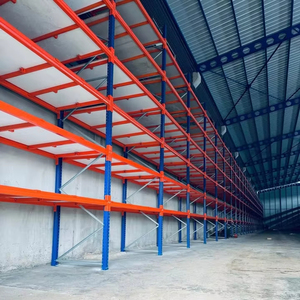
Peterack CE Certified Heavy Duty Multi Layer Pallet Storage Rack
High-capacity cold-formed steel racking framework engineered for structural tier stacking, high warehouse density, and dynamic payload stability.
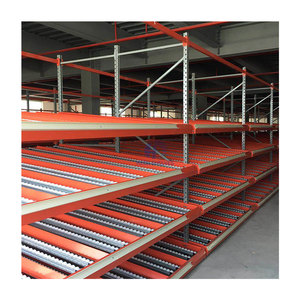
Customized Gravity Pallet and Carton Flow Dynamic Storage System
Incorporates precision inclined roller beds for high-throughput FIFO intralogistics, reducing travel distance for assembly and multi-tier mezzanine picking operations.
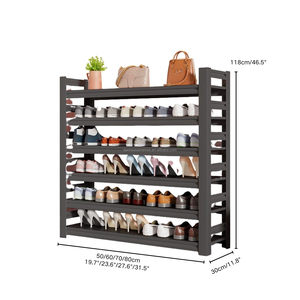
Tianhaida Adjustable Steel Corrosion Protected Industrial Shelving
Electrostatic powder-coated tall warehouse shelving modules with slotted multi-pitch adjustment, serving as intermediate structural supports for hand-picking platforms.
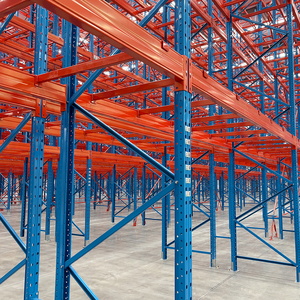
Jracking Modular Heavy Duty Pallet Storage for Sub-Zero Cold Rooms
Engineered with low-temperature ductile steels and rust-proof pre-treatments, maintaining yield strength in temperature-controlled -30°C facilities.
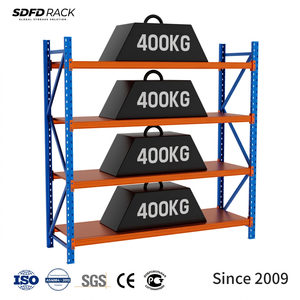
400KG Galvanized Sheet Metal Long Span Shelving & Deck Units
Heavy-duty galvanized sheet decking and step-beam integration delivering 400kg per level uniform distributed loads for integrated multi-tier walkways.
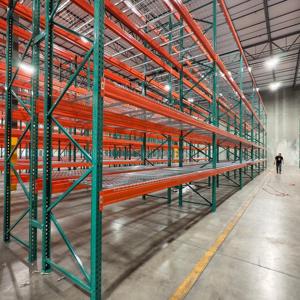
Jracking Heavy Duty Teardrop Pallet Racking for Logistics Hubs
North American standard universal teardrop punched uprights designed for rapid boltless assembly and high moment-resistant connections under severe loading.
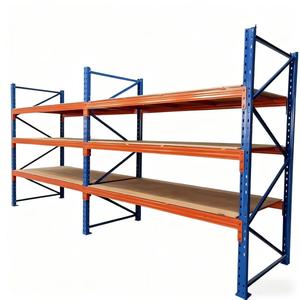
Mracking Factory Customized Heavy Duty Industrial Shelving Units
Bespoke industrial storage structures featuring custom RAL powder finishes, reinforced welded baseplates, and seismic-rated cross-bracing systems.
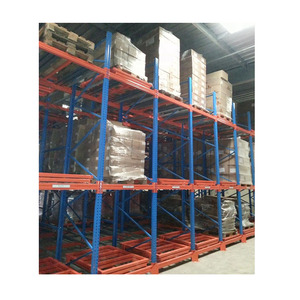
Heavy Duty Push Back Nested Cart Racking System (2-5 Pallets Deep)
Engineered dynamic multi-cart storage offering dense LIFO volume control without requiring lift trucks to drive directly into structural bays.
Engineering Principles of Rack-Supported Mezzanine Systems
A custom OEM rack-supported mezzanine represents one of the most structurally efficient intralogistics configurations available to modern supply chain engineers. Unlike traditional structural steel platforms that require heavy rolled I-beams, massive H-section pillars, and expensive civil foundation modifications, rack-supported platforms utilize the cold-formed uprights and load-bearing beams of the underlying pallet racking or long-span shelving as the primary structural framing. By converting vertical airspace into functional intermediate deck levels, enterprise distribution hubs achieve up to a 100% to 200% increase in usable cubic footprint without extending the warehouse boundary.
Structural Integrity Note: All OEM rack-supported platforms designed and manufactured by our factory adhere strictly to EN 15512 (Steel static storage systems – Adjustable pallet racking systems – Principles for structural design) and EN 15620 execution standards. Calculations account for static dead loads, dynamic live storage loads, horizontal seismic accelerations, lateral forklift impact forces, and point loads exerted by hand pallet jacks or automated guided vehicles (AGVs).
| Structural Parameter | Standard Specification | Custom OEM Engineered Range | Compliance Reference |
|---|---|---|---|
| Primary Steel Grades | Q235B Structural Carbon Steel | Q355B High-Yield Cold Formed Coil | EN 10025 / ASTM A36, A572 |
| Upright Column Profiles | 80×60, 90×70, 100×70 mm | 120×95, 140×100 mm (Custom Pierced) | EN 15512 Section Modulus |
| Mezzanine Deck Live Load | 300 kg/m² to 500 kg/m² | Up to 1,200 kg/m² (AGV / Robot Rated) | Eurocode 1 (EN 1991-1-1) |
| Decking Surface Types | Galvanized Steel Plank / Solid B-Deck | Perforated Anti-Slip Steel / Plywood Deck | DIN 51130 Slip Resistance |
| Surface Pre-Treatment | Pickling, Phosphating 4-Stage Rinse | Automated Shot-Blasting (SA 2.5) | ISO 8501-1 Preparation |
| Finish Coating | Electrostatic Epoxy Powder (60-80 μm) | Hot-Dip Galvanized (Outdoor/Freezer) | EN ISO 12944 Corrosion Cat. |
In an OEM integration, structural decking systems—ranging from perforated zinc-coated steel planks that maintain overhead sprinkler fire penetration to heavy-duty corrugated B-decking overlaid with high-density particle board—are anchored directly to secondary and tertiary cold-rolled floor joists. These joists lock securely into the structural columns via specialized drop-in connectors and high-tensile Grade 8.8 structural bolts. The result is a monolithic, highly rigid mezzanine floor platform that resists progressive shear collapse, eliminates horizontal sway, and safely segregates heavy palletized bulk staging on the ground floor from fast-paced, multi-SKU carton picking or assembly cells above.
Future Procurement Trends for Industrial Mezzanines
Key macroeconomic and operational factors shifting how global logistics procurement leaders specify and import structural storage systems.
Supply Chain Decoupling & OEM Nearshoring
Global distributors are shifting away from fragmented domestic intermediaries to direct factory-level OEM partnerships. By engaging directly with source manufacturing plants equipped with roll-forming lines, buyers compress margins by 28% to 42%, securing proprietary profile punch patterns, custom brand labeling, and verified material test certificates (MTC) straight from the coil mill.
Integration with Carbon Border Adjustments (CBAM)
With international carbon accounting becoming mandatory—such as the European Union's Carbon Border Adjustment Mechanism (CBAM)—procurement teams must demand fully documented greenhouse gas tracking across steel smelting, cold-bending forming, and powder coating phases. Leading factories now provide mill-certified recycled scrap content ratios and eco-friendly pre-treatment compliance.
Modular Reconfiguration & Circularity
Fixed civil mezzanines are being rapidly phased out in favor of 100% modular, bolt-together rack-supported frameworks. Modern corporate procurement policies prioritize demountable industrial assets that can be disassembled, extended vertically, or resold when leases terminate, eliminating write-offs and aligning with circular enterprise asset management.
Architectural & Technological Evolution Trends
How next-generation automated warehouses are reshaping structural mezzanine engineering.
AMR & AGV Fleet-Ready Decking
The explosive proliferation of autonomous mobile robots (AMRs) for order picking requires mezzanine decking systems to handle intense repetitive wheel-point loading, ultra-flat surface tolerances conforming to DIN 18202 Table 3 Group 4, and anti-static ESD-dissipative coatings that prevent sensor blindness.
BIM & Parametric FEA Simulation
Modern structural engineering is no longer built on static tables. Full-scale Building Information Modeling (BIM) via Autodesk Revit paired with parametric Finite Element Analysis (FEA) allows our engineers to stress-test micro-deflections under combined seismic and localized rack impact conditions before steel is fed into roll-forming dies.
Integrated Intralogistics Verticals
Mezzanines are transitioning from passive manual platforms into kinetic material flow nodes. Current designs incorporate pre-punched mounting nodes for continuous vertical reciprocating conveyors (VRCs), high-speed spiral chutes, modular picking tunnels, and floor-level integration with carton flow gravity lanes.
Why Global Tier-1 Distributors Source From Our Plant
Over 25 years of engineering manufacturing backed by verifiable European certifications and end-to-end export infrastructure.
25+ Years OEM Authority
Established in 2001, providing continuous production leadership across 10,000+ completed installations worldwide with dedicated English-speaking structural project teams.
CE & ISO 9001 Certified
Fully compliant with CE Certificate No. 2435-CPR-8605159, ISO 9001:2015 No. 18624Q00169R0M, and comprehensive RoHS compliance across all anti-corrosion finishes.
Free 3D & CAD Engineering
Receive comprehensive structural drawings, 3D renderings, and certified static load tables within 48 hours of submitting building plans—before signing contracts.
Containerized Sea Logistics
Specialized bundled export strapping, numbered component packing manifests, and sea freight handling directly to Rotterdam, Hamburg, Felixstowe, and global ports.
Frequently Asked Questions on Mezzanine Procurement
Direct technical and operational answers to address common procurement and site engineering inquiries.
How do rack-supported mezzanines compare in cost to structural steel mezzanines?
Rack-supported mezzanines are typically 25% to 40% more cost-effective than independent column-and-beam structural steel platforms. Because the vertical upright columns perform double duty—holding both high-density pallet storage and the intermediate floor framing—raw steel tonnage is reduced, and separate structural foundations are often unnecessary.
Can the platform be configured for Euro (1200×800mm) and ISO pallets simultaneously?
Yes. Every OEM project is custom-engineered. Beam clear spans, bay openings, upright depths, and under-pallet support bars are tailored precisely to the pallet footprints, clear overhangs, and bottom-board configurations of both EUR/EPAL and standard industrial bulk pallets.
What structural documentation is provided to satisfy local building control?
We provide full structural dossier packages referencing EN 15512, EN 15620, and Eurocode standards. This includes static finite element stress diagrams, column baseplate pressure ratings, weld inspection reports, material mill certs (MTC), CE Declaration of Performance (DoP), and comprehensive installation manuals.
What are standard production lead times and shipping turnaround to European ports?
Production cycles for systems ranging from 500 to 5,000 square meters typically require 20 to 30 days. Direct sea freight transit from our factory port in Guangzhou to major European gateways (Rotterdam, Antwerp, Hamburg, Valencia) requires approximately 30 to 38 days, packaged in sequential shipping blocks for streamlined unloading.
How are fire protection and emergency egress requirements accommodated?
Platforms can be integrated with 50% open area perforated steel decking to permit downward water penetration from building ceiling sprinklers without requiring under-mezzanine pipe branches. Furthermore, structural stair towers, kickplates, OSHA/EN-compliant self-closing safety gates, and smoke evacuation zones are engineered directly into the CAD schematics.
Can local installation crews assemble the delivered mezzanine system without specialists?
Yes. All structural elements arrive pre-cut, pre-punched, and zinc or epoxy finished with zero on-site welding required. Bay uprights and floor joists are labeled matching 3D exploded assembly diagrams. We also provide remote real-time video engineering guidance or dispatch on-site bilingual erection supervisors upon request.
Ready to Maximize Your Warehouse Cubic Footprint?
Submit your warehouse CAD drawings or dimension sketches. Our senior structural logistics engineers will deliver a free 3D mezzanine layout, detailed component specification, and certified project estimate within 48 hours.
Get a Quote