Engineered Industrial Racking & Automated Material Flow Solutions
Manufactured in our 30,000 m² automated facility, our systems balance structural FEA integrity, modular adaptability, and high pallet throughput for worldwide logistics operators and OEM private-label distributors.
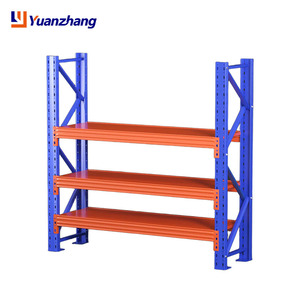
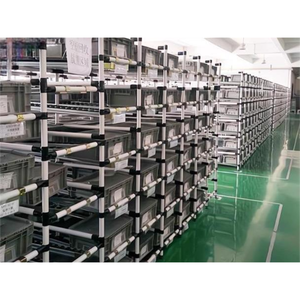
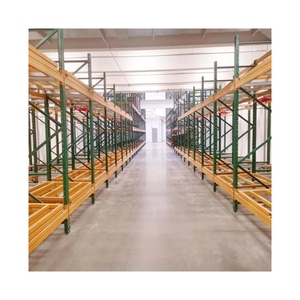
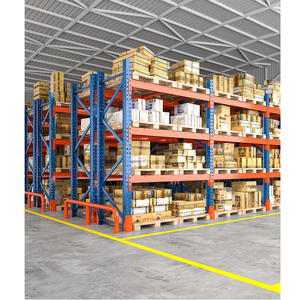
Engineering Deep Dive: Radio Shuttle Pallet Racking Architecture & Selection Criteria
Radio shuttle racking (also categorized in intralogistics as pallet runner or automated pallet shuttle systems) represents the premier semi-automated density solution for high-throughput, multi-pallet-per-SKU distribution hubs. Unlike static drive-in racking that requires lift truck operators to navigate deep into structural tunnels—introducing structural collision risks and cycle-time bottlenecks—a custom OEM shuttle system utilizes autonomous, remote-controlled carts that navigate specialized galvanized running tracks inside the racking lanes.
For warehouse architects and supply chain directors specifying custom systems, selection hinges on specific operational variables:
- Channel Depth vs. SKU Breadth: When handling fewer than 20 distinct SKUs with pallet inventories exceeding 50 pallets per SKU, deep-lane shuttle configurations (depths from 20 to 60 pallets per lane) maximize cubic space by 75% to 85% compared to standard selective setups.
- Rotational Discipline (FIFO vs. LIFO): Shuttle systems can be engineered with access lanes on both faces (drive-through format) for strict First-In-First-Out rotation, critical for pharmaceuticals, dairy, and dated consumer goods, or single-face drive-in format for Last-In-First-Out raw material buffers.
- Dynamic Structural Interaction: The shuttle runner induces localized horizontal dynamic braking forces and vertical cyclic loads onto the guide rails. As an OEM manufacturer, our upright profiles utilize high-yield structural steel (Q235B / Q355B or European S235 / S355JR equivalents) roll-formed with a continuous omega cross-section and multi-bend stiffeners to suppress torsional flex under maximum load acceleration.
| System Type | Storage Density | Throughput Speed | Forklift Impact Risk | Cold Store Energy Efficiency | Optimal Pallet Volume / SKU |
|---|---|---|---|---|---|
| Radio Shuttle Racking | Extreme (Up to 88% Cube) | High (Automated Lane Transit) | Near Zero (Cart Stays in Rack) | Superior (−30°C Thermal Core) | High (> 30 Pallets / SKU) |
| Double Deep Selective | Moderate (55% Cube) | Moderate (Reach Mast Slowdown) | Moderate (Reach Mast Overhang) | Average (Wider Aisles Required) | Low-to-Medium (2–4 Pallets / SKU) |
| Drive-In Pallet Racking | High (70% Cube) | Slow (Mast Maneuvering in Lane) | High (Direct Upright Proximity) | Good (Reduced Clear Aisles) | High (> 20 Pallets / SKU) |
| Push Back (Cart System) | Medium-High (65% Cube) | Moderate (Fork Push Action) | Low-to-Moderate (Mast Outside) | Moderate (Mechanical Springs) | Medium (2–6 Pallets / SKU) |
Industry Technology & Future Procurement Trends in High-Density Logistics (2026–2030)
The global warehousing landscape is experiencing a paradigm shift driven by rising urban industrial land lease rates, surging labor scarcity, and the exponential expansion of temperature-controlled pharmaceutical and cold-chain grocery networks. Procurement directors are transitioning from passive static racking toward active, digitally integrated automated density solutions.
1. The Convergence of 2D Shuttles into 3D and 4-Way Multi-Shuttle Swarms
While traditional 2D radio shuttles travel unidirectionally down storage lanes with forklift relocation across levels, next-generation procurement is moving toward 4-way multi-directional shuttles. These intelligent robotic units transfer across storage channels and main longitudinal transfer tracks via automated lifters, eliminating forklift dependency completely. Our OEM manufacturing facility supports this trajectory by producing micro-tolerance galvanized channel sections capable of integrating rack-mounted vertical reciprocating conveyors (VRCs) and busbar power rails.
2. Cold Store Energy Optimization via Supercapacitor & Lithium Titanate (LTO) Power
Operating in environments down to −30°C presents severe challenges for conventional lead-acid or standard lithium-ion batteries, which suffer up to 40% capacity degradation in freezing temperatures. Modern automated shuttle designs incorporate rapid-charge supercapacitor modules and insulated, heated Lithium Titanate battery enclosures. These achieve an 80% charge in 15 minutes while maintaining over 10,000 thermal cycles, delivering non-stop 24/7 cold storage uptime without battery swap overhead.
3. Direct Integration with WMS/WCS APIs via Industrial 5G and Wi-Fi 6 Mesh
Standalone remote controls are increasingly obsolete in enterprise facilities. Next-generation radio shuttle units incorporate embedded PLCs with MQTT, RESTful, and OPC-UA protocol stacks. These interface directly with SAP, Manhattan Associates, or proprietary Warehouse Control Systems (WCS). Fleet management systems dynamically balance shuttle task queues, calculate automated lane compaction algorithms, and monitor real-time battery health and wheel wear telemetry.
Factory Authority: Engineering Rigor, Certifications & OEM Scalability
As a specialized manufacturer founded in 2001, Guangzhou Heda Shelves Co., Ltd. operates an integrated 30,000 m² industrial facility staffed by 300+ technical fabricators, certified structural engineers, and intralogistics specialists. We provide engineering consulting, finite element structural calculation (FEA), and custom profile roll-forming for tier-1 supply chains, global 3PL contractors, and specialized racking distributors.
End-to-End 10-Stage Precision Manufacturing Process
Raw Steel Testing
Tensile, yield, and chemical spectrometry verification on certified coiled strip steel.
Precision Slitting
Automated uncoiling and CNC longitudinal slitting within ±0.1 mm width accuracy.
CNC Upright Punching
Continuous hydraulic pitch perforation ensuring exact pitch repeatability across upright lengths.
Continuous Roll-Forming
Multi-station roll-forming lines creating structural omega shapes without residual material strain.
Guide Rail Profiling
Custom cold roll-forming of high-precision shuttle running rails with integrated safety ridges.
Robotic Laser & Welding
Robotic gas-shielded arc welding for beam connectors, baseplates, and bracket subassemblies.
Surface Degreasing
Pre-treatment bath sequence including hot alkaline degreasing and ultrasonic cleansing.
Pickling & Phosphating
Multi-tank chemical pickling and zinc phosphating to provide lasting corrosion resistance.
Powder Coating
Automatic electrostatic powder application cured at 200°C for high impact and chip resistance.
Pre-Assembly & Seaworthy QC
Dimensional test-fitting, load deflection verification, and moisture-sealed maritime bundling.
Strategic Technical FAQ for Racking Specifiers & Procurement Teams
Direct engineering answers to technical queries raised during layout planning, structural review, and international procurement tenders.
How does the structural upright engineering of a radio shuttle rack differ from standard drive-in racking?
What floor slab structural tolerances and flatness ratings are mandatory for high-bay shuttle installations?
Can our custom OEM shuttle racking accommodate both European EUR/EPAL pallets and American GMA standard pallets interchangeably?
What specific adaptations are engineered for radio shuttle systems operating in sub-zero (−25°C to −30°C) cold storage environments?
What engineering documentation and calculation books are supplied for building permits and regional safety audits?
What is the expected Total Cost of Ownership (TCO) and ROI timeline when upgrading from conventional selective racking to an automated shuttle system?
Transform Your Warehouse Storage Density & Throughput
Submit your warehouse CAD floor plan, ceiling clear heights, and pallet load parameters. Our senior structural intralogistics team will prepare a comprehensive 3D layout, load-capacity matrix, and factory-direct OEM estimate within 24 hours.
Get a Quote