When procurement executives and logistics engineers source industrial racking for aggressive operational environments—such as biopharmaceutical production, seafood cold processing, wet chemical blending, or ISO Class 4–7 cleanrooms—standard carbon steel with electrostatically applied polyester powder coating proves fundamentally deficient. Even micro-perforations as small as 50 microns in epoxy coatings allow moisture penetration, catalyzing aggressive sub-film filiform corrosion. Within 18 to 36 months, conventional cold-rolled profiles suffer structural embrittlement, load-rating degradation, and catastrophic flaking hazards that immediately breach FDA 21 CFR and European GMP regulations.
As a global OEM stainless rack shelving factory founded in 2001, Guangzhou Heda Shelves Co., Ltd. architects industrial storage systems that decouple structural durability from chemical degradation. The critical engineering criterion lies in selecting between austenitic stainless alloys (AISI 304 vs. AISI 316L) versus high-grade duplex systems. Stainless steel’s inherent defensive mechanism—a spontaneously reforming chromium-rich passive oxide film (Cr₂O₃)—demands precise chemical composition control during cold roll-forming and laser punching processes to avoid chromium carbide precipitation along grain boundaries.
"In high-humidity cleanrooms and chemical washdown distribution zones, true operational safety is not determined by initial yield strength alone, but by Pitting Resistance Equivalent Number (PREN) and strict avoidance of enclosed unvented tubular profiles."
Our manufacturing protocols eliminate bacteria-harboring hollow cavities by deploying open-channel structural uprights, perforated sanitary teardrop arrays, and continuous robotic laser seams. Where hollow structural sections (HSS) are mandated for torsion resistance in high-bay automated storage and retrieval systems (AS/RS), our factories implement precision hermetic seal welds verified by pressurized helium leak detection, or integrated drainage wept channels compliant with European Hygienic Engineering & Design Group (EHEDG) Document 8 principles.
Furthermore, surface topography plays an equally decisive role in sanitization economics. Standard mill-finish 2B stainless steel exhibits microscopic surface roughness (Ra) values hovering between 0.4 µm and 0.8 µm. In our dedicated finishing bays, automated electro-chemical polishing lines pull surface roughness down to Ra < 0.25 µm. This micro-smoothing eliminates bacterial biofilm anchorage points, accelerates clean-in-place (CIP) washdowns, reduces sodium hydroxide or peracetic acid detergent consumption by up to 34%, and ensures compliance with strict European EN 1672-2 hygiene requirements.
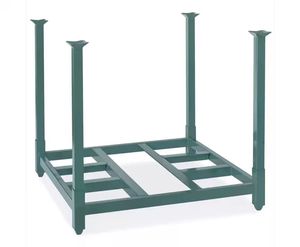 Heavy-Duty Modular