Intelligent Hub
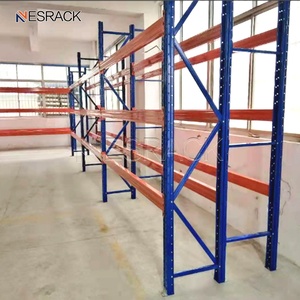
From standard Euro-pallet back-to-back bays to semi-automated shuttle channels and structural platforms, our factory manufactures custom-tolerance storage solutions designed to withstand severe cyclic loadings and maximize volumetric density.
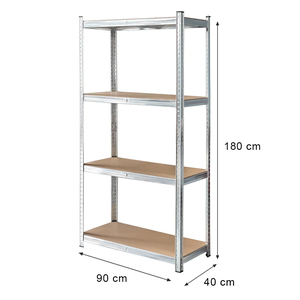
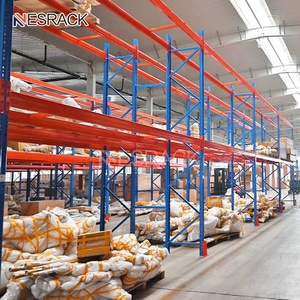
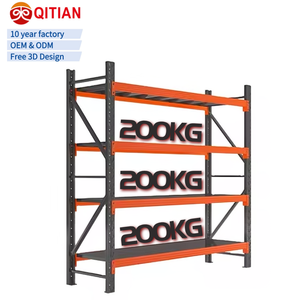
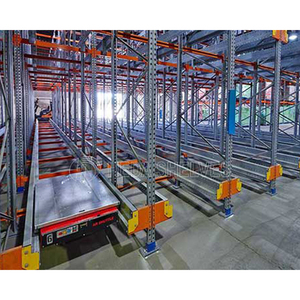
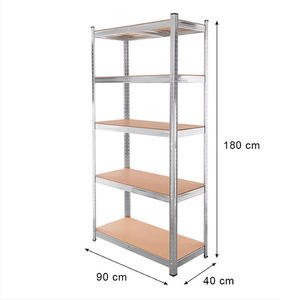
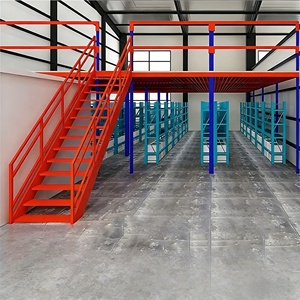
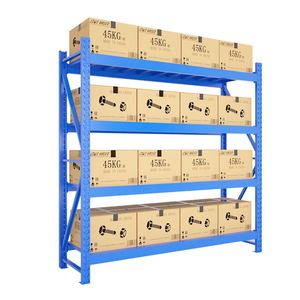
Back-to-back racking is the structural backbone of modern commercial intralogistics. By joining two single rows of selective pallet racks with cold-formed structural steel row spacers, the assembly transforms isolated high-slenderness upright frames into a braced twin-frame superstructure. This configuration halves the required operating forklift aisles while drastically elevating the system's second moment of area ($I_x$ and $I_y$) against longitudinal seismic displacement and transverse impact vectors.
Under the European standard EN 15512:2020 (Steel static storage systems — Adjustable pallet racking systems — Principles for structural design), row spacers must not merely act as geometric separators; they function as primary load-transfer cross-ties. When engineered correctly with calibrated flue-space clearances (typically 200mm to 300mm to comply with NFPA 13 sprinkler penetration standards), back-to-back row spacers prevent eccentric upright buckling during dynamic pallet handling and counteract catastrophic torsion caused by uneven forklift loading.
At Guangzhou Heda Shelves Co., Ltd., our engineering methodology utilizes structural Q235B and high-yield Q355B cold-rolled micro-alloy coil steel. Every beam-to-column connector is designed with a multi-claw hook connection featuring high shear-resistant safety locking pins, ensuring beam deflection limits remain well within the strict $L/200$ to $L/300$ serviceability limit state (SLS).
Upright frame stability in back-to-back arrays depends on the effective buckling length ($L_{cr}$) calculation:
L_cr = μ × L_bay √(1 + β_spacer)
HEDA Shelves executes non-linear P-Delta finite element analysis (FEA) on every customized back-to-back bay design. This guarantees that frame twisting, baseplate anchor pullout forces, and floor slab ground bearing pressures are meticulously modeled prior to extrusion and roll-forming.
| Engineering Attribute | Standard Selective (Single Row) | Back-to-Back Racking (HEDA Design) | Double Deep Selective System |
|---|---|---|---|
| Aisle-to-Rack Area Ratio | 60% Aisle / 40% Storage | 35% Aisle / 65% Storage | 30% Aisle / 70% Storage |
| Pallet Access Index | 100% Direct Immediate Access | 100% Direct Immediate Access | 50% Direct Access (LIFO 2-deep) |
| Transverse Structural Stability | Independent Cantilever/Anchor Only | High (Braced Twin Superstructure) | High (Twin-Depth Coupled Bays) |
| Seismic Damping Coefficient | Base Plate Anchors Absorb 100% Shear | Spacers Disperse Lateral Wave Energy | Extended Base Frames Distribute Shear |
| Forklift Compatibility | Standard Counterbalance / Reach | Standard Reach / Counterbalance / VNA | Deep-Reach Pantograph Truck Required |
| Recommended Maximum Height | Up to 8,000 mm | Up to 14,000+ mm (EN 15620 Cl. 300) | Up to 10,500 mm |
Strategic supply chain operations are evolving rapidly. As real estate footprints command premium square-meter valuations globally, warehouse rack procurement has pivoted from purchasing raw steel shelving to commissioning high-performance dynamic structural assets.
Global logistics hubs—particularly across the European Union, the UK, and North America—now enforce rigorous environmental, social, and governance (ESG) procurement benchmarks. Factory sourcing requires documented traceability under the Carbon Border Adjustment Mechanism (CBAM). Buyers demand Electric Arc Furnace (EAF) or sustainably melted recycled coil stock, eco-friendly zinc phosphate pre-treatments, and lead-free thermosetting TGIC-free powder formulations that eliminate VOC outgassing.
Manual forklift operations are rapidly interfacing with Autonomous Mobile Robots (AMRs), Automated Guided Vehicles (AGVs), and semi-automated pallet shuttles. Modern back-to-back racking specifications demand tighter erection tolerances according to EN 15620 Class 300/400. Millimeter-accurate floor-level openings, bottom guide-rail integrations, and sensor-reflector bracket punchings allow facilities to transition seamlessly from manually piloted reach trucks to automated high-bay vehicles without rack teardowns.
Enterprise procurement teams avoid locked-in proprietary regional profiles that constrain future expansions. Modern buyers partner directly with global OEM/ODM manufacturers like HEDA Shelves who maintain open tooling catalogs for tear-drop, diamond-hole, and 50mm/75mm European Omega upright profiles. This ensures long-term interchangeability, direct-from-factory beam additions, competitive replacement component costs, and transparent architectural CAD file availability.
Industrial racking has evolved into a smart, resilient component of intralogistics infrastructure. Discover how structural material science and automated monitoring are reshaping warehouse safety and operational continuity.
Traditional racking relied on thick, hot-rolled structural channels that increased floor dead-loads and freight tariffs. Modern HEDA systems utilize cold-rolled high-strength Q355B alloy steel, engineered with continuous stiffening ribs along the column flanges. Through cold-work hard-forming techniques, we achieve equivalent or superior section moduli ($W_x$) with up to a 15% reduction in overall deadweight, significantly reducing transatlantic shipping costs while maintaining 100% resistance to local torsional buckling.
Condensation in temperature-controlled deep-freeze environments (-30°C) causes rapid micro-pitting in standard powder coatings. HEDA's cold-chain systems feature continuous hot-dip continuous galvanizing (HDG) or zinc-aluminum-magnesium (ZAM) coil forming combined with multi-stage nano-ceramic passivation. This achieves salt spray resistance exceeding 1,000 hours (ISO 9227 standards), virtually eliminating rust creep under cyclic freezing and thawing conditions.
In seismic risk zones (Eurocode 8 / FEMA 460 compliance), back-to-back rack arrays are equipped with hysteretic energy-dissipating row spacers and articulated baseplate joints. Rather than allowing rigid impact waves to shear floor anchors, our flexible spacer dampeners absorb and redistribute ground acceleration energy through controlled micro-deflection, drastically reducing top-bay pallet shedding risks during seismic shockwaves.
Our 30,000 m² production complex operates under ISO 9001:2015 quality management standards. Every single upright, box beam, and row spacer follows a rigorous quality-controlled journey from raw certified coil to seaworthy container export.
Spectrometric chemical analysis and mechanical tensile testing of raw Q235B/Q355B coil stock to guarantee structural yield strength.
Continuous servo-controlled punching of high-precision Omega upright slots with consistent ±0.1mm pitch accuracy along the full mast.
18-to-24 station roll forming mills shape column uprights and interlocking twin-C box beams without creating residual internal stresses.
Automated robotic MIG welding of beam end-connectors ensures complete weld penetration and uniform fatigue strength under cyclic loading.
Automated 9-tank chemical pre-treatment removes all surface oils, scale, and rust, depositing a crystalline zinc-phosphate anchor coat.
High-efficiency automated powder spray booths apply pure polyester thermosetting powder with a cured thickness of 60 to 80 microns.
Controlled baking tunnels ensure complete powder cross-linking, producing an impact-resistant, scratch-proof, high-gloss industrial surface.
Heavy steel bundles with corrugated edge guards, water-resistant PE stretch film, and wooden dunnage designed for overseas container stripping.
Straightforward answers regarding structural calculations, building code compliance, installation engineering, and OEM manufacturing agreements.
Standard single-selective racks stand as isolated single-bay depths, requiring a dedicated forklift access aisle for every rack run. Back-to-back racking pairs two identical selective rack runs rear-to-rear, linked with rigid steel row spacers. This eliminates half of the transport aisles, instantly boosting storage density by 25% to 40% while preserving 100% individual pallet selectivity.
Our manufacturing and engineering design methodologies comply with European Standard EN 15512:2020, EN 15620, and EN 15635. We hold official CE Certificate No. 2435-CPR-8605159 and ISO 9001:2015 Certificate No. 18624Q00169R0M. Comprehensive third-party material mill test reports and calculation sheets are available for review.
The spacer dimension is dictated by pallet overhang and local fire regulations. For standard EUR/EPAL 1 (1200 × 800 mm) pallets seated on 1,000mm deep frames, the pallet overhangs front and rear by 100mm. To maintain a safe 100mm clearance between opposing pallets, a 300mm row spacer is standard. If in-rack ESFR sprinkler drop pipes are installed, spacers can be customized from 200mm up to 500mm.
Yes. As a direct manufacturer, Guangzhou Heda Shelves Co., Ltd. routinely builds custom tooling for global distributors and system integrators. We can replicate column profile widths, hole-pitch patterns (including 50mm, 75mm, 76.2mm, or teardrop configurations), beam connector brackets, and custom powder-coat RAL color shades with client-branded embossments.
To produce a fully engineered 2D/3D layout with structural static calculations, please share: (1) Architectural building plan in DWG/PDF with clear underside-of-beam heights, (2) Floor slab concrete thickness and load-bearing rating, (3) Pallet specifications (width × depth × height, including cargo overhang and maximum gross weight), and (4) Forklift model, turning radius, and maximum reach height.
Standard OEM manufacturing cycles range from 15 to 25 business days depending on tonnage. Finished steel is packed in seaworthy, export-strapped steel bundles with protective dampeners to prevent coating abrasion during transit. We manage FOB, CIF, CFR, or DDP shipments to major global ports including Rotterdam, Hamburg, Antwerp, Valencia, Felixstowe, Long Beach, and Singapore.
For over two decades, Guangzhou Heda Shelves Co., Ltd. has delivered factory-direct manufacturing precision, structural reliability, and engineering support for complex intralogistics hubs across Europe, the Americas, Australia, and the Middle East.
By eliminating intermediary brokers, our clients work directly with certified structural engineers and factory production managers. We provide transparent raw steel index tracking, verified mill certificates, rapid turnaround on layout revisions, and dedicated manufacturing lines for high-volume rollouts.
We do not cut corners on column gauges or weld quality. Every upright frame and beam connector is manufactured with safety factors exceeding standard industrial requirements, fully verified by periodic factory destructive stress testing, ultrasonic weld testing, and surface cross-hatch adhesion checks.
Every shipment is packed with detailed, piece-numbered assembly blueprints, 3D exploded structural views, column-base anchor torque specifications, and safe working load (SWL) signage. Remote engineering consultations or on-site project installation supervisors ensure smooth site commissioning.