Direct-from-Factory OEM/ODM Pallet Racking Portfolios
Constructed from high-grade Q235B/Q355B structural steel, our modular racking and gravity flow systems meet strict CE (No. 2435-CPR-8605159) and ISO 9001:2015 production benchmarks. Explore our specialized warehouse configurations below.
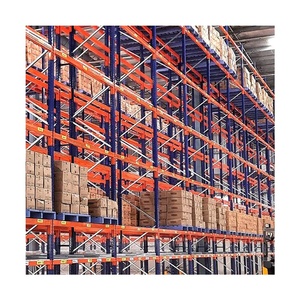
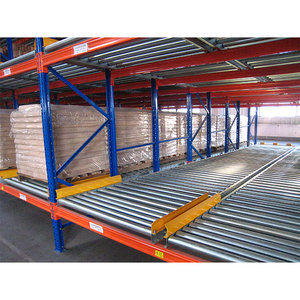
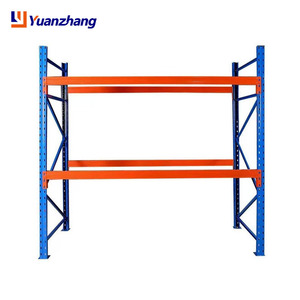
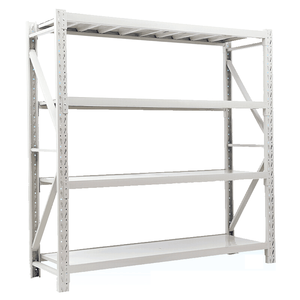
The Mechanics of Industrial Gravity Flow Racking
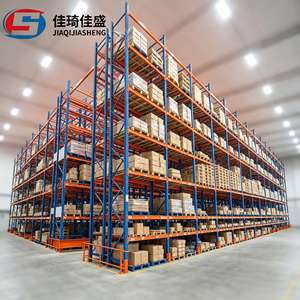
Gravity flow pallet racking—commonly designated dynamic flow storage—operates via dedicated roller tracks inclined at an exact engineering gradient (typically between 1.5° and 2.5° or 2.5% to 3.5% grade). Utilizing natural gravitational force, pallets advance automatically from the rear replenishment aisle (charging side) to the front discharge station (picking side), establishing a strict First-In, First-Out (FIFO) material progression.
Unlike static selective racking that requires dedicated driving aisles per double-row, a gravity flow matrix consolidates footprint usage by eliminating internal traffic aisles. This architecture boosts storage density by up to 65% while halving forklift operating travel cycles. Designed for fast-moving consumer goods (FMCG), temperature-controlled cold stores, and pharmaceutical buffer hubs, it guarantees inventory freshness and minimizes pallet dwell variance.
Critical Kinetic Parameters
Standard dynamic parameters deployed by HEDA Shelves for Euro (1200×800mm) and Industrial (1200×1000mm) pallets:
- Calculated Incline Slope: 1.5° to 2.2° optimized against pallet base deflection
- Centrifugal Speed Retarders: Regulates run speed at ≤ 0.30 m/sec
- Load Separation System: Eliminates back-pressure at unloading face
- Lane Depths Available: Up to 20 pallets deep under continuous braking
Storage Density vs. Dynamic Access: Technical Benchmark
Compare high-density warehousing systems across volumetric efficiency, capital commitment, cycle speed, and operational mechanics to identify the ideal engineering fit for your logistics center.
| Racking Architecture | Stock Rotation | Volumetric Space Utilization | Throughput Cycle Velocity | Forklift Exposure Risk | Primary Industrial Match |
|---|---|---|---|---|---|
| Gravity Flow Rack (FIFO) | Strict FIFO | 80% – 85% (Ultra-High) | Rapid (Simultaneous In/Out) | Very Low (Separate Aisles) | Perishables, FMCG, Cold Stores, Pharma |
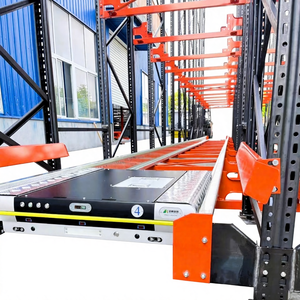
| Radio Shuttle System | FIFO or LIFO | 85% – 90% (Maximum) | High (Automated Carriage) | Minimal (Cart Operates in Lane) | High-Volume Seasonal Buffers, Cold Chain |
| Drive-In / Drive-Thru | Strict LIFO (Drive-In) | 65% – 75% (High) | Moderate to Low | Elevated (Forklift Enters Frame) | Uniform Non-Expiring Bulk SKUs |
| Push Back Racking | Strict LIFO | 70% – 75% (Medium-High) | Moderate | Low (Aisle Pick/Push) | 2 to 6 Pallets Deep, Medium Rotation |
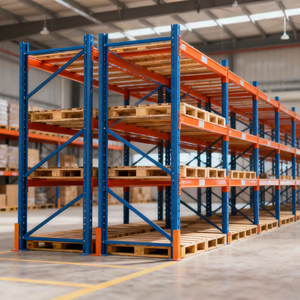
| Selective Pallet Rack | FIFO / LIFO (Manual) | 40% – 50% (Standard) | Medium (100% Direct Selectivity) | Moderate (High Aisle Traffic) | High-SKU Heterogeneous Distribution Centers |
Guangzhou HEDA Shelves: Engineered Rigor Since 2001
For over two decades, Guangzhou Heda Shelves Co., Ltd. has delivered turnkey industrial storage solutions for international system integrators, distributors, and logistics giants. Operating across a modern 30,000 m² smart manufacturing base, our infrastructure delivers bespoke OEM and ODM execution with audited reliability.
Verified CE & ISO Compliance
Fully accredited with CE Certificate No. 2435-CPR-8605159 and ISO 9001:2015 Certification No. 18624Q00169R0M. Frame structures, connector brackets, and safety lock configurations strictly adhere to EN 15512, EN 15620, and OSHA requirements for static and dynamic stability.
Free CAD & 3D Structural Layouts
Our senior racking engineers deliver comprehensive DWG CAD floor plans, load-bearing simulation reports, beam deflection models, and 3D warehouse renderings prior to project commitment. We calibrate roller beds precisely to your specific wooden, plastic, or metal pallet bases.
Custom OEM/ODM Private Labeling
We partner directly with overseas racking brands, distributors, and general contractors. We supply bespoke roll-formed upright sections, specialized powder-coat RAL color finishes, customized stamping of distributor trademarks, and containerized seaworthy packing with barcoded labels.
Future Procurement Trends in Industrial Gravity Pallet Systems
Shifting macroeconomic parameters, automated handling mandates, and carbon neutrality requirements are reshaping how enterprise logistics directors procure dynamic racking systems. The critical purchasing drivers dominating the global sector include:
Total Cost of Ownership (TCO) vs. Initial CapEx
Modern buyers have moved beyond base steel cost metrics. Procurement matrices now evaluate operational lifecycle calculations: zero-energy gravity movement requires no power conduits, wiring, or battery replacements, achieving an estimated 42% operational savings across an 8-year span compared to active mechanized alternatives.
Nearshoring Buffer Stock Redundancy
Supply chain disruptions have triggered the end of razor-thin Just-In-Time replenishment. Logistics operators in Europe and North America are actively deploying high-density FIFO flow buffers at transit ports and regional fulfillment nodes to house critical 30-day inventory reserves on a minimal building footprint.
Cold Chain Energy Density Optimization
With commercial electricity tariffs placing intense pressure on blast freezers (-25°C to -30°C), maximizing refrigerated cubic volume is paramount. Gravity flow systems maximize thermal density, reducing the required cubic meter volume that must be conditioned and lowering electricity expense per stored pallet unit.
Technological Innovations in Dynamic Gravity Flow Racks
As intralogistics accelerates toward full autonomy, gravity flow systems are experiencing rapid mechanical and digital upgrades to integrate seamlessly with automated material handling fleets.
AMR/AGV Dynamic Picking Interfaces
Gravity flow discharge faces are increasingly re-engineered with optical sensor cut-outs and laser reflector alignments. Automated Guided Vehicles (AGVs) and Autonomous Mobile Robots (AMRs) interface directly with roller ends, picking discharged pallets without manual forklift drivers.
Magnetic & Hysteresis Speed Braking
Moving past traditional spring-loaded centrifugal brakes, cutting-edge OEM configurations now incorporate eddy-current magnetic retardation rollers. These deliver non-contact speed regulation, preventing runaway heavy pallets without mechanical friction wear or maintenance downtime.
IoT Telemetry & Pallet Tracking
Sensors embedded inside gravity lane tracks capture real-time lane vacancy, feed speeds, and cycle frequency. This feeds dynamic slotting data into enterprise Warehouse Management Systems (WMS), alerting control towers to slow-flowing or stationary pallets.
Frequently Asked Questions by Industrial Sourcing Teams
Clear, engineering-backed answers addressing structural calculations, pallet compatibility, safety devices, and OEM manufacturing variables.
What pallet specifications and base types are compatible with gravity flow systems?
How does the separator mechanism control back-pressure in deep-lane installations?
What anti-corrosion pre-treatments are deployed for cold store and chemical environments?
What structural calculations and certifications are delivered for building approvals?
What are typical production lead times, and how are export shipments containerized?
Can HEDA Shelves support OEM custom profiles and private labeling for European brands?
Plan Your Storage Project with HEDA Racking Engineers
Share your warehouse floor dimensions, pallet dimensions, weight ratings, and SKU velocity data. Our engineering office will generate an optimized 2D/3D CAD layout, load capacity calculation report, and formal factory-direct quotation within 24 hours.
Inquire Now