Engineered Heavy-Duty Racking & Gravity Flow Product Range
From single-direction FIFO dynamic flow lanes to modular multi-tier selective and cantilever configurations, explore our heavy-duty warehouse equipment manufactured with automated roll-forming lines.
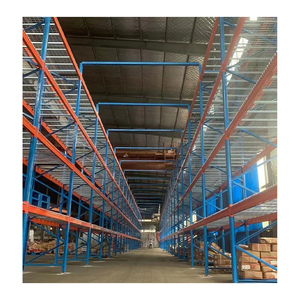
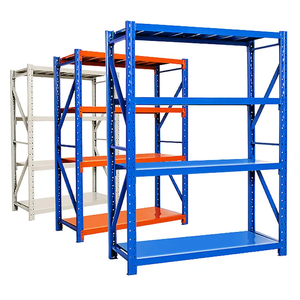
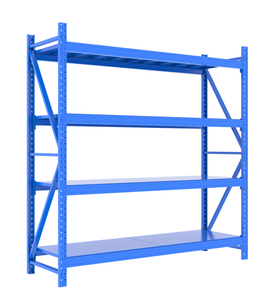
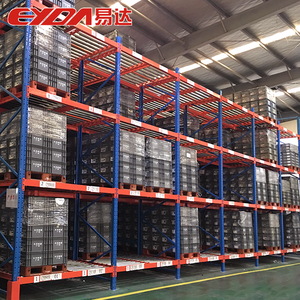
Mechanical Mechanics of Heavy-Duty Pallet Gravity Flow Systems
High-density live storage requires exact structural profiling, friction calibration, dynamic braking calculations, and safety separation mechanics to eliminate operational hazards.
Gravity flow racking systems (alternatively termed pallet flow or live storage racks) represent the pinnacle of passive dynamic intralogistics. By employing an inclined wheel or roller track (typically pitched between 1.5° and 2.5° or 2.5% to 4.0% grade depending on pallet weight and bottom construction), the system harnesses the force of gravity to transport palletized unit loads seamlessly from the loading (replenishment) face to the picking (unloading) face. This creates a strictly enforced First-In, First-Out (FIFO) stock rotation mechanism that minimizes forklift travel distances, isolates hazardous truck maneuvers from picking operators, and yields floor space density gains reaching up to 60% compared to conventional selective pallet racking aisles.
Centrifugal Speed Controllers
Independently calibrated internal gear-driven centrifugal brake rollers automatically govern descent velocities within a safe threshold of 0.15 m/s to 0.30 m/s. Brake tension adjusts dynamically to load weight variation (from 250 kg up to 1,500 kg per pallet), preventing runaway pallets in deep lanes extending past 20 positions.
Automatic Pallet Separators
Integrated mechanical safety separators isolate the front-most extraction pallet from the sequential rear queue pressure. By holding back trailing pallets until the lead unit is lifted off by the forklift, extraction torque on mast forks is eliminated, safeguarding reach mechanisms from sudden binding forces.
Structural Steel Uprights & Rails
Our OEM factory utilizes high-tensile certified steel coils (Q235B and Q355B structural grades). Uprights undergo continuous automated multi-stage roll forming with precision omega (Ω) structural geometry, providing unmatched torsional rigidity and impact deflection compliance under stringent EN 15512 parameters.
OEM/ODM Gravity Flow Technical Matrix & Structural Configurations
Configured for EUR 1 (1200×800mm), EUR 2 (1200×1000mm), industrial plastic pallets, and heavy container bins across ambient and sub-zero cold chain deployments.
| System Parameter | Standard Industrial Range | OEM Custom Engineering Capacity | Standard Compliance Benchmark |
|---|---|---|---|
| Pallet Lane Depth | 2 to 15 pallets deep | Extended configurations up to 28 pallets deep | FEM 10.2.02 |
| Load Capacity Per Pallet | 300 kg – 1,200 kg | Reinforced tracks rated up to 2,000 kg/pallet | EN 15512 / ISO 9001 |
| Gradient / Slope Ratio | 1.5° – 2.0° (2.6% – 3.5% incline) | Variable incline track mounting brackets | Factory Calibrated |
| Roller Track Specifications | Ø50mm / Ø60mm galvanized steel rollers | Triple-roller tracks or full-width heavy cylindrical rollers | RoHS & CE Certified |
| Operating Temperature | -10°C to +40°C ambient | Cold-store lubrication & steel alloys rated to -30°C | Low-Temp Resistant |
| Finishing & Surface Treatment | Electrostatic powder coating (RAL custom) | Hot-dip galvanized (HDG) & duplex zinc phosphating | ISO 12944 C3/C4 |
Why Global Brands & European Distributors Choose Our Factory
Guangzhou Heda Shelves Co., Ltd. (established in 2001) is an authoritative manufacturer dedicated to precision-engineered storage racking solutions, combining structural metallurgy with end-to-end supply chain mastery.
With an integrated production footprint exceeding 30,000 m² and more than 300 experienced technical, structural, and welding engineers, our facility processes over 30,000 tonnes of cold-formed racking steel each month. European distributors, turnkey intralogistics system integrators, and industrial procurement leaders partner with us to bypass intermediate broker markups while securing uncompromising mechanical performance backed by our official CE Certificate No. 2435-CPR-8605159, ISO 9001:2015 Certification No. 18624Q00169R0M, and thorough RoHS compliance documentation.
Every single OEM/ODM racking build passes through an unyielding 10-tier quality governance protocol: from ultrasonic steel coil thickness validation, automated high-tonnage precision punching, and 24-station continuous roll forming, to advanced pickling, phosphating pre-treatment, and climate-controlled electrostatic powder coating. This guarantees that our upright frames and dynamic gravity roller assemblies maintain optimal structural integrity throughout intense mechanical cycles in demanding environments.
Future Procurement & Technological Trends in Gravity Flow Racking
Strategic operational trends and technical breakthroughs driving dynamic flow procurement decisions across global logistics sectors.
Decoupled Buffer Zones for AGV/AMR Integration
Procurement directors are shifting away from direct forklift interactions toward automated guided vehicles (AGVs) feeding the loading face of gravity racks. Dynamic flow lanes serve as non-powered accumulation buffers that decouple robotic transport cycles from order-dispatch tempos.
Zero-Energy ESG & Carbon Neutral Mandates
With warehouse energy costs and carbon reduction mandates intensifying in the European Union, passive gravity flow storage is capturing market share from energy-heavy motorized conveyors and high-draw automated AS/RS micro-shuttles, delivering lifetime zero-kilowatt dynamic pallet motion.
Sensorized Lane Fullness & IoT Braking Telemetry
Emerging gravity flow architectures incorporate non-powered mechanical flag switches and low-power IoT optical sensors at lane discharge thresholds. Real-time telemetry notifies Warehouse Management Systems (WMS) of bay vacancies, replenishment triggers, and brake roller rotational wear.
Duplex Sub-Zero Metallurgy & Composite Rollers
Cold chain facilities (-25°C to -30°C) require specialized low-temperature impact steel alloys resistant to cold embrittlement. Technological advancements include self-lubricating synthetic roller polymer blends that resist frost crystallization and maintain consistent friction coefficients without seizing.
What slope angle is required, and how is gradient calculated for differing pallet bottom types? +
How do brake rollers prevent dynamic pallet acceleration in deep lanes? +
What are the compliance expectations under European Standard EN 15512:2020? +
Can your factory supply custom private-label OEM components for European racking installers? +
What happens if a pallet suffers base runner damage while inside a deep gravity lane? +
What lead times and logistical frameworks are provided for international sea freight delivery? +
Accelerate Your Dynamic Storage Engineering Project
Send our senior engineering team your warehouse DWG floor plan, pallet dimensional weights, and throughput metrics. We deliver comprehensive 2D CAD layouts, 3D structural simulations, and transparent direct-from-factory quotes within 24 hours.