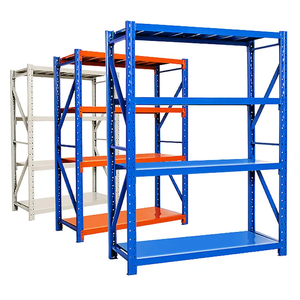
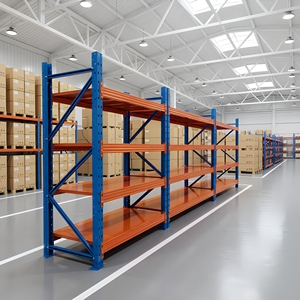
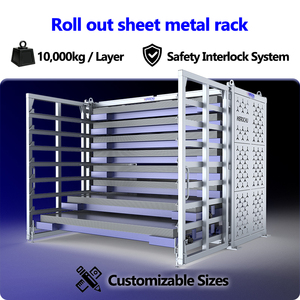
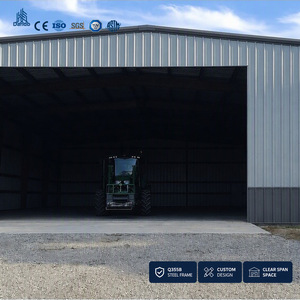
OEM/ODM Heavy Duty Industrial Racking Factories & Suppliers
Precision-engineered pallet storage, structural steel cantilever units, and automated high-bay racking systems custom manufactured to EN 15512, CE, and ISO 9001:2015 international quality standards.
25+
Years Plant Operation (Est. 2001)
30,000t
Monthly Steel Processing Capacity
10,000+
Completed Logistics Facilities
120+
Global Export Destination Ports
Engineered Storage Solutions
High-Performance OEM/ODM Heavy Duty Racking Systems
Built from high-yield cold-rolled structural steel (Q235B/Q355B equivalent to S235JR/S355JR), configured for EUR/EPAL, US standard pallets, and non-standard bulk cargo applications.
Structural Mechanics, Metallurgy & Safety Compliance in Industrial Racking Sourcing
In modern high-density intralogistics, selecting an industrial storage system is not merely a steel tonnage procurement decision—it is a mission-critical structural engineering commitment. Industrial racking frameworks operate under massive, static, dynamic, and seismic cyclic stresses. Under the European Standard EN 15512:2020 (Steel static storage systems – Specification of beam racking) and equivalent global codes (RMI ANSI MH16.1 in North America; AS 4084 in Australasia), the calculations governing upright bucking, torsional-flexural distortion, beam connector mechanical grip, and baseplate anchorage demand precise structural verification.
Our OEM/ODM manufacturing facility engineers upright columns with continuous roll-formed closed or open multi-bend omega profiles. By incorporating up to 12 cold-rolled work-hardened bend radii into our upright cross-sections, we substantially raise the cross-sectional moment of inertia ($I_x$, $I_y$) while reducing unnecessary tare deadweight. This structural discipline ensures that installations achieve the maximum safe working load (SWL) with an elastic deflection strictly capped under $L/200$ to $L/300$ across beam clear spans, even under continuous maximum working loads.
Engineering Decision Matrix
Comparison of Heavy Duty Industrial Storage Topologies
Direct technical evaluation matrix utilized by logistics consulting engineers to specify high-density storage frameworks according to selectivity, cube volume, and forklift kinetics.
Storage Topology
Volumetric Cube Ratio
Selectivity Factor
Rotation Logic
Forklift Equipment Match
Typical Industrial Sector
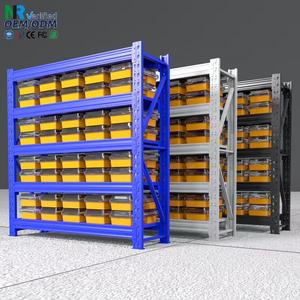
Selective Pallet Racking
Standard (40-50%)
100% Direct Immediate Access
FIFO / LIFO Universal
Counterbalance, Reach Truck, VNA
3PL, FMCG Distribution, Auto Spares
Double Deep Racking
Medium (+30% Cube)
50% Immediate (2 Pallets Deep)
LIFO Operational Priority
Pantograph Double-Reach Trucks
Cold Storage, Dry Grocery Wholesaling
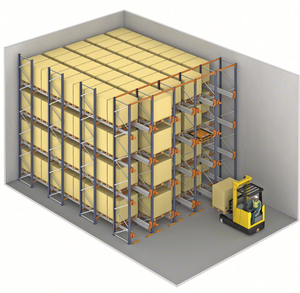
Drive-In / Drive-Through
High (+65% Cube)
Single Lane Pallet Batching
LIFO (Drive-In) / FIFO (Drive-Thru)
Standard Reach / Counterbalance
Seasonal Harvest, Frozen Warehousing
Radio 4-Way Shuttle Racking
Maximum (+85% Cube)
Semi-Automated Matrix Selective
System-Managed FIFO / LIFO
AGV, AMR, Conventional Stacker
Deep-Freeze (-30°C), Pharma Buffer Hubs
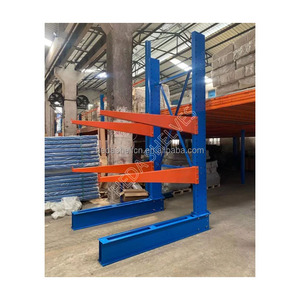
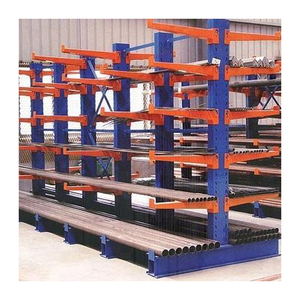
Heavy Duty Cantilever Racks
Linear Floor Space Focus
100% Unobstructed Longitudinal
Direct Crane / Side-Loader Access
Side Loader, Multi-Directional Truck
Timber Yards, Steel Profiles, Extrusions
Rack-Supported Mezzanines
Multi-Tier Duplication
Hybrid (Bulk + Carton Piece Pick)
Integrated Workflow Routing
Conveyors, Vertical Lifts, Pallet Jacks
E-Commerce Fulfillment Centers, MRO
Certified Metallurgy and Seismic Engineering Under Eurocode 8
A primary failure mode in heavy-duty logistics facilities is seismic column resonance coupled with live load shear. As an accredited OEM/ODM supplier certified with CE Certificate No. 2435-CPR-8605159 and operating strictly under ISO 9001:2015 Quality Management standards, our design engineers execute finite element analysis (FEA) to simulate horizontal base shear forces, ground acceleration values ($a_g$), and soil-structure interactions in accordance with EN 16681 (Seismic design of steel static pallet racking).
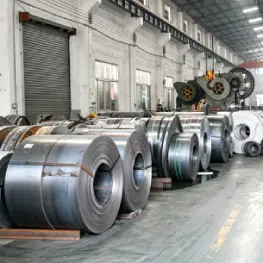
Our raw coil procurement relies entirely on certified hot-dip and cold-rolled prime steel from major integrated steel mills. Every raw material heat batch is tracked with mill test certificates (MTC) proving minimum yield strengths ($R_{eH}$) of 235 MPa to 355 MPa and elongation percentages ($\ge 18\%$) that eliminate brittle fracturing risks under freezing operational temperatures.
Enterprise Strengths
Why International Supply Chains Rely on HEDA Shelves
Direct manufacturing transparency, robotic cold roll-forming precision, and total project lifecycle engineering support tailored for international distributors, system integrators, and plant directors.
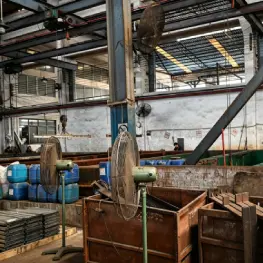
30,000 m² Advanced Production Plant
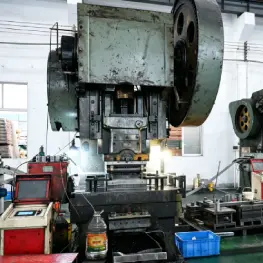
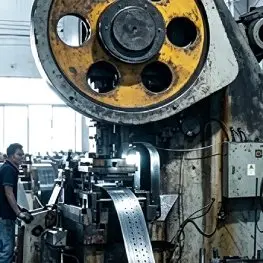
Over 300 experienced technical staff and automated continuous rolling lines delivering 30,000 metric tons of precision structural racking components monthly for multi-container deployments.
Free Turnkey CAD & 3D Modeling
Every commercial brief receives full DWG layout blueprints, static load distribution calculations, and 3D visualization within 24–48 hours, fully coordinated with your forklift fleet profile.
Strict European Safety Certifications
Fully compliant with CE Factory Production Control (FPC) CPR No. 2435-CPR-8605159, ISO 9001:2015, and RoHS, supplying verified test reports ready for local municipal structural permits.
Dedicated OEM/ODM Private Labeling
End-to-end custom production for tier-one European and American distributors: custom column stamping punches, proprietary beam connectors, customized RAL colors, and branded containerized packing.
Manufacturing Precision
Our 10-Step Quality-Controlled Production Flow
From metallurgical verification of incoming raw coils to anti-abrasion container bundle packing, every stage operates under closed-loop ISO 9001 quality supervision.
STEP 01
Raw Material Inspection
STEP 02
Precision Steel Slitting
STEP 03
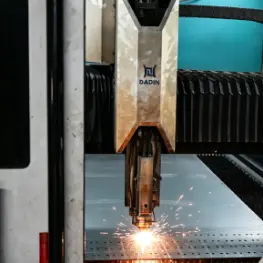
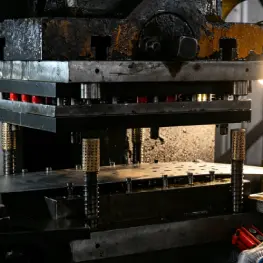
CNC Upright Punching
STEP 04
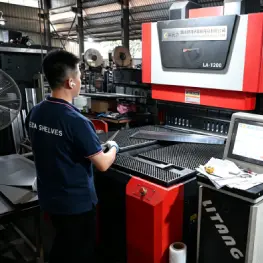
Cold Bending Forming
STEP 05
Continuous Roll Forming
STEP 06
Robot Deburring & Polishing
STEP 07
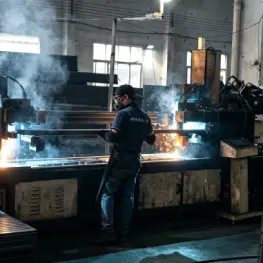
Automatic Beam Welding
STEP 08
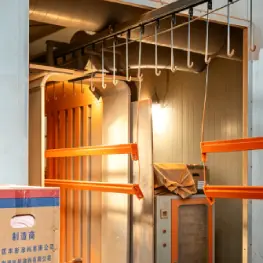
7-Stage Chemical Pretreatment
STEP 09
Electrostatic Powder Coating
STEP 10
QA Inspection & Sea Bundling
Industry Foresight
Future Procurement Trends in Industrial Storage (2025–2035)
Strategic technology developments reshaping warehouse infrastructure investments, total cost of ownership (TCO), and automated material handling integration over the next decade.
Convergence with Autonomous Shuttles & AMRs
Traditional static storage is rapidly evolving into dynamic, robotics-ready kinetic storage grids. Industrial buyers are shifting capital expenditure toward multi-tier 4-way pallet shuttle systems and autonomous mobile robot (AMR) compatible low-profile floor rails. Structural tolerances are tightening by over 40%, necessitating factory floor fabrication precision where beam level sag is engineered to $< \pm 1.0\text{ mm}$ under full dynamic deceleration.
IoT-Enabled Structural Health Monitoring
Accidental forklift impact along upright columns represents up to 78% of racking damage incidents. Forward-thinking enterprise supply chains are introducing integrated piezoelectric strain sensors, continuous acoustic emission micro-crack detectors, and smart baseplates with real-time deflection telemetry. This shifts maintenance from periodic visual audits (EN 15635) to automated predictive structural diagnostics.
Circular Economy Steel & Decarbonized Coating
Scope 3 carbon reporting is increasingly mandatory for multinational logistics providers. Sustainable procurement mandates the use of EAF (Electric Arc Furnace) recycled high-tensile steel, cutting the embodied carbon footprint by over 60% compared to blast-furnace hot bands. Simultaneously, thermosetting TGIC-free epoxy-polyester coatings processed in low-temperature curing ovens are eliminating VOC emissions entirely.
Sub-Zero Cold Chain & Cryogenic Steel Metallurgy
With pharmaceutical cold chains, rapid-frozen seafood buffers, and prepared meal logistics expanding globally, cold-storage racking must endure temperatures down to -30°C without low-temperature embrittlement. Modern specs require fine-grain fully killed structural steel with guaranteed Charpy V-notch impact energy absorption ($\ge 27\text{ J}$ at -20°C), preventing catastrophic brittle shear under dynamic forklift impacts.
Urban In-Fill & Multi-Story Micro-Fulfillment
Surging e-commerce expectations for 2-hour home deliveries are compelling operators to convert urban, space-restricted properties into multi-tier micro-fulfillment centers. Procurement demands rack-supported mezzanine floors and multi-tier picking structures that transform low building envelopes into 3x usable square footage, complete with carton flow lanes and automated vertical spiral lifts.
Full Modularity & Rapid Scalability
Supply chain volatility requires physical warehouse infrastructure to expand, dismantle, or reconfigure with minimal downtime. Enterprise buyers are abandoning rigid welded systems in favor of bolted upright frame assemblies with standardized 50 mm / 75 mm beam connector hook geometries, enabling frictionless reconfiguration as pallet heights and SKU profiles change.
Procurement Knowledge Hub
Frequently Asked Questions by Industrial Racking Buyers
Comprehensive technical guidance compiled by our structural application engineers to assist global procurement teams, safety compliance officers, and plant project leaders.
How does the factory verify seismic baseline coefficients for high-bay installations under EN 16681?
Our structural engineering team evaluates site-specific spectral ground acceleration values ($S_a$), soil profile classifications (A through E), and the fundamental vibration period of the loaded frame ($T_1$) in strict accordance with EN 16681 and Eurocode 8. Using response spectrum modeling, we size diagonal upright bracing gauge, anchor bolt diameter (typically M12 to M18 chemical or mechanical anchors with ETA seismic Option 1 approval), and baseplate thickness (ranging from 8 mm to 20 mm). This ensures high structural ductility and prevents localized shear collapse during severe ground acceleration.
What are the key dimensional tolerance thresholds for 4-Way Radio Shuttle tracks vs standard selective racks?
While standard selective pallet racking accommodates installation tolerances up to $\pm 3.0\text{ mm}$ per bay under EN 15620 (Class 400), 4-way automated radio shuttle systems (Class 100/200) operate under strict optical and laser navigational constraints. Rail parallel alignment must be maintained within $\pm 1.0\text{ mm}$, cross-diagonal lane variance within $\le 2.0\text{ mm}$, and longitudinal elevation gradient under $0.1\%$. Our factory utilizes dedicated robotic fixture tooling and pre-slotted connection joints to guarantee rail leveling and avoid shuttle chassis hang-ups or wheel derailment.
What distinguishes Q235B vs Q355B steel in heavy-duty racking load tables?
Q235B steel exhibits a nominal yield strength ($R_{eH}$) of 235 MPa (chemically and mechanically equivalent to European S235JR and ASTM A36), which is standard for general-purpose beam tiers, wire decks, and light-to-medium uprights. Q355B (equivalent to S355JR and ASTM A572 Grade 50) offers a significantly higher yield strength of 355 MPa (~51% increase in yield resistance). We strategically utilize Q355B for high-bay bottom column segments, long-span open channel cantilever arms, and heavily concentrated beam loads, keeping profile mass low while achieving the required safety factors against permanent inelastic deformation.
Which regulatory documentation is provided for European customs and safety inspectors?
Every shipment arrives with a complete technical dossier required by European work equipment directives and customs clearance. This includes CE Declaration of Performance (DoP) under Factory Production Control Certificate No. 2435-CPR-8605159, ISO 9001:2015 Certificate No. 18624Q00169R0M, raw material mill test certificates (EN 10204 Type 3.1), electrostatic coating cross-hatch adhesion and salt spray test reports (ASTM B117), stamped static calculation load tables referencing EN 15512, and high-visibility aluminum load safety warning notices for installation at every rack bay aisle end.
How does the 7-stage chemical pre-treatment safeguard steel in chemical and cold environments?
Inferior racking often fails from the inside out due to poor surface pre-treatment before painting. Our automated continuous finishing line incorporates an industrial 7-stage chemical dip immersion: degreasing, industrial rinse, pickling for mill-scale removal, acid neutralization rinse, zinc phosphating conversion, deionized water passivation, and drying. This forms a micro-crystalline zinc-phosphate conversion coating that chemically bonds the electrostatic epoxy powder coat (60-80 microns) to the base steel, preventing paint flaking, edge creep, and under-film corrosion in high-humidity chemical storage or sub-zero condensation cycles.
What are the exact aisle width clearances required for different forklift topologies?
During our free CAD layout development, aisle widths ($A_{st}$) are calculated according to the material handling fleet profile: Standard 3-wheel counterbalance forklifts require aisles between 3,200 mm and 3,500 mm; standard moving mast reach trucks require 2,700 mm to 2,900 mm; articulated pivot-steer forklifts (such as Bendi or Flexi) operate within 1,800 mm to 2,000 mm; and Very Narrow Aisle (VNA) man-up or man-down turret trucks navigate tight 1,600 mm to 1,750 mm aisles guided by floor inductive wire or mechanical steel guide rails. Clearances include the mandatory safety buffer of 200 mm on either side per EN 15620.
How are OEM/ODM private-label distribution agreements handled for global channel partners?
We operate extensive private-label manufacturing partnerships for industrial racking distributors, systems integrators, and storage resellers across Europe, North America, the Middle East, and Oceania. OEM services include dedicated roll-forming toolsets to match proprietary slot geometries (e.g., teardrop, keyhole, or diamond punches), custom laser-etched dealer logos on upright column faces, customized RAL color formulations matching your corporate catalog, and direct neutral export packaging with drop-shipping capabilities direct to your client's warehouse site.
How does the plant package and bundle racking components to avoid transit deformation in 40ft containers?
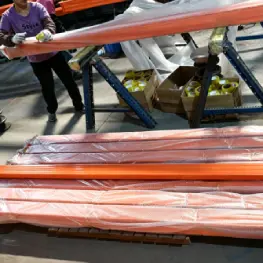
Ocean transport exposes steel to mechanical vibration, shifting g-forces, and maritime salinity. Our export packaging uses rigid wooden dunnage support blocks, custom heavy-gauge steel strapping, edge corner protectors, and heavy plastic shrink-wrap for all palletized beams and upright frames. Small hardware (baseplates, row spacers, shims, safety pins) is packed in reinforced, labeled wooden crates. Component bundles are weighed and dimensioned precisely for 40ft High Cube (40HC) container door clearance, ensuring safe forklift offloading at destination ports without transit bending or paint abrasion.
Request an Engineered Layout & Factory-Direct Quote
Collaborate directly with our senior intralogistics structural engineers. Submit your warehouse floor plan (DWG/PDF), clear internal height, pallet dimensions, and loading requirements to receive a complete CAD design layout and competitive direct factory quotation within 24 hours.
Free 2D/3D CAD Layout Blueprint
Seismic Calculation Report (EN 16681)
CE & ISO 9001 Technical Dossier
Global Port Delivery (FOB, CIF, DDP)
Engineering Consultation Desk
Speak live with our structural project managers. Fast turnaround for distributor tenders and large-scale EPC logistics projects.