Fabric / Textile Tier
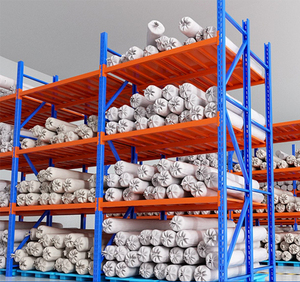
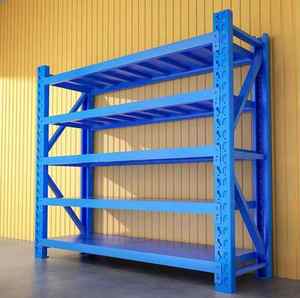
Textile Industry Heavy Duty Steel 5-Layer Corrosion Protection Warehouse Shelf Storage Rack for Rolls Fabric
- Anti-Sag Saddles
- 5-Layer Protective Finish
- Cylindrical Roll Rails
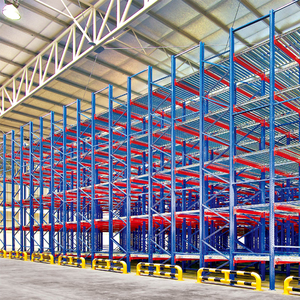
Direct from our 30,000 m² automated manufacturing facility: heavy-duty pallet racking, continuous gravity flow systems, specialized textile cradle modules, and wide-span shelving fabricated with high-yield structural carbon steel.
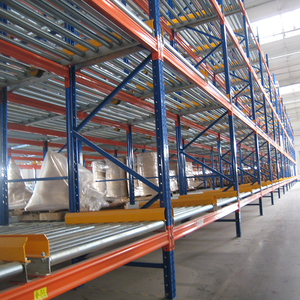
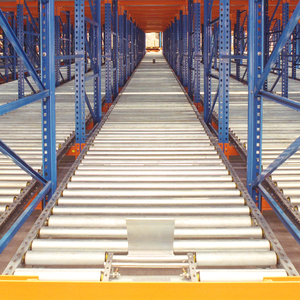
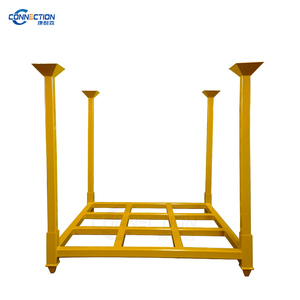
Industrial warehouse racking systems are active structural frameworks subjected to cyclic dynamic stresses, localized torsion, and seismic acceleration. As an established OEM/ODM manufacturing partner, our structural engineering focuses on yield mechanics, deflection control, and surface passivity.
Every upright upright and box-beam profile originates from primary metallurgical steel coils with full mill test certs (MTC). By selecting low-carbon manganese alloy steels (Q355B equivalent to S355JR), we achieve yield stresses surpassing 355 MPa with minimum elongation percentages exceeding 22%, eliminating brittle failure modes under heavy shock loading or low-temperature cold chain installations down to -30°C.
Our continuous automated cold-roll forming mills produce complex open omega (Ω) columns with 12 to 16 bending stages. Incremental progressive bending preserves metallurgical crystal grain alignment, preventing micro-fractures along corners and generating critical work-hardening effects that enhance profile torsional rigidity ($I_t$) and sectional modulus ($W_x, W_y$) without surplus deadweight.
Steel life expectancy in humid or corrosive industrial facilities depends on chemical conversion coatings. Uncut raw components pass through automated immersion tanks featuring alkaline ultrasonic degreasing, twin water cascades, high-density zinc-iron phosphating, and deionized water rinsing before electrostatic TGIC-free epoxy-polyester powder baking at 190°C–210°C.
Balancing volumetric footprint utilization, SKU selectivity, and capital equipment synergy. Engineered benchmarks comparing primary industrial pallet storage archetypes.
| Storage Topology | Volumetric Space Density | Pallet Selectivity | Picking Cycle Profile | Structural Standards | Ideal Industry Segment |
|---|---|---|---|---|---|
| Selective Pallet Racking | Baseline (40–45%) | 100% Direct Access | Fast / Multi-MHE Parallel | EN 15512, RMI MH16.1 | 3PL FMCG, General Retail, Spare Parts |
| Drive-In / Drive-Through | High (65–75%) | Low (Lane FILO/FIFO) | Medium / Dedicated Channel | ISO 9001, FEM 10.2.02 | Cold Storage, Beverage, Homogeneous Batches |
| Gravity Roller Flow Racks | Ultra-High (70–80%) | FIFO Strict Face | High Velocity Gravity Assisted | CE 2435-CPR, EN 15620 | Perishable Foods, Pharmaceuticals, Dairy |
| Radio Shuttle Automation | Maximum (80–85%) | Channel Indexed | Autonomous Deep-Lane Shuttle | CE Machinery, EN 15512 | Blast Freezers, High-Throughput Buffers |
| Multi-Tier Rack Mezzanine | 200–300% Footprint | 100% Hand Pick | High-Density Multi-Level | Eurocode 3, EN 1090-2 | E-Commerce Fulfillment, Fashion, Auto Kits |
| Heavy Duty Cantilever | Specialized Linear | 100% Unobstructed | Overhead Crane / Side-Loader | EN 1993 Structural Steel | Timber, Extrusions, Rebar, Steel Plates |
Global supply chain disruptions, soaring logistics square-footage rents, and automated robotics convergence have fundamentally altered how supply chain directors, procurement managers, and systems integrators evaluate heavy-duty storage investments.
Traditional static shelving is transitioning toward hybrid picking interfaces. Forward-thinking procurement teams specify racks engineered with recessed baseplates, reinforced lower ground clearance zones, and QR-code fiducial target mounting surfaces. This permits low-profile autonomous vehicles to glide underneath bottom beam levels without colliding with anchoring brackets, maximizing both lower-level automation and high-bay vertical bulk pallet density.
With stringent European CBAM (Carbon Border Adjustment Mechanism) and global corporate Scope 3 sustainability targets coming into enforcement, procurement protocols demand verifiable Environmental Product Declarations (EPD). Modern factories utilize electric arc furnace (EAF) processed steel feeds, renewable solar roof energy in manufacturing cells, and solvent-free TGIC powder chemistry, significantly slashing embodied lifecycle carbon per metric ton of installed racking.
Geographical distribution centers in seismic zones require dynamic response spectrum analyses rather than static equivalent load estimations. Modern OEM contracts mandate continuous FEA simulation under Eurocode 8 or ASCE 7 protocols, quantifying beam-to-column connector semi-rigidity characteristics ($K_{si}$) and floor anchor pull-out limits under horizontal ground acceleration forces ($S_s, S_1$), safeguarding warehouse teams and valuable inventory.
Sourcing low-gauge steel racking to shave initial procurement outlays consistently generates structural maintenance debt. B2B enterprise procurement now measures TCO over a 15-year life cycle. Specifying hot-dipped galvanized baseplates, cold-formed box beams with continuous fillet welds, and impact-resistant column guards with high-molecular polymer buffers reduces periodic maintenance downtime and ensures compliance with annual EN 15635 inspections.
The rapid volatility of SKU dimensions driven by direct-to-consumer fulfillment requires modular beam elevation adjustability. Standardized 50mm and 75mm slotted upright pitch matrices allow warehouses to re-profile bay heights within minutes without welding or structural cutting. Drop-in secondary components like wire mesh decks, pallet support bars, and modular dividers provide dynamic inventory agility across evolving seasonal SKU splits.
Cold chain logistics operations and seaside coastal logistics hubs face severe condensation and chemical vapor exposure. The sourcing trend has shifted toward heavy-gauge pre-galvanized coils or multi-stage hot-dip galvanizing conforming to ISO 1461, yielding zinc barrier layers surpassing 65–85 μm that withstand continuous freeze-thaw cycles without surface micro-pitting or structural delamination.
Over 25 years of specialized manufacturing experience, world-class precision automation, and dedicated engineering consultation backing your warehouse expansion projects.
Spectrographic metallurgical chemical validation & yield tensile testing of Q235B/Q355B coils before uncoiling.
High-precision automated hydraulic tooling dies maintaining exact slot tolerances across 12-meter column profiles.
Progressive 16-stand roll forming producing structural omega columns and seamless interlocking step-beams.
Multi-axis automated OTC robotic welding cells delivering spatter-free, deep-penetration structural fillet joints.
10-tank pre-treatment, chemical phosphate conversion, Swiss Gema spray guns, and controlled thermal curing ovens.
Send us your architectural slab layout or storage brief. Our certified senior structural engineering department prepares complete 3D warehouse layout schematics, beam load allocation charts, and seismic deflection analyses.
Direct factory response within 2 business hours. Multilingual technical support in English, German, and Spanish.
In-depth answers addressing structural engineering calculations, international regulatory standards, packaging logistics, and private-label distributor customization.
Connect with our structural racking engineers to discuss pallet configurations, slab load capacity ratings, and automated warehouse integrations. Get an engineered proposal, CAD floor layout, and factory-direct quotation.
Send an Inquiry