2001
Established Manufacturing Base
30,000 m²
Automated Plant Footprint
30,000 t
Monthly Profile Tonnage Capacity
120+
Global Export Markets Served
Engineered Product Portfolio
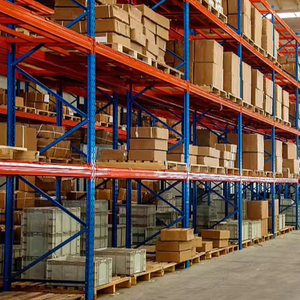
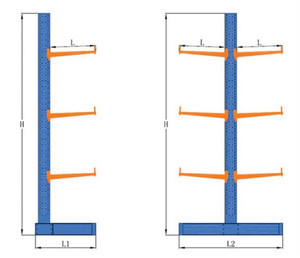
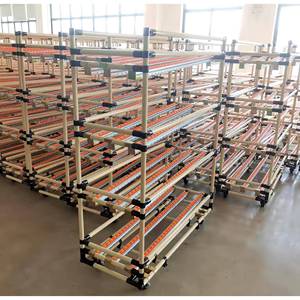
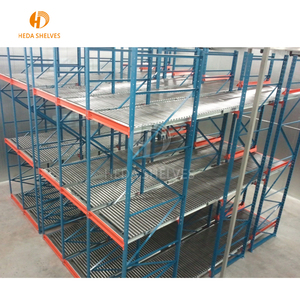
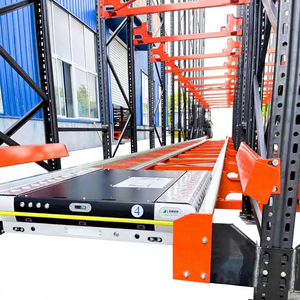
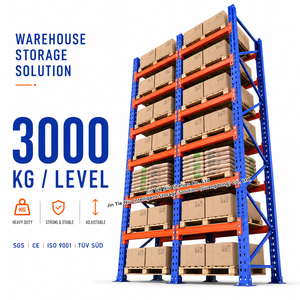
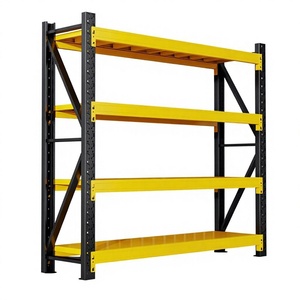
Industrial Storage Systems & Upright Structural Frameworks
Precision-rolled selective profiles, flow dynamic architectures, and heavy-duty cold storage infrastructure engineered for maximum mechanical efficiency and vertical storage density.
Structural Engineering Whitepaper
Engineering Anatomy of Cold-Formed Industrial Shelving Uprights
A comprehensive examination of structural load transfer, steel microstructures, and geometric profile engineering governing modern vertical warehouse storage.
In modern high-bay and automated warehousing installations, industrial shelving uprights constitute the primary load-bearing infrastructure. Unlike secondary horizontal elements such as box or step beams, upright columns are subjected to severe combined axial compression, transverse shear, and biaxial bending moments. As a dedicated OEM/ODM manufacturing partner and international exporter, our manufacturing plants operate under the stringent requirements of structural codes such as EN 15512:2020, ANSI MH16.1, and AS 4084, assuring that cold-formed profiles withstand complex dynamic and seismic load combinations without localized cross-sectional failure.
Sectional Geometry Optimization
Our OEM roll-forming lines integrate up to 24 continuous forming stations. By incorporating multiple stiffening ribs, secondary returns, and precision flanges along the upright spine, our cold-formed profiles minimize torsional-flexural buckling and distortional buckling phenomena under deep structural loading.
Certified Steel Metallurgy
We utilize verified hot-rolled structural steel coils (grades Q235B, Q355B, and EN 10025 S355JR). Every production heat is traceable back to the raw coil mill, verified for controlled carbon equivalence, minimum yield strengths up to 355 MPa, and continuous elongation guarantees greater than 20% for superior seismic resilience.
CNC Punch Pitch Calibration
Upright perforation profiles—including European 50mm diamond patterns, 75mm 50mm teardrop pitches, and universal slot cutouts—are stamped prior to cold-roll forming utilizing high-speed CNC punching presses. This guarantees perforation tolerance within ±0.15mm across the entire 12-meter unjointed span.
Strategic Procurement Analysis
Future Procurement Trends in Industrial Racking & Upright Engineering
Critical operational transformations shaping global capital expenditure, supplier qualification, and engineering specifications through 2026–2030.
Integration with High-Bay Automation (AS/RS)
The explosive deployment of Autonomous Mobile Robots (AMRs) and automated stacker cranes demands structural uprights engineered with tight deflection tolerances (exceeding 1/1000 deflection criteria). Modern B2B procurement is transitioning away from standard manual warehousing frames toward precision-straightened uprights that maintain millimeter-accurate alignment across multi-tier pick towers.
Key Factor: Strict Vertical Linearity & Minimal Plumb VariancePre-Galvanized & Harsh Environment Uprights
Cold-chain logistics hubs and aggressive chemical storage operations are increasingly replacing standard powder-coated uprights with continuous pre-galvanized (Z275/Z600 hot-dip zinc coatings) or specialized thermoset zinc-rich epoxy primers. Buyers now mandate surface resistance capable of withstanding 500+ hours in ASTM B117 salt spray chambers without surface oxidation.
Key Factor: Enhanced Corrosion Inhibition in Sub-Zero FacilitiesDigital Twin Layout Validation & BIM Integration
Engineering procurement teams no longer accept static 2D DWG submittals alone. Standard OEM contracts now require native Autodesk Revit BIM models and finite-element analysis (FEA) validating baseplate slab stress distributions, rack upright frame bracing buckling modes, and dynamic pallet impact energy absorption zones.
Key Factor: 3D Revit-Ready BIM Objects & Digital Engineering Workflows
Enterprise Manufacturing Capabilities
Why Tier-1 Distributors & System Integrators Partner With Us
Combining 25 years of structural metalworking pedigree with automated mass-production infrastructure in Guangzhou, China.
Advantage 01
Certified Production Quality
Direct compliance verified through official CE Certificate No. 2435-CPR-8605159, ISO 9001:2015 registration No. 18624Q00169R0M, and comprehensive RoHS environmental material verifications.
Advantage 02
Full OEM/ODM Tooling Flexibility
In-house roll forming tool design allows rapid tooling adjustment to replicate teardrop, speedlock, European 50mm, or bespoke slotted profiles to match your existing proprietary systems.
Advantage 03
Automated Electrostatic Coating
Multi-stage industrial pre-treatment lines incorporating chemical degreasing, zinc phosphating, and electrostatic powder curing ensure uniform paint thickness of 60–90 microns across all hollow profiles.
Advantage 04
Export Packing & Ocean Logistics
Systematic bundling with custom steel nesting dunnage, protective corner wrapping, and container loading schemes designed to maximize ocean freight payload while eliminating transit abrasion.
Require technical cross-sectional drawings, finite element load charts, or a competitive container-load quotation for industrial shelving uprights?
Inquire Now
Procurement & Engineering FAQ
Frequently Asked Questions by Industrial Sourcing Specialists
Detailed technical, quality, and commercial considerations addressed by our structural application engineering staff.
How are structural load ratings calculated for custom upright profiles?
Load capacity per upright frame is calculated using finite-element numerical modeling and physical stub column testing in accordance with EN 15512 or ANSI MH16.1. The permissible bay load depends not only on steel gauge (thickness) but significantly on the unbraced vertical length (distance between consecutive beam levels), floor anchor shear-tension parameters, baseplate moment rigidity, and lateral bracing geometry (K-type or X-type truss bracing configurations).
Can your factory manufacture compatible uprights for existing proprietary brands?
Yes. Through our specialized OEM/ODM tooling division, we routinely reverse-engineer and manufacture compatible replacement uprights and extension bays for international standards. We calibrate punch pitch geometry, frame column depth (800mm, 900mm, 1000mm, 1100mm, 1200mm), and profile hook-in connectivity while maintaining structural parity with your installed facility base.
What steel grades and mill certifications are provided with export shipments?
Our uprights are exclusively rolled from virgin Q235B (yield strength ≥ 235 MPa) or high-tensile Q355B (yield strength ≥ 355 MPa) structural steel. Every container dispatch is accompanied by an EN 10204 Type 3.1 Inspection Certificate detailing chemical ladle analysis, yield and tensile performance, elongation percentages, and standard Charpy impact verification.
How does the factory prevent corrosion during ocean transit and long-term storage?
Prior to painting, all roll-formed profiles pass through an automated 8-stage pre-treatment immersion process that includes degreasing, clean-water rinsing, and zinc-iron phosphating to passivate the substrate metal. After thermoset electrostatic powder curing, components are packed with desiccant packs, separated by polyethylene dampening separators, and wrapped in moisture-impermeable plastic film to eliminate sea-salt corrosion.
What is the standard production lead time and typical ocean transit timeline?
Standard OEM production runs of 1 to 5 full container loads (FCL) require approximately 15 to 25 business days. Transit time from our primary staging port in Guangzhou to major European hub ports (such as Rotterdam, Antwerp, Hamburg, or Valencia) typically spans 30 to 38 calendar days, supported by complete customs export clearance documentation.
What structural documentation is supplied to satisfy local warehouse safety inspectors?
We provide stamped engineering drawing packages including plan layouts, frame elevation sections, permissible load-capacity plaques, baseplate anchor torque specifications, and structural calculation summaries referencing Eurocode 3 and EN 15512. This documentation equips local engineers and QHSE officers with verified mathematical validation for project sign-off.