Featured Industrial Storage & Live Racking Systems
Engineered for extreme loading capacities, space optimization, and continuous pallet throughput across modern cold-chain, distribution, and manufacturing logistics centers.
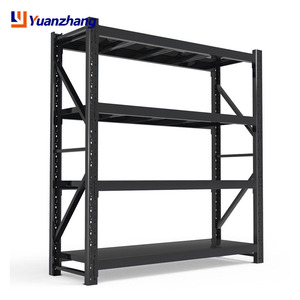
Warehouse Wide Span Duty Racking Industrial Steel Storage Rack Coated Warehouse Metal Shelves
- Heavy gauge Q235B cold-rolled steel
- 500kg - 1,500kg / level loading
- Multi-tier manual picking layout
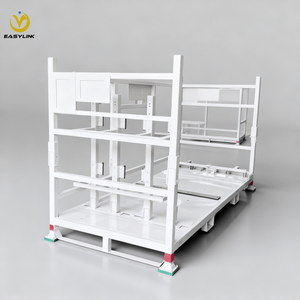
Easylink-Customized Foldable Single Pallet Steel Stillages Powder Coating for Outdoors for Warehouse Storage Stacking Racks
- Foldable space-saving ratio 4:1
- Anti-corrosion powder coating
- Standard 1,000kg stacking capacity
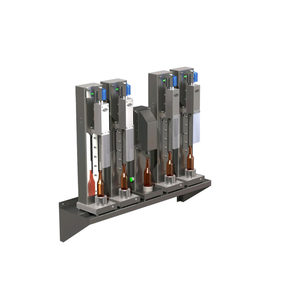
Wall Shelf With Drainage Groove for Industrial Processing & Chemical Storage
- Integrated spill & liquid drainage
- Heavy wall-mount mounting flanges
- Washdown & chemical splash resistant
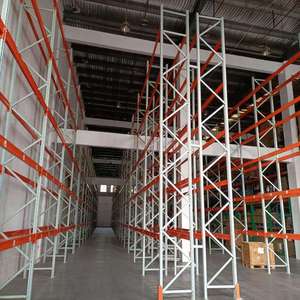
Heavy-Duty Selective Pallet Rack 4-Layer Steel Upright Orange Beam Corrosion Protection Powder Coated Tall Storage Racks
- 100% pallet accessibility
- 75mm beam adjustment pitch
- Up to 4,000kg load per level
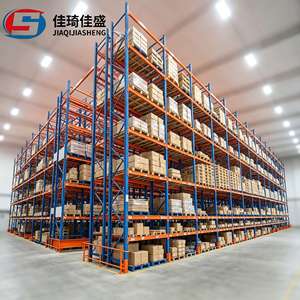
Custom Surface Finish OEM Heavy Loading Modular Assembled Beam Type Heavy Duty Pallet Racking for Production Workshop Storage
- Interlocking safety drop-pins
- Bespoke RAL color finishes
- EN 15512 European compliance
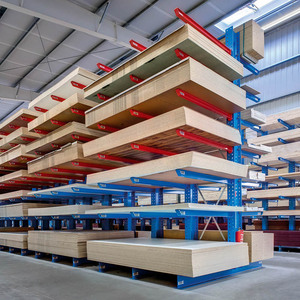
Nesrack Double Sided Rack Galvanizing Warehouse Cantilever Racking for Rebar, Pipe & Timber
- Hot-dip galvanized for outdoors
- Up to 3,000kg arm capacity
- Unobstructed front forklift loading
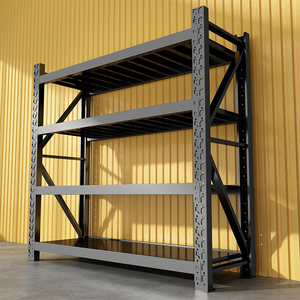
Adjustable Industrial Warehouse Light Duty Steel Slotted Angle 5 Layer Shelving Rack System with 500KG Capacity
- 10-Year industrial warranty
- Tool-free snap-lock assembly
- High-density carton sorting layout
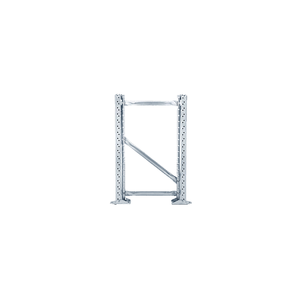
METALSISTEM Superbuild Heavy Duty High Strength Industrial Steel Pallet Rack Shelving System Multi-Level Design Galvanized
- 3.1 Certified structural steel
- Zero-oxidation zinc finish
- Deep-freeze -30°C certified
Dynamic Live Storage Racking: Principles of Gravity-Driven Pallet Flow
In modern fulfillment infrastructure, Live Storage Racking (frequently designated as Pallet Flow, Gravity Flow, or Dynamic Storage Racking) represents the benchmark for compact footprint, high-throughput logistical efficiency. Unlike static selective pallet racking, which requires dedicated access aisles for every pair of racking bays, live storage eliminates transit aisles by consolidating loading (replenishment) and discharging (retrieval) into opposite ends of an inclined roller bed. Pallets move smoothly via gravitational force from the charge face to the pick face, executing true First-In, First-Out (FIFO) or Last-In, First-Out (LIFO in push-back systems) stock sequencing without requiring auxiliary electricity or motorized tractors.
From an OEM/ODM manufacturing perspective, designing dynamic live storage systems demands strict mechanical tolerances and advanced metallurgy. The roller beds operate on an engineered gradient—typically between 3.0% and 4.0% (1.7° to 2.3°)—calibrated precisely to the tare weight, underside wooden skid topography, and maximum live payload of the pallet (standard Euro EPAL 1200×800mm or Industrial GMA 1200×1000mm). If the slope is too gentle, resting pallets experience static inertia stall; if the gradient is too aggressive, kinetic momentum creates high impact velocity at the discharge stop, threatening structural deformation and cargo displacement.
| Storage System Dynamic | Pallet Access Type | Floor Footprint Efficiency | Throughput Velocity | Initial CapEx Level | Optimal Logistics Application |
|---|---|---|---|---|---|
| Live Pallet Flow (FIFO) | Gravity Rollers / Single Lane | Up to 85% Utilization | Continuous Pick-Face Flow | Moderate to High | Perishables, FMCG, Cold Chains, High Turnover SKUs |
| Push-Back Flow (LIFO) | Nested Carts / Low Gradient | Up to 75% Utilization | Batch Access | Moderate | Medium Rotation, 2-6 Pallets Deep, Manufacturing Buffers |
| Radio Shuttle Automation | Independent Robotic Cart | Up to 90% Utilization | Automated Indexing | High | Deep-Freeze Sites, Massive Single-SKU Run Volumes |
| Static Selective Racking | 100% Direct Selective Bay | 35% - 45% Utilization | Aisle-Constrained | Low | Multi-SKU Distribution, Spare Parts, Low SKU Volumes |
To regulate kinetic movement in deep-lane live racking systems (often spanning 10 to 30 pallets in depth), Guangzhou Heda Shelves incorporates high-performance centrifugal brake rollers and eddy-current magnetic speed limiters spaced along the roller bed. These non-motorized braking units act as speed governors, capping terminal velocity at an industry-standard 0.25 to 0.30 meters per second regardless of whether the pallet weighs 250kg or 1,500kg.
Furthermore, critical to worker occupational safety and structural integrity under EN 15512 and EN 15620 standards is our custom-engineered Time-Delay Pallet Separator Mechanism. When a forklift operator lifts the leading pallet from the pick face, the separator maintains line pressure on all trailing pallets in the lane, holding back the accumulated hydrodynamic force of dozens of tons. Only after the leading pallet clears the threshold does the separator automatically disengage, allowing the subsequent unit to gently index forward to the pick stop.
Future Procurement Trends in Dynamic Live Storage
How supply chain directors, multinational 3PL operators, and warehouse EPC integrators are shifting their specifications for gravity live racking systems.
1. Hybrid AGV/AMR Interface Engineering
Global distribution centers are rapidly replacing manual counterbalanced trucks with Autonomous Mobile Robots (AMRs) and Automated Guided Vehicles (AGVs). Procurement demands roller charge and discharge faces manufactured with robotic visual docking targets, photoelectric zero-pressure sensors, and ultra-flat precision guide rails to guarantee sub-millimeter repeatable engagement without human intervention.
2. Cryogenic Sustainability & Cold Chains
With refrigerated square meterage costing up to four times more to cool than dry ambient space, live racking is dominating cold storage facility expansions. Modern OEM specifications require cold-formed structural steel formulated to prevent low-temperature ductile-to-brittle transitions down to -30°C, combined with permanent synthetic lubricants inside roller bearings that eliminate viscosity drag.
3. Circular Metallurgy & ESG Procurement
Procurement teams across Europe, North America, and Australasia now systematically evaluate product carbon footprints (PCF). Manufacturers that use closed-loop electric arc furnace (EAF) steel coils, low-VOC epoxy-polyester electrostatic powder coatings, and heavy pre-galvanized framing (EN ISO 1461) receive preferred tier-1 vendor status under modern Corporate Sustainability Reporting Directives (CSRD).
Technological Evolutions in Roller Beds, Dynamics, and Safety Governance
The fundamental architecture of gravity flow racking has evolved beyond simple passive roller tracks. Contemporary OEM/ODM engineering addresses several complex operational failure modes historically encountered in high-density dynamic storage:
Split-Roller Architecture
Triple-track segmented rollers allow uneven wooden pallet bottom boards to track true along lane centerlines, neutralizing skewing forces that lead to lane jamming.
Zero-Contact Friction Brakes
Contactless magnetic eddy-current brake drums eliminate internal rubber brake pad wear, yielding lifetime service cycles even under 24/7 automated grocery distribution duty.
High-Impact Entry Guides
Spring-damped, replaceable steel guide funnels absorb dynamic forklift misalignments at the charge face, shielding internal precision bearings from shock loads.
At Guangzhou Heda Shelves, roll-forming lines execute continuous multi-stage profiling to produce upright columns with complex closed-omega and multi-flange profiles. This cross-sectional geometry delivers unmatched torsional rigidity and anti-buckling factors under high vertical point loads, guaranteeing that racking runs maintaining up to 30 meters of continuous live storage stay deflective-stable within 1/1000 of beam span tolerances.
Global OEM/ODM Racking Manufacturing Prowess
Founded in 2001, Guangzhou Heda Shelves Co., Ltd. is an authoritative designer, manufacturer, and exporter of certified industrial warehouse storage racking systems.
Rigorous 10-Stage Precision Manufacturing Workflow
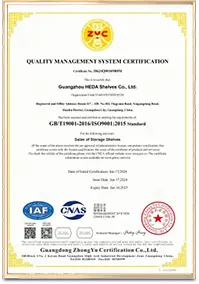
Every upright, beam, dynamic gravity bed, and structural bracket passes through automated processing stages under ISO 9001:2015 strict quality control.
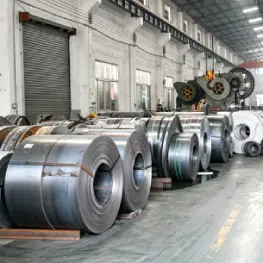
Raw Material QA
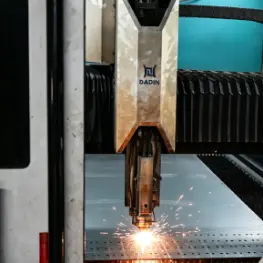
Laser & Saw Cutting
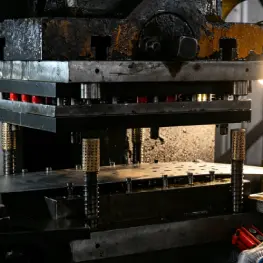
CNC Punching
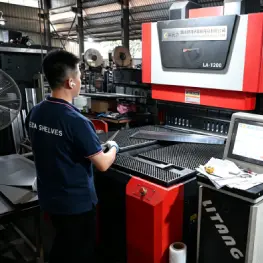
Cold Roll Bending
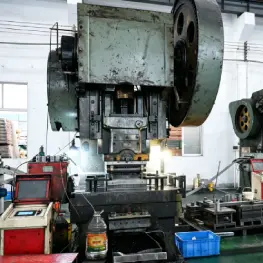
Profile Forming
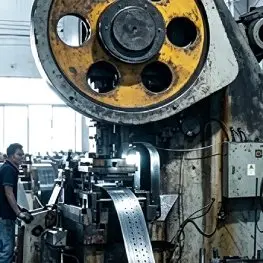
Surface Polishing
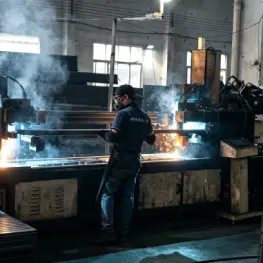
Robotic Welding
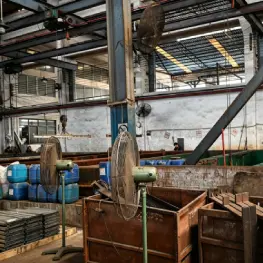
Acid Pickling
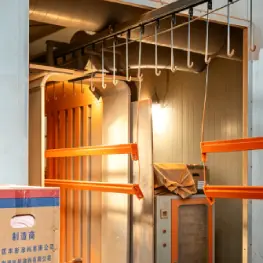
Powder Coating
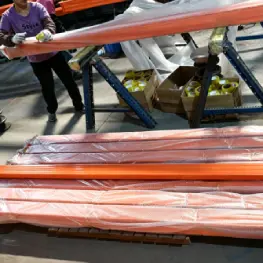
Export Packaging
Certified Structural Safety for Demanding Audits
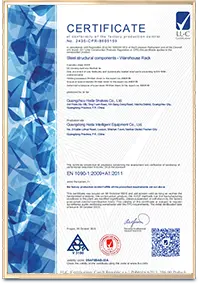
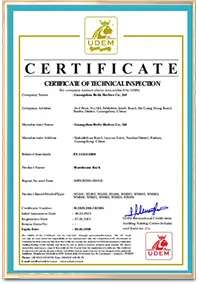
We provide fully documented load testing calculations, steel mill metallurgical certificates, and third-party verified test reports to satisfy stringent international building and safety codes.
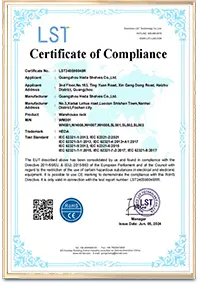
- CE Certification: Certificate No. 2435-CPR-8605159 (EN 1090 structural steel execution standards)
- ISO 9001:2015: Certificate No. 18624Q00169R0M verifying global design and factory operations
- European Standard Adherence: Static design calculations based on EN 15512, EN 15620, and EN 15635 tolerances
Frequently Asked Questions by Global Racking Buyers
Straightforward technical answers regarding engineering parameters, minimum orders, test protocols, and port logistics.
How do you calculate the optimal slope gradient for pallet live storage lanes?
What prevents pallets from jamming or colliding violently in deep 15-pallet lanes?
Can Guangzhou Heda Shelves manufacture OEM custom upright and beam profiles?
What structural documentation is supplied to satisfy European and American building inspectors?
How does live storage compare financially with Radio Shuttle automated racking?
What are typical production lead times and ocean shipping timelines to major ports?
How are heavy racking components packaged to prevent damage during ocean transit?
Plan Your High-Density Live Storage Facility with Our Engineers
Submit your warehouse architectural DWG or PDF floor plan, clear ceiling heights, pallet specs, and turnover rates. Our technical engineering division will generate a free 3D CAD layout, lane capacity calculations, and factory-direct OEM/ODM quotation within 24 hours.