Engineered Heavy-Duty Industrial Racking & Pallet Handling Systems
Precision-manufactured in our 30,000 m² Guangzhou production complex. Fully certified to EN 15512, EN 15620, and CE directives to support high-density logistics, cold chain distribution, and dynamic throughput requirements.
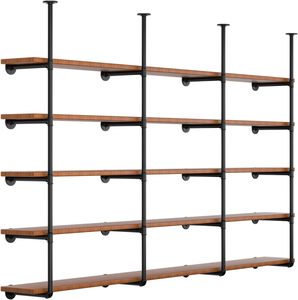
Industrial Iron Pipe Shelving Brackets, Farmhouse Wall Mounted DIY Pipe Shelves
Heavy structural malleable iron construction engineered for workshop tool display, retail staging, and utility storage requiring modular anchoring.
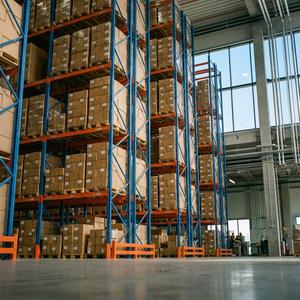
Multi Level Heavy Duty Shelf Multi Layer Garage Stacking Warehouse Storage Rack
Multi-tier modular upright frames featuring certified steel loading plates designed for maintenance depots, automotive workshops, and raw stock staging.
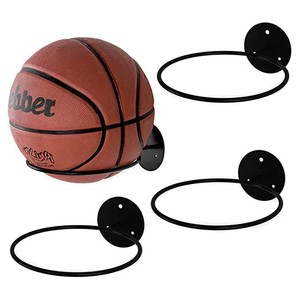
Modern Design Wall-Mounted Metal Storage Holders Racks Organizer System
Precision stamped tubular brackets built for rapid-access inventory sorting, retail warehouse packing aisles, and athletic distribution warehouses.
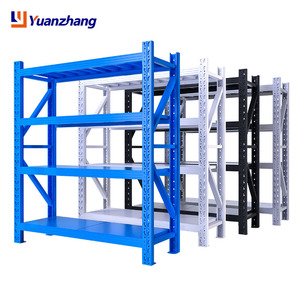
Warehouse Medium Duty Industrial Racking Shelves Spare Auto Parts Longspan
Longspan step-beam racking configured for manual carton picking, automotive spare parts distribution, and assembly plant inventory buffering.
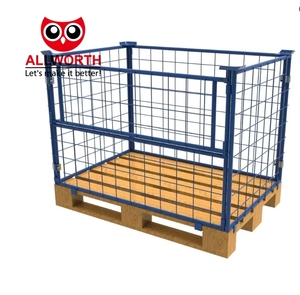
High Quality Steel Wire Mesh Pallet Cage Container for Storage Logistics
Drop-gate collapsible galvanized wire containers tailored for safe integration into dynamic gravity tracks, push-back lanes, and standard Euro pallets.
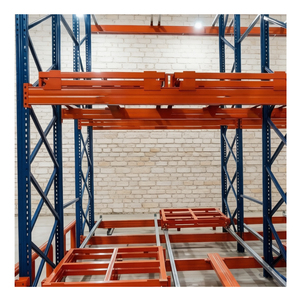
DJ High Density Storage Push Back Rack Warehouse Dynamic Pallet Systems
Flagship nested trolley push rack system accommodating 2 to 6 pallets deep on inclined steel structural channels. Delivers superior space utilization and LIFO rotation.
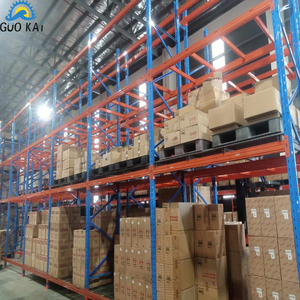
Industrial Customizable Warehouse Heavy Duty Pallet Rack Store Shelf System
Tailored beam profiles, column reinforcements, and upright depths fabricated specifically for heavy manufacturing plants and multi-client logistics terminals.
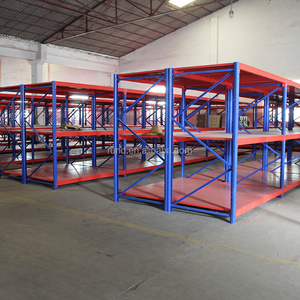
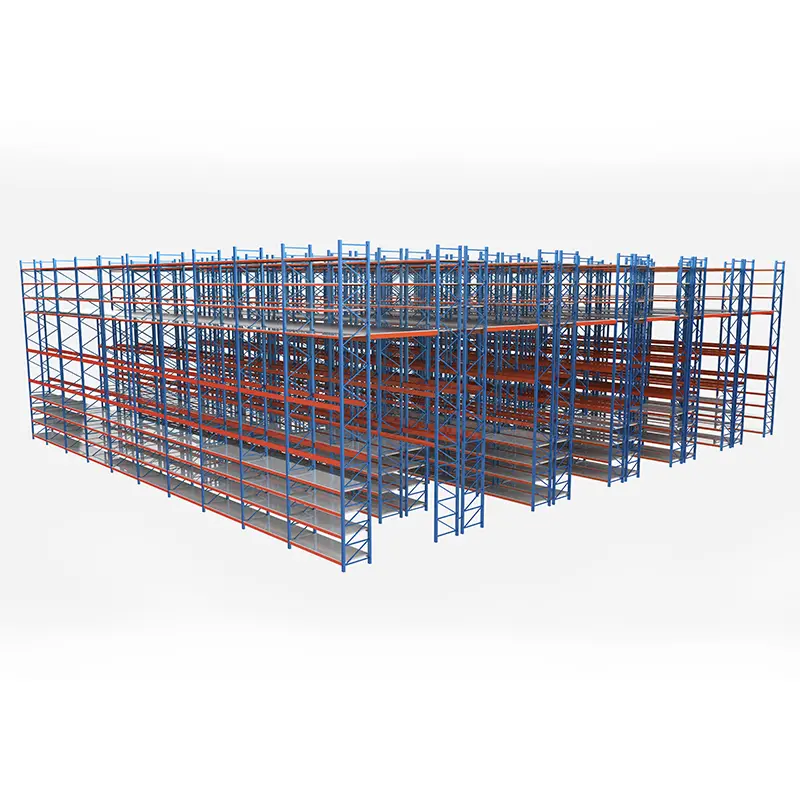
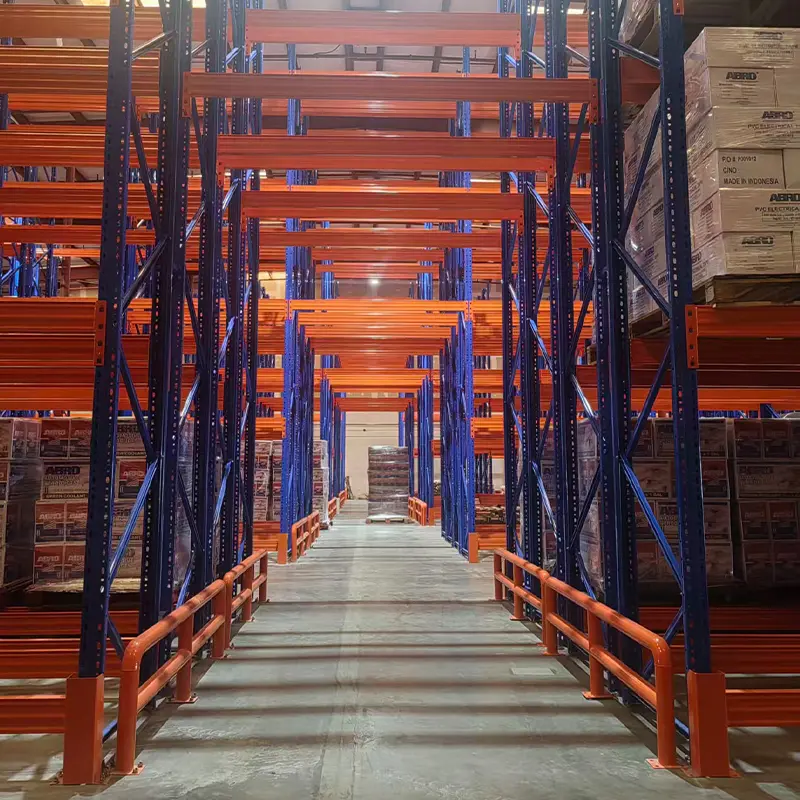
Heavy Duty 5-Layer Selective Pallet Rack 1500-4500kgs/level Storage System
Engineered for 100% immediate pallet selectivity with interlocking box beams, 75 mm beam adjustment slots, and heavy impact perimeter floor guards.
The Mechanics of High-Density Push Rack (Push-Back) Storage
An engineering analysis of how low-profile nested trolleys on inclined geometric channels eliminate dead aisle space while safeguarding pallet integrity.
Gravity-Assisted Telescopic Trolleys
Push rack systems operate on nested rolling carriages that travel along heavy-duty structural steel channels set at a strict 2.5% to 3.5% incline. When loading, the forklift gently pushes the front-loaded pallet inward, forcing the carrier underneath to roll backward and exposing the subsequent nested trolley. Unloading reverses this process: as the front unit is extracted, gravitational momentum smoothly brings the rear carrier forward to the loading face.
Elimination of Forklift Penetration
Unlike drive-in racking where material handling equipment must traverse narrow structural uprights inside the rack bays, push rack systems restrict all vehicle movement exclusively to the front access aisle. This structural barrier isolates vertical columns from direct vehicle impacts, drastically reducing rack frame failure rates by up to 88% while accelerating pallet cycle loading times by 30% to 45%.
High Density with SKU Selectivity
By nesting up to 6 pallets deep per lane while leaving each vertical lane independent, push-back racking bridges the historical gap between ultra-dense drive-in systems and 100% accessible selective racks. Operators can store different SKUs on every vertical tier and horizontal bay without honeycomb honey-trapping, making it the premier choice for cold storage, pharmaceuticals, and fast-moving FMCG staging.
| System Configuration | Effective Lane Depth | Floor Footprint Utilization | Stock Rotation Strategy | Handling Equipment Compatibility | Structural Compliance |
|---|---|---|---|---|---|
| 2-Deep Push Rack | 2 Pallets (2,400–2,600 mm) | Up to 60% Bay Density | LIFO (Per Lane) | Counterbalance, Reach Trucks | EN 15512 / RMI |
| 3-Deep Push Rack | 3 Pallets (3,600–3,900 mm) | Up to 68% Bay Density | LIFO (Per Lane) | Reach Trucks, Heavy Forklifts | EN 15512 / CE |
| 4-Deep Push Rack | 4 Pallets (4,800–5,200 mm) | Up to 75% Bay Density | LIFO (Per Lane) | Heavy-Duty Electric Reach | EN 15512 / ISO |
| 5-to-6 Deep Push Rack | 5–6 Pallets (6,000–7,800 mm) | Up to 82% Bay Density | LIFO (High SKU Buffer) | Standard MHE with Speed Dampers | CE / Custom Statics |
Guangzhou Heda Shelves Co., Ltd. Structural Capabilities
Over 25 years of engineering excellence since 2001. We deliver verified metallurgy, advanced cold roll-forming lines, and certified quality controls to distributors and warehouse developers worldwide.
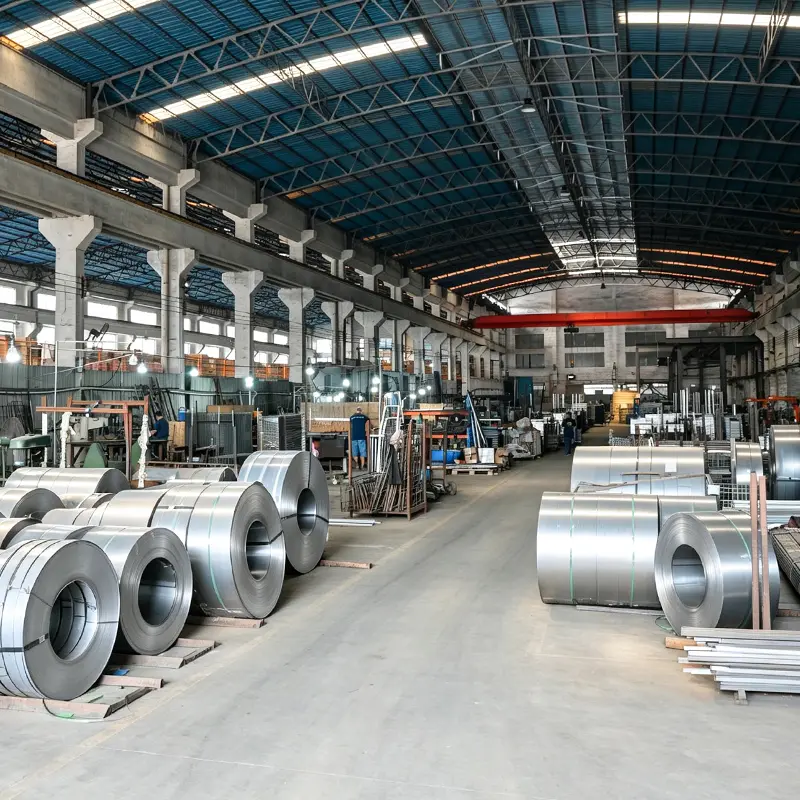
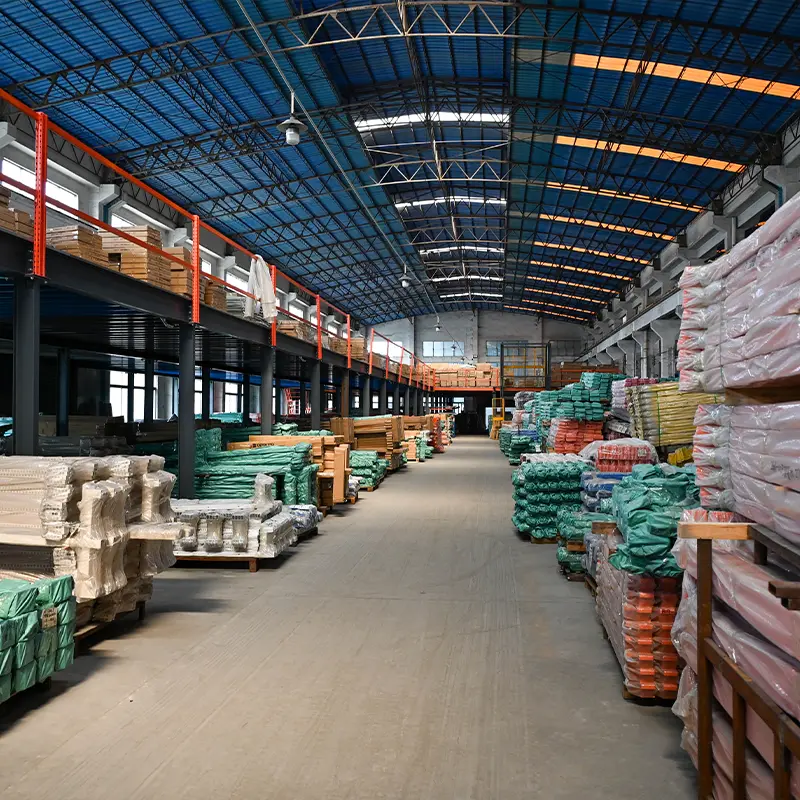
As a tier-one OEM/ODM manufacturer headquartered in Guangzhou, China, Guangzhou Heda Shelves Co., Ltd. operates an advanced 30,000 m² automated manufacturing facility staffed by more than 300 experienced technical and production personnel. With a monthly production run exceeding 30,000 metric tonnes of cold-formed structural steel, our factory has successfully delivered over 10,000 warehouse racking projects across 120+ countries, including key markets across Europe, North America, the Middle East, and Southeast Asia.
Proprietary Metallurgy and Continuous Production Flow
Dynamic push rack systems depend entirely on wheel-bearing durability, channel straightness, and torsional resistance under dynamic rolling friction. Our automated roll-forming machines utilize high-grade hot-rolled and cold-formed coil steels (Q235B and Q355B grades) with certified elongation limits and tensile strength ratings up to 510 MPa. Upright columns feature cold-stamped tear-drop or 50 mm/75 mm pitch Omega patterns punched on multi-station CNC presses to guarantee pitch tolerances within ±0.15 mm.
Automated Surface Pre-Treatment and Electrostatic Powder Coating
To ensure lifelong resistance against industrial degradation and cold-storage humidity, our steel undergoes an automated 8-stage surface preparation line: alkaline degreasing, ultrasonic water rinsing, acid rust removal, micro-crystalline phosphating, and deionized neutralization. Components then receive an automated electrostatic powder coat with environmentally friendly pure polyester resin powder (RoHS compliant), oven-cured at 200°C. This guarantees a smooth, chip-resistant finish with coating thickness between 60 to 90 microns and salt-spray resistance exceeding 500 hours.
Future Procurement & Technology Trends in Push Racks
Key industry shifts reshaping capital expenditure decisions for logistics directors, 3PL providers, and industrial equipment distributors over the next decade.
Cold-Chain Energy Optimization
Refrigerated warehouse electricity costs have surged by over 40% worldwide. Push rack systems allow facility managers to compact pallet footprints by 65%, eliminating dead aisle air volume that requires costly continuous refrigeration.
Hybrid Push-Back & AGV Integration
Next-generation facilities are bridging gravity push-back lanes with automated guided vehicles (AGVs) and autonomous reach trucks. Our custom trolleys incorporate laser reflectors and soft-docking bumper plates for automated pick faces.
Total Cost of Ownership (TCO) Shift
Procurement managers are aggressively migrating away from fragile, battery-dependent radio shuttles in medium-depth applications (2–4 deep). Push racks deliver zero electrical downtime, zero battery replacements, and minimal 10-year service overhead.
Closed-Loop Sustainable Steel
European and North American supply chains prioritize suppliers with verifiable decarbonization metrics. Our Q235B/Q355B coils utilize recycled scrap blends processed via EAF steelmaking, drastically lowering Scope 3 carbon intensity per ton.
Technological Development & Structural Safety Trends
How innovative mechanical design is overcoming historical operational barriers in dynamic gravity racking systems.
1. Precision Sealed Bearings & Low-Temperature Tribology
In sub-zero cold storage operations down to -30°C, traditional commercial rolling bearings suffer from lubricant freeze and grease solidification, leading to cart skidding and uneven pallet rollback. HEDA’s latest generation push racks utilize synthetic aviation-grade low-temperature lubricants paired with double-sealed ABEC-3 flanged steel wheels. This guarantees static friction breakout coefficients below 0.02 even after months of continuous sub-zero deep-freezing.
2. Anti-Decoupling Magnetic & Mechanical Safety Interlocks
A classic hazard in legacy push-back systems was cart derailment caused by erratic forklift operator lifting or uneven wooden pallet runners. Our modern OEM nested carriages incorporate anti-lift hooks and wrap-around rail profiles. The secondary cart physically mechanically captures the primary cart underneath, making accidental disengagement mechanically impossible regardless of forklift extraction speed or operator angle.
3. Dynamic Speed Governors and Multi-Pallet Dampening
When operating deep push rack lanes (4 to 6 pallets deep), the cumulative rolling mass returning to the picking face can exceed 6,000 kg. To prevent dangerous impact shocks against the front beam stops, our engineering team integrates pneumatic and hydraulic speed-limiting centrifugal governors within the running rails. These frictionless dampeners automatically restrict forward velocity to safe, controlled descent rates (under 0.25 m/s) throughout the entire stroke.
Procurement Engineering FAQ: Push Rack Systems
Authoritative answers to critical structural engineering, load testing, and operational questions frequently asked by logistics engineers and project auditors.
The optimal geometric incline angle ranges between 2.5% and 3.5% (approximately 1.5° to 2.0° slope). Lighter pallets (under 500 kg) generally require a 3.2% incline to maintain reliable gravity roll-forward, whereas heavier industrial pallets (1,200 to 1,500 kg) perform ideally at 2.5% to minimize forklift pushback thrust resistance.
Yes. As an OEM/ODM manufacturer, HEDA engineers multi-standard universal nesting carts. Our trolleys incorporate broad perimeter cross-members and integrated wire mesh or steel grid inlays that safely support bottom runners of Euro pallets, perimeter-base GMA pallets, and plastic logistics skids interchangeably without slippage.
Due to the nested design of the low-profile rolling carriages, a 2-deep system requires approximately 100 mm to 120 mm of vertical lane depth clearance. A 4-deep carriage stack requires roughly 150 mm to 180 mm of vertical beam-to-beam allowance. This minimal height loss is easily offset by the substantial gains in cubic floor storage density.
Standard counterbalance forklifts and electric reach trucks with standard masts operate push racks with zero retrofitting. The forklift only needs sufficient tractive push power to overcome the low rolling resistance of the nested carriages when inserting pallets. Specialized attachments or extended pantograph reaches are not required.
Every OEM order is supplied with CE certification under CPR 305/2011 (Certificate No. 2435-CPR-8605159), ISO 9001:2015 factory production control compliance, mill steel test reports (MTR), static structural calculation sheets referencing EN 15512:2020, and stamped bay load warning plaques ready for immediate local municipal sign-off.
Standard production lead times for bespoke OEM/ODM push rack systems range between 15 to 25 business days from CAD layout approval. Direct sea transit from the Port of Guangzhou or Shenzhen to major European gateway ports (such as Rotterdam, Hamburg, Antwerp, or Valencia) typically spans 30 to 38 calendar days.
Accelerate Your Warehouse Density With Free Engineering Layouts
Send your warehouse CAD architectural drawing, pallet specifications, and handling equipment model. Our senior structural engineers will return a complete 3D design, static calculation report, and factory-direct price quotation within 24 hours.