Featured Industrial Warehouse Storage Systems
Direct-from-factory storage racking manufactured with precision cold-formed and hot-rolled structural steel. Fully adaptable to multi-tiered logistics facilities, lumber yards, steel mills, and automotive recovery centers.
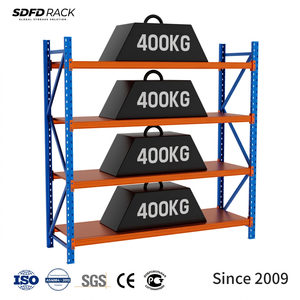
400KG Adjustable Galvanized Sheet Metal Industrial Storage Rack
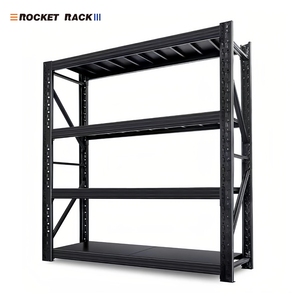
4/5-Layer Cold Rolled Steel Medium Duty Corrosion-Proof Shelving
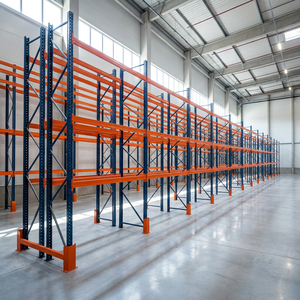
Adjustable Stacking Heavy Duty Selective Warehouse Racking
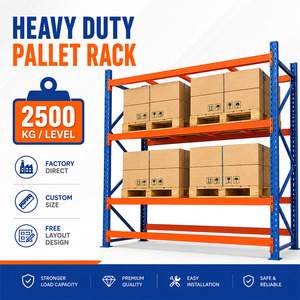
Heavy Duty Industrial Double Deep Warehouse Pallet Racking System
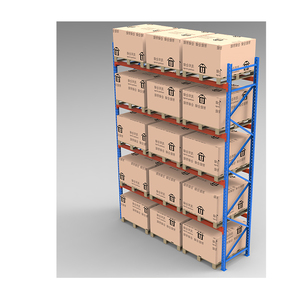
Adjustable Modular Metal Heavy Duty Pallet Stacking System
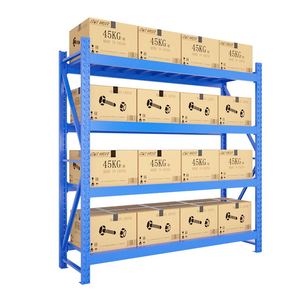
Runda 200KG Fast-Assembly Factory Manual Storage Shelf Units
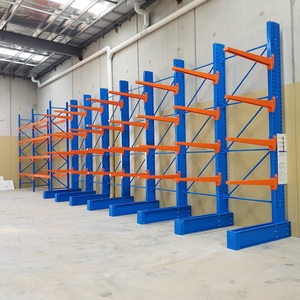
Structural Heavy Duty Cantilever Salvage Car & Steel Storage Racks
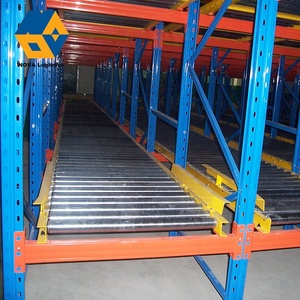
Dynamic First-In First-Out Heavy Duty Gravity Pallet Flow Racking
Structural Architecture of Industrial Cantilever Racking Systems
An engineering examination of moment distribution, roll-formed versus structural steel section dynamics, and deflection tolerances under EN 15512 and ANSI MH16.1 design criteria.
Cantilever racking represents one of the most mechanically demanding structural configurations within modern materials handling. Unlike standard pallet racks that transfer vertical compressive loads directly through four-cornered vertical frames with paired cross-beams, a cantilever rack operates primarily through overturning moment transfer. Arms act as pure cantilever beams projecting outward from a single vertical column, requiring substantial resistance to cantilever bending stress, shear forces at the mechanical arm-to-column connection, and continuous torsion across the central upright tower.
In high-capacity warehouse environments handling long steel bar bundles, extruded aluminum profiles, structural timber packs, sheet steel, or end-of-life vehicles (ELVs), engineering calculations must balance ultimate limit state (ULS) strength with serviceability limit state (SLS) deflection parameters. Standard design protocols, such as EN 15512, EN 15620, and the American RMI (Rack Manufacturers Institute) specification ANSI MH16.1, mandate arm deflection under full safe working load (SWL) to not exceed L/250 or L/300 (where L is the arm length). A minute arm tip deflection of merely 1.5 degrees can propagate hazardous downward slip angles if the arms are not manufactured with built-in upward compensation angles (typically 1.5° to 2.5° upward slope relative to horizontal baseline).
Roll-Formed Sheet Cantilever Systems
Engineered for light-to-medium loads, retail showrooms, pipe distributors, and automated light long-load picking tunnels.
- Material Grade: High-yield Q235B / S235JR cold-rolled strip steel.
- Upright Profile: Double C-profile back-to-back automated robotic continuous seam welding.
- Connection Mechanism: Hairpin lock, wedge pin, or self-locating tapered bracket hooks without loose hardware.
- Adjustability: High-frequency 50mm, 75mm, or 76.2mm (3-inch) pitch adjustment holes.
- Load Class: 150 kg to 800 kg per arm uniformly distributed load (UDL).
- Economic Efficiency: Optimal strength-to-weight ratio; minimizes container ocean freight tare weight.
Heavy-Duty Structural I-Beam Systems
Designed for severe industrial yards, vehicle salvage recycling, steel coil bar mills, and heavy timber pack yards.
- Material Grade: Hot-rolled structural steel IPE, HEA, HEB (European) or H-Beam / W-Beam (ASTM A36 / Q355B).
- Upright Profile: Solid wide-flange universal columns resistant to direct lateral forklift impacts.
- Connection Mechanism: Grade 8.8 or Grade 10.9 high-tensile bolted shear-tab connections.
- Adjustability: CNC drilled 100mm or 150mm bolt centers with anti-slip torque plates.
- Load Class: 800 kg to in excess of 5,000 kg per single cantilever arm.
- Damage Resilience: Solid thick flanges (8mm to 24mm) prevent structural buckling under accidental collisions.
Bespoke OEM/ODM Cantilever Engineering Matrix
Our 30,000 m² Guangzhou production facility provides turnkey original equipment design, structural analysis, and private-label manufacturing for international rack system integrators and distributors.
Custom Column Heights & Depth
Continuous column section profiles manufactured up to 12 meters in height. Single-sided cantilever racks for warehouse wall perimeters; double-sided central spine towers for forklift aisle operations.
Arm Topologies & Accessories
Tapered arms with welded or drop-in front retaining pins. Removable pipe chocks, bolt-on timber decks, wire mesh decking, roll stop cradles, and heavy-duty coil cradles for cylindrical materials.
Corrosion Protection Finishes
Pre-treatment automated multi-stage pickling and phosphating followed by 80-120μm electrostatic epoxy powder coating. Outdoor lumber and yard racks hot-dip galvanized to ISO 1461 (minimum 65-85μm zinc thickness).
Private-Label OEM Marking
Custom laser-cut brand plates, bespoke stamping on column lips, serialized QR-coded load compliance plaques, and export-ready knock-down (KD) pre-labeled structural bundles for direct site delivery.
Future Procurement Trends in Warehouse Storage Systems
Analyzing supply chain dynamics, dynamic load management, and the shift toward integrated warehouse management systems (WMS).
1. High-Bay Mobile Cantilever Bases
Rising industrial land valuations in North America and Western Europe have catalyzed the deployment of electrically powered mobile carriages. Cantilever towers mounted on motorized base tracks eliminate dedicated static aisles, elevating volumetric density by up to 80% while retaining 100% individual arm accessibility.
2. CBAM & Low-Carbon Steel Tracing
Procurement directors are demanding audited Environmental Product Declarations (EPDs). With the European Carbon Border Adjustment Mechanism (CBAM) coming into full enforcement, our manufacturing workflows integrate lower-carbon scrap-based electric arc furnace (EAF) raw materials and eco-compliant powder coatings free from VOCs and heavy metals.
3. Impact Monitoring & Smart Sensors
In accordance with periodic inspection standards like EN 15635, facility managers are adopting IoT-based acceleration and strain gauges installed on main cantilever columns. Early detection of structural deflection and forklift impact loads mitigates catastrophic racking collapse and ensures structural compliance during annual audits.
Why Global Supply Chains Partner With HEDA Shelves
Backed by 25 years of engineering precision, Guangzhou Heda Shelves Co., Ltd. operates an integrated 30,000 m² manufacturing plant delivering full-scale industrial storage projects across Europe, North America, the Middle East, and Australia.
Operating continuously since 2001, HEDA Shelves has completed over 10,000 warehouse projects worldwide. Our certified technical engineering department provides end-to-end support—commencing with raw structural site evaluations and DWG/CAD floor plan layouts, through finite element analysis (FEA) structural simulations, to automated manufacturing and container-optimized export packaging.
Certified Compliance
Fully compliant with international safety frameworks. We hold accredited CE Certificate No. 2435-CPR-8605159, ISO 9001:2015 Quality Management Certificate No. 18624Q00169R0M, and comprehensive SGS / RoHS material test reports for steel chemistry and weld integrity.
Turnkey Engineering & Free 3D/CAD
Our dedicated engineering department drafts custom CAD layout plans, 3D structural previews, and dynamic deflection analyses within 24 to 48 hours. Every bay is calculated around your specific handling equipment, turning radius, and building clearances.
Seaworthy Container Optimization
Export packaging features custom steel-banded dunnage, protective corner angles, and moisture-barrier film. Bundles are pre-calculated to maximize 40ft High Cube (HC) container capacity, avoiding dead freight volume and lowering per-ton landed costs.
Cantilever Racks Technical Procurement FAQ
Detailed engineering clarifications addressing structural design criteria, soil anchoring, seismic zone adjustments, and international shipping protocols.
1. How do you calculate the Safe Working Load (SWL) for cantilever arms?
Cantilever arm capacity is computed assuming a Uniformly Distributed Load (UDL) across the full unsupported length of the arm. The bending moment ($M$) is calculated using the equation:
M = (W × L) / 2
Where W represents the total weight on the individual arm and L is the effective length. If loads are point-concentrated at the outer tip, the bending moment doubles ($M = W \times L$), reducing load capacity by 50%. Our engineering team verifies the cross-section modulus ($Z$) and yield stress ($\sigma$) to guarantee that maximum outer fiber stress remains safely within allowable limits while accounting for dynamic forklift loading factors.
2. What is the fundamental difference between single-sided and double-sided cantilever columns?
A single-sided cantilever upright is engineered to bear arms extending in one direction only. The base plate is longer and heavily anchored to resist unidirectional overturning moments. In contrast, a double-sided column supports arms on both opposing sides, sharing a central central vertical column. When both sides are loaded uniformly, vertical bending moments cancel each other out, putting the column primarily into pure axial compression. However, structural engineers must calculate the structure for the worst-case eccentric loading scenario—where one side is 100% fully loaded while the opposite side is completely vacant.
3. Why do cantilever arms feature an upward inclination angle?
Under physical gravity load, all horizontal cantilever beams experience elastic deflection. If an arm is fabricated at a perfect 90-degree right angle to the column, adding thousands of kilograms will cause the arm tip to dip below the horizontal baseline, creating a slip hazard for cylindrical pipes or smooth steel sheets. By engineering an inherent upward pitch of 1.5° to 2.5° into the welded arm bracket connection, the arm levels out under full Safe Working Load (SWL), maintaining safety and retention compliance.
4. How does warehouse floor concrete thickness influence cantilever capacity?
Cantilever racks transfer huge uplift and overturning tension forces to base anchor bolts. While standard selective pallet racks often operate on standard 150mm slabs, heavy-duty structural cantilever systems typically require concrete slab thicknesses between 200mm and 300mm with a minimum compressive strength of C20/25 or C25/30 (3,000 to 4,000 PSI). Mechanical expansion bolts (wedge anchors) or chemical chemical resin capsules (M16 to M24) are specified based on edge distances and pull-out shear load ratings.
5. Can cantilever racks be installed in outdoor lumber or steel pipe yards?
Yes. Outdoor installations require two critical engineering accommodations: environmental corrosion protection and meteorological load calculations. Outdoor systems are processed through hot-dip galvanization according to ISO 1461, yielding an ultra-durable zinc barrier resistant to rain, salts, and UV degradation. Additionally, outdoor columns can be fitted with integrated overhead canopy arms (roof trusses) to protect stored materials; our engineers incorporate local wind velocities, gust factors, and snow loads according to Eurocode 1 (EN 1991) or ASCE 7 into the column structural base calculations.
6. How does the diagonal bracing system function within a cantilever row?
Cantilever columns lack front vertical frames, meaning individual columns have zero longitudinal stability on their own. Longitudinal stability along the length of the aisle is created by linking consecutive uprights with horizontal tubular spacer bars and cross-diagonal tension rod bracings (X-bracing). This forms a rigid structural truss box that prevents racking collapse during handling collisions or seismic earth tremors.
7. What international standards govern HEDA Shelves' cantilever engineering?
Our rack engineering and factory production adhere strictly to European Norms EN 15512 (Racking structural design principles), EN 15620 (Tolerances, deformations, and clearances), EN 15635 (Operation and maintenance of storage equipment), as well as American RMI ANSI MH16.1 and Australian standard AS 4084. Steel chemistry is tested under ISO 9001 quality protocols to ensure correct tensile and elongation characteristics.
8. How do you prevent structural damage from reach trucks and forklifts?
Forklift impacts represent the primary cause of industrial racking deformation. We supply purpose-built accessories including floor-anchored heavy-gauge upright column bullnose guards, wrap-around base protectors, guide rails for side-loader or articulated VNA trucks, and front arm end-stops. High-visibility safety yellow (RAL 1023) or safety orange (RAL 2004) durable powder coating guarantees clear optical perception for operators.
9. What is the typical manufacturing lead time for custom OEM/ODM production?
Standard OEM/ODM production cycles require between 15 and 25 calendar days following formal CAD technical sign-off. For specialized hot-rolled structural sections requiring heavy fabrication, certified welding inspections, and hot-dip galvanizing, lead times range from 25 to 35 days. Fast-track production lines are maintained for ongoing standard distributor framework agreements.
10. What documentation is provided for local building permit applications?
HEDA Shelves supplies a full project submittal package including structural layout DWG drawings, static load calculation sheets signed by structural engineers, certified steel mill test certificates (EN 10204 3.1), CE Declaration of Conformity documents, and detailed multi-lingual installation step-by-step assembly blueprints.
Request an Engineered Layout & Factory Quote
Send your warehouse architectural CAD drawing, material weight profiles, and handling vehicle specs. Our certified engineering department will generate a compliant cantilever layout and cost-efficient FOB/CIF quote within 24 hours.