Specialized Industrial Pallet Racks & Dynamic Flow Systems
Structural certified cold-formed steel racking systems tailored for variable unit load capacities, seismic zoning compliance, and high-density warehouse intralogistics.
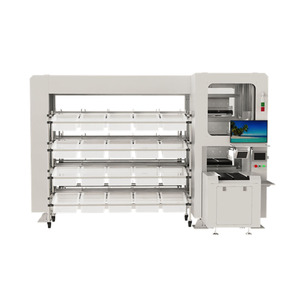
Omnistorage Mini Warehouse Storage Racking High Speed 3d Intelligent Warehousing
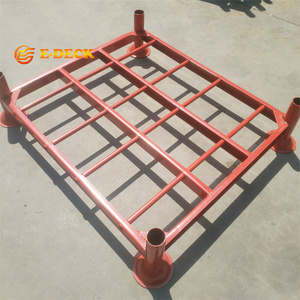
Heavy-duty Steel Metal Logistic Stackable Storage Post Pallet Racks
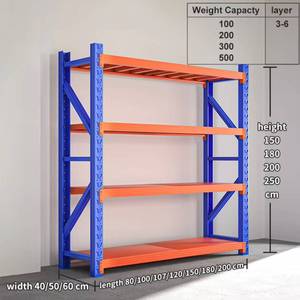
Customizable Industrial Steel Metal Shelving Shelves Adjustable Bolts Garage Warehouse Rack for Pallet Stacking Racks Shelves
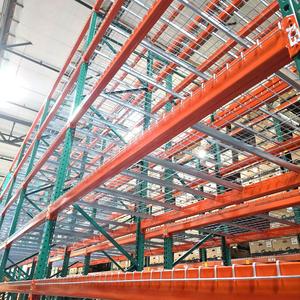
Bolted Type Warehouse Storage Heavy Duty Teardrop Pallet Rack With Barrier Rack Shelf Made in Viet Nam
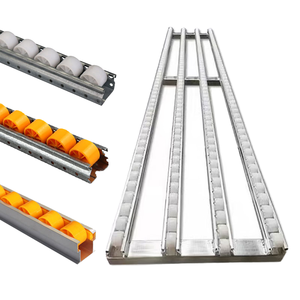
Langle Carton Flow Rack System Sliding Roller Shelf for Warehouse Storage Slide Warehouse Rack
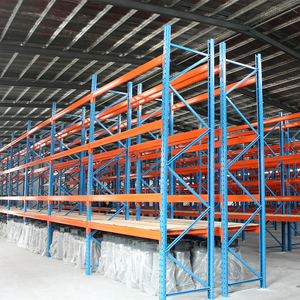
Industrial Rack By LIJIN Manufacture Heavy Duty Adjustable Steel Garage Storage Shelving Rack For Warehouse Stacking Racks
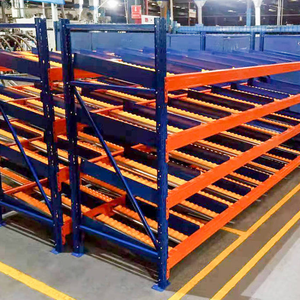
Easy Assemble Steel Carton Flow Racking Shelving with Corrosion Protection Sliding Box Storage for Inventory Management
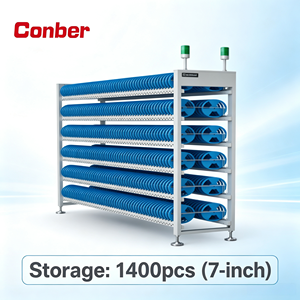
Conber Smart Pick To Light SMT Reel Storage Rack With Multi-color LED And Motor Core For Electronic Component Reel Warehouse
Precision Roll-Forming, Welding Integrity & Strict European Standards
Operating from our 30,000 m² modern manufacturing hub with 300+ technical personnel, Guangzhou Heda Shelves Co., Ltd. delivers engineered pallet racking and mezzanine structures that satisfy CE Certificate No. 2435-CPR-8605159 and ISO 9001:2015 audit standards.
High-Yield Certified Metallurgy
We utilize prime cold-rolled coils conforming to Q235B and high-yield Q355B (equivalent to European S235JR and S355JR). Every heat batch undergoes ultrasonic non-destructive testing, chemical composition spectrometry, and tensile coupon validation to guarantee yield strengths up to 355 MPa without micro-fissuring during roll-forming.
Continuous 36-Pass Roll-Forming
Complex omega and step beam upright profiles are shaped through continuous automated multi-stage roll-forming mills. This gradual plastic deformation mitigates residual cross-sectional internal stress, maintaining tight dimensional camber and sweep tolerances within ±1.0 mm per 10 meters, essential for narrow aisle (VNA) and automated crane clearances.
Pretreatment & Electrostatic Finishing
Prior to powder application, components pass through an in-line 5-stage automated chemical immersion cycle: hot alkaline degreasing, industrial descaling, dual-stage water rinsing, and micro-crystalline zinc-phosphating. Powder coatings are applied electrostatically using high-adhesion polyester resins cured at 190°C–210°C to achieve 60–90 μm thickness.
Traceable 10-Step Quality Engineering Sequence
Our integrated fabrication lines adhere strictly to ISO 9001:2015 protocol (Certificate No. 18624Q00169R0M), guaranteeing structural accountability across every container shipped.
Macro Trends Reshaping Industrial Storage Sourcing & Engineering
Global supply chain directors are balancing capital expenditure (CapEx) optimization, seismic resilience, environmental decarbonization, and modular standardization. Understanding these dynamics delivers long-term lifecycle savings.
Nearshoring Buffers & Modular Scaling
With geopolitical disruption driving nearshoring and safety stock buffers, procurement heads are avoiding rigid, fixed-dimension racking. Modern requests mandate universal slotting profiles that permit conversions from Selective Single-Deep into Double-Deep or Drive-In lanes without replacing foundational vertical upright frames, minimizing long-term civil renovation costs.
Decarbonized EAF Green Steel
Scope 3 greenhouse gas reporting under EU CBAM (Carbon Border Adjustment Mechanism) and US SEC disclosures is forcing procurement agents to audit steel provenance. Our foundry networks deploy Electric Arc Furnace (EAF) melts with up to 70% recycled scrap steel, lowering embodied carbon metrics to under 1.2 tonnes of CO2 per tonne of fabricated racking profile.
TCO Over Initial Price-Per-Bay
Sophisticated buyers look beyond raw FOB price per kilogram. Total Cost of Ownership (TCO) modeling encompasses container loading density (nesting upright geometries that clear 26 metric tons in a 40HQ), field assembly bolt-count reduction, powder film impact resilience (reducing corrosion remediation), and certified column impact deflection limits.
Engineering Verification: EN 15512 vs RMI MH16.1 vs AS 4084
Structural racking is a critical load-bearing civil structure. We engineer every project against global seismic, geotechnical, and deflection limit states, providing transparent load calculation reports for local building authority approvals.
| Engineering Parameter | European Norm (EN 15512:2020) | American Standard (ANSI / RMI MH16.1) | Australian Standard (AS 4084:2023) | Heda Shelves Engineering Baseline |
|---|---|---|---|---|
| Beam Deflection Limit | L / 200 (Span between uprights) | L / 180 (Vertical service load) | L / 200 (Serviceability limit) | L / 200 Standard (L / 250 for AS/RS) |
| Safety Factor (Steel) | $\gamma_M = 1.0$ to $1.1$ (Limit State) | $\Omega = 1.67$ (ASD) or $\phi = 0.90$ (LRFD) | Capacity factor $\phi = 0.85 - 0.90$ | Partial Safety Factor Verified |
| Seismic Ground Analysis | Eurocode 8 (EN 1998) Dynamic Modal | IBC / ASCE 7 Equivalent Lateral Force | AS 1170.4 Earthquake Actions | Finite Element Response Spectrum |
| Upright Perforation Reductions | Direct stub-column compression test | Effective width / AISI S100 testing | Testing according to Appendix A | Full Physical Lab Test Database |
| Impact Protection Rule | 400 N·m frontal / 200 N·m lateral min | Mandatory corner column reinforcement | Specific corner and end aisle guards | High-Impact Ductile Baseplates |
Cold-Store Metallurgy (-30°C)
Preventing cold-temperature brittle fracture requires low carbon content ($C \le 0.16\%$) and aluminum killed fine-grain steel. Our cold storage beams exhibit guaranteed Charpy V-notch impact energy absorption ($\ge 27\text{ Joules}$ at -30°C) preventing sudden structural collapse.
Automated Shuttle Interfaces
Deep-lane radio shuttle storage demands precision running track tolerances. Rails are laser-aligned to within 1.5 mm across a 60-meter bay. High-friction guide surfaces optimize automated shuttle wheel traction under rapid acceleration/deceleration cycles.
Seismic Dissipative Baseplates
In high seismic acceleration zones (PGA > 0.3g), rigid anchoring risks slab punch-through. We engineer extended ductile footplates with certified Hilti wedge anchor configurations that dissipate seismic energy through controlled yield zones rather than catastrophic sheared bolts.
Smart SMT & Pick-to-Light
Bridging structural steel and digital warehousing, our automated reel systems integrate embedded addressable multi-color LEDs and optical confirmation sensors wired directly into localized warehouse management software (WMS) APIs for rapid error-free picking.
Frequently Asked Technical & Procurement Questions
Detailed engineering clarity on structural calculations, installation tolerances, international logistics, and OEM private-label manufacturing.
What precise structural information is required to generate a definitive CAD layout and static load calculation? +
How does Heda Shelves calculate and enforce deflection tolerances on pallet rack beams under full rated load? +
Can your manufacturing lines support OEM custom profiles and private labeling for European and North American distributors? +
What anti-corrosion pretreatments and powder coating thicknesses are guaranteed for high-humidity and chemical warehouse environments? +
How are upright frames and cross beams packed to ensure zero transport damage and maximize container volume? +
What are the lead times for custom production, trial assembly, and ocean freight logistics to major global ports? +
Plan Your Storage Project with Certified Engineers
Share your facility floor plan, unit load profiles, and operational throughput targets. Our engineering department prepares an optimized 2D CAD layout, 3D structural model, and transparent static calculation breakdown within 48 hours.