Featured Industrial Racking & Pallet Handling Equipment
High-tensile Q235B/Q355B structural steel, automated continuous roll-forming, and anti-corrosive powder coatings certified to international ISO 9001 and CE norms.

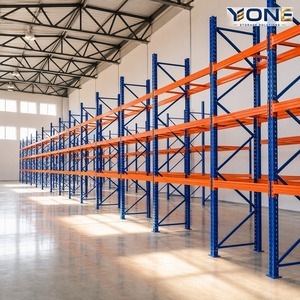
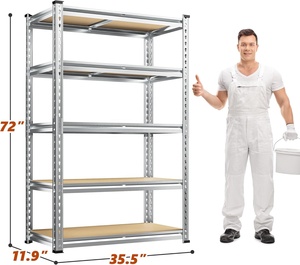
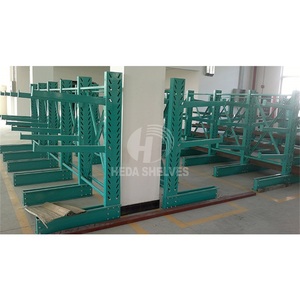
Top 10 Industrial Shelf Rack Manufacturer & Supplier Evaluation Criteria
In modern supply chain architecture, identifying a tier-one racking manufacturer requires looking far beyond raw steel pricing. Structural compliance with EN 15512:2020 (European standard for steel static storage systems), RMI MH16.1 (Specification for the Design, Testing and Utilization of Industrial Steel Storage Racks), and FEM 10.2.02 determines operational safety, vertical clear-span rigidity, and long-term asset depreciation. A qualified industrial rack manufacturer operates not merely as an OEM metal fabrication plant, but as a structural engineering partner delivering certified finite element analysis (FEA), validated deflection thresholds (typically restricted to L/200 under maximum safe working load), and turnkey intralogistics alignment.
01. Metallurgy & Yield Strength
Verified Q235B to Q355B structural steel certified with mill test certificates (MTC). Profiles undergo automated continuous multi-roll forming to preserve cross-sectional grain integrity without micro-fissuring.
02. Pre-Treatment & Coating
Multi-stage chemical degreasing, pickling, and zirconium/iron phosphating prior to automated electrostatic powder coating (60–90µm DFT) ensuring salt spray resistance exceeding 500 hours (ASTM B117).
03. Seismic & Dynamic Testing
Full-scale beam-end connector moment tests, stub column compression assessments, and baseplate anchorage shear testing under cyclic lateral load protocols referencing Eurocode 8 / EN 16681 standards.
| Racking Topology | Floor Space Utilization | Direct Selectivity | Stock Rotation Strategy | Standard Load Envelope | Ideal Application Profile |
|---|---|---|---|---|---|
| Selective Pallet Racking | 35% - 40% | 100% Direct Access | FIFO / LIFO Agile | 1,000 – 4,500 kg / Level | 3PL FMCG, Multi-SKU Distribution, Spare Parts |
| Drive-In / Drive-Through | 65% - 80% | Lane-Dependent (15%) | LIFO (Drive-In) / FIFO (Drive-Thru) | 1,000 – 2,000 kg / Pallet | Cold Storage, Seasonal Stock, Raw Bulk Goods |
| Push-Back Rail Racking | 60% - 75% | Aisle-Face Only (25%) | Strict LIFO (Gravity Cart) | Up to 1,500 kg / Cart Position | Food Wholesalers, Staged Buffering, 2-5 Pallet Depth |
| Radio Shuttle Automation | 80% - 90% | Lane-Face Automated | Programmable FIFO / LIFO | 500 – 2,000 kg / Shuttle Run | Deep-Freeze (-30°C), High-Throughput Beverage Plants |
| Cantilever Free-Arm Racking | Variable Open | 100% Unobstructed | Continuous Run Access | 500 – 3,000 kg / Column Arm | Extruded Aluminum, Structural Timber, Steel Tubing |
Procurement Trends & Technological Evolution in Industrial Storage
The global warehousing landscape is experiencing a paradigm shift propelled by geopolitical realignment, soaring industrial real-estate lease costs, and the convergence of mechanical steel fabrication with cyber-physical intralogistics. Forward-looking procurement directors must anticipate three core evolutionary axes:
Integration with AMR & AS/RS
Traditional static shelving is being rapidly retrofitted or purpose-built for Autonomous Mobile Robots (AMR) and Automated Storage and Retrieval Systems (AS/RS). This demands strict geometric fabrication tolerances: upright verticality deviation within 1/1000 and deflection tolerances conforming to FEM 9.831 automated handling tolerances.
Circular Green Steel & EPD
Global decarbonization policies mandate transparent Environmental Product Declarations (EPD). Tier-1 manufacturers utilize Electric Arc Furnace (EAF) structural steel with verified recycled scrap fractions, dramatically reducing Scope 3 embodied carbon emissions per pallet position.
Digital Twin & SHM Sensors
Emerging super-high-bay systems (up to 40 meters) are integrating Fiber Bragg Grating (FBG) strain gauges and IoT collision sensors directly into upright base columns to continuously monitor impact energy, seismic stress drift, and load overload in real time.
From a commercial procurement perspective, supply chain executives are migrating away from spot-market transactional buying toward vetted global supplier ecosystems. Total Cost of Ownership (TCO) models now account for modular disassembly, reconfigurability for changing SKU dimensions, long-term availability of interchangeable beam connectors, and full-spectrum documentation required for local authority permitting (CE Declaration of Performance, static engineering calculation books, and foundation load transfer data).
Factory Direct Manufacturing Excellence & Engineering Credentials
Established in 2001, Guangzhou Heda Shelves Co., Ltd. has evolved into an authoritative powerhouse in heavy-duty intralogistics manufacturing. Backed by a 30,000-square-meter precision production footprint and an elite technical team exceeding 300 professionals, our operations deliver an industrial capacity of over 30,000 metric tons per month. We serve global distribution hubs, EPC contractors, and OEM distributors across 120+ sovereign jurisdictions.
Complete In-House Production
From automated CNC sheet profiling, cold roll-forming lines, 6-axis robotic welding cells, to fully enclosed automatic electrostatic powder-coating tunnels, we maintain 100% control over physical mechanical integrity and surface finishing quality.
Stringent CE & ISO Compliance
Fully certified with CE Certificate No. 2435-CPR-8605159, ISO 9001:2015 Certificate No. 18624Q00169R0M, and comprehensive RoHS chemical compliance for surface finishes. Every batch is traceable down to individual steel coil heat numbers.
Complimentary 3D CAD & Structural FEA
Our senior intralogistics engineering department provides comprehensive pre-procurement support: complimentary DWG layout drafting, 3D spatial simulation renderings, forklift aisle optimization, and certified static load calculation reports.
Industrial Racking Procurement & Engineering FAQ
Direct technical guidance formulated by our chief structural engineers to streamline your facility planning and tender documentation: